 An important aspect of revision is the hunt for overused words. One good way to do that is to use the “Find” option in your word processor: type the culprit in the find field and see how many times you’ve used it and where it is located. Each writer has different words they tend to gravitate toward. Creating a personal overused word list will become very helpful. I know that I overuse just which I can usually just find and remove. There are many lists of overused words on the internet to help you get started. Here’s an example:
From Claire Fallon’s article in the Huffington Post:
Here are 12 words that have been so overused they really don’t mean anything anymore:
- literally: Originally meant “in a literal or strict sense,” but is used as a more general intensifier for things that are not strictly true. Because of this, “in a figurative sense,” the exact opposite of the original meaning, has now been added to the dictionary as a definition for literally.
- unique: Originally meant “unlike anything else,” but is used to mean “different, to some degree, from the standard or the norm.”
- awesome: Originally meant “causing feelings of fear or wonder,” but is used as a general, positive descriptor like “great” or “cool.”
- amazing: Originally meant “causing overwhelming surprise or astonishment,” but is used as a general, positive descriptor like “great” or “cool.”
- totally: Originally meant “completely, in every part,” but is now used as a general intensifier, much like “really.”
- basically: Originally meant “essentially” or “fundamentally,” but is now used as general verbal filler.
- incredible: Originally meant “impossible to believe,” but is now used as a general, positive descriptor like “great” or “cool.”
- really: Originally meant “actually true,” but is now used frequently as a general intensifier.
- very: Meaning “to a high degree,” we all just need to stop using it in every other sentence.
- honestly: Originally meant “in an honest and genuine manner,” but is now often used as general verbal filler.
- absolutely: Originally meant “in a complete and total manner,” but is now used as a general intensifier.
- unbelievable: Originally meant “impossible to believe,” but is now used as a general, positive descriptor.
I recently read a book that had a serious seemed problem.
“seems”
—This word weakens the sentence it is
used in. If something happens it shouldn’t “seem
to” happen it should simply happen.
from slcc.edu
Thesaurus: seem
Jullianne Q Johnson said this about the word seemed: A new problem word arose, and I blame it on writing reports for a job I had working with at-risk kids. In these reports, we were not allowed to say anything like “Bob was sad,” because we didn’t know it, we were only observers. So we had to write things such as “Bob seemed sad.” Seemed. Unless one is a lawyer or an eye witness in a court of law, seemed is a very boring word choice. My usage was under 100 times, but I axed quite a bit of them for being too uninteresting to live. If it wasn’t for my word cloud, I wouldn’t have known “seemed” was a problem.
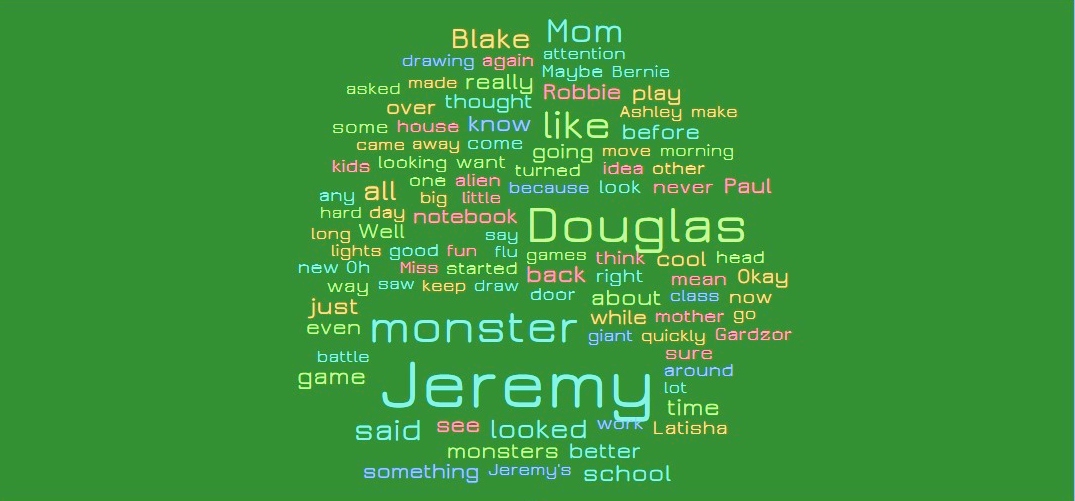
She recommends using a word cloud to find overused words. She puts her whole manuscript into Word it Out. I decided to try it with the first ten pages of my middle grade novel.  That was fun. Hitting the Random Settings button changed the colors and font and the Redraw button changed the arrangement. It looks about right. I’ll head back to my manuscript and “find” looked and like to make sure they aren’t overused.
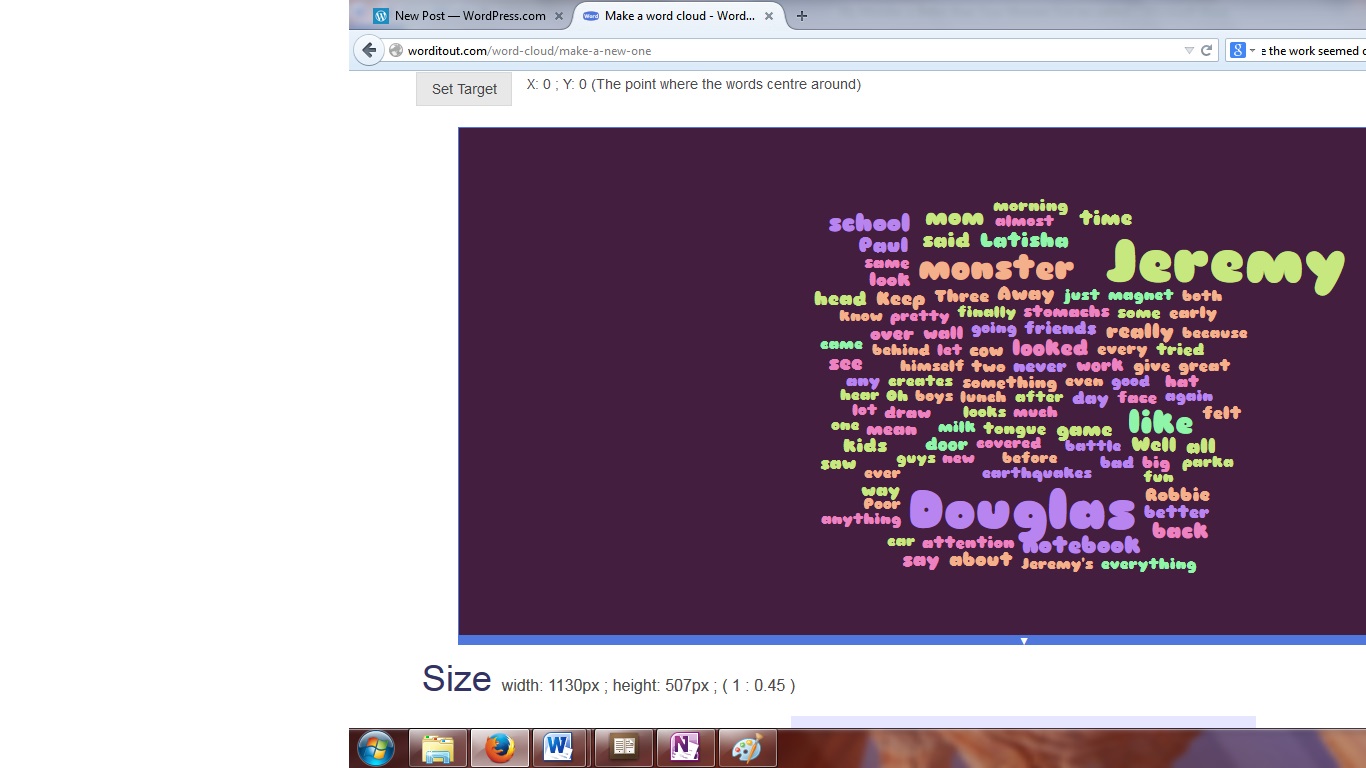 That was fun. Hitting the Random Settings button changed the colors and font and the Redraw button changed the arrangement. It looks about right. I’ll head back to my manuscript and “find” looked and like to make sure they aren’t overused.
 Experience Writing
One thought on “Revision: Overused Words”