While reading through the July/Aug 2020 Poets&Writers Magazine, I didn’t find a lot of Y words to choose from. The one that came up the most was “you” in the form of a question.

Like in the Q&A with Natasha Trethewey, Joshunda Sanders asks, “Are you relieved to have physical distance from Georgia?” “Have you been changed by writing this memoir?” and How do you cope with that?”
In the First Fiction 2020 section each debut author is asked questions by another author who is “introducing” them. The questions are printed in red. They asked questions like, “Can you tell me about when and how you first started writing these stories?” and “How do you feel about the collection coming into the world in this strange, fraught time?”
Then I read this quote from Ashleigh Bryant Phillips who wrote the story collection Sleepovers(assoc link), “You can end up hearing the life stories of a couple different family members over the course of mashing potatoes or silking corn. And the sounds of the words in this storytelling—it’s music.”
Can you? You can.
As I read over these questions, I started hacking off the specifics of the questions and wondering how filling in the blanks might lead to poetry. Here are the questions I came up with:
How long did you contemplate _____?
Was it cathartic to_____?
Are you relieved to have physical distance from_______?
Have you been changed by______?
Do you think _______ captures that feeling, suspends it in amber?
Was helping others a motivation for _____?
How do you cope with _____?
How do you feel about _____ coming into the world?
What do the people you know and love think about this place?
Is there a feeling that you’re a spy in this house?
How do you envision the role of violence in _____?
What sent you down the road that _____?
How did you handle the fear to get to _____?
How did it shift while _____?
What made you want to explore _____?
How do you bring those concepts into _____?
What do you think bout the future of _____?
If you fill in those blanks with the first thing that comes to mind; choose your favorites and arrange them; that could be a poem in itself. And / or, filling in the blanks then answering your questions could lead to some self discovery to put in a poem.
I’m excited about this idea for creating questions for myself from interview questions. I’m going to have to go back through the magazines, and see what else I find.
The Prompts
NaPoWriMo : “Merriam-Webster put together a list of ten words from Taylor Swift songs. We hope you don’t find this too torturous yourself, but we’d like to challenge you to select one these words, and write a poem that uses the word as its title.”
PAD Challenge : A title prompt, “Until (blank)”
Poetry Non-stop : Write a poem inspired by a singer or artist
Poetry Super Highway : “Write non-stop for 3 minutes about whatever comes in to your head. Draw a line down the center. Number it section a and section b. Choose one section. Using most if not all the words in that section to make a poem. You can’t use any of the words in the other section but you can add any words other than them to create a new poem.” This poetry writing prompt submitted by Judy England-McCarthy
Today’s Poem
Until Altruism
altruism doesn’t really exist, because we are selfish,
self-serving beings. Until altruism we feel pleasure
when we are praised for helping others, and thus
are helping for the dopamine. Until altruism it turns out
giving of ourselves isn’t cathartic, it’s frustrating.
Until altruism we are relieved to have
physical distance from lack of resources,
insane expectations, and having to face
really hard questions of what help is. Until altruism,
trying to help, the idea of betterment, assumes change
which is invasive violence itself. Until altruism,
the giver is a masochist, receiving pleasure from getting
nothing but pain in return. Stepped on, stepped over,
forgotten, expected, never truly appreciated.
Deep down, no matter how much we try,
there’s no getting around it. We are self-serving.
We want attention for our good deeds. We want to
be showered in gratitude and love. Until altruism is
finally programmed into an emotion-understanding
robot, altruism will never exist, and even then, if
the robot understands emotions to be able to tend
to others’, will it not feel some need for reciprocation
of its own?
Portable MFA Week Five: Shape
This week’s focus is free verse line breaks.
Writing: This week’s instructions are to choose a favorite free-verse poem and re-write it twice. “Each time, make different choices in terms of line length and line breaks than the poet did, and study the results you get; feel your way through them.”
Reading: This week we can choose another poet to study. Since I’ve been learning so much from my Ada Limón study, I thought I would try studying a poet that I have found challenging, Louise Glück. I picked up a copy of Meadowlands (1996)(assoc link) last time I was at the library. For this week’s poem, I’ll be looking at “Moonless Night.” As part of my study, I’ll use it for my writing exercises as well.
Time is precious, and I appreciate that you spend some of your time here at Experience Writing reading and learning along with me. I set up a buy me a coffee account, so you can now buy me a beverage. It will help a lot.
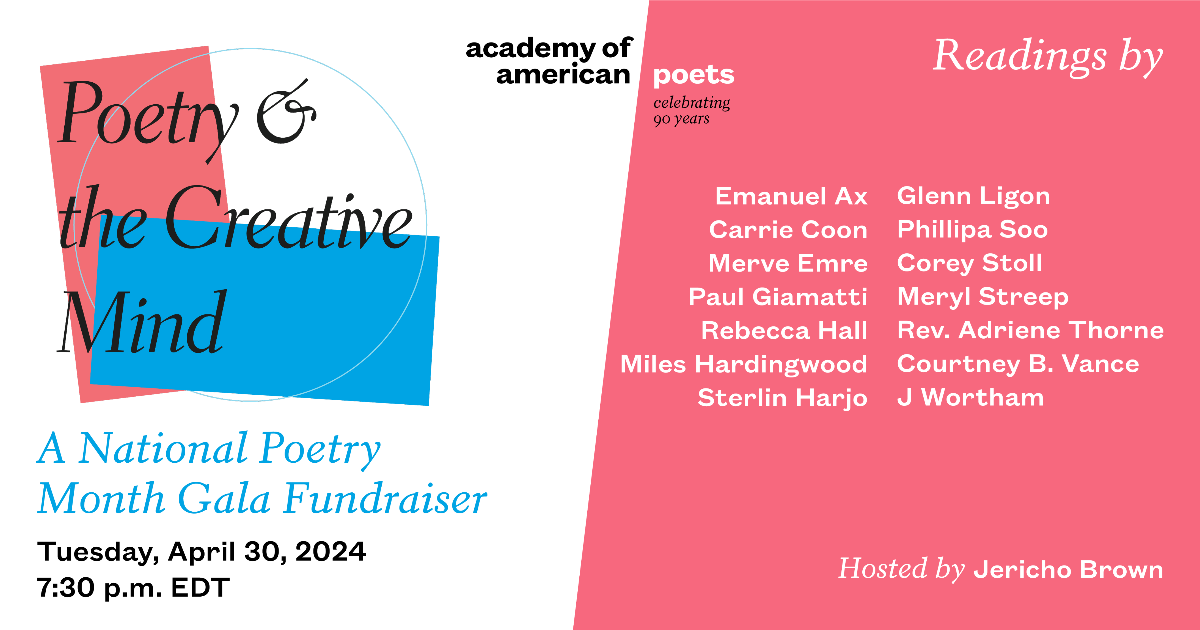
And don’t forget to get your free tickets to:
 Experience Writing
I can’t agree with the content of the poem about altruism.
All my life I have worked for others, never asked for attention, payment or gratitude.
The only problem is that I forgot to care well for myself, so now I have no pension.
I don’t call it altruism, but my way of living is.
Sad that you have no trust in others.
LikeLiked by 1 person
Thank you for coming by.
LikeLike