The Fiction prompt in the March/April 2019 Poets&Writers Magazine is called “Family Recipe.” The prompt uses (assoc. link)Gingerbread by Helen Oyeyemi as inspiration and says, “a mysteriously powerful homemade gingerbread wends its way like a spell through multiple generations of friendships and familial relationships. At times it plays an integral role in the alienating forces that drive characters painfully apart, and at other times it proves to be a tie that reinvigorates the complex bonds between mothers and daughters, as well as between friends. Taking inspiration from an ingredient, dish, or recipe that has meaning for your own family, write a short story that revolves around food and how the sharing of it can be both nurturing and disruptive.”
Inspiration would have been the obvious choice for today’s I word, but what makes something inspiring? What is the integral ingredient?
Though the ingredient in the prompt has to do with cooking, an ingredient can be a constituent element of anything; a component.
Integral is such an interesting word. It is a Janus word or contronym, a word that means something and its opposite. It means: of, relating to, or belonging as a part of the whole; constituent or component; a necessary part of a whole, a constituent. What is a constituent? An element, material, etc. that is part of something else; component; serving to compose or make up a thing. So integral means a necessary part of a whole, but it also means entire; complete; whole.
Integral math: Integration, the process of computing an integral, is a way of adding slices to find the whole. Integration can be used to find areas, volumes, central points and many useful things.
That makes me think of a phrase I really like, “A whole that sums more than its parts.” I think that’s a great definition for a poem, and also a collection of poems. And that is making me think of fractals. A fractal is a never-ending pattern. Fractals are infinitely complex patterns that are self-similar across different scales. In mathematics, a fractal is a geometric shape containing detailed structure at arbitrarily small scales, usually having a fractal dimension strictly exceeding the topological dimension. Many fractals appear similar at various scales, as illustrated in successive magnifications of the Mandelbrot set. Fractals are often found in nature like broccoli and ferns. The integral ingredient repeats in larger and larger iterations to compose the whole.
Alice Fulton has written extensively about what she calls Fractal Poetics. Marian Christie writes about Poetry and Fractals on the site Poetry and Mathematics If you’re interested in exploring fractal poetry, I found this fun Fractals in Poetry Project. I attempted fractal verse in my poem, “The Multiplicity of Choice” and “Rapid Irregular Movement”.
I like this idea that the integral ingredient of a poem (or a collection of poems) is like a fractal, something that repeats in iterations of different sizes, working together to create the whole.
The Prompts
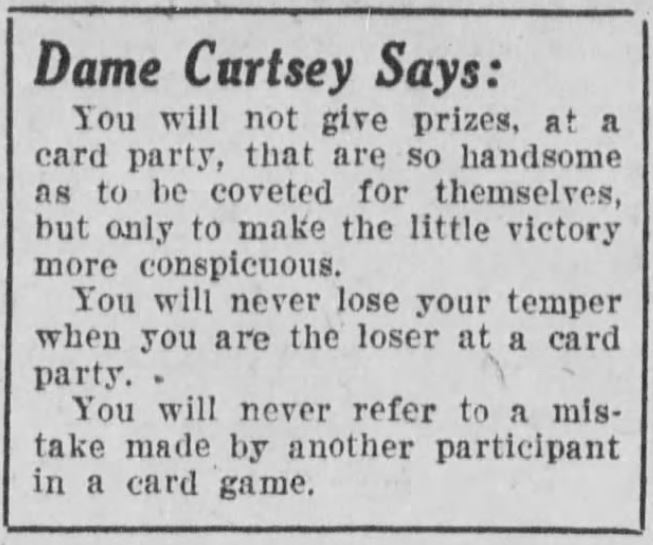
NaPoWriMo : write a poem based on one of the curious headlines, cartoons, and other journalistic tidbits featured at Yesterday’s Print. To go with the other prompts talking about what you can’t do, I chose:
PAD Challenge : A title prompt – (Blank) Better
Poetry Non-stop : from Casey Garfield “write a nature poem about something you wouldn’t normally write a nature poem about: something humans built; something humans do; something a little more urban that you’ll treat with the same beauty, respect, and reverence that a nature poet would give to clouds, mountains, rolling treescapes . . .”
Poetry Super Highway : from Joanne Durham “write a poem about something someone has told you that you shouldn’t write about. You might want to title it, “You can’t put ___ in a poem” or “You can’t write about ___ in a poem.” Then go on to explain why you’re not supposed to include it, and use it anyway.”
Joanne Durham’s prompt goes well with the Ada Limόn poem I’m studying this week, “The Magnificent Frigatebird.” In the second couplet she writes, “A mentor once said, You can’t start a poem with a man looking out a window. Too may men looking out a window.” So many people telling poets what they can’t write about. What a strange way to spend time.
Today’s Poem
The Cards Dealt Better
~after Ada Limόn
Aren’t humans part of nature? I sucked air walking uphill.
Isn’t it natural to point out the mistakes in the grand design?
Dame Curtsey said, You can’t write a poem that refers to a mistake
made by another participant in a card game
But isn’t this life a card game? We all are participants making mistakes.
One last hand to fold, after going all in.
Once, in New Orleans, six women sat around my table in the upstairs apartment
of the identical boxes that were once military housing
Good bluffers all, stony-faced, emotionless, chatting as if they held
no cards at all, as if it wasn’t food money in the pot.
Then purses opened, and three players set down their cards and held guns
out to compare. The game changed now that I was aware
that people brought guns to our friendly card games. Is that the mistake
to which I must not refer? It had not occurred to me
that these women in nature, around my table, in my apartment keep guns hidden in
their pouches to display like brown pelicans gular sacs turn red.
I am far from the Big Easy now. I am not sweating and no cockroaches
threaten to crawl across the cards if I put them down. But
I stay away from card games and the mistakes that lurk in the pouches of purses.
 Experience Writing
Ada Limon is my favorite, and I enjoyed the way you chose to emulate one of her poems! “We are all participants making mistakes” was my favorite line. Thanks for sharing your poem and your process ❤
LikeLiked by 1 person
I’m so glad you enjoyed it.
LikeLiked by 1 person