Light Depth

It’s already April, and at Experience Writing that means it’s time for NaPoWriMo (National /Global Poetry Writing Month) and the A-Z Challenge. Continuing this year’s theme, I’m writing about the A to Z of Depth.

Depth of Lights by Maria L. Berg 2025

Light Depth is is how far light penetrates in water, specifically the ocean. According to the National Oceanic and Atmospheric Association (NOAA) the ocean has three zones based on depth and light level:

Euphotic (sunlight) Zone: from the surface to 200 meters below = 656 feet. This is the area where there is underwater light. Colors appear different here because water absorbs warm colors and scatters cool colors, making warm colors look gray or black as one descends, and cool colors look more blue-violet.

“In clear ocean water, visible light decreases approximately 10-fold for every 75 m that you descend. This means that at 75 m the light is 10% as bright as it was at the surface; and at just twice that depth, 150 m, it is another 10-fold dimmer, or 1% of surface light.” ~NOAA

Dysphotic (twilight) Zone: 200 meters to 1000 meters = 656 feet to .6 miles. At this depth photosynthesis is no longer possible.

Aphotic Zone (no light) which is further subdivided into:

  • bathypelagic (midnight) zone: 1000-4000 meters = .6 miles-2.5 miles
  • abyssopelagic (abyss) zone: 4000-6000 meters = 2.5 miles to 3.7 miles
  • hadopelagic (hadal-chiefly oceanic trenches) zone: 6000 meters/ 3.7 miles and deeper
infographic from National Ocean Service

This Oceanic Light Depth is also called Deep Light. When I looked up Deep Light, I found some other interesting things:

Deeplight – The European company manufactures ultra narrow linewidth lasers. You may want to keep them in mind for when you’re building your quantum computer.

DeepLight Labs – The people of DeepLight Labs have created an eternity mirror in a light up dodecahedron.

Depth & Light (Abstract connection)

When we say that someone has “seen the light” we may mean that she has come to a sudden deep understanding or had an epiphany. It can mean to understand something that you did not understand before.

Seeing the light is also associated with near death experiences in which people describe seeing a tunnel of bright light.

In Depth Psychology, light represents the ego and consciousness, where shadow represents the unconscious.

Today’s Poem

Losing Light

Sunlight illuminates pleasure-babble
of bikini-clad sunbathers, baking
on bow decks, woohoo-ing over
boat motors and buoy bells
warning horns and crashing waves.

The light slants past the surface
not only absorbed, but also scattered.
Snorklers’ fins slap, seaweed slurps
and shells clack against rocks.
Propellers whir beneath the hulls
stirring air bubbles, gurgling.

In the twilight zone, light
decreases rapidly with depth.
Sonar pings play tricks.
A distant whale song
both eerie and beautiful
surrounds me as the humpback
rises to breech from the darkness.

In the midnight zone, I’m
in an echo chamber
of my own breath.
My running fears pulse
in my head, a horrifying
heartbeat.

Even from these depths
I can see the light.

This poem was inspired by today’s prompts at NaPoWriMo and Writer’s Digest’s April Poem a Day (PAD) Challenge.

Thank you so much for coming by and reading my post. Any thoughts or questions about Light Depth? Come back tomorrow for more depth exploration and poetry.
Full Circle

Today being Sunday, there is no A to Z today. Here is my poem in response to the prompts at NaPoWriMo and Writer’s Digest’s Poem a Day Challenge.

Full Circle by Maria L. Berg 2025

Full Circle

1.
Here I am again: Again I’ve come full circle.
The flowers come too soon with so much left to do
stalled upside down in the loop-de-loop of progress
positive change slides back as bad habits undo
all hope mangled to disappointment, the cycle
continues. I can’t seem to break this ring cycle.

2.
The music is thick and syncopated, building
in complexity like an ear worm that won’t let go
It’s as if the drama mentions the previous
events so I can still understand how this goes
I hear the pattern repeating as I repeat
the stumbles and digressions I wouldn’t repeat

3.
this time, because this time was different, this time
I identified the source and changed the bad script
“Take that subconscious fears,” I said sure of success
But my ego read a different rehashed transcript
and so quickly all the old feelings were back again.
I can see the curve of my own back, here again.

Week in Review with My Deep Knowledge Worksheet

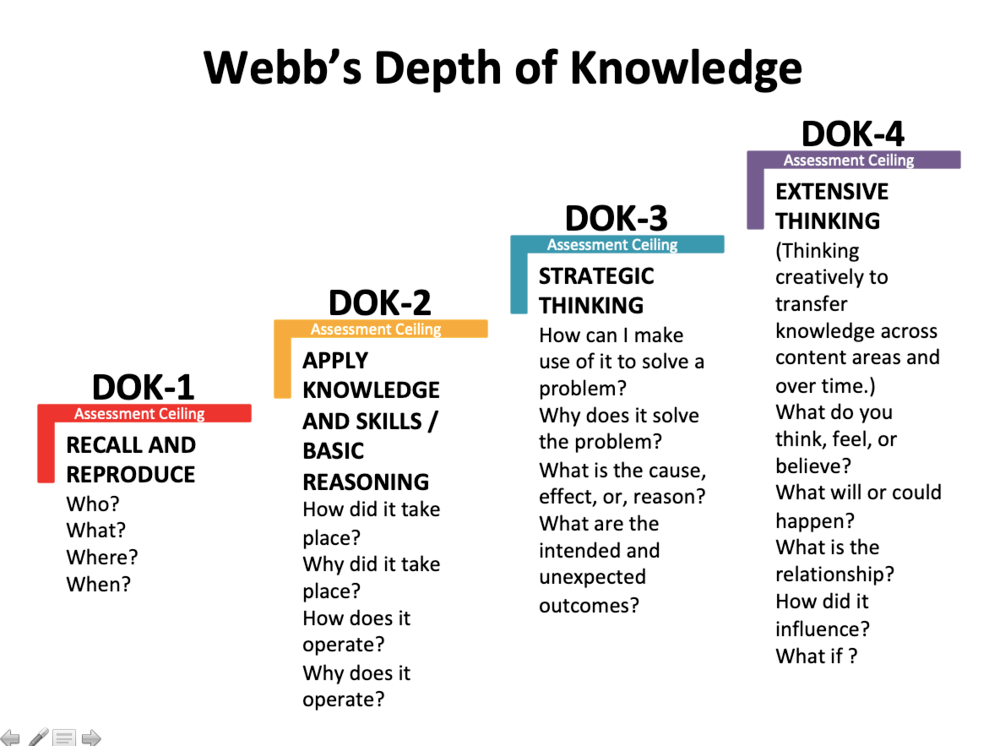
Working through the Deep Knowledge Worksheet to review this week’s depth posts, I experienced what it was like to think deeper, then deeper about the subject.

In DOK-2, I concluded that one of the rules of depth (as presented this week) is we have to connect an inner experience to an outer experience.

In DOK-3 I wrote, “Based on past events, if I connect universal symbols with specific sensory details, and compare or place their dualities in conflict, I will write more deeply.”

In DOK-4 I wrote, “I feel like I need to get in touch with my dream imagery.”

So through using this tool, I synthesized the information from the six posts from this week, and formed a plan of action to deepen my writing and thinking.

Depth of Knowledge

It’s already April, and at Experience Writing that means it’s time for NaPoWriMo (National /Global Poetry Writing Month) and the A-Z Challenge. Continuing this year’s theme, I’m writing about the A to Z of Depth.

Reviewing Anew by Maria L. Berg 2024

Deep Knowledge is a profound comprehensive understanding of a subject. It includes getting past the surface-level understanding to the specific details: the whys and hows. Deep knowledge leads to insights and the ability to apply that knowledge.

Deep knowledge requires focus, time, and reflection to reach an integration of facts and feelings.

Here are a couple of other interesting things I came across having to do with Deep Knowledge:

An article about “Deep Knowledge Tracing” which is using Recurrent Neural Networking machine models to track student learning in computer supported education.

Deep Knowledge Group: The word “consortium.” I’ll just leave it at that.

Webb’s Depth of Knowledge

Depth of Knowledge is a framework developed by Dr. Norman Webb in 1997. It’s a way to measure how deeply students need to engage with a topic or material, ranging from basic recall to advanced problem-solving and reasoning for educational tasks. It categorizes required complexity of cognitive engagement.

Webb introduced Depth of Knowledge to define criteria for evaluating the alignment of educational expectations and standardized testing. But we can use it as a tool to deepen our understanding of a subject.

A Deep Knowledge Exercise

So using ideas of Deep Knowledge, Depth of Knowledge, and Depth & Complexity, I created this Deep Knowledge worksheet:

Making this tool, I gained deep knowledge of how to acquire deep knowledge. To use the tool, I thought I would review the depth posts from this week to examine the depth of knowledge we’ve acquired, and also how to deepen our knowledge. I’ll share the results tomorrow.

Today’s Poem

Perils of 20,000 Leagues

I. Alarming rumors
of an avenging monster
living horror
of the deep
glowing gold eyes
haunt the fog
when it surfaces
and ram all
approaching vessels

Oh, Mr. Verne
so ahead of your time
imagining a frightening future
of modern machines
and madmen

II. Annonax and Land
on an adventure to find
the fish that got away
hurled into the sea
survive by climbing
onto the beast

Oh, Captain Nemo
such a surprising disguise
of your quest for knowledge
and secret existence

III. Aboard the Nautilus
beyond the reach
of government entities
of land-based ideologies
we see beauty and mysteries
even legendary Atlantis
isn’t beyond reach
but in those depths
the archangel of hatred
at the helm
no one is safe
we must escape
or drown

IV. Man had dreamed
of such miracles
means to explore
the depths of the seas
but the Nautilus
a technical marvel
in the hands of a man
lost to the depths of grief
became an agent
of destruction

This poem was inspired by today’s prompts at NaPoWriMo and Writer’s Digest’s April Poem a Day (PAD) Challenge.

Thank you so much for coming by and reading my post. Any thoughts on Depth of Knowledge? Did you try the worksheet? Come back tomorrow for the results of my Deep Knowledge Exercise and a new poem.

C. G. Jung & Depth Psychology

It’s already April, and at Experience Writing that means it’s time for NaPoWriMo (National /Global Poetry Writing Month) and the A-Z Challenge. Continuing this year’s theme, I’m writing about the A to Z of Depth.

A photo of a picture of Jung from Man and his symbols (original photo uncredited)

Depth psychology refers to the psychological study of the unconscious.

Resources (these are amazon associate links): When I was a freshman in college, a senior art student gave me his copies of The Basic Writings of C. G. Jung (1990) and The Archetypes and the Collective Unconscious (1959: tenth printing 1990). He told me to hold onto them, I would want them some day. So I’ve held onto them and read parts from time to time. I also picked up a gorgeous hardcover of Man and his symbols (1964) conceived and edited by Carl G. Jung which I really enjoy.

Some things I read about Deep Image poets said the poets were influenced by the work of C. G. Jung and other Depth Psychologists. I think it’s fun when aspects of my depth study come together.

On the opening pages of The Archetypes and the Collective Unconscious, Jung separates himself from his contemporary Freud by saying,

“For Freud, accordingly, the unconscious is of an exclusively personal nature, although he was aware of its archaic and mythological thought forms. A more or less superficial layer of the unconscious is undoubtedly personal. I call it the personal unconscious. But this personal unconscious rests upon a deeper layer, which does not derive from personal experience and is not a personal acquisition but is inborn. This deeper layer I call the collective unconscious. . . . We can therefore speak of an unconscious only in so far as we are able to demonstrate its contents. The contents of the personal unconscious are chiefly the feeling-toned complexes, as they are called; they constitute the personal and private side of the psychic life. The contents of the collective unconscious, on the other hand, are known as archetypes.”

The idea of feeling-toned complexes made me think of the symbolist theory of correspondences from the deep image poets. Let’s see if Depth Psychology can take us deeper into these correspondences.

In Man and his symbols Jung writes, “a word or an image is symbolic when it implies something more than its obvious and immediate meaning. It has a wider unconscious aspect that is never precisely defined or fully explained.”

Jung writes that a human life should be open conflict and open collaboration of conscious reason, and chaotic unconscious. He calls this conflict between the ego and the unconscious the individuation process, and says that this process leads to a uniting symbol. He also calls the union of conscious and unconscious contents in this symbol transcendent function which he says is the goal of any psychotherapy.

This uniting symbol with correlation in the realms of the conscious and unconscious could be what the deep image poets meant, making each of their poems a transcendent function.

Jung studied the unconscious through his patients’ dreams. He wrote, “It is easy to understand why dreamers tend to ignore and even deny the message of their dreams. Consciousness naturally resists anything unconscious and unknown. . . erecting psychological barriers to protect himself from the shock of facing something new.”

There’s a word for this, misoneism: a hatred, intolerance, or fear of innovation or change, essentially a dislike of new things or ideas.

After a lot of discussion of dream analysis, and a warning against “unintelligent or incompetent dream analysis”, Jung also wrote, “But symbols, I must point out, do not occur solely in dreams. They appear in all kinds of psychic manifestations. There are symbolic thoughts and feelings, symbolic acts and situations. It often seems that even inanimate objects co-operate with the unconscious in the arrangement of symbolic patterns.”

Jung focused on the mandala (meaning circle) as both a process and symbol for reaching transcendent function. He wrote, “Their basic motif is the premonition of a centre of personality, a kind of central point within the psyche, to which everything is related, by which everything is arranged, and which itself is a source of energy.”

Find Your Uniting Symbol

So let’s get Jungian and make a mandala:
1. Cut your paper into a square
2. Fill the square with a large circle
3. Draw the two intersecting center lines of your circle
4. Label the four outer points: T (thought), I (intuition), F (feeling), S (sensation)
5. Draw a circle around the center, and a larger circle between it and the outer circle.
6. Close your eyes and take a few deep breaths. Relax and clear your mind.
7. Think of a dream you remembered recently, note any images or symbols that come to mind.
8. Fill the entire circle with your images using any artistic media you choose. Work quickly.

To save you time, and make this as easy as possible. Here’s an outline I created. Print it out on some thick paper.

A series of videos have recently popped up on YouTube from Depth Psychology Hub. Each video has a stagnant image of Carl Jung and has annoying lines and dots moving across the screen (I guess an old film simulation) while the words being spoken about things Carl Jung said, presented as self-help, change from gray to white. You may want to take a look just for fun.

Today’s Poem

It’s In My Nature

Morning has come, another day
You are talking in your sleep
I must pack my bags and say

goodbye The next adventure awaits
new scents exciting to breathe
morning has come, another day

Another leap to brave
nothing and no one to keep
I must pack my bags and say

goodbye It’s getting harder to stay
the shadows so quickly creep
morning has come, another day

But you, you held my gaze
even colored a new dream, but
I must pack my bags and say

goodbye Because I can’t be tamed
and my sharp claws scrape deep
morning has come, another day
I must pack my bags and say goodbye

This poem was inspired by today’s prompts at NaPoWriMo and Writer’s Digest’s April Poem a Day (PAD) Challenge. The song lyric lines I chose are from “Hands to Heaven” by Breathe (1988).

Thank you so much for coming by and reading my post. Any thoughts or questions about Jung or Depth Psychology? Did you make your mandala? Find your uniting symbol? Come back tomorrow for more depth exploration and poetry.
Deep Image

It’s already April, and at Experience Writing that means it’s time for NaPoWriMo (National /Global Poetry Writing Month) and the A-Z Challenge. Continuing this year’s theme, I’m writing about the A to Z of Depth.

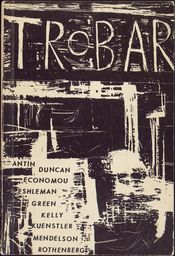
Cover of Trobar No. 1

The Deep Image Poets were a group of poets in the early 1960’s who wrote stylized, resonant poetry that operated according to the Symbolist theory of correspondences.

The Symbolist theory of correspondences is the idea that there are inherent analogies between the spiritual and material worlds. It proposes that elements in one realm symbolically reflect and interact with their corresponding element in another realm. This relationship creates a system of interconnectedness.

I first came across the Deep Image poets while reading Dorianne Laux’s new poetry craft book Finger Exercises for Poets. In the introduction to her chapter, “The Leap,” she says that that the Deep Image poets introduced us to Spanish poets who use the technique of leaping into seemingly unrelated imaginary material such as Federico Garcia Lorca and Pablo Neruda. She lists the Deep Image poets as Robert Bly, James Wright, W. S. Merwin, and others and compares them to others who use “sudden metaphorical flights.”

The Deep Image poets, Robert Kelly, Joan Kelly, and George Economou, started their own magazine called Trobar which is available to read on JSTOR. Robert Kelly writes that Jerome Rothenberg coined the phrase Deep Image. Rothenberg made a magazine called Poems from the Floating World also available on JSTOR. Above the Table of Contents of Issue 3, he wrote:

“The poem is the record of a movement from perception to vision.
Poetic form is the pattern of that movement thru space and time.
The vehicle of movement is passion-speaking-thru-things.
The condition of movement is freedom.
The deep image is the content of vision emerging in the poem.”

Today’s Poem

Five Images Build Eudaimonia

union
youth dies
universe demands more
you dream in morning air
you’d have a money year

This poem was inspired by today’s prompts at NaPoWriMo and Writer’s Digest’s April Poem a Day (PAD) Challenge. And the word Eudaimonia from Deborah Weber’s A to Z.

Thank you so much for coming by and reading my post. Any thoughts or questions about Deep Image poets? Come back tomorrow for more depth exploration and poetry.

Depth’s Highs and Lows

It’s already April, and at Experience Writing that means it’s time for NaPoWriMo (National (Global) Poetry Writing Month) and the A-Z Challenge. Continuing this year’s theme, I’m writing about the A to Z of Depth.

Secret Music by Maria L. Berg 2021

Height and Depth may seem contradictory, but “high” is right there in the definition: “of color: high in saturation and low in lightness.” And since that brought up both high and low, I thought we could also look at “Having a low musical pitch or pitch range.”

I figured these were both pretty straight forward concrete definitions of depth, but when I started looking into Color Depth and Musical Depth I found more depth than I expected.

Color Depth

In display technology, Color depth, also bit depth or pixel depth, is a technical term. It is either the number of bits used to indicate a color in a single pixel, or the number of bits for each color component of a single pixel. It can also refer to the number of possible colors that can be displayed or represented in an image on a screen. True Color (24-bit color) is required for photorealistic images and video.

In painting, color depth is using color to create the illusion of a third dimension in a two dimensional image. This is done through
Warm and Cool Colors

  • Warm colors (like red, orange, yellow) appear closer to the viewer.
  • Cool colors (like green, blue, purple) appear to recede into the background, creating a sense of distance.

Value and Contrast: Lighter colors in the foreground and darker colors in the background can create a sense of depth. High contrast (large differences between light and dark values) can draw the viewer’s eye forward, while lower contrast can push areas back. 

Color Intensity and Transparency: More saturated colors in the foreground can create a sense of forward movement, while lighter, more translucent colors can recede.

I really enjoyed this video that talks about aspects of color using colored pencils:

While writing this I listened to the DEEP COLOR Podcast interviews with artists. I have to fast forward the beginning of each podcast until the piano stops. I almost didn’t get to the first interview I listened to because that piano plonking kept going and going. Talk about a lack of musical depth.

Musical Depth

More than just a low tone, musical depth can refer to the richness, complexity, and multi-dimensionality of music. Musical depth can be achieved through:

Layers and Textures-Adding different instruments, sounds, and effects

Melodic and Harmonic Complexity-Melodies that combine major and minor scales, and harmonies that create interesting chords

Timbral Depth-timbre is also known as tone color or tone quality. It is the quality or character that makes a particular musical instrument or human voice have a different sound from another. Combining instruments and/or voices of different timbre can create depth.

Rhythmic Depth-a combination of rhythm instruments and players, polyrhythms (multiple rhythms played at the same time), and syncopation (emphasizing notes off the beat), can add complexity and depth. 

Emotional Depth-Music can express and evoke a range of emotions, and create a deep emotional connection with the listener.

I thought it would be fun to end this discussion with a vocal exercise video to work on the lower part of our vocal ranges. Instead of a singing exercise, I found this video that equates a lower speaking voice with the voice of authority. She says a deeper voice can earn you more money, more respect, and make you sound more confident. I hadn’t been thinking about vocal depth in this way at all. What do you think?

Today’s Poem

Deny Distraction

a megaton brainwave zings
sings of fun to misbehave, forget the whole thing

but once begun be brave and cling

to none of the depraved coiling and pissing

Anyone who would enslave or sling
one by one lost in the shock wave, ears ring
stunned they will crave your everything
while they run and rave and sting

under the gun don’t cave or grow wings
the hot sun in waves coloring

the one who stayed stomaching

and won then forgave everything

unwavering

This poem was inspired by today’s prompts at NaPoWriMo and Writer’s Digest’s April Poem a Day (PAD) Challenge. I chose the sculpture “Unwavering” by Martin Klein.

Thank you so much for coming by and reading my post. Any thoughts or questions about Musical Depth and Color Depth? Did you try the speaking exercises? Do you sound like Darth Vader now? Come back tomorrow for more depth exploration and poetry.
Depth Grammar

It’s already April, and at Experience Writing that means it’s time for NaPoWriMo (National (Global) Poetry Writing Month) and the A-Z Challenge. Continuing this year’s theme, I’m writing about the A to Z of Depth.

Final Words by Maria L. Berg 2022

While searching for aspects of depth, I got really excited when I came across “Depth Grammar.” Could there be a more perfect topic for a writer exploring depth? However, it has turned out to be rather elusive and complicated. Here is what I’ve dug up from the depths.

Depth Grammar (Ludwig Wittgenstein) distinguishes the surface grammar of words—how words are used in a sentence, the sound of the word to the ear—from the atmosphere or feeling that words carry in different contexts. Resource: Tractatus Logico-Philosophicus (1921)

Deep Grammar (Charles F. Hockett): “It is as though the whole network of structural relationships between forms, overlapping sometimes into the non-speech context, constituted a complex intertwining of various kinds of valences, only one layer of which is immediately apparent to the analyst. This most apparent layer constitutes, we shall say, surface grammar. Beneath it lie various layers of deep grammar, which have much to do with how we speak and understand but which are still largely unexplored, in any systematic way, by grammarians.” Resource: A Course in Modern Linguistics (1958)

Deep Structure (Noam Chomsky): is a theoretical construct in linguistics that grammar has layers. The surface structure is the many sentences with similar meaning. Below the surface structure are the rules of making those sentences. And below that layer are all the things trying to be expressed in the sentence: where the idea for the sentence originated.
Resource: Syntactic Structures (1957)

I have been reading, and reading, searching out original sources, trying to get to the depths of Depth Grammar. The one thing I’ve learned is that I’m not a linguist, and reading texts on linguistics is slow-going and challenging. Though I did not get to a deep understanding of Depth Grammar to reveal to you, I did find some interesting things to share:

A slide show on Universal Grammar.

An interesting sketch of a Wittgenstein pinball machine design.

A Noam Chomsky interview at the University of Washington:

Fun synchronicity: When asked about poetry in the interview, Noam Chomsky mentions Seven Types of Ambiguity by William Empson. I found a copy and started reading, and right there in the introduction I read:

“In this way such a passage has to be treated as if it were ambiguous, even though it may be said that for a good reader it is only ambiguous (in the ordinary sense of the term) while he is going through an unnecessary critical exercise. Some critics do not like to recognise this process because they connect it with Depth Psychology, which they regard with fear.”

What a surprising round-about connection between Depth Grammar and Depth Psychology which I will be talking about later in the week.

Today’s Poem

The Call of the Wild in Spring

Your voice on the wind is irresistible
a familiar tune of home, irresistible

Sweet as birthday cake and resonant
as fuzzy bunny slippers, irresistible

A lit lantern when the lights go out
the comfort that lures to trust, irresistible

The glimmer in the storm, steering hope
out of the churning dark, irresistible

Maria, It’s not time yet. Don’t go into the light.
But its sparkling and its siren song is irresistible.

This poem was inspired by today’s prompts at NaPoWriMo and Writer’s Digest’s April Poem a Day (PAD) Challenge.

Thank you so much for coming by and reading my post. Any thoughts or questions about Depth Grammar? Come back tomorrow for more depth exploration and poetry.

The Depths of Our Fears

It’s already April, and at Experience Writing that means it’s time for NaPoWriMo (National (Global) Poetry Writing Month) and the A-Z Challenge. Continuing this year’s theme, I’m writing about the A to Z of Depth.

Fear of Predators by Maria L. Berg 2024

we suffer more often in imagination than in reality.“—Seneca

Fear serves a very important role in our lives. It can be a physical response to help us react to life-threatening situations. Our sympathetic nervous system’s fight, flight, or freeze response to stimuli increases our heart rate and breathing providing oxygen to our limbs, dilates our eyes for better low-light vision, slows digestion, releases glucose for a burst of energy, stimulates sweat glands for temperature regulation, and more. All of this is helpful when facing a rational fear stimulus like a rattlesnake’s rattle, or the roar of a wild lion. But we also develop irrational fears which trigger the fear response when it is not helpful.

Irrational fears are fears directed at things with little or no opportunity to harm us. They may also be a disproportionate and debilitating response to common rational fears. These fears, often formed in childhood, can be subconscious and stop us from doing things we want to do. It’s important to identify and get to the depths of these fears to understand where they came from and confront them so our fear response is working for us and not against us.

Facing Fears

In my post for B, Deep-seated Belief, I offered up an exercise for identifying and changing our fears.

Let’s continue that exercise with “The Premeditation of Evils” (premeditatio malorum) a stoic practice from Seneca. This is a visualization exercise to prepare us for the unknown.

Take a look at one of your fears. List specific actions you are afraid to do because of that fear. Choose one of those actions and imagine doing it. What are the worst things that could happen? Let the serious to the silly come to mind and imagine them clearly. Now imagine what you can do to prevent or lessen the damage of those worst case scenarios. Next, imagine your recovery from those worst case scenarios. What will you learn from the experience? How will you grow stronger?

Now that you’re prepared, it’s not so frightening. Right?

This idea is presented as a writing exercise called Fear-setting in Tim Ferriss’s TED Talk
starting at five minutes & fifteen seconds.

Writober

Over the last few years, I’ve taken on hosting my favorite October blogging events after the hosts dropped away one by one. Every day in October I offer poetry prompts for OctPoWriMo, image prompts for Writober flash fiction, and one word prompts for a Halloween photography challenge. The Writober themes are around fear.

Last year we explored the five universal human fears: ego death, separation, loss of autonomy, mutilation, and extinction. I also offered activities to overcome fear of the blank page. Any time you would like to take a look at those posts, just scroll down to the bottom of the main page and select October 2024 from the Month box.

Oh, and speaking about Halloween, I was really happy to come across 15andmeowing where the A to Z Challenge theme this month is Halloween.

This year we’ll be exploring The Depths of Fear all month. Toward that end, I’ve already discovered some interesting resources.

Fran Krause’s Deep Dark Fears (Tumblr): Fran takes submissions from readers about their fears and draws them as comics. He has published two books of these comics: Deep Dark Fears and The Creeps (amazon associate links). After looking at the comics and knowing that they are based on people’s submitted fears, I found it really interesting that Fran said his books are on banned book lists. I think that speaks volumes about how humans, collectively, don’t want to face our fears.

Today’s Poem

Never an Opera

I wasn’t an opera
even in my hormone-fueled
blossoming days; I didn’t
literally visit hell
or lead a revolution
though there were crazed lust-filled arias
a banda of love triangles and jealousies
coloratura of raging arguments
and the curtain calls of so many endings
I didn’t plot revenge
no blood stained my hands

I am not an opera
I focus on harmony and calm ease
The overture has ended
I have learned how to breath
though the dynamics of life
are beyond my control
and my imagination presents
catastrophes so clearly
I reflect during intermissions
without plotting a kidnapping or entrapment
I don’t desire to test your faithfulness

I will never be an opera
even as a batty old broad
when I become supenumerary
I will still be a spinto alto
in the vibrato of my verismo
I may crash a chandelier or two
bring some shame to the family
or become disfigured, but
being deprived of my honor
I won’t take my own life
and I won’t haunt the theater

This poem was inspired by today’s prompts at NaPoWriMo and Writer’s Digest’s April Poem a Day (PAD) Challenge.

Thank you so much for coming by and reading my post. Any thoughts or questions about Fear? Did you try the exercise? How did it go? Come back tomorrow for more depth exploration and poetry. I hope you will put Writober on your calendar and join me in October for another month of daily prompts celebrating the Halloween season through poetry and art (and flash fiction).

Summer Seeds

Today being Sunday, there is no A to Z today. Here is my poem in response to the prompts at NaPoWriMo and Writer’s Digest’s Poem a Day Challenge.

Reactions to Watermelon by Maria L. Berg 2025

Watermelon

My whole face puckers
tongue out, licking air
searching for balance
some release
from the sickly sweet
gushing after the first
crisp bite

A splash of summer
too pink and sticky
pitted with seeds like
mocking rotten teeth
in a Cheshire smile
that threaten to choke
sugar-gluttons transfigured to spitters
gorging on sunshine nostalgia

I try it again
this time frozen in cubes
thinking either it will change
or I will change
another decaying reminder
that I never belonged

Exploring Endless Depth

It’s already April, and at Experience Writing that means it’s time for NaPoWriMo (National (Global) Poetry Writing Month) and the A-Z Challenge.

Endless depth by Maria L. Berg 2025

This year, I’m looking at the A-Z of Depth. I’ll leave the definitions up for the rest of this week for you to peruse.

When I think of endless depth, I think of an abyss. An abyss is a seemingly bottomless chasm. It can also be a profound difference between people or things, or a looming catastrophic situation. Abyss has also been associated with the infernal pit of hell. When I think of an abyss, I think of a dark void.

Endless depth also makes me think of the vastness of space, unlimited imagination, a lifetime of self-discovery and growth, and particle physics.

I picture the ouroboros. The symbol of the snake eating it’s tail, symbolizing the endless cycle of creation and destruction. And I picture the symbol for eternity that looks like an elongated eight on its side. I imagine tracing a circle with a pencil over and over, forever. Eventually the line will accumulate enough graphite to have its own depth.

Endless Depth

One of the tasks I’ve been meaning to do for The Artist’s Way, is to make a collage. So with all this imagery in my mind for endless depth, I think I’ll make a collage.

Endless Depth by Maria L. Berg 2025

This worked for me. Focusing on endless depth instead of looking for images that reflect my life or interests, helped me find images I like in the same magazines I couldn’t find anything in the other day. I haven’t glued it down yet because I want to get this post out, but I’m going to glue this one down and hang it in my meditation closet as a source of contemplation.

While working on this collage I’ve been listening to The Endless Practice (assoc link) audio book written and read by Mark Nepo. The book is filled with reflective pauses which are suggestions for journaling. I think I’ll add this book to my morning writing exercises of self-discovery as part of my effort to write with depth.

Today’s Poem


After Beauty Died

Tap, tap tap tap
The baton hits the music stand
“You call that terrible?
I told you to play terribly
If you can’t play worse
I’m going to throw this whole
symphony into the pool
You’ll be playing from
the bottom of the pool.”

The flutist twists her mouthpiece
to tug the sweetness from her notes
The violinist randomly turns tuning pegs
The horns switch to larger mouthpieces
and the tympanist pulls the heads from her mallets

The cellist watches
smirks and whispers
“I have scuba gear”
then slips away
to call his husband.

This poem was inspired by today’s prompts at NaPoWriMo and Writer’s Digest’s April Poem a Day (PAD) Challenge.

Thank you for joining me exploring endless depth today. I appreciate your comments and interaction. Any thoughts or questions about endless depth? Did you try making a collage? I would love to see it. Come back tomorrow for more depth exploration and poetry. Happy April.