It’s our last full week of NaPoWriMo (National /Global Poetry Writing Month) and the A-Z Challenge. I hope you’re enjoying the A to Z of Depth.
from NOAA
When we talk about the weather, it’s usually small talk. The most shallow kind of talk with no emotional connection unless there’s been a severe weather event. However, one of our definitions of Deepen comes from Meteorology. Deepen can mean to decrease in atmospheric pressure. So let’s take a look and some deepening weather.
Weather is relative. It is not so much about atmospheric pressure, but change in pressure.
Definitions from the National Oceanic and Atmospheric Administration NOAA:
Deepening A decrease in the central pressure of a surface low pressure system. The storm is intensifying.
Explosive Deepening A decrease in the minimum sea-level pressure of a tropical cyclone of 2.5 mb/hr for at least 12 hours or 5 mb/hr for at least six hours.
Rapid Deepening A decrease in the minimum sea-level pressure of a tropical cyclone of 1.75 mb/hr or 42 mb for 24 hours
I like that term “Explosive Deepening.” It’s got me imagining sudden emotions as explosive deepening.
Today’s Poem
Explosive Deepening – A Sonnet
You tell me to respond on my own time I relax into how sublime that sounds Then you tell me I’m running out of time I bristle warm and nervous at the sound
Molecules collide in the container heating and vibrating between the sides Soon the building pressure won’t be contained and the cyclonic storm will not take sides
But the weather here is all relative only measured by atmospheric change All my responses are relational The constant—sea level—dares also change
We’re all in an intensifying storm that will dissipate until it reforms
Thank you so much for coming by and reading my post. Any thoughts or questions about Deepening Weather? Come back tomorrow for more depth exploration and poetry.
Did you ever take a test with images like the ones above? If so, you were asked to look at the image on the left and imagine it as a 3-D object, then turn it in your mind and choose what it would look like from the images on the right. This was a test of your Visuospatial reasoning.
There are several interesting videos in this Visuospatial reasoning section of this KBAI (Knowledge-based Artificial Intelligence) series from Georgia Tech and Udacity that was produced ten years ago, if you are interested in exploring further.
I found some really interesting information in “Human Pattern and Object Perception by P. C. Dodwell, Chapter 15 of Handbook of Sensory Physiology Volume VIII: Perception(amazon assoc. link), a book given to me by my professor in grad school.
Our visuospatial knowledge begins with stereoscopic depth perception. Each point on the retina has an intrinsic visual direction and we map the visual field into retinal coordinates. When seeing with both eyes, inter-ocular distance and convergence angle allow us to map the three-dimensional physical world onto our retinas which are a pair of two-dimensional surfaces. But this is not all of our visuospatial knowledge, we also experience “perceptual space” which is inferred from judgements we make about sizes, distances, and orientations. These judgements are made due to the context of what we see (monocular cues as well as stereoscopic). “Since the properties of perceptual space are inferred from such judgements, there can be no one perceptual space that is pure and immutable. No unitary comprehensive theory of perceptual space is thus possible.”
This made me think about Parmenides’s mistrust of sensual input from yesterday. If we believe there is one true underlying substance, then we can’t trust our visuospatial perception.
“The philosophical problem of spatial perception . . . has another important facet, and this has to do with the relationship between touch and vision. In Berkeley’s view touch was the modality to reveal the stable three-dimensional nature of space, to which the less reliable visual information has to be subordinated.” Reading this, in relation to spacial reasoning, really got me excited this morning. We focus so much on visual input, and here, in relation to visuospatial reasoning, I’m reading that there is research on whether touch educates vision, or vision educates touch. This research revealed an important connection between tactile exploration and visual-spatial development. I believe I’ve found another aspect of depth I will be exploring more deeply this year.
I’m pretty sure it was a Visuospatial reasoning test I took when I was a child that started a script in my head that says I’m not good at spatial reasoning. And yet, I’ve successfully designed, patterned, and made fitted clothing which requires visual-spatial ability. So can we improve our visuospatial reasoning? This next video seems to think we can. At least it posits that we can improve our performance on the assessments.
I still find that final test difficult. How about you?
Today’s Poem
Nine French Horns
Not a common choice this call evolved from those that spurred horses to gallop and dogs to run that warned the fox death would soon come
yet French horn was his love language and here it’s so clear with nine on stage in a line their coils of brass shine and surprise with one arrangement after another and we feel the awe of this rare event
Nine french horns, a pack of family and friends he guided and encouraged through pursed and vibrating lips breath circling round and around always a hand inside the sound now in divine purpose
nine cors de chasse hunt glimmers of him as they play as one his spirit embodied in the rich-mellow tones and we hear him.
Thank you so much for coming by and reading my post. Any thoughts or questions about visuospatial reasoning? Come back tomorrow for more depth exploration and poetry.
It’s our last full week of NaPoWriMo (National /Global Poetry Writing Month) and the A-Z Challenge. I hope you’re enjoying the A to Z of Depth.
One Unchanging Substance, One Underlying Being by Maria L. Berg 2025
Yesterday we dove into change and transformation, so when I read, “the human mind is capable of fathoming that unchanging one behind the many, and having fathomed it, the mind would understand what makes the center hold . . .” in Does the Center Hold?: An Introduction to Western Philosophy(amazon assoc link) by Donald Palmer this morning, I thought that would be a great depth to explore today.
Does the Center Hold? attributes the idea of the unchanging one to Thales of Miletus (ca. 580 B.C.E.), a pre-Socratic Greek Philosopher who is believed to be the first to use nature to explain the world instead of mythology. He believed that all of nature is based on a single ultimate substance and theorized that the substance is water. Not exactly wrong, but he also believed the planet Earth floated on water.
Parmenides of Elea, also a pre-Socratic 6th Century B.C.E. Greek philosopher, known for his poem, On Nature(pdf), proposed the idea (said to be one of the most radical in philosophy by Philosophy.Institute) that reality is unchanging and indivisible. He wrote that there is only “Being,” a singular, eternal existence. He believed that “change and motion are impossible because they would imply the existence of something that ‘is not,’ and nothingness, in his view, cannot exist.” He proposed that the information we receive from our senses are fabrications, creating illusions of change. Plato used Parmenides in one of his Dialogues, putting Socrates in argument with Parmenides.
Plato’s Theory of Forms also proposes an idea of the unchanging one, but in his philosophy it is the Form of the Good which is the ultimate source and the highest reality (replace Thales’s natural source, water, with the abstract concept of Good). Plato believed that everything we perceive in the physical world is a copy or shadow of eternal archetypes outside time and space (Depth Psychology‘s precursor, perhaps?). The forms are uncreated, indestructible, unchanging, and eternal. The forms can only be understood by an intellect that has transcended the senses, and according to Plato, understanding the Forms is what leads to enlightenment.
Aristotle also presented an idea of the unchanging one, but he called it the Unmoved mover, or Prime mover. Aristotle’s idea was that for motion to exist in the universe, there has to be an unmoved mover to move other things (a first uncaused cause). He also describes the prime mover as an independent divine eternal unchanging immaterial substance.
These philosophies of the unchanging one made me think of The All in The Kybalion. I chose The Kybalion as my source material for found poetry for Heron Tree this year. I searched for best sellers in 1912 and depth, and found this interesting book that describes itself as “A study of the hermetic philosophy of ancient Egypt and Greece by Three Initiates.”
“Under and back of, the Universe of Time, Space and Change, is ever to be found The Substantial Reality—the Fundamental Truth.”—The Kybalion.
One thing I find very amusing about The Kybalion is it quotes The Kybalion. Above is the epigraph to Chapter IV. THE ALL. These three initiates (identified as one writer, William Walker Atkinson) appear to agree with Parmenides that though we may think the world is constantly changing, these are only appearances or manifestations of an underlying “Substantial Reality.” Atkinson writes that the Hermetic Masters call this underlying power by the Hermetic name “THE ALL.” According to “Hermetic thinkers of all times, as well as of those illumined souls who have reached higher planes of being” the inner nature of THE ALL is unknowable. In the Kybalion, Atkinson presents THE ALL as infinite living mind. He goes on to say The All is spirit, but then explains that spirit is a name man gives to infinite living mind. Gotta love those circular definitions. And he pretty much ends his explanation with THE ALL is something we must acknowledge that we cannot fully understand. Here are some more fun quotes from the Kybalion that are quoted in the Kybalion:
“THE ALL creates in its Infinite Mind countless Universes, which exist for aeons of Time—and yet, to THE ALL, the creation, development, decline and death of a million Universes is as the time of the twinkling of an eye.”—The Kybalion.
“The Infinite Mind of THE ALL is the womb of Universes.”—The Kybalion.
“The Universe is Mental—held in the Mind of THE ALL.”—The Kybalion.
Will this depth study lead to one eternal, unchanging substance? What do you think?
Today’s Poem
Show Time
We hit the stage hot mics, and bright hot lights and the drinking people stare almost a village from stage right
Playing rhythm in his cowboy hat he is in his youth all his years of hard living passed Don’t do anything at all
The beat pounded out in army camouflage jittery, obsessive, compact and cute And if you go chasing rabbits And you know you’re going to fall
Leather chaps fresh off his Harley fronts a man of a million voices in sweet tenor tones watches the black and white tiled dance floor for the men on the chessboard [to] Get up and tell you where to go
Long hair in all black wailing lead makes up for his lack of memory with skilled inspiration for when your mind is moving low
And I thump the bass with a woman’s curves and a permasmile in lace wanting to stay forever in your fight for your right to party Go ask Alice I think she’ll know
This poem was inspired by today’s prompts at NaPoWriMo and Writer’s Digest’s April Poem a Day (PAD) Challenge. And it’s Open Link Night at dVerse Poetry Pub, so link up your poem, and read and support the other dVerse poets.
And don’t forget, Academy of American Poet’s National Poetry Month Celebration, Poetry & the Creative Mind is tonight, April 24 at 7:30 pm Eastern!
Thank you so much for coming by and reading my post. Any thoughts or questions about the unchanging one? Come back tomorrow for more depth exploration and poetry.
It’s our last full week of NaPoWriMo (National /Global Poetry Writing Month) and the A-Z Challenge. I hope you’re enjoying the A to Z of Depth.
Transformations by Maria L. Berg 2025
Depth can lead to transformation. Transformation is change: a. change in composition or structure b. change in outward form or appearance c. change in character or condition
Looking at our depth definitions, transformation could come from: 1b. A profound or intense state; also: a reprehensibly low condition. Or definition 3. The quality of being deep (when looking at the third definition of deep), definition 4. The degree of intensity; also: the quality of being profound, or full (as of knowledge), or definition 5. The quality or state of being complete or thorough.
Stages of Change
According to Nahrain Raihan and Mark Cogburn in their article Stages of Change Theory, The transtheoretical model (TTM) is “one of the most commonly applied theoretical and clinical frameworks in mental health” for understanding the factors that influence change behavior.
Let’s look at how this model relates to depth and transformation. In the Transformation section of Walking In This World, the second book in The Complete Artist’s Way, Julia Cameron writes, “It is a spiritual law that when we are ready to transform, transformation will come to us.”
Precontemplation = Shallowness. The state of being before we are ready to transform.
Contemplation = Looking deeper. Having an open mind and thinking there might be something better.
Preparation = This is when we consciously foster openness, and creativity in ourselves, opening ourselves up for opportunities for growth and change. We are now ready to look more deeply into our inner lives and begin a journey of self-discovery.
Action = This is where so many of the definitions of depth we’ve been exploring come in: Abstract and concrete thinking; Belief; Complexity; Data; Facing Fears; Deep Image; Depth Psychology; Questions; Deep Knowledge; Mindfulness; Reading; Reflection; and everything we do to think and live more deeply.
Maintenance = The transformation that becomes deep-seated; a “constant collaboration between what we are made from and what we wish to make of ourselves.” ~Julia Cameron
So why are we so resistant to change? Fear of loss. Research has shown that fear of loss is twice as powerful as the joy of gain. Fear of losing the safety of what we know wins out over the hope of positive change in the unknown. But as long as we continue to want to change and see set-backs as a natural part of the cyclical nature of change, transformation can be achieved.
Today’s Poem
I Am an Open Book, but Someone Tore Out the Pages
“Both a bird and a shaman are common symbols of transcendence, and often are combined” ~Joseph L. Henderson
Not thinking seriously about the dove’s deep coo at my second-story window, I note it until its blonde wing flutters at the pane, pulling me from deep reading. I contemplate how rarely I hear that full-throated croak so close, and I’m not thinking seriously I’m distracted, but it’s deeper than the moan of the lone lovebird: it’s the complete betrayal of these walls to keep me safe, protect me from outside noises of the unknown. I’ve got to do something. But what can I do? Now, sitting with my wireless headphones not thinking seriously about the swirling stereo sounds, I wonder if the spring dove’s coos have attracted a mate. I’m distracted by the deep loss in my inner voice, and search the empty panes for doves.
Thank you so much for coming by and reading my post. Any thoughts or questions about transformation? Come back tomorrow for more depth exploration and poetry.
It’s our last full week of NaPoWriMo (National /Global Poetry Writing Month) and the A-Z Challenge. I hope you’re enjoying the A to Z of Depth.
Olaus Magnus Historia om de nordiska folken. Bok 2 – Kapitel 12 – Om de norska hafskusternas omättliga djup. – Utgivningsår 1555.
Sounding is a way to physically measure the depth of a body of water. Using a thin rope with a plummet usually made of lead to weight the end, the leadsman would cast the rope into the water and let it fall until it reached the bottom. Then, by counting knots in the rope representing one fathom (six feet) each he would sound the depth. He would yell out “by the mark” and the number for each of the knots, and “by the deep” followed by the last number if the depth was between knots.
The term deep-six, meaning to destroy or dispose of something irretrievably, is believed to come from “by the deep six.” Six fathoms being the depth where something thrown overboard would be hard to recover.
Samuel Clement’s pen name, Mark Twain, came from his years as a river boat pilot. “By the mark twain” (twain being old English for two) was yelled out for the safe depth of two fathoms.
Sounding was used for safety, navigation, mapping, and bathymetry. Bathymetry—from the ancient Greek bathús meaning deep and métron meaning measure—is the study of underwater depths. The first recorded evidence of water depth measurements are from Ancient Egypt over 3000 years ago. Sounding is even mentioned in the bible:
about midnight the shipmen deemed that they drew near to some country; And sounded, and found it twenty fathoms: and when they had gone a little further, they sounded again, and found it fifteen fathoms. Then fearing lest we should have fallen upon rocks, they cast four anchors out of the stern, and wished for the day. ~Acts 27:27-29
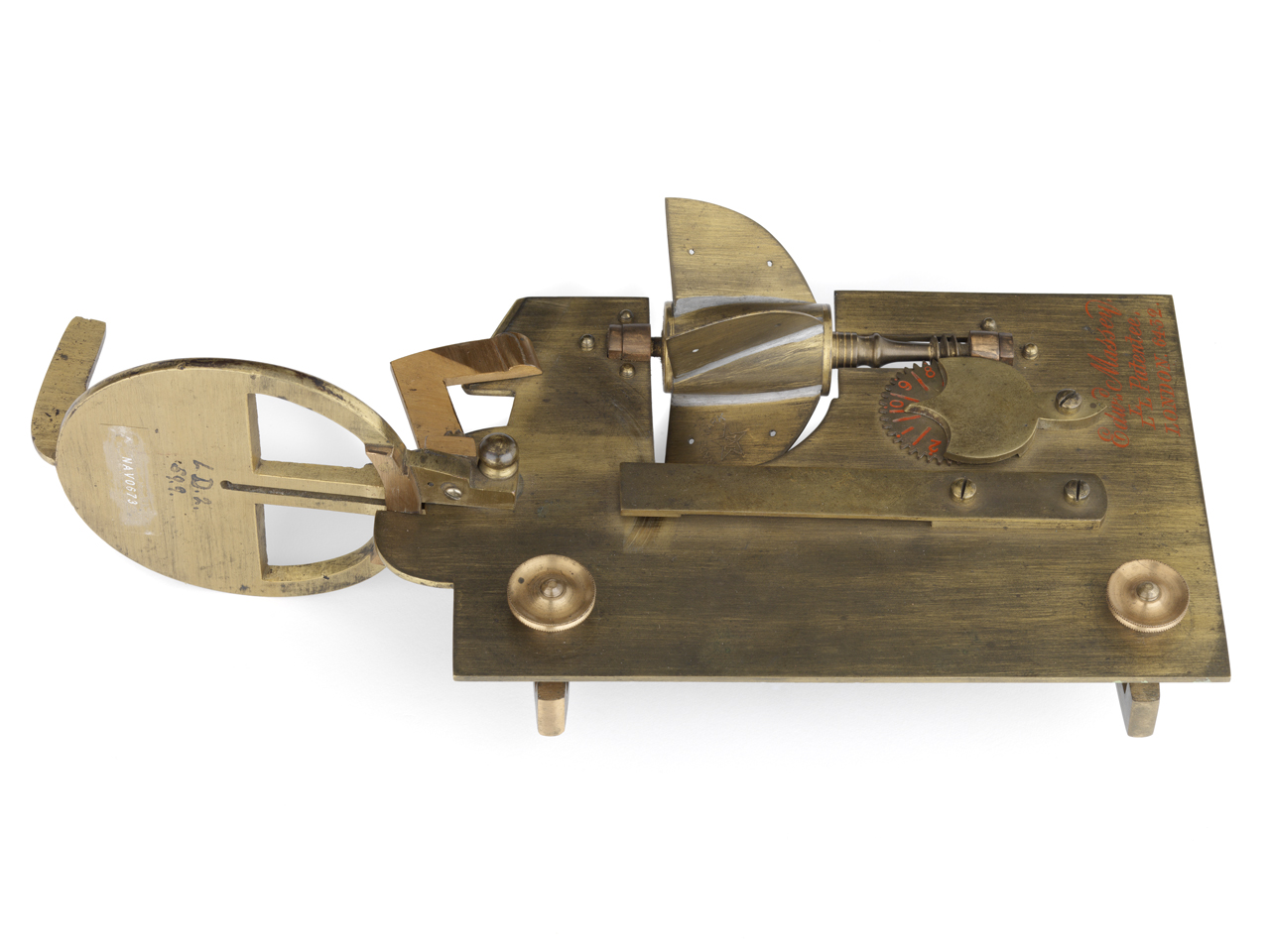
In 1802 Edward Massey, a clockmaker, invented a sounding machine.
“The machine was designed to be fixed to a sounding lead and line. It featured a rotor which turned a dial as the lead sank to the sea floor. On striking the sea floor, the rotor would lock. Massey’s sounding machine could then be hauled in and the depth could be read off the dials in fathoms.” (Wikipedia)
Though sounding has gone high tech, many ships still have a traditional sounding line for emergencies.
Today’s Poem
How the Music is Stolen
Don’t tell me I’m accepted to receive your instruction after my audition then tell me that you’ll have to tear me down start from scratch, reteach me everything starting with scale fingering.
Don’t tell me that my last teacher who taught me the piano is a percussion instrument, who changed my fingers to mallets who made practice fun, convinced me that I could play anything needs to be forgotten, yet another wrong way, keeping me from greatness.
Don’t tell me how lucky I am that you’ve seen my potential that my formative years of daily practice so many nerve-shattering recitals, contests, and conservatories would all amount to nothing if I hadn’t played for you.
How is it that each new teacher believes he is fated to form me and shape me, yet needs to steal a little of the music from inside me, and replace it with disdain.
Thank you so much for coming by and reading my post. Any thoughts or questions about Sounding? Come back tomorrow for more depth exploration and poetry.
It’s our last full week of NaPoWriMo (National /Global Poetry Writing Month) and the A-Z Challenge. I hope you’re enjoying the A to Z of Depth.
Recondite is also a DJ. I just love the space he’s in.
“To gain a reputation for wisdom a man must seem to have a store of recondite knowledge . . .” ~Bertram Russell
I like the word “seem” in that quote.
Recondite is an adjective meaning: difficult to penetrate; incomprehensible; not known about by many people and difficult to understand.
“Difficult to penetrate or comprehend: recondite” is the third definition of deep, so depth’s third definition: “the quality of being deep” would lead to depth meaning the quality of being recondite.
How do we understand depth when in its own definition it is difficult to penetrate or understand? How would we approach any subject or topic that is recondite?
Discussion. Bouncing ideas off other people to come to some consensus.
Break the subject into its smallest parts and start with something that is comprehensible.
Take your time. Learn a little bit, let it rest, then revisit and review. Learn a little more and ruminate.
Thank you so much for coming by and reading my post. Any thoughts or questions about Recondite Depth? Come back tomorrow for more depth exploration and poetry.
Two of my poems (first drafts) were discussed on Rattle’s Critique of the Week this week. Watch this video to share in this exciting learning experience:
Today being Sunday, there is no A to Z. Here is my poem in response to the prompts at NaPoWriMo and Writer’s Digest’s Poem a Day Challenge.
Easter Bunny
Little brown bunny sitting by the mailbox where did you hide those eggs? I don’t want to work for them not for the green one with stickers not for the pink one with wax resist flowers not for the sky-blue one with sparkles I want to rest into this day the potato salad is made and all I have to do is get dressed show up and be Oh, fuzzy brown bunny greeting me at the end of the driveway where do you get eggs anyway?
Come back tomorrow for more depth exploration and poetry. And for those of you celebrating, Happy Easter!
It’s already April, and at Experience Writing that means it’s time for NaPoWriMo (National /Global Poetry Writing Month) and the A-Z Challenge. Continuing this year’s theme, I’m writing about the A to Z of Depth.
Deep Questions by Maria L. Berg 2025
To learn anything, we need to ask questions. To reach a depth of understanding we need to ask a lot of questions. How do we come up with the questions to get to the deepest answers?
We can start by using the Deep Knowledge Worksheet from the Depth of Knowledge post to explore our subject as deeply as we can, and see what questions we still have. We could play the What If and What If Game from my Day 1 post on Abstract and Concrete Thinking. But then, how do we decide where to focus for further exploration?
Topoi
While reading Mindful Writing by Brian Jackson which I came across while writing the Depth Through Mindfulness post, I read about a system for creating arguments used by students of rhetoric in ancient Greece. Topoi (plural of topos meaning place) are questions to contemplate when trying to find where to start your argument.
Topos
Related Questions
Definition, category, or essence
What is this thing? How is it defined? How is it classified (with other things? How does this thing work? What is its purpose?
division
How can this topic be divided? What are its parts? How do the parts relate? Which parts are most important?
comparison
What is this thing like? What is it not like? What analogies or metaphors could be used to compare this to other things?
cause or consequence
What happens because of this thing? What are the consequences of it? Who or what is influenced by it?
antecedent or origin
Where did this thing come from? Who started it? What is its history? What is it a consequence of?
authority
Who speaks about this? Who are the experts or stakeholders? Who knows the most about this? Who cares about this?
value
Who values this thing? Is it good or bad? How is this thing evaluated? What laws, morals or practices are influenced by this? What’s the consensus on it? The disagreements?
space
Where is this thing? What is its reach, scope? Where is it concentrated? How far does it go?
possibility
What’s possible related to this thing? How much can it change? Who has power to change it? What’s difficult or impossible about this?
We can choose to focus our argument (or exploration) in one topos, or explore several topoi to deepen our argument.
Topoi led me to an amazing website called Excellence Cluster Topoi (2007-2019). This website stopped updating in 2019, but it is so full of interesting information, I don’t think I’ll ever run out of reasons to visit it. This site was part of a world-wide network of ancient studies. Reading it is like stepping into a section of the Noosphere.
In the Exhibitions section I found The Soul is an Octopus an exhibition in Berlin in 2016 where Topoi researchers “presented their ongoing research on ancient conceptions of the interaction between body and soul and attempts at localization of the soul within the human body.”
“The exhibition introduced three important questions that were central to classical philosophers and physicians alike:”
What is the ruling part of the soul?
Where does it reside?
How does it communicate with the body?
Now those are some deep questions.
Forming a Hypothesis
Another way to focus on what questions to ask is to start with a hypothesis. A hypothesis is an assumption or idea proposed for the sake of argument so that it can be tested to see if it is true. For today’s post my hypothesis is: Asking the right questions will lead to depth.
How would I start to explore that hypothesis? I would have to start by defining my variables (the parts that are most likely to change). In an experiment, we want to keep all the variables constant except for one, the one we want to evaluate. What do I mean by right questions? What do I mean by depth? How do I measure the rightness of a question? How do I measure depth?
I can revisit the depth scale I created for our Artist Date Drawing Depth Data to measure depth. To find the “right” questions, I can generate questions and observe if answering them gets me to the lowest rungs of my depth scale. A “right” question would be a question that measures Deep Dive or lower with the goal of generating questions that reach Sea Floor. I will need to redefine my levels slightly: Deep Dive: The question leads to further exploration of the subject using multiple sources. Scuba: The question leads to finding unanswerable questions: Areas where both sides of an argument could be right. Submarine: The question leads to personal discoveries that can be applied to further exploration. Sea floor: The question leads to epiphanies, real change in thinking, and/ or recognizing new truths in the world.
Do you have an hypothesis about depth? I would love to read it in the comments.
This sounds like a fun and worthwhile experiment. I’ll work on it for the rest of the month and if I get to some worthwhile conclusions, I’ll share them in my reflections post at the end.
Today’s Poem
* Content Warning: domestic abuse
The Crime of Dirty Counters
Every time I wipe down my counters I think of the man who said he would get so angry at his wife because she didn’t wipe down the counters.
I don’t remember where I encountered him If he was fact or fiction, but he’s stuck in my head. And I always wonder why didn’t he wipe down the counters himself?
I imagine him coming home seeing splatters of oil hissed from a pan a tiny floret of broccoli some pepper and salt and he sits fuming in his seat at the head of the table as she serves him his braised beef and sauteed vegetables that he won’t even taste because all he can think about is how she neglects his kitchen counters. She yammers on about her day, but he doesn’t hear. He sees broccoli florets in her teeth and on her tongue and his anger grows. He tells her he has work to do and retires to his den, so he won’t slap her filthy face, again.
I imagine him dripping honey on the counter to test how long it takes her to wipe it off. Noticing every speck that sticks to it. Counting each minute as a personal affront.
I think how livid he would be, seeing me wipe my counter with this coffee-stained sponge. How he would hate me because these old, grooved yellowish seventies counters can never get clean enough.
Then I think about after: after the rage was too much and he couldn’t go on living this way, and the little specks and florets were all he could see so he did something about it and put her where old, dirty sponges belong, who wiped down his counters then? Counters don’t stay clean for long.
It’s already April, and at Experience Writing that means it’s time for NaPoWriMo (National /Global Poetry Writing Month) and the A-Z Challenge. Continuing this year’s theme, I’m writing about the A to Z of Depth.
Stereopsis
Binocular depth perception is also called stereopsis. Stereopsis is the process in which we perceive depth due to the merging of two different image inputs from our two eyes. The area in the field of vision where stereopsis is maintained is called Panum’s fusional area, fusion being the neural process of combining the two images into one.
When the two images cannot merge because they are too different, one image is suppressed, so only one is seen at a time for a few moments each. This is called Binocular rivalry. When the eyes are misaligned like for people who are crosseyed, binocular rivalry can lead to one eye being permanently suppressed which stops stereopsis leaving the person stereoblind.
Monocular Depth Cues
People who are stereoblind and people who have lost an eye can still perceive depth due to many monocular depth cues working together. Monocular depth cues consist of:
relative size – as objects we are familiar with look smaller, we perceive them as farther away. When they get larger or closer to the size we are familiar with we perceive them as closer.
interposition – when objects overlap, we perceive the overlapped object as further away.
linear perspective – parallel lines converge to a point with increasing distance.
aerial perspective – Because of the scattering of blue light in the atmosphere, creating a “wall” of blue light, distant objects appear more blue
light and shade – because our visual systems assume light comes from above, light and shadow provide dimension cues and depth information.
monocular movement parallax – when we move our heads side to side, objects move at different relative speeds. Closer objects move against the direction of head movement and farther objects move with the direction of head movement.
In Fixing My Gaze(assoc. link) Susan R. Barry shares her experience being born stereoblind and later training her brain to see in three dimensions. As an infant she was crosseyed, so her growing brain compensated for her double vision by relaying information from only one eye. She had many surgeries to correct her vision, but remained stereoblind. Her whole life she believed she saw in three dimensions until in college it was brought to her attention that she didn’t see like her classmates. In an NPR interview Susan said, “When I didn’t see in stereo, space was very contracted and compacted. So, for example, if I looked at a tree, the leaves or the branches would appear to overlap one in front of another. But I didn’t actually see the pockets of space between the individual leaves or branches.” In her fifties, as a neuroscientist, she went through vision therapy and saw in three dimensions for the first time.
Driving under the streetlamps he sings along with the radio smiling, head bobbing from shoulder to shoulder the summer sun’s calling my name I hear you now
He turns the wheel coaxes the car through a gate sings over muffled yells and kicking from the trunk Tires crunch gravel as he brakes to a stop He shuts off the engine but the song still plays everybody sings so happy today
Sometimes sunny days torture those not feeling well guilting them for not going outside calling and calling to work or to play to be burned by the taunting flame-ball in the sky
He sings as he douses the car in gasoline I gotta get out get me some of those rays He whistles as he walks away and the car becomes a ball of flame.
This poem was inspired by today’s prompts at NaPoWriMo and Writer’s Digest’s April Poem a Day (PAD) Challenge. It was also inspired by a scene in the last episode of the show Castle which is available on Amazon Prime video.
Thank you so much for coming by and reading my post. Any thoughts or questions about Depth Perception? Come back tomorrow for more depth exploration and poetry.
It’s already April, and at Experience Writing that means it’s time for NaPoWriMo (National /Global Poetry Writing Month) and the A-Z Challenge. Continuing this year’s theme, I’m writing about the A to Z of Depth.
“Mary Oliver’s poetry is fine and deep; it reads like a blessing. Her special gift is to connect us with our sources in the natural world, its beauties and terrors and mysteries and consolations.” ~ Stanley Kunitz
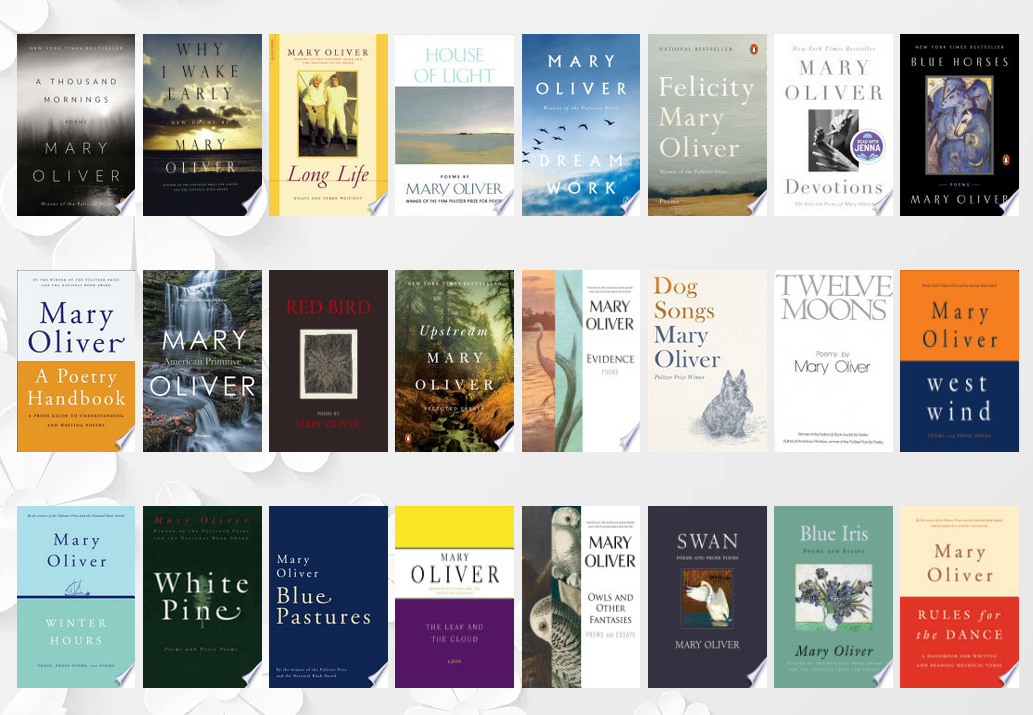
I found this quote on the back of Mary Oliver’s Pulitzer-winning collection, American Primitive. I have copies of Mary Oliver’s craft books A Poetry Handbook and Rules for the Dance, but had never read much of her poetry. So when I started my third round of Portable MFA Poetry program by Rita Gabis from the book,The Portable MFA in Creative Writing from The New York Writers Workshop, I decided to study Mary Oliver. (amazon assoc. links)
Mary Oliver (1935-2019) was a prolific writer of poetry and essays, and The New York Times wrote that she was “far and away, this country’s [America’s] best-selling poet.” She authored twenty-one volumes of poetry and six books of prose. She grew up near Cleveland, Ohio, then lived in Cape Cod, then Vermont. Her work is very focused on nature, drawing lessons and conclusions from observations on daily nature walks.
Mary Oliver was influenced by James Wright, a Deep Image poet who was deeply influenced by Robert Bly. Upon Wright’s death she wrote 3 Poems for James Wright and she dedicated American Primitive, “For James Wright in memory.”
After reading Stanley Kunitz‘s quote, I set out to answer, “What makes Mary Oliver’s poetry deep?”
In her book Winter Hours, she told me herself. She said that she has three rules for every one of her poems:
Every poem must have a genuine body – she pays careful attention to the shape and form of her poems.
Every poem must have sincere energy – she believes that every poem is an implicit pact between the author and reader.
Every poem must have a spiritual purpose.
She then revealed other “admonitions and consents”- the poem must:
“rest” in intensity
be rich with “pictures of the world”
carry threads from the perceptually felt world to the intellectual world (deep image)
indicate a life lived with intelligence, patience, passion and whimsy
ask something and, at its best moments, let the question remain unanswered
make clear that answering the question is the reader’s part in the author-reader pact
have a pulse, a breathiness, some moment of earthly delight
not contain anything that would keep the reader from becoming the poem’s speaker
That’s a lot to put into every poem, but it provides a window into the depth of her thought process. What rules do you have for your poetry?
When I started studying Mary Oliver’s poems, one poem for a week at a time, I chose a poem called “Something” from American Primitive. After so much discussion on Rattle’s Critique of the Week about the importance of titles, and the power of a good title, I was surprised that Mary Oliver would title her poem “Something.” Imagine my surprise when I found another, completely different poem titled “Something” in her collection, Why I Wake Early. I started noticing that she uses the word “something” a lot:
I searched, expecting to find an MFA or PhD thesis or two on the use of “something” in Mary Oliver’s work, but didn’t find anything. Perhaps the spiritual purpose rule for each of her poems left her always searching for “something.”
Today’s Poem
We Can Be Brave Together
When you’ve got my back I do not fear the faceless dancer in the hallway. The curved horns of the albino bull with his crystal ball are not piercing. He becomes an elegant teacher when I feel you at my side.
You are the music from my walls the nest in my chair the flowers growing between the tiles beneath my feet. You are my prism making rainbows my overflowing toolbox. When you hold my hand I only see beauty and I have everything I need.
As we face the oracle’s expanding petals and wide-spread eyes while the greyhound howls at the faceless dancer’s shadow approaching I only quiver in anticipation because together I know we can face any future prediction, any fate, and even in the strangest times, you’ll make it fun.
Thank you so much for coming by and reading my post. Any thoughts or questions about Mary Oliver’s deep poetry? Come back tomorrow for more depth exploration and poetry.





 Experience Writing