Thank You To Each And Every One Of You!

Experience Writing has reached an amazing milestone: 200 followers and growing! Over 200 people have visited my site and found my words and photographs useful and/or entertaining. That is WONDERFUL!


Poetry and The Fiction Writer

Pictures of books I recently read as a poetry study
Discovering The Art Of series and further study

The collection of books pictured above was inspired by discovering The Art of series at my local library. The Art of discusses different aspects of writing with examples from a great variety of texts. I wanted to learn more about the authors who wrote the series, so I picked up their poetry and essays as well. I’m glad I did. This group of books :intelligent discussion, imparted wisdom and beautiful poetry.

But I’m a fiction writer, why spend time with poetry and poets?

Words are a writer’s tools and poets have to use words in the most efficient manner for maximum emotional effect.

Ellen Bryant Voigt

The Art of Syntax: Rhythm of Thought, Rhythm of Song

Rhythm is what makes Ms. Voigt’s poems so amazing. Her contribution to The Art Of series is my favorite of the bunch. I learned some interesting vocabulary specific to the rhythm of words:

enjambment – the running on of the thought from one line, couplet, or stanza to the next without a syntactical break.

trochee – a foot of two syllables, a long followed by a short in quantitative meter, or a stressed followed by an unstressed in accentual meter.

caesura –

1. Prosody. a break, especially a sense pause, usually near the middle of a verse, and marked in scansion by a double vertical line, as in know then thyself presume not God to scan.
2. Classical Prosody. a division made by the ending of a word within a foot, or sometimes at the end of a foot, especially in certain recognized places near the middle of a verse.
3. any break, pause, or interruption.

fricative

palimpsest – a parchment or the like from which writing has been partially or completely erased to make room for another text.

Headwaters: Poems

I loved these poems. Though completely lacking in punctuation, the message is never lost and the rhythm is clear. Her word choice is beautiful. These poems felt like a magical discovery.

Mark Doty

The Art of Description: World into Word

I enjoyed the idea of “the sensorium”–finding the places of sensory overlap and allowing the senses their complexly interactive life.

I also noted that I should read :

Middlemarch by George Eliot and
Resurrection Update: Collected Poems, 1975-1997 by James Galvin

Deep Lane: Poems

These poems take you on walks with the dog and inspections of the garden. They take you there through lovely description and word choice.

Charles Baxter

Charles Baxter is the editor of The Art of series.

The Art of Subtext: Beyond Plot

Full of examples of how subtext is used in fiction.

Burning Down the House: Essays on Fiction

Mr. Baxter’s essays get into his thought process. They let the reader into the flow of a writer mind.

Here I also learned a new word: Pusillanimous – lacking courage and resolution

Brenda Ueland

If You Want to Write: A Book about Art, Independence and Spirit

It felt like serendipity when Charles Baxter started talking about Brenda Ueland’s book because I already had it on my bookshelf. It’s a great book for those times you need a cheerleader, which, as writers, we often do.

I just opened to a random page and found this bit of fun:

Now Blake thought that this creative power should be kept alive in all people for all of their lives. And so do I. Why? Because it is life itself. It is the Spirit. In fact it is the only important thing about us. The rest of us is legs and stomach, materialistic cravings and fears.   –Brenda Ueland

Excited to fill up on some poetry?

Here are some links to poetry sites I enjoy, so you can get your fill while you wait for the books you just ordered from Amazon to arrive  🙂

Poetry Foundation

Poets and Writers

Eunoia Review

Tweetspeak Poetry

Are You Thrilled

Joy Write

Happy Reading and Writing

Don’t be pusillanimous. Get out there and explore!

Who is your favorite poet?

What is your favorite poetry book?

What is your favorite poetry website?

Tooling up for the new book: the photography of Gator McBumpypants

An array of affordable photography equipment
Some very affordable photography tools to enhance the magic of Gator McBumpypants

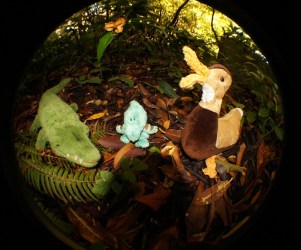
My first picture book, Gator McBumpypants Hears a Scary Noise, started out as a photography project. I was taking an online photography course and needed models for an assignment, so I took a couple of my stuffed friends outside and started taking pictures. As the photo shoot progressed, a story came into my head about how this alligator met a baby pterodactyl who was attempting to fly.

Last year, with my third book, Gator McBumpypants in Dee Dee Makes Three,  Mother Daughter Book Review published my post about a new hybrid genre in picture books. I believe that photo-illustration in children’s fiction will grow, but the photos need to be imaginative, colorful and fun. So, as I do with every one of my books, I have challenged myself to make my photo-illustrations even better.

After becoming very frustrated with the costs of photography equipment, I got creative. I

fisheye
Fish-eye effect

discovered that a very cheap fish-eye lens made some great effects, so I looked at other incredibly cheap options for effects I want.

Here’s what I’m trying out for the fourth Gator McBumpypants adventure picture book:

Some Extra Light

Last year’s photography focus was on light. I worked very hard on interior lighting and had some success with a small headshot studio. However, Gator McBupypants and his friends will be on an adventure in a place where I can only bring a small backpack, so I found some small light sources.

Macro Ring 48 LED Light

This light makes a great circular light in eyes, as apposed to the regular rectangle. Human subjects complain of its brightness when I stick my lens that close to their eyeball. However, Gator McBumyppants and his friends probably won’t be bothered.

Neewer TT560 Flash Speedlite

I’m excited to finally have a directional flash. This should be great for creating or reducing foliage shadows.

Some Extra Color

Opteka HD Multicoated Graduated Color Filter Kit

These color filters give a subtle effect over only a portion of the lens and rotate to the section of the image you wish to color.

Opteka HD Multicoated Solid Color Filter Kit

These solid color filters blanket the entire image and may be useful for dramatic mood.

Some Unique Perspective

55MM Professional Lens Filter and Close-Up Macro Accessory Kit

This is fun for getting pictures of flowers and insects, perhaps some close-ups of things Gator McBumpypants sees on his adventure.

Super 500mm/1000mm f/8 Manual Telephoto Lens

This is great for birds and other critters that are far away. I’m looking forward to experimenting with photos of the gang from far away.

More Unique Perspective

Recommended photography books:

The Unforgettable Photograph: 228 Ideas, Tips, and Secrets for Taking the Best Pictures of Your Life

Bryan Peterson’s Exposure Solutions: The Most Common Photography Problems and How to Solve Them

I hope you’re getting as excited as I am for the fourth Gator McBumpypants book. Don’t forget to like Gator McBumpypants and Friends on Facebook to keep up with all the fun activities leading up to the book release.

Carving Through Writer’s Block: Guest post from author Christopher Bailey

3 Ways to Conquer Writer’s Block

Bad guy on a boatIt’s a simple two-word phrase that can make a writer’s blood turn cold; writer’s block. It is the dreaded barrier against creative flow that every author struggles with from time to time. There are a number of causes of this mental road block, and a number of theories on how to cure it.

In an effort to give my fellow writer a leg up and over that wall of resistance, here are the three biggest things I’ve found, and my own personal variants, that have helped me past my creative constipation. No doubt you’ve all heard much of this before, so I’m going to throw my own spin on them and tell you exactly what variants work best for me. Experimentation is key to finding your own magical keys to open the writer’s block door, so by all means try out your own variations. We’re creative people by nature, after all, right?

Clear Your Mind

Easier said than done, I know. We live in a world where we’re all drowning in the pressures of our lives. Jobs, family, social obligations, finances, the list could go on for pages. It all results in the same issue however; stress and mental exhaustion. These are two of the biggest killers of creative flow.

Thankfully, there are a number of things you can do to push such things from your mind, however temporarily. Anything that helps you to rest and restore your mental clarity will work here. A few suggestions are meditation, take a nap, go for a walk, enjoy a break filled with your favorite, oft-neglected pastime. The drawback of course, is that all of these things take time.

For me, meditation is my go-to cure for mental mud when I sit down to write. It doesn’t villain meditatestake long. Even a ten minute meditation with emphasis on mental clarity works wonders. That ten minutes will often buy me so much more productivity over the course of my writing session that it makes up for itself six-fold. It does take time, but the payoff is well worth it. It’s also nice that you can do this at any time during your writing when you stall out.

Just get comfortable, close your eyes, and breathe steadily. No, the lotus position is not required. Count your breaths, but only up to five. Focus on breathing smoothly and evenly, and when you reach five breaths, start over at one. This helps to keep your mind on the breathing.

It will be obvious if you’ve lost focus, since you’ll count higher than five. Don’t get frustrated, just calmly refocus on the breathing and start over at one. Any meditative master, which I am not, will tell you that meditation takes practice like any other skill.

Handy tip: don’t set any kind of timer if the alarm will be loud and jarring. Most phones have a gentle alarm feature. Startling yourself out a calm meditation can send you spinning right back into a tailspin of frustrated, foggy thinking.

Remove Distractions

bad guy at the pianoOf course, some distractions are inevitable. If you’re a stay-at-home parent you’re unavoidably going to have to deal with child-oriented distractions on a regular basis, for example. Often, there are many distractions we may not even realize are problematic until they’re removed. The point is, when you’re trying to overcome writer’s block, eliminating all possible distractions makes a huge difference.

For me, having a designated space to write in is a tremendous help. It can be a special chair with your laptop, a writer’s nook, or even a home office. Find some place that is as quiet and calm as possible, as free from distractions as possible. And for crying out loud, turn off your phone. Texts and Candy Crush notifications will not help your writing!

Handy tip: If you’re going to play music in the background, experiment with styles. You might be surprised what you find is most beneficial to your writing flow. I tried classical, which I love, and my writing stalled out constantly. I tried soft rock, and I found none of my scenes held any real intensity. I switched to industrial metal, and suddenly even my love scenes had more impact and power. Go figure.

Can’t Write? Just write.

Okay, I get it. This seems counter-intuitive. Despite how odd it sounds, many writers will Bad guy walking a dogtell you that the best way to get past a creative speed bump is to power past it. Some will tell you to just keep writing in your current project. I don’t encourage this, personally.

You want your work to be the best possible, and forcing your way through a tough patch can often lead to sections in your finished piece that are the literary equivalent of binge-eating a gallon of mint-chocolate chip ice cream to get over a bad breakup. It might get the job done, but it certainly isn’t healthy and the end result is guaranteed not to be pretty.

Many writers suggest free writing, the practice of opening a blank page and just beginning to write whatever comes to mind, cohesive and coherent or not. I spent a lot of time working with this method, and it works passably well for me. It is not, however, what has been the cure-all for my own creative blocks, though it may work great for you and I do encourage giving it a whirl.

Handy tip:

Ready for my personal favorite trick? Here we go!

I write random, unrelated back stories for my antagonists. Often totally unrelated to my current story or why my villains are, well, villains.

Villain in the gardenJust little things, like psycho cop’s bachelor party, or evil galactic dictator’s childhood trip to the pet store. This practice always takes me to unexpected depths in my anti-heroes, and allows me to see and understand my malevolent friends a little better. This is not only good for the depth of my bad guys, but fun writing practice. Simple, right? I get stuck, I open a new document and write a fun little back story for a much-maligned character.

The crazy part is that every single time I’ve done this, I’ve had a random inspiration on my main story. I suspect this works on the same principle as the theory that we have our best problem-solving ideas when we’re not thinking about the problem at all. For whatever reason, it works absolute magic for me!

Keep Trying!

Whatever works for you, or doesn’t, keep trying! Don’t give up, and if you have to walk away for a time, do it. But come back to it soon. No art form is improved without practice, and writing is no exception. Don’t let yourself get discouraged or frustrated. Just clear your thoughts, remove distractions, and just write.

Happy writing!


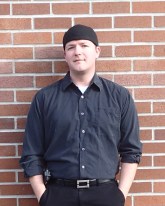
picture of author Christopher BaileyChristopher Bailey lives in Seattle with his incredible wife and daughter, eagerly expecting their second child. A lover of literature from an early age, he began writing short stories in the third grade for a school assignment and has never looked back. Having worked professionally with children and teens for many years, he has developed a particular fondness for young adult fiction, which is where he now focuses his writing in the hopes of helping a few more children learn to love the written word.

Hey readers! Want to meet Christopher Bailey in person?

Chris has a full schedule of fun events he’ll be at this fall. Want to pick his brain in person, or tell him how much you loved this post and his author interview? Stop on by and say hi.

Jet City Comic Show in Tacoma, WA, Nov 5th-6th
https://www.facebook.com/events/1321988751163825/

Silver Bells Christmas Bazaar in Puyallup, WA, Nov 19th
https://www.facebook.com/events/912423608864757/

Victorian Country Christmas in Puyallup, WA, Nov 30th – Dec 4th
(Disregard dates on the banner, they haven’t updated from last year!)
https://www.facebook.com/AVictorianCountryChristmas/posts


He’ll be signing autographs at all three. He hopes to see you there!

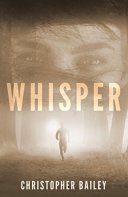
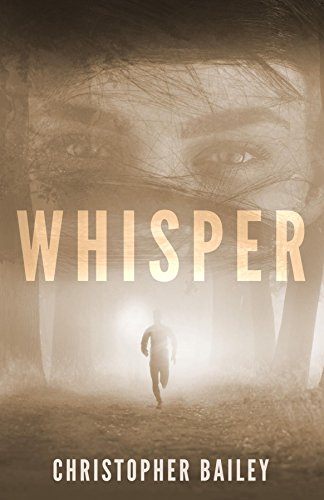
cover of Christopher Bailey's new book WHISPER

If you don’t live in the Pacific Northwest and can’t make it to any of the above events to get your copy of his new book Whisper signed, don’t worry. Chris is having a Goodreads Giveaway for 5 autographed copies.

Interview with Christopher Bailey, author of WHISPER

cover of Christopher Bailey's new book WHISPERWe are in for a treat today! Christopher Bailey’s new book Whisper just hit shelves and he has taken time out of his very busy schedule to tell us about his writing life. Christopher Bailey is the author of many books including the Starjumper Legacy YA sci-fi series and Without Chance.

As I mentioned in my previous post Exciting Firsts, this is the first of a series of upcoming author interviews and what a fun and informative interview it is!

Let’s get started:

We met at a writer’s social meet-up, so let’s start off with: When did you first know you were a writer?

In the third grade, I was given a school assignment to write my own Greek myth. It didn’t have to be long, only 200 words, but I was dreading it. I complained and fussed about it until my mother finally made me sit down and get it done.

What I ended up with was a thousand-word short story about the God of Lost Socks, the one who was responsible for the disappearance of single lost socks all throughout the world, leaving its mated pair only to taunt you.

It was creative, it was funny, and to my third-grade mind, it was brilliant. I turned it in to my teacher the next day with more pride than I’d ever had in an assignment before or since. It was filled with errors and problems, but my teacher raved about it. Instead of berating me for the problems, she loudly praised my creativity and originality. She constructively showed me how to fix the problems, and then gave me an A on the assignment.

I was hooked, and haven’t stopped writing since.

Do you write every day? Tell us a little about your writing practice.

I wish. Seriously, I’m currently working on arranging my schedule to allow for this, but at the moment I write only a couple of times a week. Usually binge-writing, if I’m being honest. I’ll sit down on a Saturday morning and write non-stop for ten straight hours.

Luckily, my wife is a candidate for sainthood, and interrupts only occasionally to bring me food and give me kisses. Both are required to keep up my writing flow you understand, so those interruptions are welcome.

Countless times I’ve been told by other writers that I should write every day, but it’s just not possible right now in my life.

My best advice to writers struggling to write every day is this: write when you can, and don’t feel guilty when you can’t. Make sure you’re getting some time in, but it’s far better to write once or twice a week than not at all.

Are you a plotter or a pantser (someone who outlines and plans or someone who writes by the seat of her pants)?

Definitely a pantser. I plot only a start point, an end point, and maybe one or two key points along the way. My characters and worlds live so vividly within my mind that they inevitably stray from any planned course if I get more rigid than that.

When writing my first novel, I tried a trick one of my favorite authors told me about at his book signing. He writes out the major theme for each chapter on index cards, and sorts and reorganizes them until he has the best flow. Then for each chapter, he writes another set of business cards with major points he wants to hit in that chapter, and then does the same organizing and reorganizing procedure. Then he sits and writes it exactly as scripted.

I’ll be honest, I made it halfway through step one of that process, and I almost gave up writing for good. It was only after I realized that there were two different types of writers, plotters and pantsers, that I understood I could still write a full novel without scripting every single nuance before ever sitting down to write the story.

What is your best trick for getting more words on the page?

Detailed descriptions added in the first round edit. My rough drafts are never too short of my intended goal, since I’m a chronic over-writer anyway, but the best way I’ve found to push that word count up is to flesh out my descriptions during my own first round edit.

Changing “He pushed opened the creaky door,” to “He slowly pushed open the ancient, cracked wooden door and winced at the ominous creak,” only adds a few words to the sentence, but it adds a great deal of flavor, and will significantly contribute to your final word count when you do it to a few hundred sentences throughout the manuscript.

In my push to get the story out, I find I often miss opportunities to add flavorful descriptions like that in my initial rough draft. I just have to be careful not to overdo it.

Where do you find creative inspiration?

Like most artists, I draw inspiration from the world I see around me.

With my Starjumper Legacy trilogy:Starjumper Legacy: The Crystal Key, Starjumper Legacy: The Vanishing Sun and Starjumper Legacy: The Plague of Dawn for example, the idea originated from an argument between a pair of fourth graders I had been working with. They were arguing the advantages of magic over science and vice-versa, and I couldn’t help but point out that magic is simply science we don’t understand yet. The discussion that grew between the two children eventually became the idea for Starjumper Legacy.

My standalone Without Chance was inspired by a difficult situation I helped a friend through many years ago, as his parents threatened to disown him when he came out as gay.

Whisper, my newest standalone novel, came from a news story I had been watching about a kidnapping victim, and from a girl I dated in my teens who was schizophrenic.

Of course, once the initial concepts take hold, the stories themselves take on a life of their own and grow into something far beyond what I’d ever initially envisioned.

Life is such a wonderful, terrible, beautiful, ugly thing, that there are no limits to creative inspirations for stories of any kind if you’re willing to look for them in your own life.

Who have you found most influential to your writing?

My brother, Jeff. Since we were little, we’ve loved reading many of the same books and analyzing the stories to death. We look at everything, from the broad concept of the plot to the delicate nuances of character, right down to any hidden subtexts we can discern. We then debate the finer points potentially for hours on end. Our shared love of the written word has been a huge influence on my life, and most especially in my writing.

Do you listen to music while you write? What do you listen to? Do you create playlists?

Absolutely. I can’t write without music playing. I don’t create custom playlists, but rather add a few artists to a Pandora station and let it take over from there. My musical tastes are greatly varied, and I love everything from Beethoven to Big Bad Voodoo Daddy, from Michael Bublé to Metallica.

Interestingly, when I write I prefer heavy metal. I’ve tried a dozen different styles during my writing, including changing styles to suit the scene. For me, it breaks my flow to change styles, and anything other than the hard-driving metal seems to negatively impact both my flow, and the power of my writing. Some favorites include Samael, Rob Zombie, and Celldweller.

Who are your favorite authors?

Wow, this is a hard question. All right, some favorites that come first to mind would be Dean Koontz, Bruce Coville, Robert Heinlein, Brandon Sanderson, Terry Pratchett, Mercedes Lackey, Brian Lumley, and R.A. Salvatore. This is by no means a complete list.

What are your favorite books?

As above, this list could go on forever. There have been a few that have really changed my perspective, though.

I read Homeland by R.A. Salvatore as a youth, and the theme of a young man fighting to be a virtuous soul despite the darkness of his upbringing really resonated with me. I’ve carried that message with me my entire life, and attribute a great deal of who I am today to that book.
Stranger in a Strange Land by Robert Heinlein almost literally rocked my world. His ability to take social norms and spin them so completely to force the reader to look at them from a completely outside perspective is staggering. So many things about our world that we simply take for granted. This book shook them all up for me.

Hogfather: A Novel of Discworld by Terry Pratchett is, I maintain, one of the finest pieces of literature ever created. The entire Discworld series is great, but this book in particular was absolute genius.

What three writer’s blogs do you visit most often?

http://thewritepractice.com/ is great for tips and tricks on the more technical aspects of writing.

http://www.thecreativepenn.com/ has some amazing information on marketing.

And of course, https://experiencewriting.com/.

Ha. Ha. Thank you very much. What three writer’s websites do you visit most often?

http://rebeccaconnolly.com/ This is a personal friend of mine and while I openly admit I’m not a big romance fan, her books are genuinely fun to read. It’s always interesting to see what she’s up to, since she always has some reader-participation game going.

http://brandonsanderson.com/ This guy is a brilliant writer in the Fantasy and YA Fiction categories, and I have yet to read one of his books I didn’t appreciate.

http://www.deankoontz.com/ Dean Koontz has always been a bit of a guilty pleasure for me, and I’ve read more of his work than possibly any other single author. The Odd Thomas series is among my favorites.

Let’s talk about your book:

What inspired you to write Whisper ?

Whisper was inspired by a combination of a news story I read about a kidnapping victim who had recently been rescued, and an experience I had with a girl I dated in high school who was schizophrenic. Sounds like an odd combination, but in my mind the pairing just clicked and the story came alive in my mind.

What was the hardest part to write? How did you push through?

The most difficult part to write was the part of the book where Jackson is in the mental institution for treatment of his schizophrenia. I had second-hand experience with schizophrenia, thanks to the girl I mentioned above, but have no personal experience in a place like that.

Wanting to get this part right was important to me, so I interviewed a number of people who had spent time in institutions just like the one now in the book. Some readers may have had different experiences than that portrayed in the final book, but that part is based closely on the personal experiences of several people who’ve spent significant time in a variety of hospitals and institutions.

Following that, the difficulty was in not allowing the darkness and hopelessness in many of those places from overwhelming the greater story. It was a tricky balance, keeping the realism of his experience there while not detracting from the story I was trying to tell.

When you’re not writing, what is your favorite thing to do?

I sort of collect hobbies. I paint, play guitar, do some low-grade woodwork and leatherwork, all sorts of random things.

That said, my two favorite things in the entire world are curling up next to my wife with a good book, and playing with my daughter.

Are you a dog person or a cat person?

I’m very much a dog person. They make sense to me, and I relate well to them. My wife teases me a little about this because she says I behave much more like a cat. Funny thing is, she behaves much more like a dog and is very much a cat person. Perhaps that’s why we’re such a good fit.

What bit of wisdom would you share with new writers?

Writing is an art form. Like any art form, nearly nobody starts off brilliant. We all start from the bottom, learning the tools of our trade and the techniques of our craft. Even the masters have things they are still learning.

Don’t get discouraged if your first piece isn’t a masterpiece. Nobody’s is. Practice, refine, listen to constructive criticism and tell those who offer only nonconstructive criticism where they can shove their unfounded opinions.

No matter what, keep writing. Brilliant or not, marketable or not, popular or not, pursue it because you love it. Write because the stories live in your mind and need release. Write because it is a passion, a freedom, and an outlet.

Just keep writing.

Thank you so mush Chris! Readers, go get your copy of Whisper !

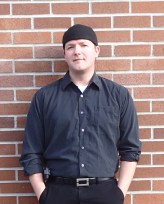
picture of author Christopher Bailey
Christopher Bailey lives in Seattle with his incredible wife and daughter, eagerly expecting their second child. A lover of literature from an early age, he began writing short stories in the third grade for a school assignment and has never looked back. Having worked professionally with children and teens for many years, he has developed a particular fondness for young adult fiction, which is where he now focuses his writing in the hopes of helping a few more children learn to love the written word.

Writing Prompt Contest Winner: Maria L. Berg

One of my flash stories won a contest! Head over to wakingwriter.com to see everything else on Bernadeta’s great site. And like my story there as well 🙂

Berneta L. Haynes's avatarWaking Writer

Premise: A family moves into an old Victorian house in a sleepy town where everybody knows everybody. The house has been vacant for the last five years, and nobody knows why the previous family left so suddenly. 
Prompt: Write a 500-word story, but write it from the perspective of the house, not the family.

She drips coffee on the counter and the floor not noticing the stains to be as she floats, almost dances, on a sunbeam to the boxes gathered in the living room. The children quarrel upstairs, but she hums as she lifts belonging after belonging, contemplating its perfect abode, then finding its home.

The neighbor arrives with a gift basket and peeks inside saying, “You’ve done a great job with the space.” She doesn’t mean it. She doesn’t mention her friends, The Wilsons, who had lived in the house until that day, five years…

View original post 389 more words

About Writing: Guest post by Michael Onofrey

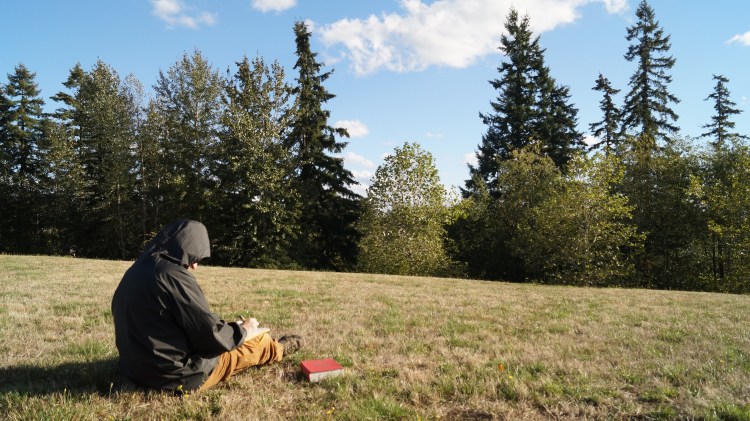
picture of man sitting next to his dictionary on a grassy hill writing in the park

The urge to write is what got me into writing fiction, or trying to write fiction. And by “urge” I mean a feeling that I want to write. This was what motivated me and what continues to motivate me. I don’t think this is unusual—the urge to write. A lot of people have it. But of course those numbers diminish considerably when it comes to picking up a pen or sitting down at a keyboard.

It wasn’t until well into middle age, forty-five years old, that I sat down at a keyboard with the intent of writing fiction. Of course in college (community college and then university) I wrote papers (essays and book reports) like everyone else. But that’s different than composing fiction with the intent of submitting to publications. Of course all writing counts. I’m not belittling college. I’m simply distinguishing between college papers, with the exception of creative writing classes, and fiction for publication. I think anyone who has done both understands the distinction.

Also, in college I majored in U.S. History, which is now call American Studies. So my only background and my only qualification for writing fiction was, and is, reading books, fiction mostly. But there, too, I got a late start, for I didn’t begin to read until I was in my last semester of high school (Industrial Arts major). I could hardly read. This might strike some people as strange. But it’s not strange. A lot of people coming out of high school are poor readers.

An odd set of circumstances prompted me to pick up a book. I was dating a girl from another high school, which made our dating possible because we were of very different social circles, for if we had been going to the same school we wouldn’t have gotten together. But by going to different schools neither one of us, her in particular, suffered any social embarrassment, for high school life is all about cliques. She was a half a year ahead of me, which meant she would be graduating in June, whereas I wouldn’t be graduating until the following year at the end of January.

When summer rolled around, the summer of her graduation, university life about to begin for her in September, she jilted me, which, even though I expected it, sent me into a mental tailspin. Strangely, on the afternoon of that devastating phone call I started driving and wound up in front of a bookstore. She had mentioned the titles of books during our time together and I, for whatever reason, had remembered two—The Stranger by Albert Camus and Another Country by James Baldwin. Still dizzy with confusion, I went into that bookstore and asked for those two books.

What a way to begin reading, not to mention having to look up words on nearly every page. Fortunately, as if it were a minor miracle, I was able to follow the stories, and a window flew open and there I was, looking out at a new world.

Man carrying dictionary by a lake
“I carried a dictionary and a novel everywhere I went”

I carried a dictionary and a novel everywhere I went for eight years, and when loading up a backpack every bit of weight counts. I’m still a poor speller. I still consult a dictionary often for spelling and definitions and word usage. I wouldn’t recommend getting a late start on reading, just as I wouldn’t recommend getting a late start on serious writing. Six years after I started writing and submitting, a small literary journal (Words of Wisdom, North Carolina, a publication that has since ceased publishing) accepted one of my stories.

Six years—that’s a lot of rejection. And I still get a lot of rejection. My writing is not consistent, and I don’t think it ever will be, just as I will never be a good speller nor will my vocabulary have the natural range that it might have had if I had started reading at an early age. Okay, so that’s the way it is. A lot of other people have it worse. Imagine trying to write in Aleppo, Syria.

Writing will probably never be more than a hobby for me, and by hobby I mean an activity that doesn’t generate enough money for me to live on. I wish there was another word besides “hobby.” “Pastime” maybe? But that’s even more nonchalant than hobby. If I were teaching at a college or university, I could say that publishing stories, while getting little in the way of remuneration, was worthwhile because it adds to my curriculum vitae (CV), which might serve to boost my position and income. But I don’t teach at a college or a university.man carrying dictionary by some shops

In addition to not making millions there is rejection, which is always painful. In dealing with rejection, stoicism would be a nice rejoinder. After all, rejection is part of the weather. Even the most renowned writers have had work rejected, primarily before they became famous. There are only two choices when faced with rejection: feel the pain and move on, or feel the pain and give up. This isn’t about heroics. This is pragmatism. Most stories that are submitted to a publication are going to be turned down.

I’m hardly different from anyone else. I like acceptance. I write, rewrite, rewrite, rewrite, and submit. Rejection, rejection, rejection. After six months or so, another look, another rewrite. Revising has become fun. I don’t know why. Maybe because it presents an opportunity to play with words and sentences, as well as ideas and point of view. I do give up on stories, but I keep them on file. Now and then an idea will occur that pertains to a story I’ve given up on. I’ll draw the story up and try the idea. And then I’ll submit. Hey, all they can do is turn it down. Now and then one of those formerly dead stories will get accepted.

Also in the hash are different publications with different editors who have different tastes. Usually a rejection carries no real comment, perfunctory comments yes, but no real comments. Every once in a while, though, there is a genuine comment. Some are encouraging. But some . . . On a couple of occasions an editor has given me a totally pissed off lambasting, boredom and tedious detail cited. I guess they had had it up to their necks with that stuff, dull writing and details, and took it out on me. Or maybe they had a hangover, or maybe they couldn’t meet a mortgage payment, or maybe they were in the middle of a divorce. Yet, within that same week that same story (respective stories, but at different times) got accepted by a publication which I had deemed more reputable than the one(s) the tongue-lashing(s) came from. Highs and lows—the landscape.

man with dictionary walking by rocks
“Highs and lows—the landscape.”


At other times, I had given up on a story only to have it accepted after a whole lot of time by the last publication where the story was still (as it turned out) under consideration. Recently a story of mine was accepted and published by a university journal after the story went through two years of rejection and rewrites—forty-seven rejections. Why did I keep at that story? Because I believed in it. Giving up on a story or continuing with rewrites and submissions is a tricky thing, a case-by-case thing. But—I keep all my stories on file.

Favorite authors—here’s the link to my listing on Poets & Writers where I’ve listed my favorite writers: http://www.pw.org/content/michael_onofrey

About books concerning reading and writing—I return again and again to How Fiction Works by James Wood and Reading Like a Writer: A Guide for People Who Love Books and for Those Who Want to Write Them (P.S.) by Francine Prose.


author Michael Onofrey bio picMICHAEL ONOFREY was born and raised in Los Angeles. Currently he lives in Japan. Over seventy of his short stories have been published in literary journals and magazines, in print and online, in such places as Cottonwood, The Evansville Review, Natural Bridge, Snowy Egret, Terrain.org, Weber–The Contemporary West, and The William and Mary Review. Among anthologized work, his stories have appeared in Creativity & Constraint (Wising Up Press, 2014), In New Light (Northern Initiative for Social Action, 2013), Road to Nowhere and Other New Stories from the Southwest (University of New Mexico Press, 2013), and Imagination & Place: An Anthology (Imagination & Place Press, 2009). He can be found online at Directory of Writers, Poets and Writers, and on Facebook.
Twitter #Hashtags That Motivate Revision

Twitter hashtags for writers and bloggers
Create visuals like this at canva.com. It’s quick and easy.

Twitter did not appeal to me at first (or second or third). So why, you ask, would I write this post? Recently,  I find myself enjoying it more and more. There are lots of fun challenges for writers and the character limitation ends up being a great revision tool.

How Twitter can help your revision

One Word Search

Many of the writing challenges have themes. One of the challenges I did had “green” for its theme. I opened my work in progress (WIP) and typed the word green in the find bar. This brought up every instance of the word green in my manuscript. As I searched through, looking for a sentence I would like to share with fellow writers and readers, I found myself editing every single sentence. I also noticed a trend toward shiny green eyes that I probably wouldn’t have noticed otherwise–time for a game of pessimistic moustache with body part eyes. I posted:

(that’s the first time I’ve embedded a tweet. So many firsts recently here at Experience Writing )

Themes and Word Count

The reason twitter is working so well for me as a revision tool is the limited character count. Another theme I participated in was Send/Receive/Give. In my WIP, my main character wrote a poem that fit this theme perfectly. However, I could only use a small part of it within a tweet. I thought it was a great revision exercise to attempt to keep the message and feel of the poems with so few words. Here is what I tweeted:

Finished revision and ready to pitch?

The third line of hashtags in my picture is for you. Writing a pitch for your book that will fit in a tweet is great practice for creating your logline. When you’re ready to start querying agents, or are working on a new story idea #MSWL is great! Agents list stories they are looking for. This can quickly narrow your agent list to agents looking for your work.

Check out Twitter Pitching Like a Pro over at publishingcrawl.com

These are only a few ways that I find Twitter helpful to my #writingprocess. There are many more hashtags to explore and create. Have fun!

For more hashtag suggestions L.M. Pierce has a great list.

There are also many books out there about using twitter for writers. For more tips and tricks check out:
Your Book, Your Brand: The Step-By-Step Guide to Launching Your Book and Boosting Your Sales

Twitter for Writers: The Author’s Guide to Tweeting Success (Writer’s Craft Book 8)
Twitter for Authors Artists and Entrepreneurs: Social Networking for the Creative Mind

Don’t forget to enter the Gator McBumpypants Contest that ends on Friday and come back Thursday for a guest post from author Michael Onofrey.

Be Outrageous! Guest Post from Author Diana Rose Wilson

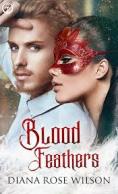
picture of cover of Blood Feathers by Diana Rose Wilson

Today’s guest post is from author Diana Rose Wilson. The book release party for Blood Feathers (Forbidden Secrets), her new book in the Forbidden Secrets series is September 28th from 6pm-7pm PST. Join the festivities on facebook or at spiritbeast.org.


I began writing believing that authors flexed their fingers and the stories flowed fully formed from their brains into their novels. From: ‘Lolita, light of my life, fire of my loins.’ To: ‘I am thinking of aurochs and angels, the secret of durable pigments, prophetic sonnets, the refuge of art. And this is the only immortality you and I may share, my Lolita.’ –Vladimir Nabokov, Lolita (1955)Nabokov: Novels 1955-1962: Lolita / Pnin / Pale Fire (Library of America).

In 3rd grade, after reading Watership Down / Richard Adams, I decided I wanted to be a writer. I mucked through my masterpiece and my story came out in one start-to-finish jumble of awesome. No one explained with compassion that it should have sucked as a first draft and a first try. I tossed out hundreds of pages and started a completely new story. Results did not vary.

Years later I started again but my process was much different. Here is the important part to remember: a story doesn’t need to be delivered fully formed from A to Z.

When you begin, you don’t need to know every breath and every move your character will make.

The key is to keep things moving, and here are some ideas that I hope will work for you.

Start

Start where you want. Anywhere you want. Start with the description of his eyes and then go from there. Throw yourself into the middle or the end but just go. The important thing is starting.

This goes for every day you write. If you sit and stare at the screen and don’t know what to do, pick up a conversation between some random characters. Characters in your story or those from the last book you read or movie you watched or even a conversation you overheard. Once you get going, your muse will guide you around to what is important.

Eventually you will have some bones and you can weave your scenes around and those can be strung together.

Respect the Muse

Elizabeth Gilbert’s TED Talk ‘Your Elusive Creative Genius’ changed my thought process about writing and creating.

Part of my return to writing started when I watched that video and put a persona behind my muse. Besides, it’s fun having a character for my creative process. He needs a whole blog post of his own, so here I only encourage you to think about the concept. Embrace that muse.

Be Ugly

Watch Bob Ross. His canvas begins as globs of color and only slowly transforms into beauty. Go ahead and be ugly!

I live in wine country, and during crush season it stinks. Literally. Someday it will be lovely wine but it begins as fruits, stems, seeds and skin all fermenting in tanks. It is allowed to smell nasty and you should allow your first draft to be too.

Accept it is okay to be really gnarly old vines. Just throw it in there.

Don’t know what color Mister Perfect will wear? Just type blue, highlight that sucker and move on. Mister Perfect might not be who you think he is when you get to the end. He might need a leather jacket instead of a suit. Don’t stress the small stuff.

This goes for spelling and grammar. Just throw it all in there. Stems, seeds, skins and all.

Be Extraordinary

Have you ever sat down to write the scene you’ve been brooding over for weeks and suddenly the mind yanks the wheel away from the muse? You know the thoughts: ‘could/would that really happen?

Since we’re talking about first draft, it doesn’t matter during this part of the process.

For example; the hero is trapped behind a booth in the donut shop with the entire police force there ready for a shootout. Hero must get away to move the plot forward.

How? Mind: should/could/would/can he really do <whatever your mind comes up with>?

It is a great question to ask and for the finished product you will need to make sure your story is believable, but not today. Besides, when your Hero is a vampire/superhero/alien/ex-marine-fireman/super-sexy-smart-and-also-rich-babe, we left reality a few miles back.

Write your character out of that scene.

Have Hero leap over the seat and throat-chop the douchebag ex-partner. Then throw the DEA agent into the DA who just walked in. Toss in an eye poke or two before Hero takes a bullet. Sliding out the door on both knees, Hero flips double birds as she vanishes into a blast of sunlight.

Phew!

Through!

We’re through! *victory lap*.

Crazy? Meh. Sure. But hero sipping coffee for ten pages while you’re pulling out your hair unable to push forward is worse.

Right?

Now you can write the next scene, or write another way for Hero to get out. (Maybe she gets caught. Maybe her lady comes and save her butt. Maybe her new partner flies the helicopter in and zooms her out of there.)

Play around with it and have fun while you get the ideas out of your brain and onto the page.

Be Extreme

You probably don’t read books because the hero is a normal person who goes to an average job and does average things.

It’s okay to write things that are over the top. Chip it out later if it doesn’t fit. If you’re stuck, don’t let reality hold you back. Let the hero be so smart she could shame Sherlock Holmes and beautiful and rich and she only works her dead end job because she enjoys talking to people at the call center.

None of this is set in stone. Even the best crafted, based in reality character isn’t necessarily going to survive the creation process unchanged. Your good guys may become bad guys, and your bad girl might become your hero. Allow some over the top characters and then when you edit, pull out those wild stems.

Same goes for scenes. Write situations as dangerous and unbelievable as you can imagine. If it doesn’t fit into the story, just tuck it aside or turn down the volume.

Be Flexible

You might have your plot scripted from start to finish, but allow yourself to write a scene differently to test the waters. Try that side door and discover it leads to a back alley where a character can overhear an important secret. Maybe it will be useful, otherwise tuck it away.

If a scene fizzles, explore it at a different angle. Maybe you don’t have to kill that two-faced friend. Or maybe that cow has to go! You can find out a lot about a character when you put them in unexpected situations. Even if the scene is clipped, you have more information about how to detail your character.

Be Uncomfortable

Put Hero into a situation that really sucks. She has to go into the boss’s office and explain why she was using company time/money for her personal research project. Have hero get hit by that car and be physically/emotionally changed. Force the hero to face a fear to save someone important to your plot, but maybe not important to them.

Put yourself in the hot seat too. Try writing something outside your comfort zone. Drop your characters into a genre you’ve never tested. Maybe the serious story that has you stuck would loosen up in a different setting. You never have to show any of this, it’s just practice.

Don’t Fuss

You finished that story/novel/novella! Now, leave it alone. Set a time limit of a week or a few months and do not look! No poking or overthinking about it. Continue to write but move onto something different. Create some blog posts or try another genre.

Do not uncork that baby until it has some cellar time.

Then, if you sample it and it tastes like vinegar, review what went wrong. The part about writing that you don’t get in wine making is that if you don’t like it you don’t need to start over from scratch. Don’t be afraid to make adjustments. Or, snip the pieces you like and put them into a new story.

Regardless of what happens with that story you will learn what no amount of coaching can teach you; the technique that works for YOU.

Try/GET Scivener

(https://www.literatureandlatte.com/scrivener.php)

I don’t have any affiliations to this company/product and this is only my own opinion but this software is a great tool. It is easy to use. It allows you to break your story into acts and scenes and scenes within scenes. You can easily shuffle whole acts/scenes like they are index cards. There is also easily accessible pages to keep your characters/places and research.

It also allows you to strain out the scenes that didn’t work and keep them away from the real product.


I hope this was helpful. Just keep in mind, everything you write is practice so even if no one sees it but you, it’s not a waste of time.


bio pic of Diana Rose WilsonDiana Rose Wilson grew up under the shadow of the Mayacamas Mountains, raised by outlaws and bikers. She has been involved in the lifestyle since 1989 including working at a high end adult boutique specializing in fetish, BDSM and LGBT merchandise. Her debut book is Wicked Masquerade, first in the Forbidden Secrets series. She has also been published in Finesse, a publication for the Thomas Keller Restaurant group.

Currently Diana lives in wine country with her husband where she enjoys good wine, better food, loud Harleys, 3-day eventing and the delights of deviant erotica. She is a member of the Pacific Northwest Writers Association, Redwood Writers, Snoopy Writers and CFTW Writer’s Block.

Exciting Firsts at Experience Writing: Contests, Guest Posts, Author Interviews and More

Yesterday, I announced the first contest here at Experience Writing: Guess Gator’s New Friend. But that’s not the only exciting new first coming this fall:

I reached out to some of my fellow writers and they agreed to do guest posts and/or author interviews!

The first guest post is from author Diana Rose Wilson, author of the Forbidden Secrets series. Her post, entitled “Be Outrageous” will be published here on Thursday, September 22nd.

The following Thursday, September 29th, we’ll have a guest post by Michael Onofrey whose first novel is coming out with Tailwinds Press in 2017.

You can also look forward to interviews, with Diana, Michael and:

Christopher Bailey, author of Starjumper Legacy: The Plague of Dawn

Ben Sandmel, author of Ernie K-Doe: The R&B Emperor of New Orleans (Louisiana Musicians Biography)

and more!

For today’s final first: I won my first contest! Look for the announcement and a link to my story on September 30th!

Make sure to follow Experience Writing, so you don’t miss out on all these fun firsts!