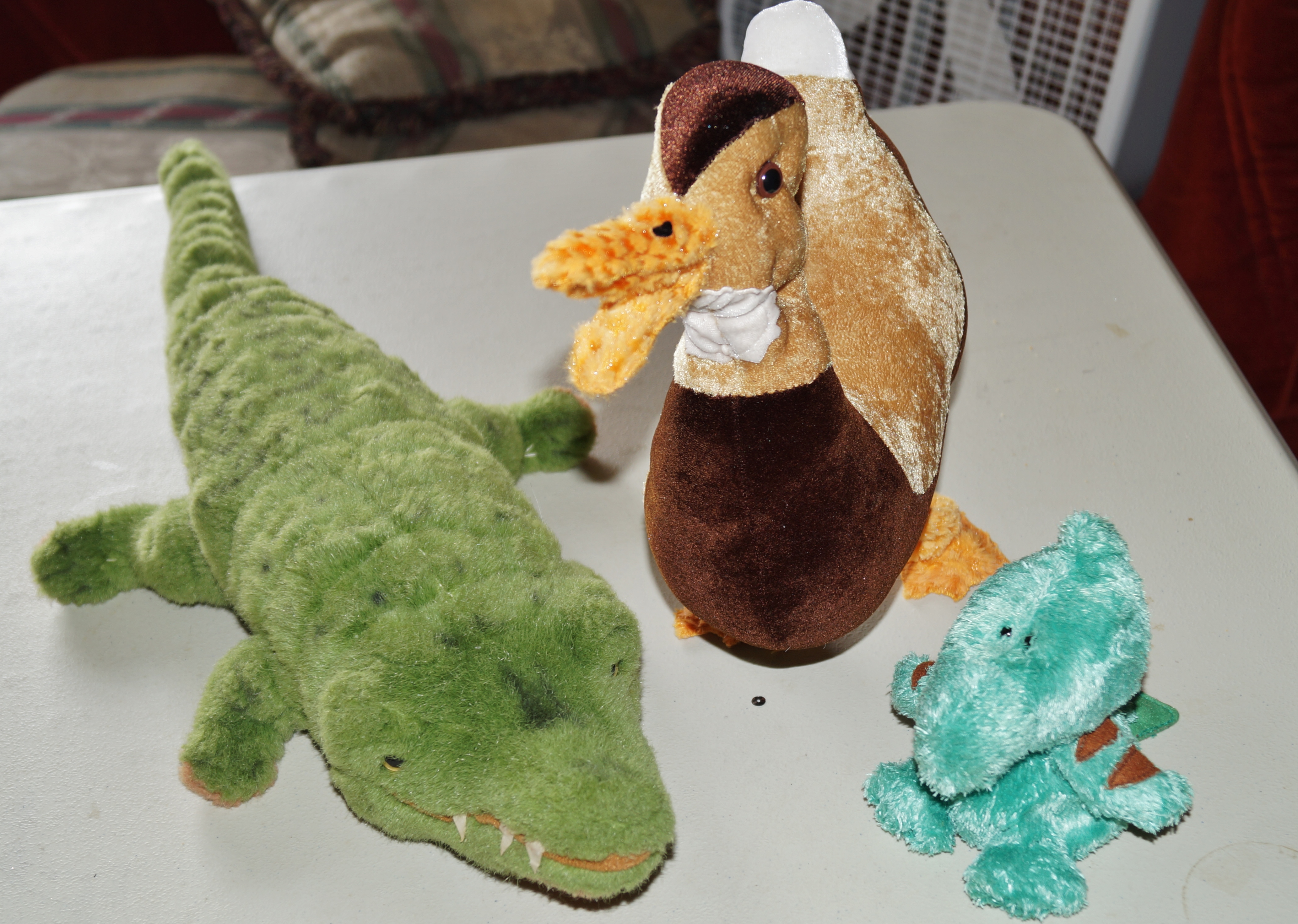
Though I did not write another 1,000 words since I reported yesterday, I did write 570 words to finish up the first draft of my third picture book in the Gator McBumpypants and friends series: Gator McBumpypants in Dee Dee Makes Three. That brings the weekend total to 2,014! By my math, I made it to the goal of 1,000 words a day (though I still have to write 1,000 today, but that’s for tomorrow’s blog). I’m very excited about this book, not only because it’s fun to take pictures of stuffed animals in the wild and tell their stories, but because Dee Dee is the first of my characters that I designed and created myself. Spoiler alert! I plan to make a box turtle next.
For the rest of my 5,000 words this week I will be working on two projects:
One is a middle grade novel that I plan as a series. It’s about a nine year old girl who realizes she can interact with spirits to help them with their unfinished business. However, she doesn’t want anyone, especially her classmates, to know, so she creates a business getting rid of household noises.
The other project is a series of short stories about a lake spirit. The story I’m trying to finish is called “Creation of the Lake Spirit” and is about half done. I hope to finish this week.
As part of the Novel Recommit challenge, I said I would post my word count each day, so I will keep you posted. I have a couple of more instructional yet-to-be-finished blog posts saved in my drafts to dust off for you throughout the week and hopefully some very fun pictures of Gator McBumpypants and his new friend Dee Dee as the week progresses.
The last month has been very busy in my writing life. I am happy to say that I reached my goal of sending out a draft of my novel to first readers on August 28th. I have already received some invaluable feedback and I am excited for more over the next couple of months.
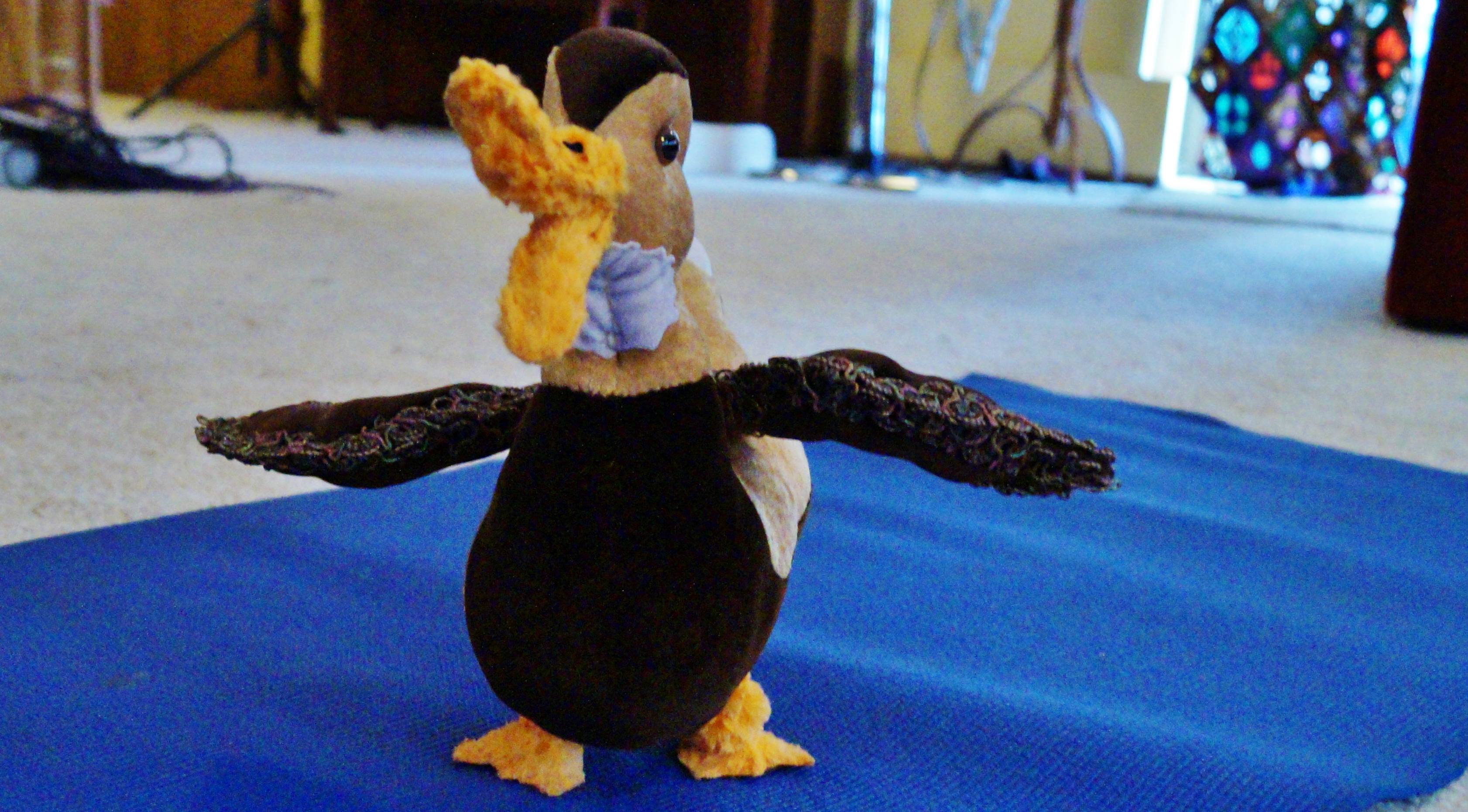
In the meantime, I set another major goal which is to write and publish the next Gator McBumpypants book. For the third book in my picture book series I wanted to design and build a new friend for Gator and Herman and she is finally finished. Meet Dee Dee the duck.
Dee Dee Wings TuckedDee Dee Wings Out
This week I’ll start taking the photographs for the book, but I want to keep making progress on my other stories as well, so I joined Robert Evenhouse over at Part-Time Novel for his Novel Recommit. The goal is to write 1,000 words each day this week. I’ll admit I only reached 581 words yesterday, but I was inspired to get up early and write 863 more. Since I usually have trouble writing anything at all on the weekend, Robert’s challenge has already inspired me to write 1,444 more words than I would have written. However, the day is not done. Robert and I agreed to hold each other accountable by writing a blog post with our word count for each day. Hopefully, this is my report that I wrote 1,444 words for Saturday and tomorrow I’ll report at least 1,000 words for Sunday. This should be a fun and productive week.
The hummingbird moth drinking after dark. photo by Maria L. Berg
I apologize for my time away. I needed a break and an adventure to fill me up with new energy, so I could return to you with insight.
I can finally see an endpoint to my revisions, at least an endpoint that will allow me to send a draft to my carefully chosen first readers (I chose my first readers for many different reasons. I chose eight people who will give me honest feedback and may see my content from different points of view. I will talk more about first readers in October). Here are the revelations occurring in my writing life that have brought me to this exciting point in the writing of my novel.
Tips:
1. Listen when a good friend asks if you need to be held accountable.
There is nothing better than a fellow writer and good friend wanting to read your book. When my critique group asked how my revision was going and I said I kept writing other things, Sherri stepped up and said, “Do you need me to hold you accountable?” I am obstinate and rebellious, so having someone else hold me accountable was not an option, but wow did she set a fire under my seat .
As a self-motivator, I interpreted her words as, “you are not doing your work” in a way that I needed. I realized I had to set goals and make deadlines to see my draft become the novel that I want it to be.
2. Make your goals real and tell others.
The first thing I did to become accountable was to choose a date that had meaning to me. I didn’t map out the time I thought it would take and then set a date.That never works for me. Large dates like birthdays, anniversaries of important events, important holidays, are ways that I challenge myself. This time, I have a difficult anniversary (Ten years since evacuation with no return) and I want to turn it into a celebration. Once I imagined I could achieve my goals by that date, I set personal goals for each day. For the first time ever, I tried to be reasonable and create achievable goals. Believe it or not, I procrastinate and have impressive skills in self-sabotage.
Then I talked to my first readers. I told them the date I chose and asked if they still wanted to be my first readers. This made me accountable, not only to myself, but to eight other people. And now to you.
3. Break your goals into little pieces and attack!
Knowing what I had left to accomplish in a short amount of time, I had to break down the last of my goals into daily work. To do that, I created weekly themes that I could break down into little projects. The first hurdle was typing all of my hand written edits from my last read through and from my critique group into a new draft. The perceived tediousness of the task had been the stop sign that had me wandering into different styles and story ideas. I gave myself two days to only type in edits. However, for every little comma or word choice, I saw larger problems that I either changed or got stuck on.
One of the greatest tips I have to give you is when you get stuck, change your text to red, type a note about what you want but can’t get to or why you’re stuck and move on. Typing up all the editing ended up taking five days instead of two, but I discovered how prepared I was to finish. For every sentence that was confusing, I knew how to change it into sense. For every chapter that was weak, I had a plan.
Reflecting on reflection photo by Maria L. Berg
Which leads us to my new (and newly applied) tricks:
1. Character Development through dialog: A personal breakthrough and a lesson in rereading my own blogs – This was my original name for this post because I felt like I had a major epiphany and wanted to share, but realized I had already posted about my use of dialog to get writing to the page in a previous post Getting words on the page. Dialog as a warm-up is the third tip in that post. My epiphany, however, is a little different. My protagonist is a self-proclaimed hermit who has very little interaction with anyone outside of her house. She has a lifetime of reasons for her hermithood and layers of associations as motivations, but I found it hard to get any of this across to the reader because my character didn’t want to think about those bad experiences. Finally, I had a breakthrough. I had already established that she talked to a friend every day on the phone, but I hadn’t written any of their conversations. I started writing their conversations as part of my morning pages and suddenly my protagonist’s world opened up. I found it awe inspiring how a quick phone conversation could let the reader know twenty years of back-story. My critique group found some of conversation unclear, but I think leaving some parts of the conversation up to interpretation leaves space for the reader (to relate to or not, to imagine something different in the space between).
2. Let yourself go through research- After finishing my edits, I created a separate document for each of the seven section I had left in red ink that need further writing. I noticed that the sections I need to really dive into are the areas I have little to no experience with, or contain behaviors that are outside my purview. I needed to get outside of myself.
Even if your novel isn’t historical fiction or science fiction, finding an avenue for research can inspire. In my case, a textbook on criminology and Inside the Criminal Mind by Stanton E. Samenow, Ph.D. (Samenow is a great last name!) inspired pages of notes. Inside the Criminal Mind also showed me that many of the behaviors I had already written were right on track which felt great! It’s not often a writer manages to find her own positive feedback.
3. Names: A new fun technique for me– One of the most important things I have left to do is come up with names for the tertiary characters. Looking through lists of baby names or name engines online did not inspire me. I enjoyed looking through the most recent local candidates and trying to mix lasts with firsts, and talented friends have told me to look online for another country’s white pages, but these techniques were not what I needed either. Today, I found an unlimited fountain of names in my piles of old records. If you don’t have records, CD liners or movie credits will do just as well. Think of all the people that work behind the scenes to make music and film happen, then think about the multitude of combinations you can make by mixing and matching those first and last names.
For my example, I had a sampling of my old records and my parents old records. I had records from Sweden and France. I had a selection of Pop, Rock, Musicals and Classical. I made three columns in my notebook: Last names, Male character and Female character first names. This way my lists created unique randomized combinations as I wrote them down so when I look at it later, I won’t have to worry about using an actual name.
4. Those pages you don’t want numbered – When I send out my draft, I want to make it very clear to my first readers that I wrote a piece of fiction, so I created a page with the well known statement “All of the characters in this book are fictitious, and any resemblance to actual persons, living or dead, is purely coincidental. After typing it into the center of my new page after the title page, I had a major page numbering dilemma. This bugged me. I knew how to not number my cover page in Word, but I hadn’t figured out any extra pages until today. The magic? Section breaks.
How to: Delete your header. Create all the front pages you want: I created a disclaimer, but you might also want a couple quotes and a dedication; like I said this is for my first readers, so I might make a page of my expectations for reading time, editing/commenting expectations and easy directions for making notes inline. Once you know how many pages you do not want topped with a header or page number, make a section break. To do this in Word, leave your cursor at the end of the text that does not want a number, select the page layout tab, click on Page Breaks and scroll down to New Page. That will most likely create a break and a blank page. I recommend clicking on the Home tab and clicking on the paragraph symbol to see the backspaces needed to delete the extra page.
Once you have created a new section, click on the page you want as page one then click on the Insert tab and select Header. Make sure to click (unclick) Link to previous. Once you’ve created the header that you want, click pages and choose your style and placement then select format page numbers and select start at and enter 1. That should do it.
(I had to go back to the beginning of my first section and edit Header and delete it, then recreate the second header in the second section, but that is most likely because I was making changes instead of starting from scratch. Happy news, it worked).
So there you have it. The tips and tricks I am using to finish my revision and prepare for first readers. I hope you found something useful. Happy writing.
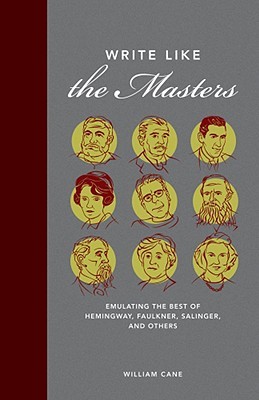
I first saw the term Free Indirect Discourse while reading the chapter on Flannery O’Connor in Write Like The Masters by William Cane. Cane describes Free Indirect Discourse (FID) as “A popular technique with good writers, FID involves narrating a scene in language that contains some elements from the lexicon of one of the characters (Cane sites Rimmon-Kenan 1983).” He also writes “A helpful way to think of it is to conceptualize FID as narration tinged or colored with the voice of one of the characters.”
The room was lined with automobile tires and had a concrete and rubber smell. Meeks took the machine in two parts and held one part to his head while he circled with his finger on the other part. Then he sat waiting, swinging his foot, while the horn buzzed in his ear. After a minute an acid smile began to eat at the corners of his mouth and he said, drawing in his breath, “Heythere, Sugar, hyer you?” and Tarwater, from where he stood in the door, heard an actual woman’s voice, like one coming from beyond the grave, say, “Why Sugar, is that reely you?” and Meeks said it was him in the same old flesh and made an appointment with her in ten minutes.
This passage describes a telephone from the perspective of a character who has never seen one before. A more distant third person narrator may have said, “Meeks stopped at a gas station to use the phone. Tarwater had never seen anyone act so strangely, talking into a box like that.” O’Connor draws the reader into the mind of the young man experiencing the machine through observing its use.
Free Indirect Discourse is a type of third person point of view (POV) that allows a minimal psychological distance between the reader and the character. In other words it lets the reader inside the character’s head. There are two other forms of discourse in third person POV: direct discourse and indirect discourse. Direct discourse (or quoted speech or direct speech) is the same as dialogue, something stated out-loud by the character and written in quotation marks. Indirect discourse (reported speech) tells the reader what a character said or thought without quotation marks and using a reporting verb like she said or he thought.
Examples:
Direct Discourse –
“It’s a lot more than that,” Jerry said. “If it works out, you could get everything you need and make some money too.”
“I’m intrigued. It sounds too good to be true,” Rick said.
Indirect Discourse –
Jerry told him it was a lot more than that. If it worked out, he could get everything he needed and make some money too. Rick told Jerry he was intrigued, but it sounded to good to be true.
Free Indirect Discourse –
Jerry’s proposition was intriguing. Could he get everything he needed and make some money too? It sounded too good to be true.
As a writing exercise, I recommend creating examples like those above, first, starting with dialogue and trying to change it to the other two forms of discourse and then, starting with FID and trying to turn it into the other two kinds of discourse. I found it to be trickier than I expected.
For me, discovering FID cleared up the question: do I put my characters’ thoughts in italics or in quotes? I now believe the answer is neither as long as I am using free indirect discourse correctly.
If you would like more information about free indirect discourse, I found these posts interesting and informative:
Once I understood free indirect discourse, I went on the hunt for it in my work in progress. My novel is a psychological thriller told from the perspective of each of its three main characters, so, it turns out, my novel is full of FID.
Here’s a jog through B’s mind:
She wasn’t afraid of snakes. They fascinated her from a young age. She loved to draw their beautiful colors and patterns. She remembered spending hours in the snake habitat at the zoo watching their tongues flicking in and out as she imagined seeing the world through tasting her environment. Talk about an oral fixation. She attempted to emulate the way pieces of their bodies expanded and contracted to propel them forward by wriggling on her carpet, that old shag carpet that shed fuzz right up her nose and made her sneeze. Mom helped her create a really cool Medusa costume in sixth grade by sticking wires through a ton of rubber snakes and hooking them into a cheap wig.
And here’s a moment in R’s:
“Of course, silly. I’m a regular.” She smiled and scrunched up half her face. She probably thought she was winking.
That sounded like the brush off. She wasn’t going to give him a number and tell him to call her, so he wasn’t going to ask. She would let him find her here in this dive, if she wasn’t hooking a bigger fish on the line. Fine. He had mastered that game long ago.
Were you able to identify the different kinds of discourse? Do you feel like you got inside the character’s heads? Did they feel like two very different views of the world? I hope so. Have you found places in your own writing where you used FID, or places where you could improve your writing by using FID? I would love to hear about it in the comments.
I hope you also find the discovery of free indirect discourse fun and exciting (for some reason knowing the style had a name was very exciting for me). Happy Writing.
This freezing sensation also rose from within like the realization that she had been formed from an iceberg all along.
Simile – afigureofspeechinwhichtwounlikethingsareexplicitlycompared. Comparisons and associations are how we help others to see the world from our unique perspectives.
Ralph Cornish, a fellow writer and friend, recently challenged our critique group to write a short piece consisting only of similes. To tackle the challenge, I noted the similes that popped into my head for a day. The next day, I organized my list of similes into a description of morning ritual:
She woke abruptly like the finality of the explosive light bulbs in her house that always need replacing at the same time and don’t sputter out but break suddenly with a loud retort when she hits the light switch. Her fragile grip on sleep had been broken by the sound of the entire house cracking like it had finally stretched “the spot” that released its stiffened spine. She didn’t feel refreshed but wilted like the flowers she left in the vase on the breakfast table because she didn’t want them to be dead. Restful sleep continued to be torturously out of reach like whispers of urgent news too quiet to comprehend. The room smelled sweet as syrup and the air felt as thick. As she dressed, the pulled muscle in her back worried her like an alligator’s jaw ready to snap. This morning, she made her coffee strong as a ranch hand and bitter as a dreamless atheist. She liked it black as Ape Cave and hot as the sulfur smelling mud pots of Yellowstone, so it felt like molten lava pouring down her throat and pooling in her middle. Sitting at the breakfast table, she smelled the rotting flowers and felt a sudden change in the room as if someone shoved ice down the back of her shirt. Her skin pricked like she had fallen into a nest of fire ants, like she had leapt into the still winter lake fed by dripping glaciers in the first heat of spring. This freezing sensation also rose from within like the realization that she had been formed from an iceberg all along. Then her lava coffee warmed her and she sighed like a steam train after it settled into the station releasing the concocted vapors and set pen to paper.
Completely over the top? You know it, but I had so much fun writing it, I wanted to continue exploring and writing similes.
So how do we create similes that are unique and stay away from cliches? One way is to write what you know. Draw from personal experiences and the things that make you different. For instance, if you love chess or have horses you might come up with:
He zigzagged the path like a rook.
His options were limited like a knight.
She kept her hand on him as she walked behind him like she would with a horse. She had a feeling he kicked.
As she brushed her fingers through his sweat-matted hair, dust flew into the light like she was brushing a horse after a ride.
I lived in New Orleans so I relate things to alligators and fire ants but now live near a sleeping volcano which makes me think of molten lava and glaciers. I studied psychology which would explain a simile in my work in progress –
She felt all of these recent slights tapping at her rage button like a pigeon in an experiment desperate for a seed.
When writing similes for your novel, think about your characters’ interests and environs as well. What similes would your characters create?
Speaking of my work in progress, I went to the find function in Word, typed “like a” and found two problems. One, there were very few similes and two, many were cliche:
like a veil had been removed from his eyes
be treated like a queen
his torso and arms were chiseled like an action hero
Now that I’m excited about creative similes and plan to come up with new ones every day as part of my writing warm up, finding places in my manuscript that beg for similes should be organic. However, not finding similes could be a sign that I need to provide more sensory information. Tastes, smells and textures are difficult to describe without using simile: She tasted like chewing tobacco and pixie-sticks; she discovered a spot behind his ear that smelled like lavender and cucumbers drizzled with a salty musk; His trimmed beard defined his jaw, but painfully pierced her face like needles and pins fused to porcupine quills. Thus, I think a good place for me to start is with finding places to add sensory detail to my manuscript.
And how will I deal with my cliches? Well, I will need to get more creative. Let’s see what we can do with the examples above:
“like a veil had been removed from his eyes”- What else clears cloudy vision?
like the ophthalmologist gave him a stronger prescription
like he had all the Visine in the world
like he finally found his other contact
“be treated like a queen”- How are queens treated? Everything I think about how a queen is described is a cliche, so this one’s tough.
you’ll never chip a nail again
your heels will never blister
you’ll be worshiped like Bonnie Lu Nettles (maybe a bit gauche)
“his torso and arms were chiseled like an action hero” – What is another way to describe well defined muscles?
like the peaks and valleys of the Rocky Mountains
his muscles were large enough to house hobbits
his muscles were as sharply defined as cliff walls meeting the ocean
Please write your suggestions in the comments. I can’t wait to read how you would deal with these pesky cliches.
I was inspired by this simile challenge, so to continue it and share it with others, I’ve started posting daily Tweets with #similes. Please join me in creating and sharing creative similes.
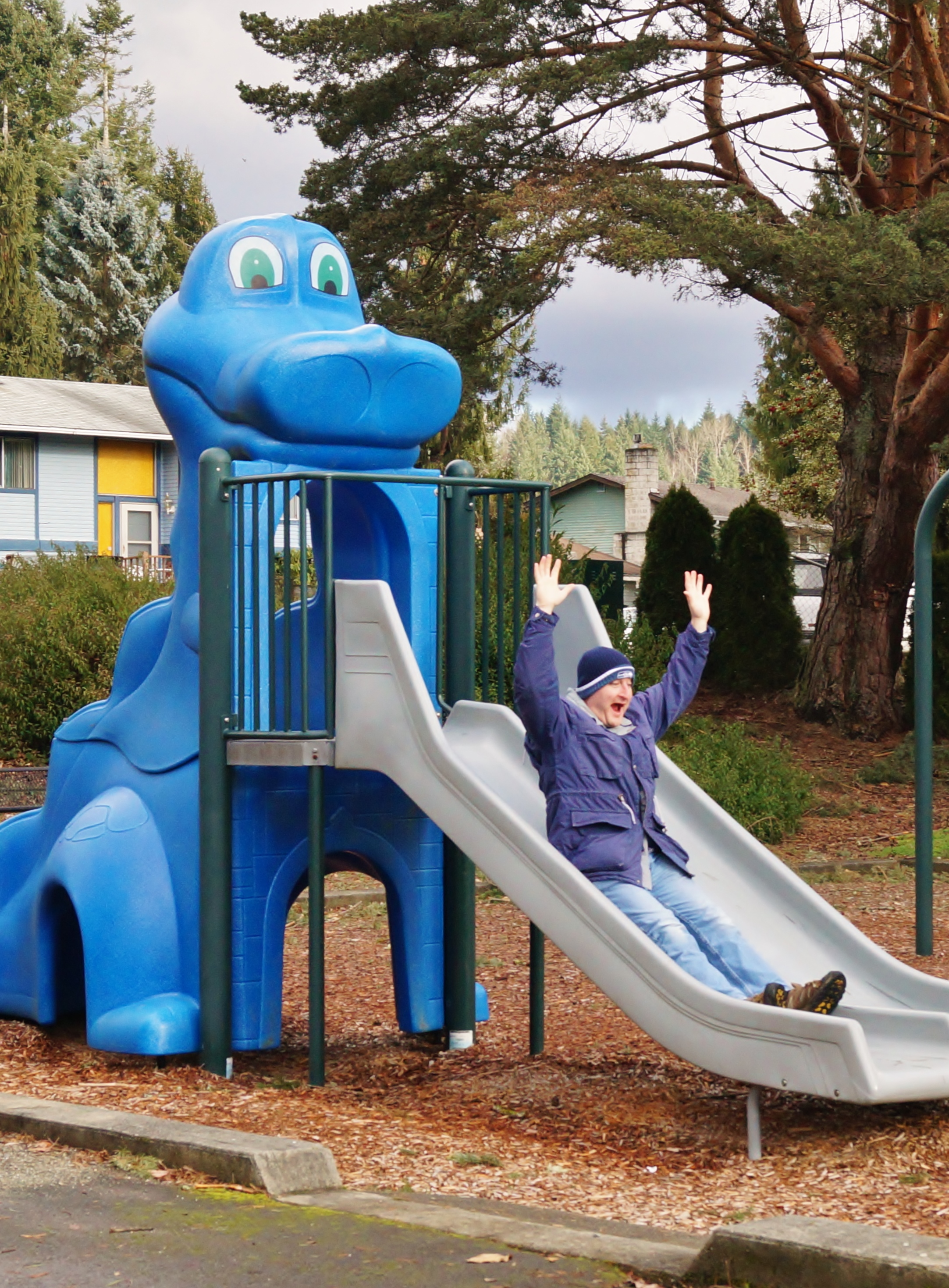
He went down the slide. He slid. He zipped. He whooshed!
In my last post, I shared an amazing discovery, a little book full of helpful tips called The Curious Case of the Misplaced Modifier by Bonnie Trenga. At the end of exploring Chapter Seven, you’ll recall I encountered a “there was” problem in my manuscript. After my battle with “there was”, I moved on to Chapter Four: The Delicious Drama of the Weak Verb. Finding specific verbs is important, interesting and sometimes fun, but I didn’t find it delicious.
In Bonnie Trenga’s words:
“Weak verbs are everyday, normal verbs we use all the time. However, they’re often repetitive, passive, wordy, or too general. These verbs frequently fail to clarify the action, and they make readers work too hard.”
Which verb does she start with? You guessed it, our friend “to be”. Along with the battle of “there was” that we discussed last time, she also mentions “it was” and “this was”. Because “there was” introduced me to my worrying workload of weak writing, I won’t linger on “to be”, but introduce you to the other worrying weak verbs and how I began to weed them out.
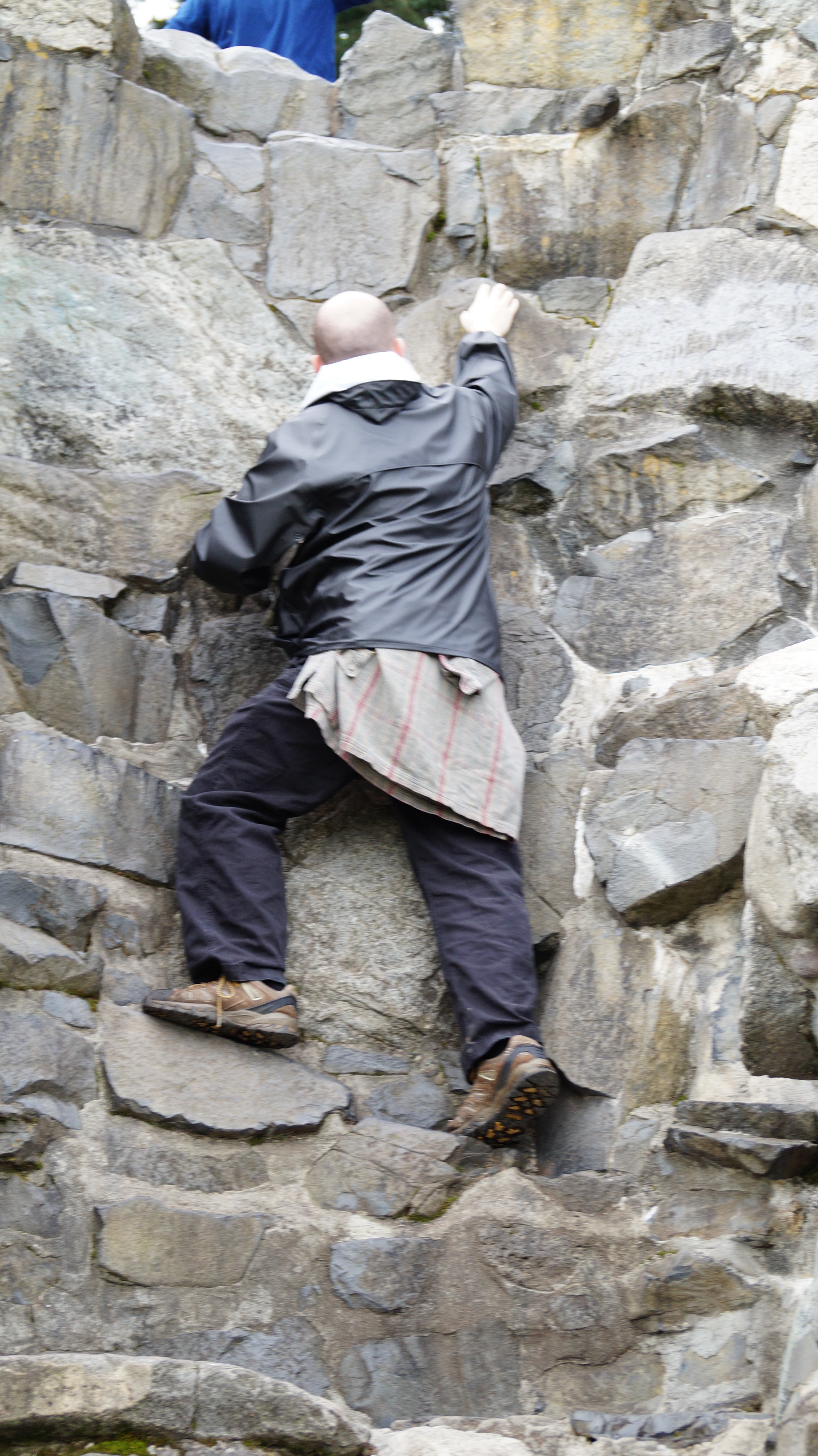
He got up the rock wall. He climbed. He hauled himself up. He tested his upper body strength.
As the title of this post suggests, other weak verbs include: to do, to get, to go, to have and to make (Trenga also suggests to occur and to use). Because my manuscript is written in past tense, I started my search for the past tense of each verb: did, got, went, had and made. When I typed “did” into the find bar in Word an astounding, heart-breaking 826 instances came back. However, a friend and fellow writer, Sherri Ann DeLost offered a very helpful tip: when typing a word into find type a space before and after it, so the results only include the word not the letters within another word (such as candid). This made a large difference bringing my did count down to a reasonable 180 or so (though many “didn’t”s may still need to be dealt with).
After seeing the staggering number of verbs in need of more specific replacements, I decided I needed lists of specific action verbs at the ready. I started with my thesaurus and found some replacements.
These are only a few examples of the words I found, but I didn’t feel like I had enough replacement verbs, so I searched online. I printed out these three lists:
I created a key: D=did, H=had, W=went, G=got and M=made and scoured my lists, writing the correlating letter or letters next to the strong verb that could replace the weak verb.
With all of these active, descriptive, precise verbs at the ready, was I prepared to attack my weak verbs? Some of them.
Here’s an example from my work in progress with the verb “got”:
“Ben grabbed a handsaw and got up on the step ladder while Anna attempted to twist the branch and tug at it to help it along.”
Ben grabbed a handsaw and climbed the step ladder while Anna attempted to twist the branch and coax it along.
I found stronger replacements for hundreds of weak verbs, but I also found new issues. Many of these weak verbs were like parasites in symbiotic relationship with other words to create a different meaning than the replacement verbs I so obsessively collected. Example:
“Went back” led me to find as many words as I could for returned.
“Had to” led to must, needed, and wanted.
“Did his/her best” to = I don’t know. I’m still working on this one.
After I worked through each of the weak verbs, examining my sentences over and over again, I thought it would be fun to do a new word cloud of my manuscript to see if this exercise had changed my overused words. I was sure changing so many “went back”s would get “back” off of my list at least. If you haven’t read my earlier post about overused words, you can make your word cloud here. Sadly, “back” was still there, but more shocking was “make”. Hadn’t I just spent an entire day replacing make?
The answer was no. I had focused on the past tense of the weak verbs and, like “there was”, led to “there is”, and “there were”, I needed to search for each of the other weak verbs in all of their variations.
“Make” presents interesting challenges: “Make any sense”, “Make sure”, “Make it look like”, “Make this work”. At least one or two “make sure”s can become “ensure”. I would greatly appreciate other suggestions.
As you can see, verb choice presents unending challenges and sparks the neurons.
This week I will be reading my entire novel for content: plot, action, consistency, etc. I will also pay close attention to whether my verb choices have changed the distinctive voices of my characters. I tried to keep that in mind as I made changes, but I’ll only know for sure after I’ve looked at the big picture. Wish me luck.
Over the last two years, I thought I had read every book my local library system offered on writing: instructional, anecdotal, genre specific, technique specific–the works. Last time I went to the library, however, a cute little book I hadn’t noticed before jumped out at me: The Curious Case Of The Misplaced Modifier by Bonnie Trenga. Modifiers were part of my research for my Hemingway post and I enjoy film noir and spent a lot of time researching film noir imagery for a puzzle design of Edward Hopper’s Night Hawks (believe it or not, I created a puzzle piece shaped like a man under a lamppost). Maybe that was why I brought it home, or maybe it was perfect timing; I was finally primed and ready for the serious revision this fun, easy read hid within its pages.
Editor Bonnie Trenga has created a humorous and entertaining study of seven mistakes writers make and how to remedy them. She starts each chapter with a catchy detective story title and weakly written scene that includes the specific errors discussed in the chapter. Once the reader learns to recognize and correct the errors, she is encouraged to correct the opening anecdote. Though I chose to take the exercise to my manuscript instead, I found the book format clever and inspired.
Though every chapter is informative, I started reviewing my work in progress with the tips from Chapter Seven: The Stretched-Out Story of Wordy Writing. I thought I would breeze through my manuscript correcting a few wordy sentences and move on to changing a few weak verbs, but my eyes have been opened and my writing will never be the same.
I started by opening the find function in word to highlight “even though”. Trenga recommends changing it to although, but I found other ways to tighten the sentences as well. Examples:
“He never talked about them, but even though he betrayed them and lied to them every day, she knew that he somehow loved them and didn’t want to harm them, or leave them.”
I changed to
He never talked about them. He betrayed them and lied to them every day, but she knew that he loved them and didn’t want to harm them or leave them.
and
“Even though he held her arm, she still wanted to run away.”
became
Even with Rick holding her arm, she wanted to run away.
After even though, I took a look at “Not only . . . But also”. Trenga recommends replacing both parts of the phrase with “and”. Let’s see what I came up with:
“He felt an urge to call Karen, not only to get it out of the way, but to make sure she wouldn’t mess things up.”
He felt an urge to call Karen, to get it out of the way and make sure she wouldn’t mess things up.
“She and her husband not only traveled to all the places Anna still needed to go, but sent her postcards and the most gorgeous invites to the best parties.”
She and her husband traveled to all the places Anna wanted to go and sent her postcards. She also mailed handmade invitations to her wonderful parties.
So far so good, right? Not too many instances to tighten up. The sentences were fun to play with, but then–I typed in “there was”. The sea of “there was”s was momentarily overwhelming. I dreamed of going AWOL or lying down and playing opossum, but I battled on for you, dear future readers, for you.
Trenga recommends to delete the offender which works in this example:
“He went into the ladies’ room and happily saw there was a lock on the door.”
He went into the ladies’ room and happily saw a lock on the door.
and this one
“Now, he saw that there was a faux stone facade along the back wall with pillars and statues so it looked like an ancient Greek temple.”
Now, he saw the faux stone facade along the back wall with pillars and statues like an ancient Greek temple.
Here are some other ways I struck down and defeated “there was”:
“He had evidently put in some effort. There was champagne and chocolate covered strawberries.”
He had put in some effort evidenced by champagne and chocolate covered strawberries.
“He was surprised there wasn’t any apparent bruising on his face.”
He expected more apparent bruising on his face.
“Rick knew there was no reason for worry.”
Rick wasn’t worried.
“There was a bright red light glaring out of the front of this fabulous piece of hunting technology.”
A bright red light glared from this fabulous piece of hunting technology.
“Brittany wished there was a way to make sure she would never see him again.”
Brittany wished for a way to make sure she would never see him again.
and a fun example of the many ways to reword one sentence
“Maybe there was something to what that stupid jerk Pat said.”
Maybe that stupid jerk, Pat, was right.
So that stupid jerk Pat wasn’t completely wrong.
She refused to admit that Pat could be right.
Oh F@#!, could Pat be right?
This is a small sampling of the epic battle I fought through the night to wipe out the rampant “there was”. “There were” still awaits on the horizon with “there is” and “there will be” as reinforcements. I will fight on.
Stay tuned for my next post in which we discover that the battle with “there was” was only a skirmish–a prelude, an aperitif–compared to the war on weak verbs to come.
Yesterday, I updated (wrote the post that went with the picture I accidentally published) Strange Pleasures Part Two. I assumed the update would go out to the readers who follow this blog, but a friend told me it did not. I enjoyed writing it and would love some reader feedback, so hopefully this little note will get you to Strange Pleasures Part Two.
The stripes in this dirt bring me pleasure. A strange pleasure? Perhaps, but not to a gardener.
To continue my study of strange pleasures, I took to the web in search of others’ ideas and insights on the subject.
I found some interesting ideas at Wooden Boat Forum where a discussion of enjoying things from the past brought up the strange pleasures of: cutting grass with a scythe; doing laundry by hand; muzzle loading a shotgun; smelling of fireworks and rowing instead of using a boat motor.
Over at Vinted forum, I found a discussion of strange pleasures. After pages of what to me were very tame and usual pleasures (morning coffee, sunshine, etc.), I found some interesting entries: the smell of gasoline; popping knuckles and ankles weirdly; chewing on plastic; the smell of brand new backpacks; the smell of a new box of crayons and a parent smelling her children’s feet.
At Cloudcap Games I found a nice post about the strange pleasure of watching other people enjoy board games. This could be taken as the pleasure of board games, a rather mundane pleasure as board games are created to be pleasurable, or the pleasure of voyeurism which at its extreme can be criminal, a strange pleasure indeed.
Speaking of strange pleasures that may be criminal, I found an interesting statement at We Will – “the joy of the thief in stealing”. If one follows the theory of Hedonic Motivation that I talked about last time, criminal activities would somehow bring the criminal pleasure and/ or decrease pain–something to think about for your antagonists’ motivations.
I even found an article in the Huffington Post about the strange pleasures of literary trickery, an intriguing article about why readers enjoy the unreliable narrator (something I’ve been studying, but not finding pleasurable, in my reading).
I really enjoyed an article at Dissonant Symphony about the pleasure dandelions bring to children who then grow up to spend time and effort trying to kill this “weed” that steals space and nutrients from the grass in their lawns. Since discovering homemade dandelion root tea, dandelions may be one of my strange pleasures.
For fun, I have assigned some of these found strange pleasures to the characters from my work in progress.
Anna – digging up dandelions to eat and make tea; the smell of a new box of crayons; cutting grass with a scythe; rowing instead of using a boat motor; her boyfriend, Ben, loves the smell of campfire and fireworks, she does not. The smell of fire makes her anxious that a fire is not being tended properly. She has a deep rooted fear that she will set the house on fire. Thus, Ben’s strange pleasure could cause conflict (And every story teller is on the hunt for conflict– Oh, strange pleasures, the gift that keeps on giving).
Brittany – Board games remind her of better days with her family. She finds great pleasure in watching happy families doing things together, especially in the park or eating at a restaurant. Chewing on any plastic she can find–she has an oral fixation, but doesn’t want to gain weight. She loves the smell of gasoline; it reminds her of summer.
Rick – popping knuckles and ankles weirdly; smelling his children’s feet; voyeurism; the joy of the thief in stealing.
Now, along with the strange pleasures from last time, I have many interesting ideas for unusual hedonic motivations for my characters. Time to apply all this learning and practice to my manuscript.
Here’s a section, from Rick’s point of view, that could use some explanation of hedonic motivation:
As Brittany talked, Rick walked over to the mailbox. It was large and silver with fading sticker stencils reading STARK, barely legible on the side. He pulled out a large stack of mail and started to leaf through it. Maybe that lady didn’t live here after all, at least not full time.
Rick’s strange pleasure is manipulating others; he likes to make others believe his lies and what better lie than identity theft. This also goes with the found strange pleasure above “the joy of the thief in stealing”. Here’s a re-write acknowledging his strange pleasure.
As Brittany talked, Rick’s attention was drawn to the old-style no-lock mailbox. People who didn’t put in even the least amount of effort to secure their stuff, didn’t deserve to keep it. He felt pleasure in the anticipation of discovering someone else’s letters and, of course, the personal information they contained. His rising excitement became physical tingles as he lowered the door and saw a large stack of mail. He cracked his knuckles for emotional and physical release and set to examining his haul.
Okay, maybe I over did it a little there, but it’s a start.
I’ll try another one:
If it wasn’t prostitution, it was definitely a case of infidelity, the conversation continued, so another solution would be getting his license plate number, finding out his address, and giving pictures to his wife. These were also ideas Anna had thought of, but playing detective could be dangerous. The “bad guys” knew where she lived, so retaliation could be very unpleasant. Anna realized that she had been focused on retaliation which made her feel helpless.
In this example, Anna has gone to an intimate dinner party, so her hedonic motivations include both pleasure: making people happy; positive attention; good food and drink; and avoidance of pain: her discomfort around people; fear of judgement; her need to seem “normal”. Though in further revision, this scene may be mostly dialogue and Anna’s anxiety and pleasure will be understood through her actions at the table, for this example, I will attempt to insert Anna’s hedonic motivation to the above paragraph.
If Anna’s driveway wasn’t passively participating in the business of prostitution, it was place-holding a case of infidelity. Anna enjoyed the camaraderie as the diners continued to contribute suggested reactions to the intrusion. They agreed that the best solution would be getting his license plate number, finding out his address, and giving pictures to his wife. It may have been a stomach full of warm delicious food or the plentiful red wine, but Anna felt included, like a normal person in a group of peers, as she recognized each of these ideas as thoughts she had already considered. However, she also recognized that this level of detective work could be dangerous and she was isolated and alone. The “bad guys” knew where she lived and retaliation could be very unpleasant. It was this idea of retaliation that made her feel helpless.
She hated feeling helpless. The warm feeling of camaraderie dissipated. They hadn’t said anything to help her at all, nothing she hadn’t already thought of. Not one of them would act on their suggestions; not one of them would help her, but they were willing to put her at risk. This feeling of bitter disappointment was why she didn’t spend time with people. She knew better.
Again, I would say my example could be over the top and in need of dilution, but a fun, challenging step in the right direction.
This study and exercise definitely put my brain machine in motion. I am churning those neurons.
I hope this inspires you to explore your characters’ motivations that may be quirky and unusual. Please let me know what you come up with and any suggestions in the comments. Happy Writing.
*I did not mean to publish this as only a picture on Friday. I meant to save it as a draft, but people had already liked it by the time I realized my mistake.
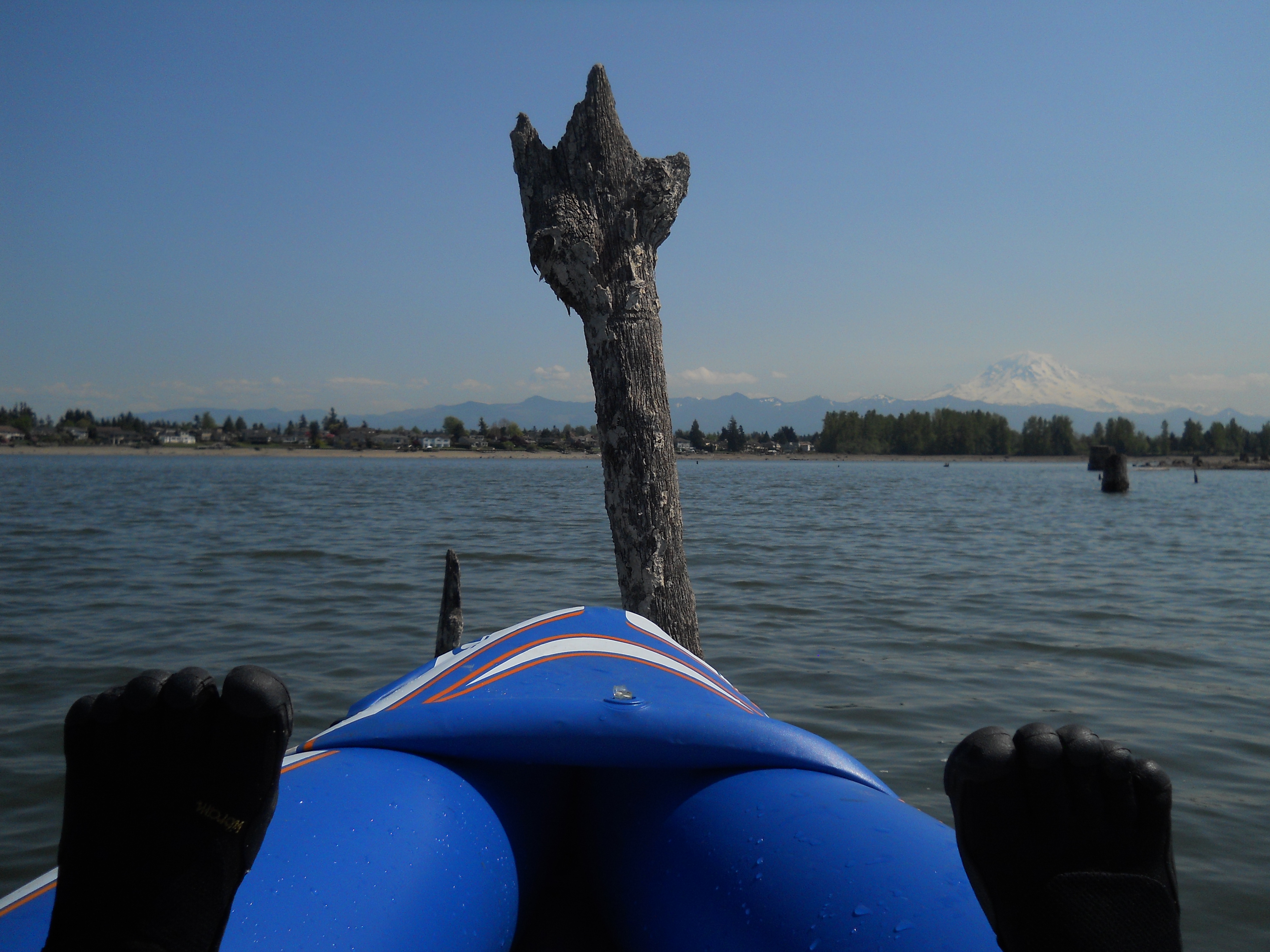
Spring has sprung here in the great Northwest and my interests have turned to fun and joy. Last weekend was all about planting the garden and Monday I inflated my kayak and had the lake all to myself. The inflatable kayak, acquired two years ago, suddenly became a brilliant purchase as the lake (actually a humongous reservoir) is still well below recreational levels and to get on the water I had to carry my boat down a hill of rocks and unstable sand. Soon the stumps will be safely deep under water and motorboats will make it difficult and unsafe for rowers, so my adventure crossing the lake to explore the stumps was a unique pleasure.
Yesterday, I planned on continuing to talk about Writing Like The Masters with a discussion of Dostoevsky, but I noticed that I needed to return The Life & Times of Michael K by J. M. Coetzee to the library. I had already renewed it to the limit because I had trouble getting into the story, but I wanted to know why it was award winning (the Booker Prize), so I began to skim it before heading for the library. The immediacy of needing to return it must have finally drawn me in because I read the whole thing before one in the afternoon. I found interesting parallels to Notes from Underground by Dostoevsky. Coincidence? Maybe the timing was just right to see the Dostoevsky in Coetzee’s book and how they both focused on strange pleasures.
From Coetzee:
“There was pleasure in spending without earning: he took no heed of how fast the money went.”
“There was a pleasure in abandoning himself to sickness.”
“–what can a decent man talk about with the greatest pleasure? Answer: about himself.”
“I would feel a certain hidden, morbid, nasty little pleasure in the acute awareness that I had once again committed something vile that day, that what had been done could no longer be undone; and I would gnaw and gnaw at myself in silence, tearing and nagging at myself until the bitterness would finally begin to turn into a kind of shameful, damnable sweetness and, in the end–into a definite, positive pleasure! Yes, a pleasure, a pleasure! I stand by that. The very reason why I brought it up is that I’ve always wanted to find out: do other people experience such pleasures?”
“This pleasure comes precisely from the sharpest awareness of your own degradation; from the knowledge that you have gone to the utmost limit; that it is despicable, yet cannot be otherwise; that you no longer have any way out, that you will never become a different man; that even if there were still time and faith enough to change yourself, you probably would not even wish to change; and if you wished, you would do nothing about it anyway, because, in fact, there is perhaps nothing to change to.”
Each of these statements made me pause. It seemed contradictory for the characters to find pleasure in things that are socially considered wrong or bad, which made me want to research pleasure as motivation.
Again, each of these motivations could be pleasurable or painful which brought me to Hedonistic Motivation:
From the Merriam Webster’s Collegiate Dictionary:
hedonic – adj. 1. of, relating to, or characterized by pleasure
hedonism – noun 1. the doctrine that pleasure or happiness is the sole or chief goal in life.
I think hedonism has become confused with being selfish, otherwise how could it have a bad connotation? Isn’t the true goal in life to be happy? Of course, happiness cannot be defined by anyone but the self, so philosophically happiness is selfish. Ha Ha.
But, think about it, if everyone was happy, life on earth would be wonderful. It is the human instinct to not be happy with what we have that breeds discontent, not pleasure or happiness. It is the idea that the goal of happiness cannot be reached, or that the attainment of happiness is somehow a bad thing that has turned hedonism into a bad word. But isn’t happiness what everyone strives for; haven’t people worked themselves to death for a bit of happiness?
The Theory of Hedonic Motivation is the idea that people approach pleasure and avoid pain. A basic idea when we speak of ourselves physically, but more complicated when we include emotions. The theory includes the idea that a person’s behaviors result from emotions such as: love, hate, fear and joy. Emotional experience is understood on a scale from bad to good and our primary motivation is to avoid bad and increase good.
So, here’s where we get to the strange pleasures; each person creates his or her own emotional scale of what feels bad and is to be avoided, and what feels good and is to be achieved, based on nature vs. nurture: perception, learning, environment, genetics, chemistry, biology, physics . . . who knows the combination? the eternal joyous question.
Now, to apply all of this to my writing life:
First, I did a cluster of the word pleasure. I put the word pleasure in a circle in the middle of a page and set my timer to three minutes. Then, I wrote all the words that came to mind about the word pleasure. The results: It looks like I associate pleasure with natural energies: wind, sun, touch; and activities (mostly outdoor): hiking, gardening, adventure, jumping, singing and dancing. When the lake comes up, I’m sure I would include swimming, floating, and rowing. I only mentioned a few physical sensations: warmth, giddy, and tingly.
Conclusion: In three minutes of clustering the word pleasure, I didn’t come up with anything very strange.
Second, I wrote down some of my strange pleasures: I like diving into freezing cold water; I pick at scabs and tear at my cuticles even when it hurts and bleeds (I know I’ll scar, but it feels good), I love finding ugly spandex fabric, I like improvising horribly discordant sounds on the piano (and guitar) even though I know how to read music, understand theory, play well and spent my entire youth in lessons; when I have a good day, I tend to stay up all night, even until dawn, because I don’t want it to end, but I get really sick to my stomach about three in the morning.
Strange pleasures may turn the mind to well known fetishes and kinks which can be interesting hedonic motivations (and, perhaps, the reason hedonism can be considered a bad word by some), but not what I’m exploring here . What I’m trying to find, as I turn this study toward the characters of my work in progress, are their contradictions, quirks, and foibles that make each character unique and interesting.
Application to my work in progress:
Anna is a hermit who finds pleasure in certain kinds of pain: pinpricks and tingles–the cold of the lake to the hot of the hot-tub. She finds her primordial scream in the night after playing discordant music on her almost tuned piano. She hates being told what to do and says she really hates humans, but likes to give away what she has and wants to make others happy.
Brittany finds pleasure in being bad; she’s experimenting with her power as a young, attractive woman whose sexuality has power over men. The death of her mother and complete absence of her father due to grief made her quit college to take care of her younger brother. She finds pleasure in being the provider and keeping her brother’s hopes of college alive, but she also finds pleasure in complete irresponsibility.
Rick finds pleasure in the absence of pain. After an injury, he became addicted to pharmaceuticals, though compulsive lying, and addictive behaviors were always part of his semi-adult life. He finds pleasure in manipulating people to do his will and to believe his lies which he believes makes his life easier.
Now that I have strange pleasures for each of my characters, I want to create a couple of concise sentences for each one and find the perfect places to put them. I’ll get into that and more in my next post: Strange Pleasures Part Two.
 Though I did not write another 1,000 words since I reported yesterday, I did write 570 words to finish up the first draft of my third picture book in the Gator McBumpypants and friends series: Gator McBumpypants in Dee Dee Makes Three. That brings the weekend total to 2,014! By my math, I made it to the goal of 1,000 words a day (though I still have to write 1,000 today, but that’s for tomorrow’s blog). I’m very excited about this book, not only because it’s fun to take pictures of stuffed animals in the wild and tell their stories, but because Dee Dee is the first of my characters that I designed and created myself. Spoiler alert! I plan to make a box turtle next.







 Experience Writing