Write Like the Masters: Hemingway vs. Subordination

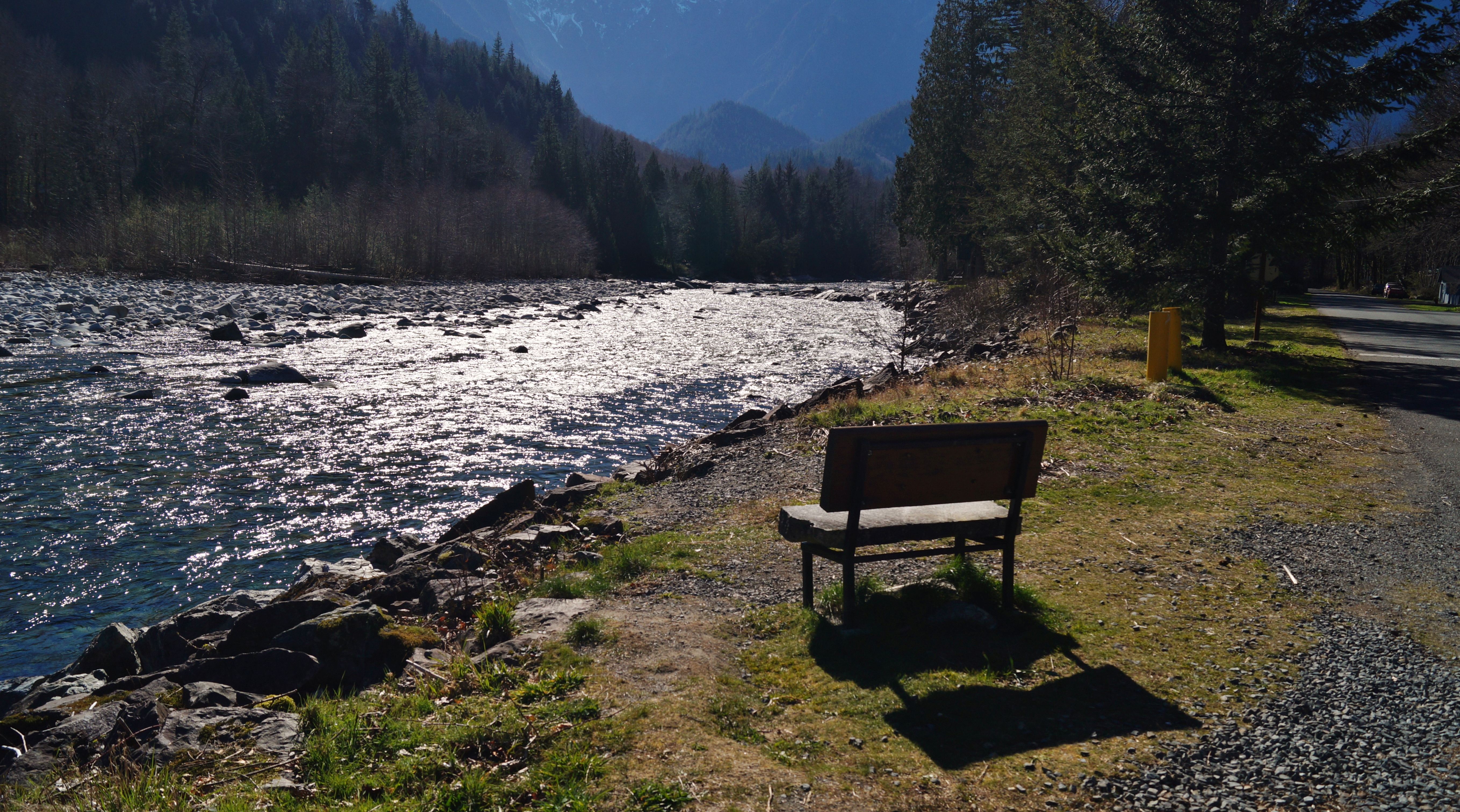
A bench by the river in Index, WA
Until it was placed at this angle, it was an ordinary bench.
It was an ordinary bench until it was placed at this angle.

I enjoyed reading Write Like the Masters by William Cane. The book included fun facts about the writing habits of some great authors and also included  interesting techniques to emulate these authors. One part of the chapter about Ernest Hemingway really grabbed my attention, the part about subordinating conjunctions. According to William Cane, “If you wish to write like Hemingway, avoid a heavy-handed style and reduce the amount of subordination in your sentences.” Personally, I do not wish to write like Hemingway specifically, but I was intrigued.

For those of you who (like me) need a refresher on dependent vs. independent clauses and coordinate vs. subordinate conjunctions, I found a couple of informative links for a very quick review:

http://owlet.letu.edu/grammarlinks/sentence/sentence3d.html  

http://www.chompchomp.com/terms/subordinateclause.htm

Using Mr. Cane’s list of the major subordinating conjunctions: after, although, as, because, so that, though, unless, until, before, how, if, since, when, where and while, I perused my work in progress in search of subordination. I found plenty of examples that made me glad to be doing this exercise. Let’s start with this sentence:

          She put the key in the box and pulled out the mail before the details from her peripheral vision registered.

Which can be rearranged to read:          

          Before the details from her peripheral vision registered, she put the key in the box and pulled out the mail.

So where’s this subordination stuff and what does it have to do with Hemingway? Here’s the fun part.

A quick dissection of these sentences reveals two independent clauses: She put the key in the box and pulled out the mail and The details from her peripheral vision registered. The second clause becomes dependent when the subjective conjunction before is added.

According to Mr. Cane, to write more like Hemingway I want to start by removing the subjective conjunction which leaves us with: She put the key in the box and pulled out the mail, The details from her peripheral vision registered.

Then, replace the comma with and          

          She put the key in the box and pulled out the mail and the details from her peripheral vision registered.

What do you think? Do I sound more like Hemingway? I think I like the subordinate sentence beginning with the dependent clause the best. Let’s try another one from my work in progress:

          The club was easy to spot (independent clause) since (subordinate conjunction) it was the only white house with columns (dependent clause).

          Since it was the only white house with columns, the club was easy to spot.

We remove the subordinate conjunction (since) and have: It was the only white house with columns, The club was easy to spot. In this case I think we would switch The club and It to end up with

          The club was the only white house with columns and it was easy to spot.

The coordinating conjunction so is more to my liking than and for this example changing it to

          The club was the only white house with columns, so it was easy to spot.

A simple, but effective example. I like the final sentence the best. Since coordinating conjunctions are supposed to specify a relationship between equally important ideas (from owlet link above), I wonder if Hemingway’s style comes from a belief that all of his ideas are equally important. Ha Ha Ha . . . Hmm.

Let’s take a look at a couple of examples from Hemingway and do some reverse engineering:

From The Sun Also Rises

“I paid for the saucers and we walked out to the street.”

How would we make this subordinate? Choose a subordinate conjunction and add it to one of the independent clauses to make it dependent. I’m going to use after though before might make it more interesting.

After I paid for the saucers, we walked out to the street.

We walked out to the street after I paid for the saucers.

Here’s another one:

“She grinned and I saw why she made a point of not laughing”

I chose the subordinate conjunction when

When she grinned, I saw why she made a point of not laughing.

I saw why she made a point of not laughing when she grinned. (I think this form confuses the meaning of the sentence)

Let’s look at one more:

From the short story Summer People

“He was ugly to look at and everybody liked his face.”

          Although he was ugly to look at, everybody liked his face.

          Everybody liked his face although he was ugly to look at. (This example made me think about dangling prepositions and modifiers, but that is a topic for another day)

Well, I had fun. I hope I got your thinking machine churning. I know mine is. Now I’ll leave you with a couple of more challenging Hemingway examples to play with on your own.

From The Sun Also Rises

“I mistrust all frank and simple people, especially when their stories hold together, and I always had a suspicion that perhaps Robert Cohn had never been middleweight boxing champion, and that perhaps a horse had stepped on his face, or that maybe his mother had been frightened or seen something, or that he had, maybe, bumped into something as a young child, but I finally had somebody verify the story from Spider Kelly.”

“I watched a good-looking girl walk past the table and watched her go up the street and lost sight of her, and watched another, and then saw the first one coming back again. She went by once more and I caught her eye, and she came over and sat down at the table.”

Happy Writing!

My first vocal interview: Chris is a talented interviewer; I want to buy my own books.

ROACHOPERA
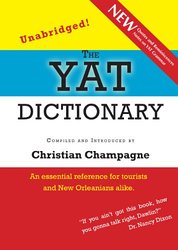
The cover of Christian Champagne’s poetry book.

YAT DICTIONARY ine YAT DICTIONARY2Chris Champagne, author of  Roach Opera and The Yat Dictionary who has been voted Best Comedian in New Orleans two years running, interviewed me about my books for his podcast. It’s a great interview. He made me want to read my books.

The first part of the podcast is a comedy quiz show, my interview starts at 24:37. I recommend following his podcast; it’s funny and I learned most of the truth about New Orleans politics through Chris’s comedy. He is a true New Orleanian.

Avi: Read Good Writing

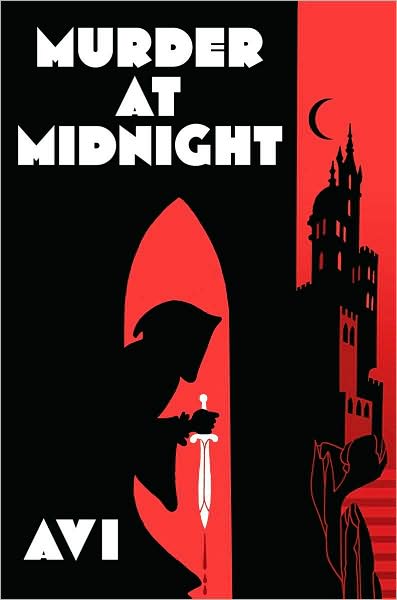
Murder1Today I discovered an amazing children’s author: Avi. Avi has written over seventy books for young readers to young adults and is still writing. My first foray into his work was a fun historical fiction novel called Murder at Midnight about a magician’s assistant and the magic of the printing press. This evening, I plan to read Crispin: The Cross of Lead  which won the Newberry Award. crispin

Curious to learn about his writing techniques, I was delighted to find that he has a writer’s blog called Wordcraft. It is insightful, candid and full of useful information. I plan on spending plenty of time catching up on the last three years of his posts. He kindly put up a tag index, so I can go through his posts by topic.

I especially enjoyed reading an entry on re-energizing. Avi wrote “There is another way to re-energize, to wash away your author’s eyes of murky fog: read good writing. Not just any writing, but something you admire, that the world has told you is good, that is good.” His writing is my re-energizer today.

A Change of Scenery: Hiking for Writers

Trail Signs in Ravensdale RetreaThis winter has been wonderfully warm and spring-like in my neck of the woods, so I’ve been going on some fun walks. Thanks to a post by harrybipedhiking, a local blogger, I recently discovered Ravensdale Retreat.

This place is an amazing contradiction–A beautiful forest with a little stream that runs through it, packed between a busy road and railroad tracks. When you enter, you expect it to be a very short jaunt, but the trail keeps going and going. Then, at the lovely sign pictured above, splits into two trails which eventually lead to a grassy road to a gravel road to some less-traveled trails beyond.

The sun comes through the moss covered treesThe slanted light coming through the moss-covered trees made me think that trolls, gnomes and fairies had to be hiding everywhere. A frog taunted us, never to be seen. We decided he was a dimension-hopping frog because whenever we thought we were getting close to him, his croak came from a completely different direction. Often along the walk, the traffic noises  disappeared and it was easy to forget we were surrounded by civilization.

This forest definitely made me think of fairy tales and magical creatures. Inspiring for any writer. I will not be surprised if the scenes I captured in the many photographs I took end up in my stories even though I don’t write fantasy. A fern lined path

It’s easy to see how hiking can help a writer describe beautiful scenes, but how else is hiking helpful for writers?

Any form of exercise is great, for getting the blood pumping and oxygenating the brain cells, but I also found some fun articles specific to walking and hiking. Enjoy!

Why Walking Helps Us Think – The New Yorker

Hiking Makes You Smarter – Backpacker Magazine

writers-take-a-hike-if-you-know-whats-good-for-you – blog post

A circle of mushrooms on the end of a felled tree
A mini fairy ring of pink mushrooms

Booklist: Finding Books To Get Excited About

Books through a fish eye lensDuring my last visit to the library–on my mad hunt for middle grade fiction represented by agents I want to query–I happened upon Booklist, a magazine full of book reviews from the American Library Association. I browsed the magazine and noticed it also had a web component booklistonline.com.  

Though that site wants you to sign up, or subscribe to the magazine, it also links to a blog  The Booklist Reader which has lots of great book reviews, promo videos, articles and booklists. Just browsing the site to tell you about it, I found a book I can’t wait to read. I already put a hold on it at my local library (the book is on order).

The book is:

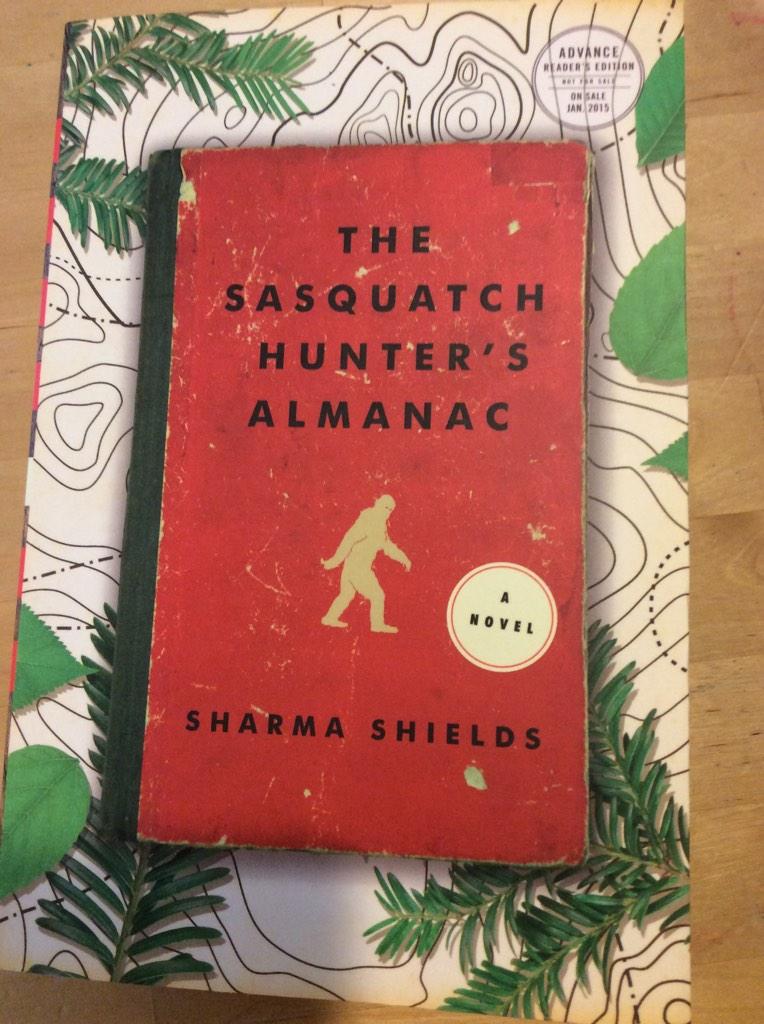
The Sasquatch Hunter’s Almanac, by Sharma Shields

The sasquatch hunter's almanac book cover

I was first drawn to the book because I’ve started a middle grade fiction story about a Sasquatch hunter. Then, in the description it said that the Sasquatch is named Mr. Krantz–presumably after Dr. Krantz who I met while studying at W.S.U. It turned out that the author is from Spokane, WA. I was not at all surprised to see, when I finished the review, that I had been drawn to a review by a librarian at the Seattle Public Library.

This is not a children’s book, and most likely not related to my story in the least, but I’m very excited to read it.

How do you find books for your reading list?

Ever hunted a Sasquatch?

Sources For Guided Revision

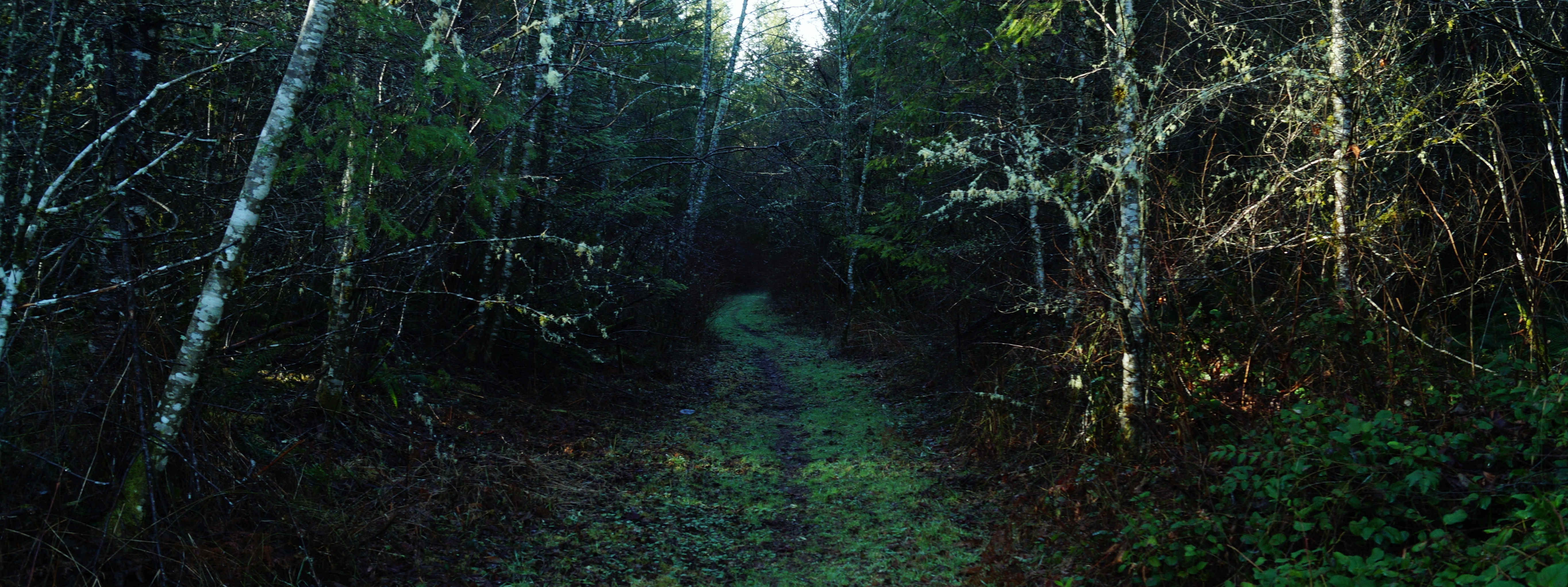
A grassy path through the woods  Since my first read-through of my novel–in which I could barely read it for all the horrible typos and grammar issues and ended up hating my manuscript–I have been actively avoiding my novel. However, having given myself a strict deadline which is rapidly approaching, it’s time to get to work. As I am still in the early stages of this project, I thought I would look for some guidance to plot my course and hopefully find a call to action.

Searching the tag “revision” in WordPress led me to :

Nicole Dacanay’s blog Team Wanderlust – which recommended Brandon Sanderson’s videos and Susan Dennard’s in-depth information on Revising Your Novel complete with worksheets

and

The Write Shelf  blog – which recommended Revision & Self-Editing by James Scott Bell

While picking up Mr. Bell”s book from the library, I also checked out How I Write by Janet Evanovich with Ina Yalof

Having armed myself with all sorts of new tools, where will I start (after I fix all my typos and address my previous notes)?

Both Susan Dennard and James Scott Bell recommend printing out your manuscript and putting it in a binder. For my first read-through I thought it would help to print it to look like a book, so I printed horizontally with two pages to a sheet, double sided. This time, I’ll still go double sided but with larger print, double-spaced, vertically and put it in a binder. I’ll also print out Susan’s Worksheets to help keep my notes organized.

I think I will start my process by following Susan Dennard’s system supplemented by Mr. Bell’s “The Ultimate Revision Checklist” while keeping a copy of Ms. Evanovich’s “A Rewriting Checklist” close-by.

The most important message from my research today is : Stop sweating the small stuff and start with the big picture. It is more important for me to look at the plot, characters, and scenes in my story, so I need to stop staring at each sentence–that comes later.

Be Prepared: Inspiration Can Surprise You!

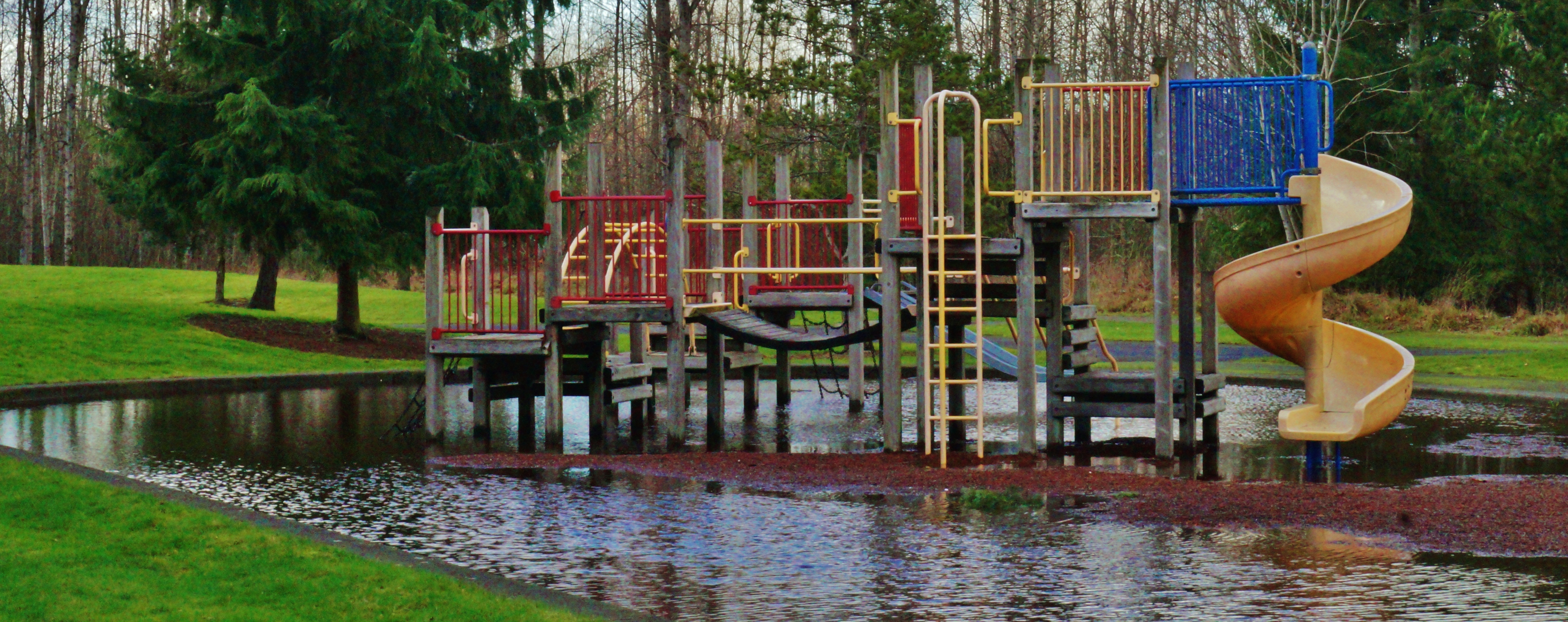
A flooded play areaYesterday, I had my whole day planned–the whole week actually–but while wandering the blogs of wordpress, I happened upon Catherine Austen’s Blog – Deadline? What Deadline? She had a post about writing contests for kids that ended with some no entry fee writing contests for adults. As usual, I find a contest I’d like to enter just before (or directly after) the deadline, but one got me excited: Highlights Magazine’s Fiction Contest.

I’ve tried entering some of my short stories for adults in contests and submitted to a few magazines, but I hadn’t  thought of writing short stories for kids. I was focused on completing chapter books and writing query letters. I loved Highlights Magazine when I was little, especially searching for the hidden objects throughout the magazine. So, I got really excited.

The theme this year is mysteries. This was a little challenging. How to write a mystery for kids in 500-750 words. I researched past winners and mysteries for kids from the library, but finally found inspiration from a mini-mystery with a funny solution from my past.

Once I came up with my story idea, I took a nice, long walk. On my walk I came up with my characters names, traits and quirks. I thought about how to build up the mystery before revealing the solution and when I got home, I wrote three quick pages of notes.

I’m not sure I’ll be able to tell this story in 500-750 words, or if I will submit it to the Highlights contest, but I’m excited about my new characters and the little mystery could be part of a larger story. You just never know where inspiration will come from.

I happened up two other blogs that might inspire ideas:

https://first50.wordpress.com/

https://writingcontests.wordpress.com/

Have you found inspiration in any surprising places lately?

Finding the Nearsighted Narwhal

A pod of narwhalsIt’s easy as a self published author to focus all of your promotion and marketing on the web. However, I recently experienced the joy of seeing my books on the shelves of a local bookstore and it feels great!

It all started with a facebook invitation to a Saturday night showing of local films. It looked like fun, so I looked up the location. It turned out that the films were being shown at a small bookstore called the Nearsighted Narwhal.

The store not only had a wonderful name, but the website said it took self published books on commission. It sounded like a great opportunity to get my children’s books into the hands of readers, so I took a look at their commissions contract.

logo for the Nearsighted Narwhal bookstore
2610A 6th Ave., Tacoma, WA 98406 253.301.4098 Sunday 10 – 6, Monday Closed, Tuesday 10-10 Wednesday-Saturday 10 – 7

As an artist and crafter, I have put items in stores on commission before–usually the store takes at least 60% of the sale price leaving the artist with 40% or less. The Nearsighted Narwhal only takes 30% of the sale price. So, I printed off the contract, signed a couple of my books and eagerly awaited the event.

I arrived a half hour early to conduct business before the show. I had expected the entire store to be crowded with books, with the amount of people self publishing these days, but there were three double sided free-standing racks at the front of the store, nicely organized with great visibility. There were some crafts in the middle of the store and the back of the store was filled with self published ‘zines.

I walked to the desk and introduced myself to the proprietors who put price tags on my books and walked them straight to the children’s book section at the very front of the store. It was wonderful.

The local films that were shown were entertaining and of high quality. I’m so glad I decided to look into this local event and that I found this great supporter of local authors.

Have you looked into places that might carry your books on commission? I’m thinking of looking into children’s clothing stores that take clothing on commission. They may also be interested in books.

Reading as a Writer: Today I learned something I do NOT want to know!

Writing in a nice outdoor setting.Recently, while reading a manuscript, I came across some dialogue that looked to be punctuated incorrectly, so I made a note about it that I intended to give to the author. This morning, I got online to find reputable sources that would back my claim. To my surprise, honestly horror, I found seven different sources that said: the rule for quotation marks in dialogue, if one person is speaking continuously over multiple paragraphs, is to start the speech with quotation marks and continue to put quotation marks at the beginning of each paragraph, until finally putting closing quotation marks at the conclusion of the speech. Only one source agreed with me, that if a single person is speaking, no matter how long their speech, the writer puts quotation marks at the beginning and closing quotation marks at the end.

I looked over the pages of dialogue in the manuscript again, since the overwhelming majority of style informants told me I was wrong, and I still couldn’t stomach it. Each time I saw the quotation marks at the beginning of a paragraph, it triggered new speaker in my reader’s brain. I tried to recall any memory of seeing this form of monologue before. I started tearing through the books on my shelves looking for just one other example, but didn’t find one. It looked like the characters in the books on my shelves didn’t give speeches–especially not the kind that would have separate paragraphs.

I wondered if this was an evolution of style, something new that I missed, but that wasn’t the answer: I’ve been reading a lot of current fiction lately. Those extra quotation marks just looked so wrong.

Another thing that bothered me about “the rule” was the reasoning. In all of the informative posts I read on the subject, the reason for the extra quotation marks was so the “lazy reader” wouldn’t forget that someone was talking. Honestly?  I’m supposed to put weird, out of place quotation marks within one character’s monologue–as a rule– because someone thought my readers would forget someone was talking? I’m going to go with rules, once learned, are meant to be broken.

I can’t imagine what it would take for me to put those distracting, confusing marks in my dialogue, but I now know better than to tell someone else that it’s wrong. At the moment I don’t see any of my characters giving long-winded speeches, but if they do, I’ll make sure they won’t speak in paragraphs. I do not foresee my readers ever being described as “lazy”.

Have any of you come across writing “rules” that you can’t abide? I’d love to hear about it.

How To Make Each Query Letter Personal

tulips on tableYou’ve written a hook to draw in the reader. You’ve summarized your story in a paragraph or two. You’ve ended the letter with a bio that makes it clear you are the only person to write your book. You received great feedback from online forums. Your critique group loves it. So it’s time to send your query letter off to all of the agents you selected, right?

Not quite yet.

First, make sure you know the agent’s name and spell it correctly. From everything I’ve read this is every agent’s pet peeve.

Second, you need to find a way to let each agent know why you would like them to represent you.

As you look through your list of agents you are going to query, think about why you chose them and make some notes (For tips on how to choose agents for your short list type Agent Query in the search bar above for previous posts on the subject). You may have chosen some of the agents on your list over another agent in the same agency. What was the deciding factor?

One important way to learn about agents is to read the books they represent. While researching in this way, you may discover that an agent represents an author you admire. If so, this is a great way to personalize your query letter. If you get really lucky, you may find a book the agent represents that is similar to yours in some way. A one to two sentence compare and contrast is the perfect way to show you’ve done your homework.

Another thing to add to your query is how your book fits with what the agent is looking for. Look at the agent’s blog, look for interviews, look for videos from conferences on youtube.com, look at their page on agentquery.com and publishersmarketplace.com to find the kinds of books they want. Mention their specific requests that pertain to your book and then offer your book for consideration.

Finding the right agent is all about patience. You not only want to sell your book and get it into the hands of readers, but you want to create a long-term business relationship with someone who will champion your work. Once you’ve put in the time to decide on the agents you want to query, let them know why you think they are right for you and your book.

Like the rest of us, an agent doesn’t want a bunch of form letters in the mail (email). Let her know that you’ve chosen her based on her merit and your belief that she will find the right home for your book based on her past sales, and you are much more likely to get a response.