Busy Writer’s Life Update: Gator McBumpypants 2 and searching for an agent

Herman becomes a dragon at Hogwarts

I can’t seem to stick to my goal of a weekly blog, but I’ll keep trying. However, while I’ve been neglecting this blog, my writing life has been very busy indeed.

First, I’ve finished the text and taken the pictures for the second book in my Gator McBumpypants series. I’m pretty sure I’ll stick with the title Gator McBumpypants in Herman Learns to Fly. I had the idea for this second book as I was working on the first. The reactions from my readers the moment they finished the first book (e.g. “Herman needs to learn to fly”, “When does Herman learn to fly”, etc.) prompted me to not waste any time before writing the sequel. I hope to have the second book available for the holidays. I plan to finish my guide for self publishing children’s books while I go through the process a second time. That way I’ll be sure I don’t leave anything out. Look for it in late November/early December. If any of you have specific questions about self publishing children’s books  you would like me to answer, please ask in the comment section, so I’m sure to put it in my free guide for you.

Secondly, I’ve been working on my query letter for my Middle Grade Fiction story. A well rounded writing life should at least attempt traditional publishing routes, right?  The rough draft is finished and edited. The summary and hook for the query were positively reviewed by a group of writers. The hard parts over right? Ohhhh, NO. I spend countless hours each week trying to figure out which agent/s I want to query.Many books I read say to read everything I can in my genre, find a book similar to my work that I like and find out who the author’s agent is. Every time I finally find something similar, find out who the agent is, research the agent on agent query or their website –the agent isn’t accepting new clients. So frustrating!

I’ve decided to do the opposite of the original advise: find an agent that sounds promising and accepts new clients, then read the books they represent. This last week I found a little help in my search, a great blog called Middle Grade Ninja. Middle Grade Ninja has mini interviews (7 questions) with a list of authors and a list of agents. I’ve been going down the list of agents, cross checking them on agent query and then looking for any other interviews on the web. Then, if they still look promising (so far I’ve found two), I’ll download the books they represent from the library, saving so much time and money. I usually don’t like reading ebooks on my laptop. I don’t have a kindle or other specific ebook device, so I’m not sure if I would feel differently, but I’ve only read all the way through about 5 books on my laptop. I don’t like the glow behind the words; I tend to read what I can in about 10-20 minutes and then not go back.  However, for this project I love ebooks. I can find out in the first 10-20 minutes if the work is like mine, if I like it, if it was well edited, etc. Imagine having to request each book at the library and wait for the few you could find to become available and the cost of purchasing the ones you couldn’t get from the library. I have to admit, the downloadable ebook is the true friend of the author attempting to find an agent through a query letter.

Thirdly, I’ve been focusing on reading. My whole life I’ve been a voracious reader. I often come back from the library with ten to twenty books at a time. However, for the last few years, the majority of the books I read to the end were How To books. I would pick up plenty of novels, but not get past the first few chapters. Finishing a few of the novels I read  in the last year was like listening to a dentist’s drill through my eyes and letting it echo through my brain. Hopefully, that’s all over. I finally joined goodreads (to set up my author page for Gator McBumpypants) and after reading an article about the new recommendation algorithm, I spent some time rating many of the books I’ve read. At first I didn’t think the recommendations were very accurate, but after a while I started finding book descriptions that sounded very interesting. Every book I chose to read from the recommendations, so far, has been great! I’m very excited. I used to think I was an intellectually eclectic reader, but I’m finding out that, though my interests are vast, they are also semi-specific. It’s nice to not have to wade through ALL the muck to find what makes me happy. I’ve posed this challenge to my critique group: to find a the closest book to your work. I’m looking for something like my novel, but I still haven’t found anything close. I’m hoping goodreads will be a catalyst to finding some similar work through my preferences and friends. Meanwhile search engines and libraries will continue to be my stabbing grounds.

Have you found the novel you will compare your work to, or use after the fact as a learning tool? I’d love to hear how you found it.

HAPPY HALLOWEEN! What will you be this year?
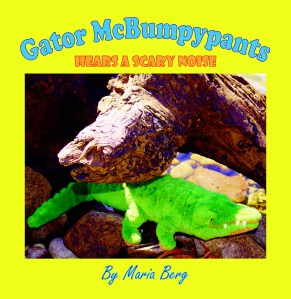
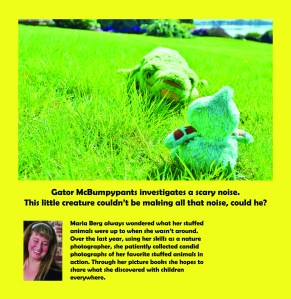
Gator McBumpypants Hears a Scary Noise

Picture Book Cover 00 Back Cover Yellow

I am excited to announce that my children’s picture book Gator McBumpypants Hears a Scary Noise is now available on my create space estore. It is also available at amazon and can be purchased for Kindle.

Gator McBumpypants Hears a Scary Noise is a full color picture book  about a friendly stuffed alligator who investigates a noise that is interrupting his happy day. Unlike most picture books these days, Gator McBumpypants Hears a Scary Noise is illustrated with photographs. My favorite response I’ve had to the book so far was from a little girl who asked, “Are there really alligators in the lake?”

For those of you who are interested in self publishing a children’s book, now that I have a nice product I am proud of, I will write up a detailed account of the steps I went through and make it available to you as soon as I’m finished.

Finishing – Making a Picture Book

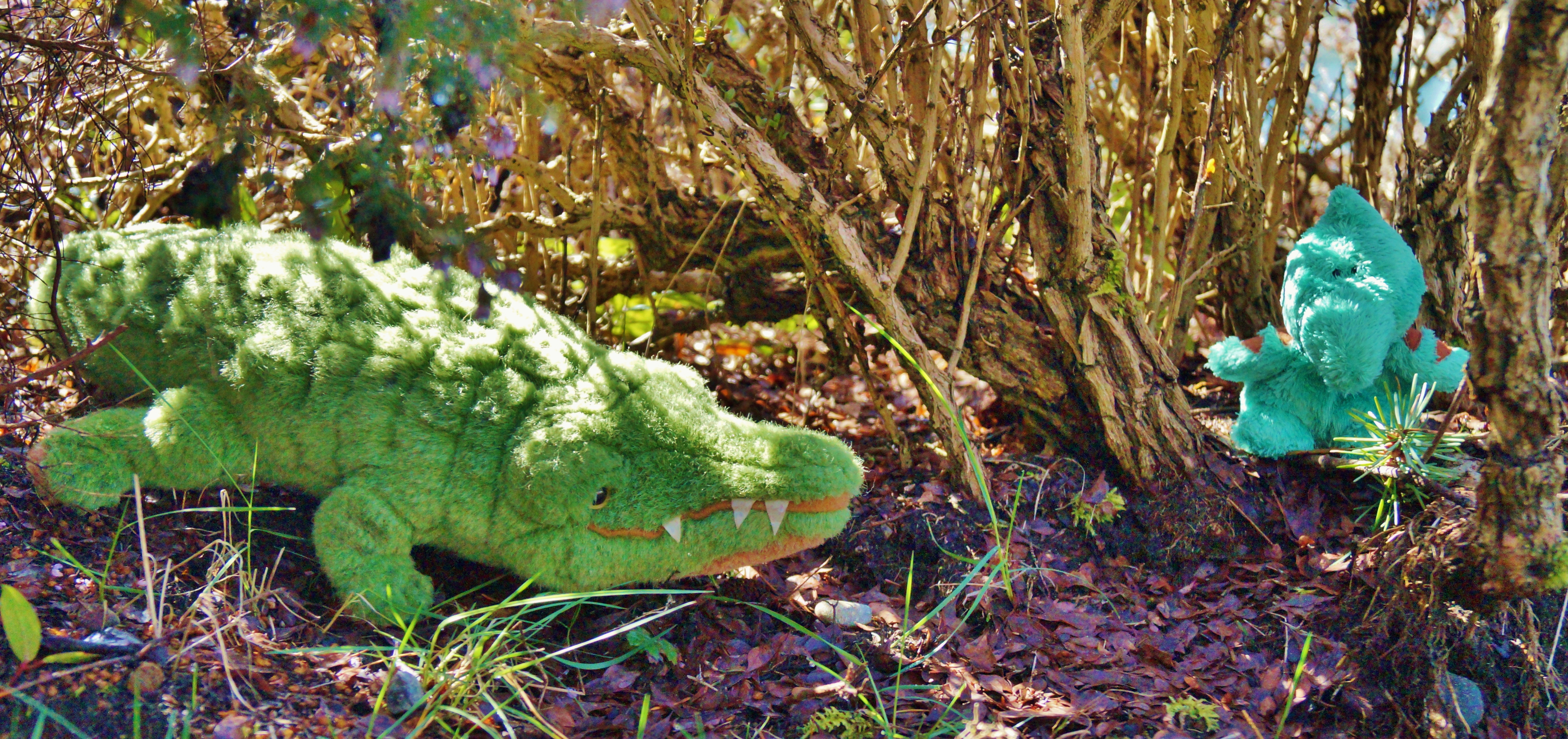
Gator McBumpypants and Herman in the shady placeContinuing with my theme of finishing what I begin, I’ve been spending most of my time finishing the picture book I started in January. At the moment, I sit in the 24 hour waiting period of review from Create Space (Amazon) before I can get to work on my ebook. While I wait, I thought I’d give you some tips and tricks I’ve learned along the way.

1. PATIENCE– Be patient and multi-task. Unlike what the rate of celebrity picture book publications might make you think, making a picture book is hard and incredibly time consuming. You have to love your idea and see it through while you work on two, three or four other things. The pictures for my book, influenced the story, which then influenced the pictures I took. Over time my ability to photograph my story improved which made me take more illustrative pictures. If I had rushed the process, my characters wouldn’t have had time to come alive.

2. Make your book  for a child who wants it (can be you).  I think it would have taken much longer to finish, or maybe I wouldn’t have finished at all, without my niece wanting her finished copy. She gave me perceptive feedback on my pictures and shared the pictures with her younger cousin, telling the story in her own way, which was the best feedback ever (though I’m still a little confused where some of her story fit with the pictures).

3. Know your Tools – If patience and inspiration weren’t so important, I would have put this first. It is my own fault this keeps taking so long. Sometimes when I work this hard, it seems like the majority of Western Society instantly found ways to buy all of the newest technology, and left me out. It took every tool I had to make my picture book, including gifts from every loved one since 2006. But I did it, so I want to share the things that hung me up. I started being frustrated by the difference between what I saw on the screen (RGB) and what my printer printed (CMYK). I spent a lot of time trying to make my Microsoft laptop video card adjust to match the printed images, but that was awful. I have a Mac with Photoshop CS. I got everything I needed from Photoshop CS and learned what I needed from youtube videos. I have many specific pointers based on specific technical issues, but I will save them for when my book is successfully printed.

4. A Book Is Forever – I started this project with the idea that I wanted to see what the pictures of my stuffed animals exploring my world would look like. Now, I’ve made a children’s picture book and I realize I have to take responsibility for my creation. As I face the final stages of self publishing and prepare to release it into the world, I hear my nagging inner voice say Are You Ready? Are you doing your best?

Just last week my mom called saying she found a box of children’s books in my old room. I think, but don’t trust, I put them there on purpose long ago. She wanted to know if I’d mind if she give them to my niece and nephews. I loved the idea. I pictured paperbacks of the Ramona series and some Judy Blume. I remembered reading the entire series of the Rescuers mice on an airplane and Ralph the motorcycle mouse at camp. But then I also saw me reading Dickens, Jaws and A Clockwork Orange. I raided  Dad’s desk to find real books to read. I wasn’t allowed in Dad’s den, and I didn’t sleep so well. I convinced Mom to look through the box, just in case. She found Ramona books and Ralph on his Motorcycle. Talking about them made me want those books back. Maybe when the kids are done reading them, they’ll let me borrow a few. I hope my efforts bring similar joyful reading experiences as the books in that box brought me.

To finish what I begin – Tips for finishing a draft

In you go

With all of the kids spending as much time in the lake as they could before heading back to school, I must have become nostalgic for a moment because I suddenly remembered something from my blue bird (tiny campfire girls) days — “to finish what I begin.” It really stuck in my head so I looked up where I thought it was from, the Blue Bird wish:

“To have fun.

To learn to make beautiful things.

To remember to finish what I begin.  

To learn to keep my temper in.

And to learn about nature and living outdoors.

To have adventures with all sorts of things.

To make friends.”

from alicemariebeard.com/campfire/memories.htm

“To finish what I begin” is my focus in my writing life right now, but a good dose of “to learn to keep my temper in” and fun and friends could definitely help me make beautiful things.

Tips for finishing a draft

1. Jump around – Ideas for scenes don’t usual come in a logical linear order. Don’t let ideas pass you by because they doesn’t happen in the scene you’re working on. Get into it. Write the ending. Write some dialogue that you have no idea where to put yet. I like to use red text to write in a general idea of what I think will happen in the places I skip, so when the idea for something I skipped in chapter one, because I was writing the ending, finally comes to me, I have a quick visual cue telling me exactly where I want to start.

2. Push through – Getting the words and ideas down on the page is the most important part of finishing your draft. Even if the words aren’t feeling quite write, or flowing the way you would like, keep going until you finish the scene, or get to the end of the idea. Don’t give up. Don’t get frustrated. The rewrite is when you get to drive yourself nuts striving for perfection.

3. Be Patient – Though it is good to push through when you have an idea, but it doesn’t seem to  flow the way you’d like, you don’t want to force things. When I want to finish a project, but it’s coming along more slowly than I would like, I often here the mean voice in my head speak up with things like, “I don’t even like this anyway,” or, “Nobody’s going to read this. What’s the point.” That is when I am very grateful I have a supportive friend who says, “Be patient with yourself” and “Tomorrow’s another day.” Some ideas just want more time than others, so be patient.

4. Ask for Help – Any story can be improved by some good research. Reading and looking things up on the internet can add a lot of fuel for ideas, but can also be a time suck leading you down a rabbit hole that somehow ends in useless celebrity gossip. When you really get stuck for story inspiration, ask for help. Think of someone you know who might know more than you do about a certain topic and give them a call. It’s a great break from writing and people really like being appreciated for their expertise. I’m always happily surprised by the solutions people come up with that I didn’t think of.

5. Focus on One Piece at a Time – When you have most of your story on the page, but it’s time to put all the pieces together and get rid of all the red skipped sections, yes, read through, thinking about everything that you have left to finish, but then just focus on one of those sections at a time. Listing everything you have left to do can be overwhelming and make you want to put it aside and do something else. Don’t. Just pick one scene you have left to finish and start with any writing technique that gets you writing. I like to start with dialogue: You may like to describe a setting or a character to get you into the scene. Often times, the little skipped parts in your draft only need a paragraph or two to tie things together, but once you get started, something that once seemed sticky as tar may flow like a river.

Finding Fresh Eyes

An adventure creates new perspective.
An adventure creates new perspective. Photo by Andrick Schall

I had forgotten how inspiring a week away from home can be, but my recent trip to Alaska was exactly what I needed to get back to my work with fresh eyes.

A fun side note: I have now been to every state in the union!

Finding the Balance: Critique and Creativity

singing or bird watching
Balance critique with things you love to do.

In a way I’m lucky. I grew up in a hyper-critical environment and still chose to perform in public. However, criticism gets old and it sticks in the psyche more than praise, which, sadly, is part of human nature. To be a writer, especially in the world of anonymous online comments, we have to prepare for the worst of criticisms. I don’t have a television that works for anything but being a screen for a DVD player, but I have found, “celebrities read mean tweets” online and find it quite enlightening. I also enjoy “@ midnight” as a glimpse into critique that is hilarious.

So, how do we prepare ourselves, or at least find enough balance in our own lives to combat the constant negative responses that, for no apparent reason, go along with creative effort? We find our joy. What I mean is, balance the amount of time that you purposely spend critiquing your work and others’ with the same amount of time writing something that makes you happy, or, engaging with friends and not talking about writing, or bragging about your work if that makes you happy. An artist needs both feedback and free creation, or love becomes a job.

I am also very lucky because when I wanted a group of writers to work with, I found two great people who balance me out. Finding the right critique group is so important. Don’t let yourself get desperate to find collaborators, or think that more opinions are better. The right people are patient and understand that writing is an art, and a craft. It takes daily effort, but also time for thought. Art often comes upon a person and takes time to control. A good critique group needs people who are comfortable and trusting, but always want to push harder and learn something new. A good critique group is never complacent.

Critique, sadly is part of everything a human does. Why? Because for some reason, as entities on earth, we have the initiative to improve ourselves. There are plenty of theories and beliefs on this topic, but self-improvement is a consensus. Being part of a critique group prepares a writer in many ways for the world of criticisms to come after the work is done. Healthy critique is three fold: being open to critique, being willing to take critique, and giving useful critiques. None of this is easy, or innate. It takes time, patience, learning, trust and skill.

First – Being open to critique: This is not easy. It means you are willing to change. It means you are willing to hear that your work is not perfect, that it needs changing based on other people’s opinions. Sometimes, some of your work will never get to this step and you need to really ask yourself if you want to try something you wrote that you don’t really care about (like that exists) and see if you’re ready. If you get mean to the people in your critique group because they thought you could use a comma before “but”, you might not be ready.

Second –Willing to take critique: I have plenty of pages from my critique group that are full of copious notes, but until I am willing to change, I will repeat myself. I didn’t like learning that I had a “he, she, I” problem. That meant I wasn’t perfect and I had to research sentence structures and change! So I did, but it was not easy. I still have issues with “read it out loud, you’ll figure it out”, because other people think if I just read something out loud, I’ll figure out why my sentences are clunky, to them. They have yet to pick up on the fact that I speak that way. Eventually my voice will be its own clunky-graceful self, but that doesn’t mean I don’t have to do the work. Every critique asked for should be taken seriously and that is the whole point of being willing to take critique. If you’re not willing to listen and try to see the other point of view, even (and especially) if you think you know better, then you are not ready for a critique group.

Third – Critiquing: This is the hardest. I was quite uncomfortable with critique as a practice when my group first started and that is a good place to start. In order to critique people who are working in the same manner that you are, who spend so much time and energy putting their words together to tell stories and trying in every way they can to get their voices heard, those are the people who need as much support as criticism. Honesty is the hardest medicine to administer, but honesty is expected and wanted.

So how do you give a good critique? The answer is it takes time. No matter what you do, find something you honestly like about the writing, and start with that. Then make sure any grammatical corrections you address are based on fact, not opinion. When addressing any content issues, make sure to acknowledge that the work is not your own and any changes you recommend are your opinion offered with the best of intentions.

With all of that in mind, get your favorite activities ready, because creating a balance is the other half of the work. And remember, reading is part of the work of a writer, so unless the book you’re reading makes you lose yourself in happiness and you aren’t dissecting every other sentence, it doesn’t count.

Getting Words on the Page – Three Tools to Increase Productivity

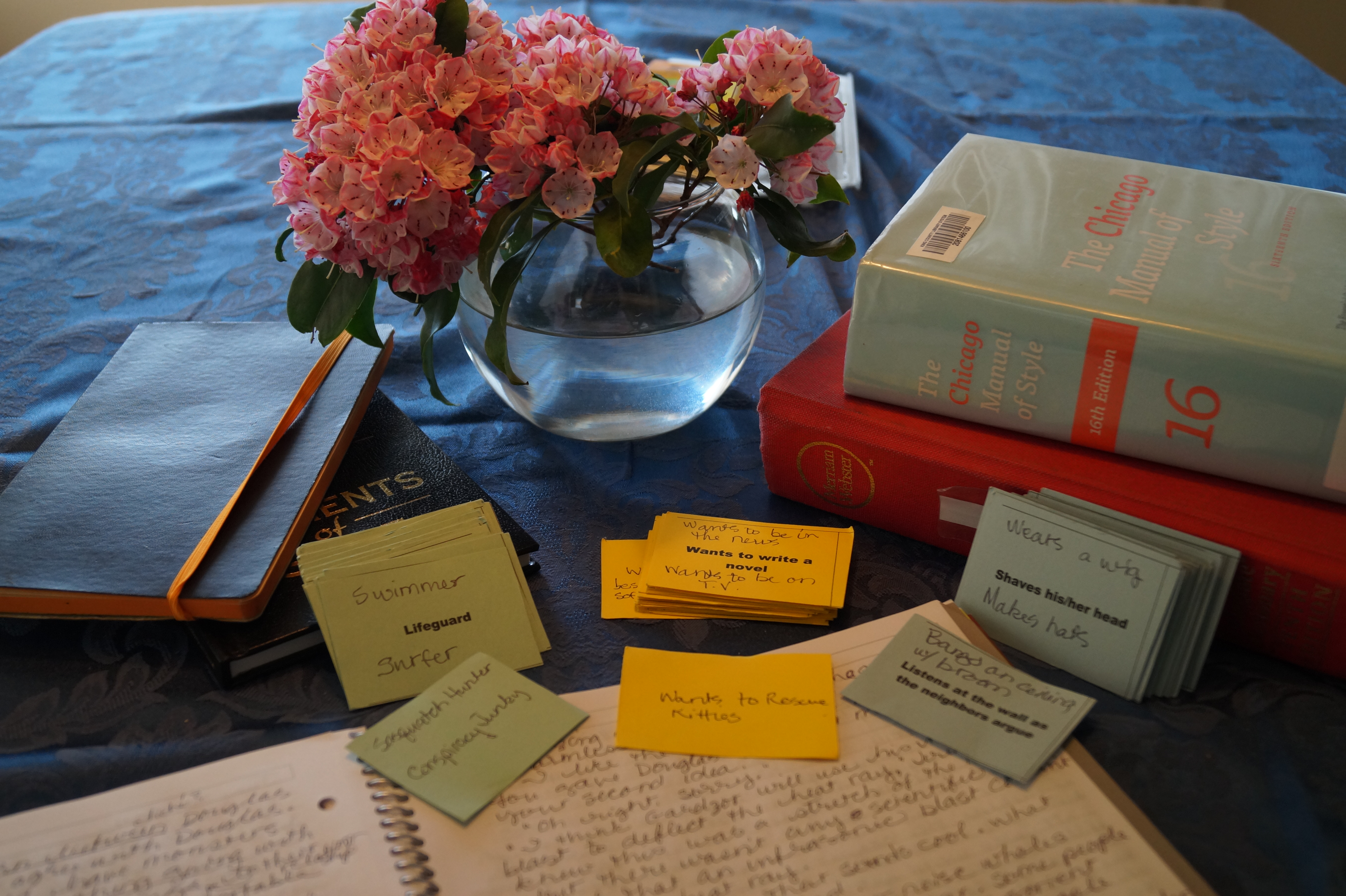
How fun is this
The Plot-o-Matic and Dialog warm-up in Morning Pages

It’s almost time for me to print out the rough draft of my novel, to read through the whole thing with fresh eyes, as if I just brought it home from the bookstore. But first, I have a few more goals to accomplish: I WILL finish reading Midnight’s Children by Salman Rushdie (I was born at exactly midnight and I enjoyed many of his other books, so I thought it would be a fun read when I bought it at the airport about five years ago. It seems no matter how much I read, I’m only half-way through.) and I WILL finish the draft of my mid-grade fiction story and make a mock-up of my picture book. I’m pretty close on all of these goals so I’ve given myself (and now you can hold me to it) until the end of the July 4th weekend to finish (these goals) before the big first-draft read.

In the meantime, I thought I would share some writing tools that helped me get all my words to the page:

  1. Morning Pages – as recommended by Julia Cameron author of many inspirational books including the Complete Artists Way where I first discovered morning pages.
  2. The Plot-o-Matic – a rendition of PLOTTOMATIC! introduced by John Dufresne in his intelligent and useful book on writing, Is Life Like This?: A Guide to Writing Your First Novel in Six Months.
  3. Dialogue Warm-up – a way that I get my writing going when my plan for the day escapes me. When I run out of things to say, I let my characters start up a conversation and watch where it goes.

Writing every day has not been easy for me, but I’m pretty close now. Throughout my journey to (almost) writing every day, I read everything in my local library on writing and everything recommended to me, plus a lot more. Only a few things really stuck with me and, through some development, still work for me.

Everyone has different amounts of time they can commit to their writing and most have to SQUEEZE it into their hectic lives (and family tithes). Making time for your passion makes you better for all the other people in your life, so that is why I want to emphasize . . .

  1. Morning Pages – Get up twenty minutes early if you have to. It will be totally worth it. Find three lined 8.5 X 11 sheets of paper. I use a thick college ruled notebook (I’m addicted to kukumusu designs, but they’re expensive and my super-favorite is already out of print, so I buy a bunch at a time). Start writing. Do not get dressed. Maybe make a pot of tea or coffee, but then – Start writing. Do not get up and do the things you remind yourself to do while you’re writing. Do not lift pen from paper. Write everything that comes to mind even if it is “I can’t think of anything” then “I’m spacing off”, etc. Keep writing until you fill all three pages. No excuses. No I have to’s.

Staying at the page for all three pages is much more difficult than I ever expected. I’ve worked with morning pages for years and looking back at my filled journals, there was very little written, but paragraphs of things done and things to do, with either woeful disappointments in not accomplishing these lists, or motivational speeches to myself of how I would accomplish these lists. After a while, however, I noticed if I did my morning pages those thoughts wouldn’t nag at me when I took a walk, or when I tried to meditate. I had more room for creative thought. More recently, I’ve started spending only the first page on those should do’s and the other two pages on character development and story ideas. These days most of my writing for the day is retyping my Morning Pages. I took a long time to get here, but if you have a story burning inside you, but can’t find time to write, set that alarm twenty minutes earlier than normal and give Morning Pages a try.

What about those days when even your morning pages won’t get you where you want to go? You feel dry of ideas, you want someone to just hand you a character, a conflict, or your character’s next step. Try the . . .

    1. Plot-o-Matic – I loved reading Dufresne’s book, Is Life Like This?: A Guide to Writing Your First Novel in Six Months and I will bring it up more when I work through my rewrite. A plot-o-matic is easy to make. I made a Word document with large print, bold type, centered in 3” X 2” rectangles. I printed the subjects – Dufresne used occupations and I added character descriptions like “Conspiracy Junky” and “Disco Dancer”- on green cardstock, the needs or wants of those subjects on yellow cardstock, and an action the character took on blue cardstock. I cut out the different colored “cards” and turned them upside down so I couldn’t see what my options were and chose one of each. If you take a look at the picture at the top of this post you’ll see I drew “A conspiracy junky wants to rescue kittens, so he listens at the wall as the neighbors argue” Fun right? Why rescue kittens? What conspiracy could the neighbors be part of? Are they the neighbors’ kittens? This tool can be great for story ideas, but you can also customize it to help you decide what your characters will do next. Limit the subject pile to only include your characters and choose wants and actions until you feel inspired. Remember to write at least five minutes for every combination you choose. Exploring what you don’t think will happen can be even more exciting than what you thought you were looking for.

If you don’t want to make a plot-o-matic, there are similar products you can buy:
The Storymatic Classic – 540 Unique Cards
Rememory – Share Memories and Make New Ones
Story Slam – Hundreds of cards with more than 600 unique story concepts, for endless storytelling fun.
The Amazing Story Generator: Creates Thousands of Writing Prompts

And finally, my personal trick that gets my mental juices flowing when I’m not quite sure what to write about . . .

  1. Dialogue warm-up – Discovering dialogue as a way to get my juices flowing was a major step to finishing the draft of my novel. The way it works for me is: I’ll imagine I’m speaking from one of my character’s point of view. Who does she want to talk to today? Who might she run into in the scene I’m thinking about? Who do I picture when I write, “Oh, wow, didn’t expect to see you here.” I let their conversation flow. While I write, I picture their motivations, what they are saying and not saying, who they might talk about. Where are they as they converse? Are they in public? Does another person join them? By the time I have finished writing a short conversation, I often have my next scene in my head, even if I never use the conversation in a finished piece, somehow my characters tell me what I need to know. Try it. Let the conversation flow. It’s fun. Big Tip: Don’t worry about dialog punctuation, or he said she said while you’re getting it out in these dialogue warm-ups. Only pay attention to starting a new paragraph for each new person speaking and adding physical descriptions of vocal or body language nuances that seem important. Be in the moment. You can put in all the other stuff when the conversation is over.

I hope at least one of these tools that work for me helps you find what works for you. The only way to know what works, and doesn’t work, is to physically put pen to paper in ways you haven’t tried yet. The job is only a little bit thinkin’ about it and a whole lot of writing it down.

I would love to hear some of the things you’ve discovered to keep pen to page. Please share your tips in the comments.

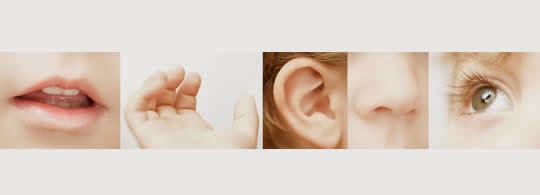
Exploring the Senses – Finale: Using sensory information in your writing

image from asiadesignwithpurpose.com

Through this series on exploring the senses we (you and I) have explored all the major senses and more. We’ve experimented with how sensual stimuli trigger memories that can inspire writing and played with different ways to add sensory detail to our writing. Now, I want to talk about when and how to use this lush sensory information we’ve discovered.

While writing your first draft, feel free to write all of the sensory details for everyone and everything. During the rewrite however, it’s important to ask yourself: Did I add this detail because it tells the reader something important about the character, because it is an important element of the story, or just because I thought it was cool? If the honest answer is the last one, take it out. Even if you came up with the greatest way to describe the color of the sky or the smell of water, if the sensory detail is not important to telling the story, take it out. Don’t let this statement turn you away from sensory detail in any way. Most sensory details add depth to your characters and dimensionality to your settings. I solely wish to remind you to be aware of your readers. When you bring sights, sounds and smells to a reader’s attention, s/he will expect them to have importance and be let down if they don’t.

Unexpected sights: The little bunny and its surroundings looked normal at first, but upon closer examination the bunny was really a swirl of white dots, as if I could see its cells magnified in space.

Creative mismatching of sensory detail is a quick cue to readers that they aren’t in Kansas anymore. A pink sky over yellow water that smells of asparagus is an instant cue that the reader is not on the earth s/he is familiar with.

Exercise: Create as many sensory mismatches as you can in 5 minutes. Use your favorite ones to imagine a place where this sensory information exists (i.e. another dimension, another planet, the center of the earth, an undiscovered land at the bottom of the ocean, under the melting ice caps, inside a future space station, etc.). Write a scene about a person experiencing this place for the first time using the sensory details you’ve created.

Inspiration from exercise: After staring at the bunny circles until it made me dizzy, I looked down, but down was no longer an option. I was separating into colorful cells, worlds within worlds orbiting each other. How did I still have my consciousness?
Inspiration from exercise: After staring at the bunny circles until it made me dizzy, I looked down, but down was no longer an option. I no longer had form. My cells now danced, worlds within worlds orbiting each other. How did I still recognize my consciousness?

I’ve enjoyed exploring the senses with you. Don’t forget to stop and smell the bad smells as well as the roses, and describe them in all their malodorous glory.

Over the next few months I’ll be working on the first rewrite of my current novel. As I work, I look forward to sharing my discoveries: what works, what doesn’t work, trials, tribulations and epiphanies. Please share your tips, tricks, suggestions, or questions along the way.

Exploring the Senses – The Sixth Sense

Playing ghost hunter on Halloween night. Ghost floutist or submarine?
Playing ghost hunter on Halloween night. Ghost flutist or submarine?
next shot no flute
The next picture zoomed in on same spot. The ghostly image is gone.

Though everyone agrees on the five major senses, neurologists and perception researchers believe there are more. Some think the main senses should be broken into  sub-genres. Others believe we have many sensory cell types leading to other senses including: balance, pain, temperature, time, body part location, and sensing internal organs. However, when we talk about the sixth sense, none of these other senses come to mind. The sixth sense is commonly understood as a blanket term for how we perceive everything that is considered paranormal (not scientifically explainable).

Writing about the sixth sense can put your story into the horror or fantasy genre, or it can add depth to a character. A character who believes she has psychic abilities can be odd, crazy, or in tune with things others cannot see depending on how the writer presents the sixth sense.

Exercise: What kind of psychic power do you wish you had? Choose one (mind reading, seeing the future, telekinesis, etc.) and write about a character who has it, or having it yourself. Is it a positive or negative experience? Are you able to use it to help others, or is it a torturous burden? How would this insight or ability change how you relate to others? Write for five or ten minutes.

Example: When we did this exercise in writing group I chose a clairvoyant who sees the future in her dreams. This is an expanded version of what I wrote in group.

Unless she passed out drunk, she always left her computer on playing reruns of television shows on repeat. The song at the end of each episode would wake her up just long enough to kick her out of REM sleep. It was the only way she knew to avoid the dreams. She had been doing it for over eight years and was sick of it. It’s nothing I haven’t seen before, she thought, as she turned off the computer.

After a few vivid demonic visages that almost convinced her she wanted to watch a comedy-mystery for the 10,000th time, she slept. The nightmarish images came in full color. It was a hot sunny day made nice by a breeze. She and Miss Opal sat at a café having a pleasant catch up chat when the bomb was thrown from a moped speeding by. The scene happened in slow motion: her head turning, the white helmet with the black reflective visor moving toward them, the brown paper package coming into view just as it was thrown. She hated the ominous seconds that felt like a lifetime in which the viewer wants to do something, but cannot move. She watched as her friends and neighbors blew apart, heard their screams and smelled their burning flesh.

The room was dark and quiet. The clock read 4:10 am. She wasn’t sitting up, crying or sweating. She was more angry than sad. Just because she had been talking to her dead friend Miss Opal didn’t mean the bombing would happen in New Orleans. It didn’t mean it would happen at all. She wouldn’t tell anyone or watch the news. Knowing never helped her help anyone, not even herself.

Let your imagination run wild. Explore more than one idea of the sixth sense. Is psychic ability a spiritual issue for you? Does the idea of a sixth sense bring up death and afterlife philosophies, or is it pure fantasy wish fulfillment?

Exploring the Senses – Touch

Touching Ostrich Feathers in a Brown Paper Bag
Touching Ostrich Feathers in a Brown Paper Bag (make sure you can’t see what you’re touching to do the exercise we did)

Touch is a sense most of us take for granted – until we’re lying on satin sheets, or picking glass and gravel out of a knee – but  touch is sensed through the skin which is the largest organ of our human bodies. The sense of touch is based on detection of mechanical energy, or pressure against the skin. Touch, like taste, can include sensing temperature and pain; these receptors also exist in the skin and can be perceived simultaneously. In our writing, texture can bring dimension to an object and a scene. I hope through this exercise you will find that touch, like the other senses, can also bring up memories and vivid images. Let your characters touch the textures that fascinate you. How do they feel? How do they react?

Exercise – Each member of writing group brought a mystery object in a paper bag. We each reached into each bag, exploring with only our fingers and wrote down everything that came to mind.

My responses:

  1. Wet. A large alien eyeball. Birds dropping pits on the deck. A warm summer day enjoying the ability to pick my lunch from the garden. Sticky hands and face from popsicles. Running after the ice cream man. Red white and blue rocket pops. Item: peeled plum.
  2. I was never good at ice skating. My weak ankles would wobble from side to side. I enjoyed floor hockey. The side texture (of the object) made me think of tines. I remember playing air hockey at the skating rink. I really liked the feel of the cool air coming up from the table. Item: a hockey puck.
  3. Soft edges on a crusty spine. I remember going to the peacock farm with my mom when I was little, so she could pick up some long colorful plumes for her huge ceramic vase in the living room. It reminds me of the hundreds of metal loops I clamped feathers into after carefully bending each feather with pliers for the huge shoulder harnesses to be worn at the Mardi Gras balls. Item: ostrich feather.

Unlike taste, touch was again quick to conjure vivid images and memories. I found it easy to identify what was in the bags without looking and had stories to tell triggered by the objects. My response to the peeled plum could read as a little poem to summer present and past (Maybe minus the alien eyeball. Guess it depends if I meet any aliens and get to touch their eyeballs this summer).

I look forward to reading your experiences with this exercise. Remember, your skin is your largest sensory organ with areas of different levels of sensitivity. Our hands and fingers may be the most sensitive and dexterous, but rolling around in the grass, or going for a swim could be a great place to start exploring your sense of touch.