not a lone wolf but a skunk in a funk or a slug on a sofa slimy and stale slowly oozing leaving sticky trails
not a peacock but an amoeba, a parasite of pain like knives stabbing from the inside once it gets in it never wants to leave feeding, feeding on its host
not a pet but a pest a fat fly circling sweaty temples, buzzing glass but avoiding window openings and open doors it buzzes and buzzes until it’s swatted
Writober Flash Fiction
Last Words from Quarantine
I know I’m going to die. There’s no point in pretending there’s any hope. But the doctors are wrong. I can no longer speak. My jaw is so locked it’s as if the bottom half of my face has melded together and my voice box has shredded, so I’m writing these, my final words. It’s not a new disease, not a mutated virus or bacterial weapon. I can hear it. Hear its loneliness. All it wants is to repopulate its species. It wants to find a mate. For now, in one host like me, it can only make copies of itself, splitting and splitting. It doesn’t find replication satisfying. It’s weak in this state. When I die, you can’t let it breed. Don’t bury the quarantined in a mass grave, and don’t, whatever you do, don’t burn the bodies, because like the phoenix it will rise stronger from the ashes. It won’t be long now. That’s blood from my eyes leaving those red splotches. Please read this. Don’t let it be too late.
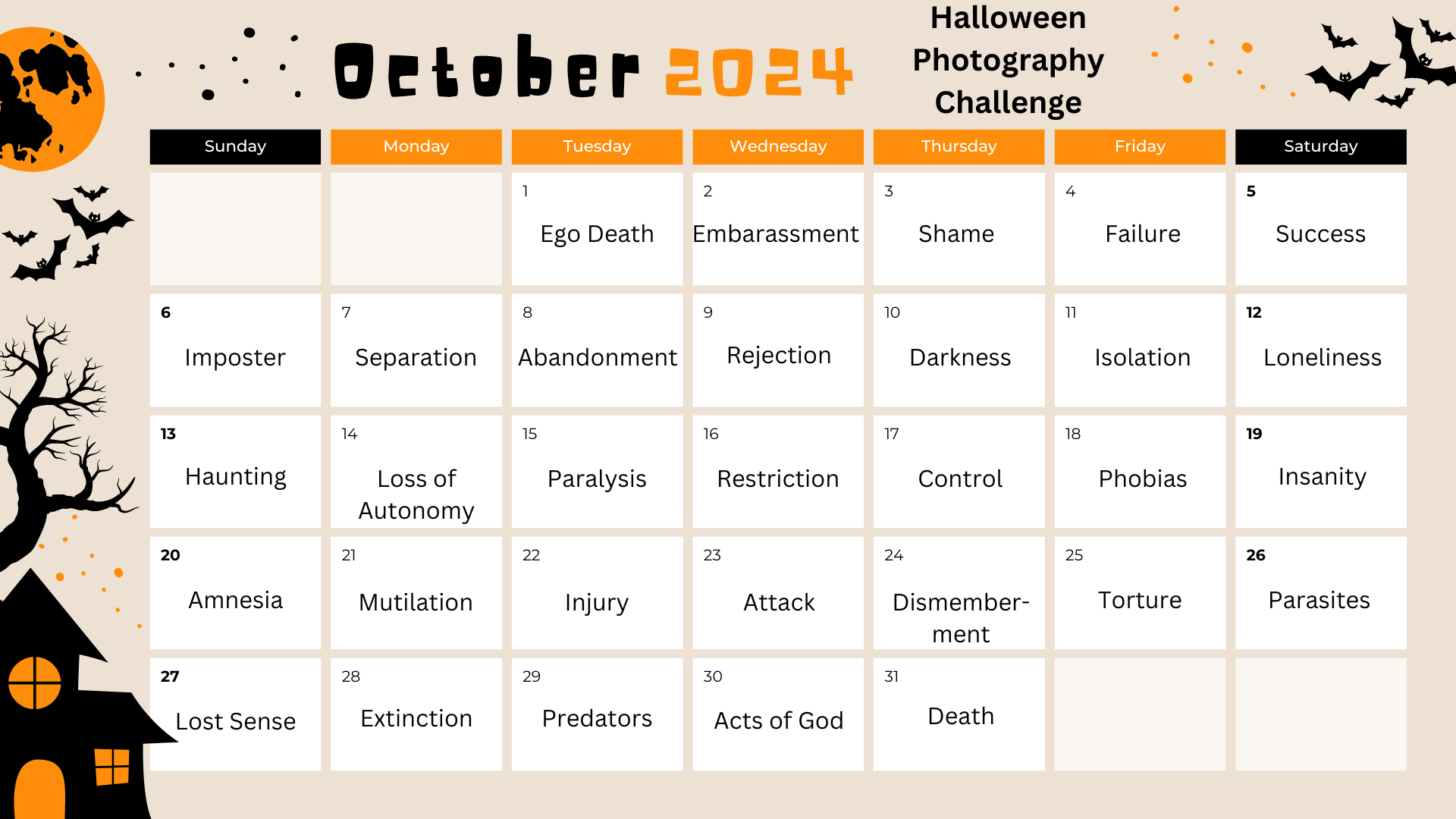
Halloween Photography Challenge
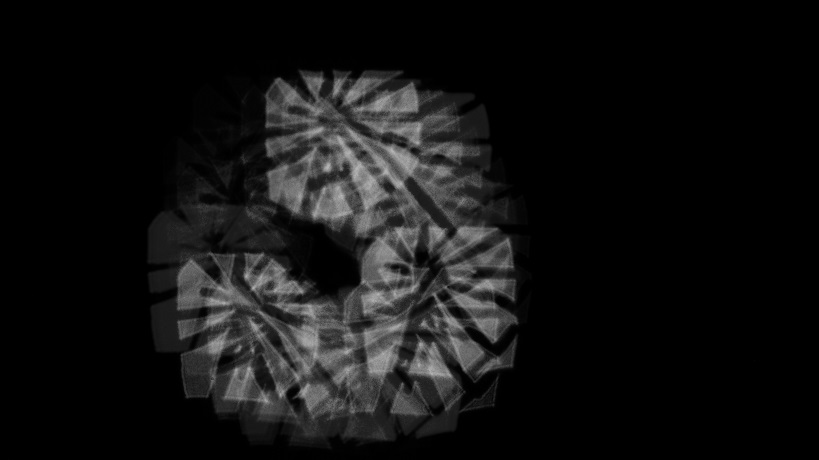
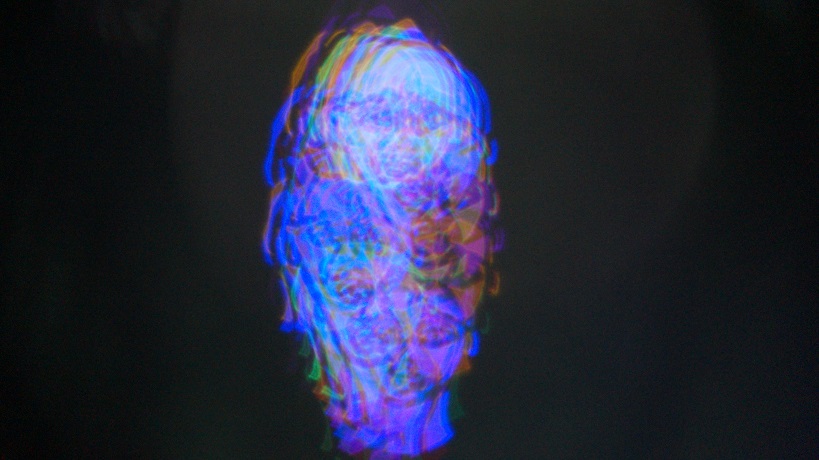
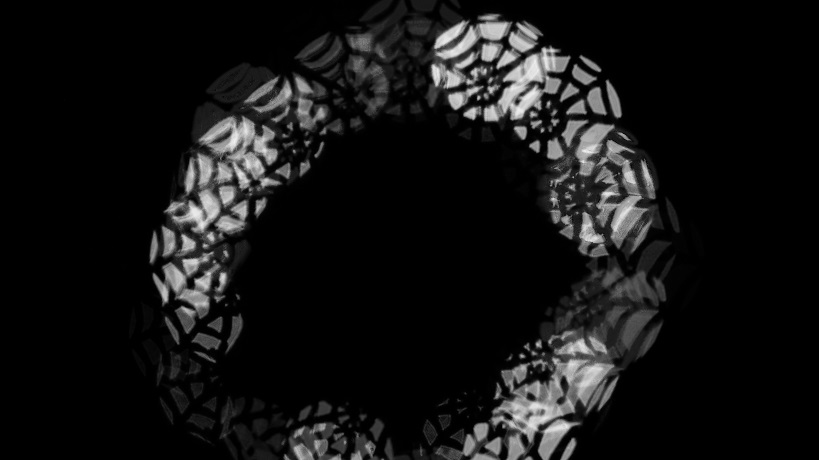
For today’s images, still thinking about the difference between fear of loneliness and fear of being alone, I thought about those times we feel lonely when we’re not alone, feeling completely lonely in a crowd. So I used a wire face filter with all the lights in the mirrorworld.
Welcome back for the twelfth day of Writober. Today we’re exploring the universal fear of separation by looking at fear of loneliness.
Loneliness by Maria L. Berg 2024
After looking for fear of isolation yesterday, but finding fear of being alone, today I’m wondering if fear of loneliness is also different from fear of being alone. I think it is. I like being alone, but could understand a fear of loneliness. I would assume that people who are afraid of being alone, are avoiding a feeling of loneliness, but may also fear the physical experience of being alone.
I liked how looking at definitions got me thinking yesterday, so here’s the definition of lonely from dictionary.com:
adjective lone·li·er, lone·li·est.
affected with, characterized by, or causing a depressing feeling of being alone; lonesome.
destitute of sympathetic or friendly companionship, intercourse, support, etc.:a lonely exile.
lone; solitary; without company; companionless.
remote from places of human habitation; desolate; unfrequented; bleak:a lonely road. Synonyms: unpopulated, uninhabited
Until I looked at these definitions, I hadn’t been thinking of loneliness in relation to place. I also really like the phrase, “destitute of sympathetic” in the second definition.
Phrase: Dysphemism
the substitution of a harsh, disparaging, or unpleasant expression in the place of a more neutral one. 2. an expression so substituted, as “cancer stick” for “cigarette.” Can you think of examples of the rhetorical device of dysphemism used to manipulate and persuade? How could dysphemism make your writing more persuasive?
Fighting Fear of the Blank Page: Sometimes fighting fear of the blank page means not looking at the page at all.
Magnetic poetry kits: I go really into poetry kits this year during April’s National Poetry Writing Month (NaPoWriMo). I was house sitting for my sister and needed something to cheer me up, so I got the Metal Easel Board and the Psycho Kitty Magnetic Word Kit. Using the available words in a poetry kit is a fun constraint, and arranging the words on the metal board is a different experience of connecting words than writing on the page. In April I also got: The Artist Kit, Music Lover, and Original Edition.
Here are links to some of the poems I wrote with these kits.
I took photos of poems I wrote with these magnetic kits and used them for cards for my family (Mother’s Day and Birthdays) and they really liked them.
There’s also an online magnetic poetry program. It doesn’t give the satisfying feel of putting the magnets on the board and arranging them, but it’s still a different way of approaching the page (as you await your magnet kits to arrive 🎃).
*Quick Note about links in this post: I am an amazon associate, so most of the links in my post will take you to amazon products. If you buy from these links, I will make some pennies which will help me pay for this site and my creative endeavors.
OctPoWriMo
Poetry Toolbox
These are quick exercises that I hope you’ll do every day. We will build on these exercises throughout the month.
Word list: Write down the first ten words you think of when you think of fear. Any words at all. Anything that comes to mind. Then choose your three favorite and say them aloud a few times until you hear the accented and unaccented syllables (if more than one syllable) and notice the duration of each syllable. (Inspired by Frances Mayes’ list of a hundred favorite words in The Discovery of Poetry)
I created this Excel Spreadsheet for you to use to collect and explore your fear words.
2. Sensory Imagery: In your journal or a word processing file, fill in these lines as quickly as you can. Notice they are slightly different from last week. You may want to revisit one or two in more detail if you’re inspired and have time.
3. More Sensory Imagery: I find a great place to start when exploring abstract ideas, is to brainstorm sensory imagery. Write down the first few things you think of to answer these questions:
What does loneliness smell like?
What does loneliness taste like?
What texture is loneliness? What does it feel like to the touch? What temperature is loneliness? Where do you feel it?
What does loneliness sound like?
What color(s) is loneliness? What is a symbol of loneliness? What does it look like?
4. Choose one poem to study all week: Read your chosen poem again. Read it aloud. What is the purpose of the poem? What do you think inspired the poet to write the poem? What is the Why of the poem?
Poetry Building
Example poem: Today we’re looking at Animals Above Me by Deborah Keenan, copied here from poets.org for educational purposes.
My neighbor cradles a coyote at the top of the hill behind my house. She is screaming at me to stop being so afraid. Then the keening yet ecstatic cry of our neighborhood hawk, and then The plunge, the lift, the rabbit, crying. Worst, the nightly dreams of the snake, huge, yellow and green, On the high shelving in my old house, sometimes the bedroom, Sometimes the dining room. The dream makes me sick And I wake from it every night between 3:30 and 4:00. Comforting Books do not comfort, so I get up exhausted and start the day. Other neighbors keep telling me: as long as you see it, you don’t need To be afraid. Then in the next dream, I cannot see it. I am sick and afraid. I wake up again. The bear straddling my maple tree, about twenty feet up. Is he scared? I am so sick of thinking about how safe I am, so sick of making Animals carry all my fear. The human beings in our country, Half, at least, live in terror. In our world, half, at least, Terrified, desperate, sick with fear. I see it. I cannot see it. I see it.
Today’s prompt: Write a poem exploring the fear of loneliness using dysphemisms.
Form: If you’re looking for more of a challenge, write your poem using animal imagery and symbolism.
Writober Flash Fiction
Write a story with a beginning, middle, and end with conflict that leads to change in less than a thousand words (no minimal word count) inspired by one of the images in the Separation folder of the Writober 2024 Pinterest board. How does fear of loneliness affect your character’s perspective and behavior?
NaNo Prep
Now that we have an idea, a main character, an antagonist, some secondary character ideas, and some setting ideas, lets try brainstorming some main plot points for our outline.
There are as many different kinds of outlines as there are writers, but here are a some options to choose from:
Once you have chosen the outline that looks to fit the story you want to write, imagine what you character is doing on an ordinary day in his or her ordinary world right before the story begins: brainstorm at least ten different ideas, or set a timer for ten minutes and list as many ideas as you can, and then a few more. Then do the same thing for the inciting incident: brainstorm at least ten ideas of what happens to your main character that sets your story in motion.
Take a photograph that depicts loneliness or fear of loneliness and link to your photo in the chat.
Get Moving
Now that you’ve read all the prompts and have all these ideas running around in your head, it’s time for motion. Some suggestions:
A New View: Try to look at the world from as many perspectives as you can. Lay on the ground and stare up at things, roll on your belly and look down at the ground, climb up a ladder, climb a tree, climb a hill, lay on a bench and look at things sideways. Get creative. Stretch first. Tighten your core while bending and twisting. Be careful. And have fun!
These are my responses to the Writober prompt post Fear of Isolation.
OctPoWriMo
Today’s poem was really fun. During Friday Gathering we did a revision exercise. I looked back at the poem I wrote on October 11th last year and used n+7 on some of the words, meaning I looked up the word in the dictionary, counted down the page to the seventh word (or the nearest to the seventh that I liked or thought would work) and substituted that word. Then, I turned the lines I created into a pantoum.
Isolation is Spreading
slanted, light-adapted fungal threat wish-fulfilled poison shadow fairy-ring that killed the grassroot spread wild, blackened death rattle
wish-fulfilled poison shadow the growly-voiced needlewoman’s wild, blackened death rattle dared to pluck, facilitating
the growly-voiced needlewoman’s feat, I plucked the feathers dared to pluck, facilitating little brown ones sauteed with butterfingers
my feat, I plucked the feathers and saltbush. I put them on a placard little brown ones sauteed with butterfingers absolutely delicious though deadpan
butterfingers and saltbush. I put them on a placard a fairy-ring that killed the grassroot spread absolutely delicious though deadpan a slanted, light-adapted fungal threat
Writober Flash Fiction
Imagine the Isolation
I saw her once. We were out on the boat, anchored and sunbathing in the cove. And I looked up at the old cathedral. You know the crumbling old thing in the side of the cliff. I had just noticed how the two round, glassless windows look like eyes and the row of cracked and crumbling pillars look like teeth, so the whole thing looks like a crazed jack-lantern, and there she was, walking along behind a broken tooth. She was covered in flowing black, made me think of a nun, but with her face covered too. I started thinking she must be like two hundred years old, right? And I’m thinking, how does she eat? How does she get food up there? She must eat the rats and the birds that fly in there. Grabs ’em with her long gnarly fingers, cracks them open, and just sucks out their insides. I bet her teeth have gotten long after all these years, she’s grown fangs. I saw her during the day, so she’s probably not a vampire, so she’s probably a witch. Yeah, the devil’s concubine. She probably flew up there and has a crow as a familiar. What do you mean, it was probably just a shadow? I’m telling you, I saw her. Quit shaking your head. I’ll show you, next time we take out the boat. You’ll have to come with, and I’ll show you.
Halloween Photography Challenge
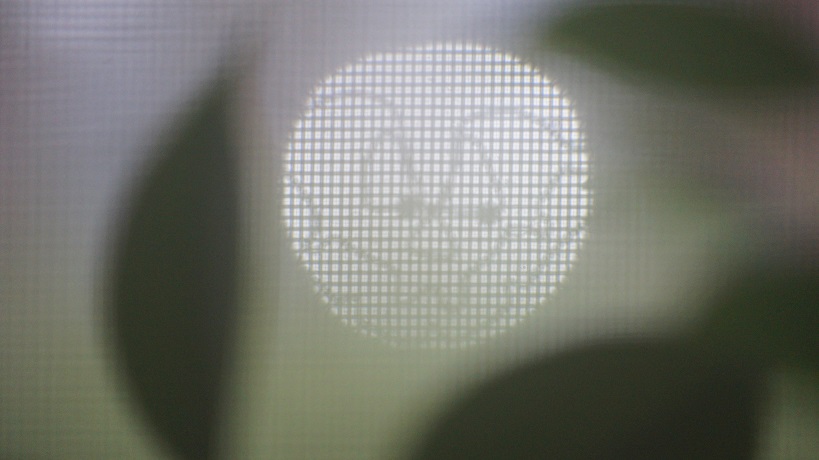
For today’s images I took pictures of my neighbor’s security light that shines into my office window all day long. I gave it a jack-o-lantern face.
Welcome back for the eleventh day of Writober. Thank you to everyone who has been linking up their poems, photos, and stories. You are making this year’s event so much fun. Today we’re exploring the universal fear of separation by looking at fear of isolation.
Isolation by Maria L. Berg 2024
Isolation may be physical or social. Some use isolation as a coping mechanism for anxiety while others find isolation anxiety-inducing.
Searching online, I found fear of being alone all over the place, but not fear of isolation. To me, isolation is more than just being alone, it’s a complete lack of contact: like a desert island, or floating in space, or a cabin in the woods.
Here is the definition of isolate from dictionary.com:
verb (used with object)
i·so·lat·ed, i·so·lat·ing.
to set or place apart; detach or separate so as to be alone.
Medicine/Medical. to keep (an infected person) from contact with noninfected persons; quarantine.
Chemistry, Bacteriology. to obtain (a substance or microorganism) in an uncombined or pure state.
Electricity. to insulate.
Television. to single out (a person, action, etc.) for a camera closeup.
Here’s the definition of Isolation from dictionary.com:
noun
an act or instance of isolating.
the state of being isolated.
the complete separation from others of a person suffering from contagious or infectious disease; quarantine.Synonyms: segregation
the separation of a nation from other nations by isolationism.
Psychoanalysis. a process whereby an idea or memory is divested of its emotional component.
Sociology. social isolation.
I love how sometimes just looking up a word can open up new ideas. I wasn’t thinking about isolation in terms of quarantine and segregation until I looked at the dictionary.
The phrase: Antimetabole
Antimetabole is a rhetorical device in which words are repeated in reverse order within or across sentences. Famous examples:
“Ask not what your country can do for you, ask what you can do for your country,” JFK
Can you think of ways to use antimetabole in your writing to motivate and persuade?
Fighting Fear of the Blank Page: Sometimes fighting fear of the blank page means not looking at the page at all.
Word Jars and generators: One thing that makes writing exciting and surprising is making connections that haven’t been made before. These new connections could show up in descriptions, sensory details, or comparisons. One way to inspire these connections is by collecting words on slips of paper, putting them in containers and then randomly choosing from different containers. I have vases on my mantel filled with abstract nouns, different categories of concrete nouns (we’ll be exploring abstract and concrete nouns later in the month), horror nouns, horror verbs, verbs of destruction, verbs or creation, etc. You get the idea.
There are also many different kinds of word generators online. You may want to try:
Random Word Generator – I clicked this twice and got “pocket” and “demand” and I’m wondering what pockets would demand if they could.
Random Idea Generator – I clicked until I got “last moment” and “enchanted kite” in a row. That could be fun.
There are so many generators online. Search around until you find one that helps you get words on the page.
*Quick Note about links in this post: I am an amazon associate, so most of the links in my post will take you to amazon products. If you buy from these links, I will make some pennies which will help me pay for this site and my creative endeavors.
OctPoWriMo
Poetry Toolbox
These are quick exercises that I hope you’ll do every day. We will build on these exercises throughout the month.
Word list: Write down the first ten words you think of when you think of fear. Any words at all. Anything that comes to mind. Are you starting to be surprised by the words you relate to fear? Then choose your three favorite and say them aloud a few times until you hear the accented and unaccented syllables (if more than one syllable) and notice the duration of each syllable. (Inspired by Frances Mayes’ list of a hundred favorite words in The Discovery of Poetry)
I created this Excel Spreadsheet for you to use to collect and explore your fear words.
2. Sensory Imagery: In your journal or a word processing file, fill in these lines as quickly as you can. Notice they are slightly different from last week. You may want to revisit one or two in more detail if you’re inspired and have time.
3. More Sensory Imagery: I find a great place to start when exploring abstract ideas, is to brainstorm sensory imagery. Write down the first few things you think of to answer these questions:
What does isolation smell like?
What does isolation taste like?
What texture is isolation? What does it feel like to the touch? What temperature is isolation? Where do you feel it?
What does isolation sound like?
What color(s) is isolation? What is a symbol of isolation? What does it look like?
4. Choose one poem to study all week: Read your chosen poem again. Read it aloud. What new things come up as you read it? What stands out now? What techniques and tools are the poet using to evoke emotion? Can you identify a form, meter, or rhyme scheme?
Poetry Building
Example poem: Today we’re looking at It was not Death, for I stood up by Emily Dickinson, copied here from poetryfoundation.org for educational purposes.
It was not Death, for I stood up, And all the Dead, lie down – It was not Night, for all the Bells Put out their Tongues, for Noon.
It was not Frost, for on my Flesh I felt Siroccos* – crawl – Nor Fire – for just my marble feet Could keep a Chancel, cool –
And yet, it tasted, like them all, The Figures I have seen Set orderly, for Burial Reminded me, of mine –
As if my life were shaven, And fitted to a frame, And could not breathe without a key, And ’twas like Midnight, some –
When everything that ticked – has stopped – And space stares – all around – Or Grisly frosts – first Autumn morns, Repeal the Beating Ground –
But most, like Chaos – Stopless – cool – Without a Chance, or spar – Or even a Report of Land – To justify – Despair.
*sirocco -a hot wind, often dusty or rainy, blowing from North Africa across the Mediterranean to southern Europe.
Notice how Dickinson uses what something is not to show what it is, repeating the phrase “It was not ___, for. . . .” Also notice how she uses many different senses to describe this moment that was not death but compared to it.
Today’s prompt: Write a poem exploring the fear of isolation using antimetabole.
Form: If you’re looking for more of a challenge, write your poem write your poem in quatrains (four line stanzas) with any rhyme scheme you choose.
Writober Flash Fiction
Write a story with a beginning, middle, and end with conflict that leads to change in less than a thousand words (no minimal word count) inspired by one of the images in the Separation folder of the Writober 2024 Pinterest board. How does fear of isolation affect your character’s perspective and behavior?
NaNo Prep
How does your main character see him or herself? Is your character afraid to be alone, or enjoy alone time? What would your MC do if completely isolated? Now think about your antagonist, and answer the same questions.
Halloween Photography Challenge
Take a photograph that depicts isolation or fear of isolation and link to your photo in the chat.
Get Moving
Now that you’ve read all the prompts and have all these ideas running around in your head, it’s time for motion. Some suggestions:
Fitness Bingo: On Wednesday we talked about fighting rejection with rejection letter bingo. Why not try getting into an exercise habit with Fitness Bingo which I found at PerformanceHealth.com. Some of the bingo exercises use Resistance Bands which were one of the suggestions last week. Or you may want to try these fitness bingo games available from Amazon:
These are my responses to the Writober prompt post Fear of Darkness.
OctPoWriMo
Today is Open Link Night at dVerse Poets Pub, so link up today’s poem, or your favorite poem you wrote this week. Sanaa also provides a mini prompt that fits nicely with our fear of separation prompts: Consider this line from Edna St Vincent Millay’s poem from “The Unexplorer.” “There was a road ran past our house, too lovely to explore.”
This Saturday is also Open Link Night Live where the poets of dVerse meet to share their poems live online. Join in the fun Saturday morning at 7am PST with this google meet-up link https://meet.google.com/mat-bsyn-cvo
Apathy Doesn’t Fear the Darkness: an Epigram
Turn off the light; we’re trying to sleep cover the windows; we don’t want to see
calm the waves; they make too much noise replace those quackers with silent decoys
Too much reality, and we’re singing the blues Bring on the darkness; block the glare of the truth.
Writober Flash Fiction
Becoming the Darkness
When Sienna texted, “Meet me behind the Taco Bell in twenty,” I was so happy to get her text. She had gone completely dark, ghosted me, since she saw Max kissing me at the club. I new she had a crush, but it just happened.
I quickly threw on my club clothes. The alley behind the Bell had our secret parking spot where we met and walked to the club. I figured she had taken this long to forgive me, and this meet was her saying she was over it. Excited to reunite, I parked and jumped out of the car, but didn’t see Sienna. An eerie green light from an open doorway filled the alley. Something knocked over a trashcan with a crash. I almost jumped out of my bodice.
“Sienna?” I whispered, not wanting a rat or raccoon to answer to her name. “Sienna?” I said a little louder.
A black outline that looked like Sienna to me suddenly appeared, backlit by the strange green glow.
“There you are, Sienna. I’m so glad you texted. I missed you,” I said.
Blood red eyes glowed out of the Sienna-shaped darkness. She didn’t say anything, just slowly walked toward me, taps of her footsteps echoing from unexpected directions.
“Sienna, is that you? Would you say something?” My voice rose, and I felt my pulse in my temples. “Say something!”
But she didn’t. She was suddenly on me, holding me consuming me like darkness consumes a space when a candle flickers out.
Halloween Photography Challenge
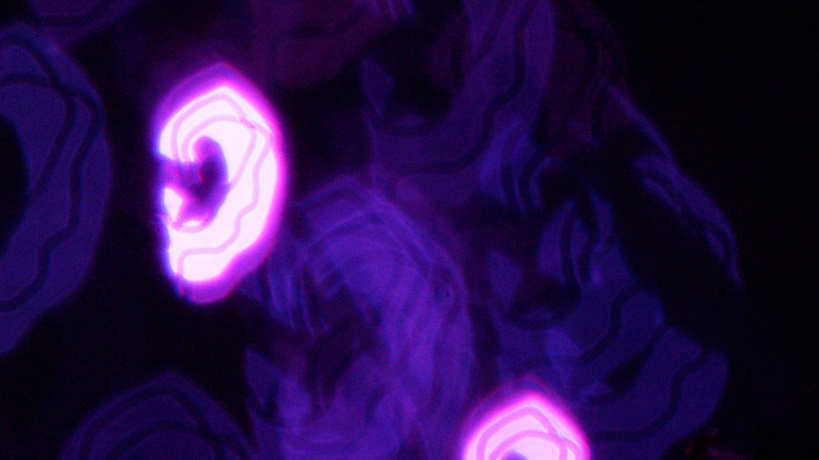
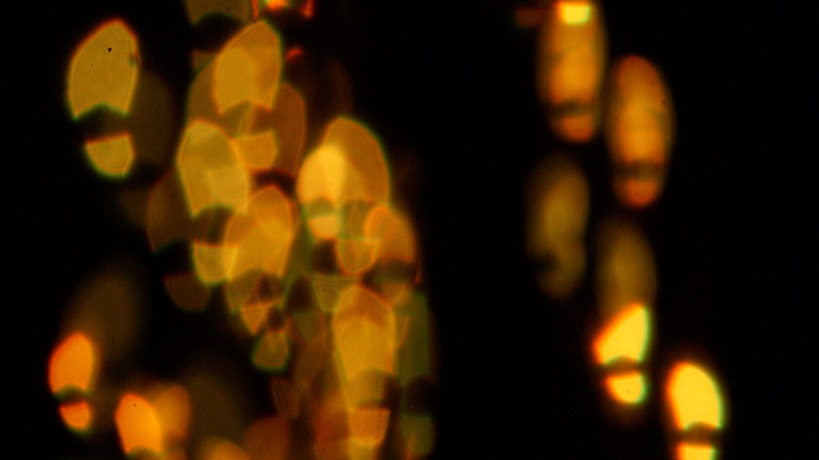
Today’s images were fun. I thought about how when we’re watching a scary or gross scene in a horror movie, we cover our eyes, but it doesn’t help because we still hear what’s happening and our imagination can make it even worse. We should be blocking out the sounds because that’s what we really fear in the dark.
With that in mind, I remembered an ear-shaped filter I made, and a footprints filter and took them into the mirrorworld, dark except for my fairy lights on the chase setting.
Fear of Footprints in the Darkness by Maria L. Berg 2024
Welcome back for the tenth day of Writober. Today we’re exploring the universal fear of separation by looking at fear of darkness.
Fear of Darkness by Maria L. Berg 2024
Fear of darkness is a part of fear of separation because in the dark we can’t see anyone or anything else. In that respect we are completely alone, and we fear any noises that make us think we are not alone.
Fear of darkness is also a fear of our own imaginations. What dangers do you imagine lurking in the darkness?
The phrase: Antiphrasis
Antiphrasis is a rhetorical device in which one says the opposite of what is meant, usually ironic or humorous use of words in senses opposite to the generally accepted meanings.
Examples from Wikipedia:
“Take your time, we’ve got all day”, meaning “hurry up, we don’t have all day”.
“Tell me about it”, in the sense of “don’t bother, I already know”.
“Great!”, an exclamation uttered when something unpleasant had happened or is about to happen.
Fighting Fear of the Blank Page: When we want to write, sometimes the blank page stares back like your inner critic is already judging or a giant void of nothingness ready to swallow you up. But what if you only feel the page?
Write in the dark: Try taking your journal into a space with no light. I have a closet I can sit in that gets no light inside. Set a timer and write for five minutes. Start your writing session with whatever you can decipher from the page.
*Quick Note about links in this post: I am an amazon associate, so most of the links in my post will take you to amazon products. If you buy from these links, I will make some pennies which will help me pay for this site and my creative endeavors.
OctPoWriMo
Poetry Toolbox
These are quick exercises that I hope you’ll do every day. We will build on these exercises throughout the month.
Word list: Write down the first ten words you think of when you think of fear. Any words at all. Anything that comes to mind. Then choose your three favorite and say them aloud a few times until you hear the accented and unaccented syllables (if more than one syllable) and notice the duration of each syllable. What antiphrasis (opposite) could express your three favorites from today’s list? (Inspired by Frances Mayes’ list of a hundred favorite words in The Discovery of Poetry)
I created this Excel Spreadsheet for you to use to collect and explore your fear words.
2. Sensory Imagery: In your journal or a word processing file, fill in these lines as quickly as you can. Notice they are slightly different from last week. You may want to revisit one or two in more detail if you’re inspired and have time.
3. More Sensory Imagery: I find a great place to start when exploring abstract ideas, is to brainstorm sensory imagery. Write down the first few things you think of to answer these questions:
What does darkness smell like?
What does darkness taste like?
What texture is darkness? What does it feel like to the touch? What temperature is darkness? Where do you feel it?
What does darkness sound like?
What is a symbol of darkness? What does it look like?
4. Choose one poem to study all week: Read your chosen poem again. Read it aloud. Journal about your thoughts on the poem. Has your understanding changed in any way? Have new questions come up? Look up the poem online. Are there any interviews with the poet? Has anyone else written insights about the poem?
Poetry Building
Antiphrasis is a rhetorical device in which one says the opposite of what is meant, usually ironic or humorous use of words in senses opposite to the generally accepted meanings. What are the humorous ironies of fear of darkness?
Example poem: Today we’re looking at The Fear by Robert Frost, copied here from poets.org for educational purposes.
A lantern light from deeper in the barn Shone on a man and woman in the door And threw their lurching shadows on a house Near by, all dark in every glossy window. A horse’s hoof pawed once the hollow floor, And the back of the gig they stood beside Moved in a little. The man grasped a wheel, The woman spoke out sharply, “Whoa, stand still!” “I saw it just as plain as a white plate,” She said, “as the light on the dashboard ran Along the bushes at the roadside—a man’s face. You must have seen it too.”
“I didn’t see it.
Are you sure——”
“Yes, I’m sure!”
“—it was a face?”
“Joel, I’ll have to look. I can’t go in, I can’t, and leave a thing like that unsettled. Doors locked and curtains drawn will make no difference. I always have felt strange when we came home To the dark house after so long an absence, And the key rattled loudly into place Seemed to warn someone to be getting out At one door as we entered at another. What if I’m right, and someone all the time— Don’t hold my arm!”
“I say it’s someone passing.”
“You speak as if this were a travelled road. You forget where we are. What is beyond That he’d be going to or coming from At such an hour of night, and on foot too. What was he standing still for in the bushes?”
“It’s not so very late—it’s only dark. There’s more in it than you’re inclined to say. Did he look like——?”
“He looked like anyone. I’ll never rest to-night unless I know. Give me the lantern.”
“You don’t want the lantern.”
She pushed past him and got it for herself.
“You’re not to come,” she said. “This is my business. If the time’s come to face it, I’m the one To put it the right way. He’d never dare— Listen! He kicked a stone. Hear that, hear that! He’s coming towards us. Joel, go in—please. Hark!—I don’t hear him now. But please go in.”
“In the first place you can’t make me believe it’s——”
“It is—or someone else he’s sent to watch. And now’s the time to have it out with him While we know definitely where he is. Let him get off and he’ll be everywhere Around us, looking out of trees and bushes Till I sha’n’t dare to set a foot outdoors. And I can’t stand it. Joel, let me go!”
“But it’s nonsense to think he’d care enough.”
“You mean you couldn’t understand his caring. Oh, but you see he hadn’t had enough— Joel, I won’t—I won’t—I promise you. We mustn’t say hard things. You mustn’t either.”
“I’ll be the one, if anybody goes! But you give him the advantage with this light. What couldn’t he do to us standing here! And if to see was what he wanted, why He has seen all there was to see and gone.”
He appeared to forget to keep his hold, But advanced with her as she crossed the grass.
“What do you want?” she cried to all the dark. She stretched up tall to overlook the light That hung in both hands hot against her skirt.
“There’s no one; so you’re wrong,” he said.
“There is.— What do you want?” she cried, and then herself Was startled when an answer really came.
“Nothing.” It came from well along the road.
She reached a hand to Joel for support: The smell of scorching woollen made her faint.
“What are you doing round this house at night?”
“Nothing.” A pause: there seemed no more to say.
And then the voice again: “You seem afraid. I saw by the way you whipped up the horse. I’ll just come forward in the lantern light And let you see.”
“Yes, do.—Joel, go back!”
She stood her ground against the noisy steps That came on, but her body rocked a little.
“You see,” the voice said.
“Oh.” She looked and looked.
“You don’t see—I’ve a child here by the hand.”
“What’s a child doing at this time of night——?”
“Out walking. Every child should have the memory Of at least one long-after-bedtime walk. What, son?”
“Then I should think you’d try to find Somewhere to walk——”
“The highway as it happens— We’re stopping for the fortnight down at Dean’s.”
“But if that’s all—Joel—you realize— You won’t think anything. You understand? You understand that we have to be careful. This is a very, very lonely place. Joel!” She spoke as if she couldn’t turn. The swinging lantern lengthened to the ground, It touched, it struck it, clattered and went out.
This poem is in the public domain.
How does Frost get the reader to feel fear of darkness? What techniques does he use? What words stood out to you?
Today’s prompt: Write a poem exploring the fear of darkness using antiphrasis.
Form: If you’re looking for more of a challenge, write an Epigram.
Writober Flash Fiction
Write a story with a beginning, middle, and end with conflict that leads to change in less than a thousand words (no minimal word count) inspired by one of the images in the Separation folder of the Writober 2024 Pinterest board. How does fear of darkness play a part in your story?
NaNo Prep
Did you find making a character web useful for understanding your main character’s relationships? Try looking at your antagonists relationships in the same way.
Halloween Photography Challenge
Take a photograph that depicts fear of darkness and link to your photo in the chat.
Get Moving
Now that you’ve read all the prompts and have all these ideas running around in your head, it’s time for motion. Some suggestions:
Move to words: Listen to a reading of your favorite poem or poems on a loop and move to the words. Dance like you would to a song, or walk, run, jump. Anything the words make you feel like doing. Does your body feel a rhythm in the poem? Does your body feel the stresses of the words?
These are my responses to the Writober prompt post Fear of Rejection.
OctPoWriMo
No Fear of Rejection
The suits push the Benjamins with the zeroes and ones and if you don’t play along you’re just one of the numbers subtracted as a cost of their living
The rejected and discarded the husks and the chaffed shuffled and scuffled until some new mouthpiece from some talking head convinces you that you’re already dead
So you could only feel better in their pyramid buying in with your last cent to upgrade their new jet because they know all the secrets to your happiness and can’t wait to share They’ll never say no to your last dollar bill.
Writober Flash Fiction
Even Her Reflection Rejects Her
After Tabitha tells Vince her life would be so much better if she had never met him; after he moves out, and she changes the locks; after she breaks her phone and never replaces it; after she stops getting dressed, putting on make-up, or doing her hair; she starts talking to her reflection in the mirror. After one particularly vicious fight in which Tabitha pounds her fists on her reflection until the mirror cracks, Tabitha’s reflection says her life would be so much better if they had never met, turns her back, and walks away.
Halloween Photography Challenge
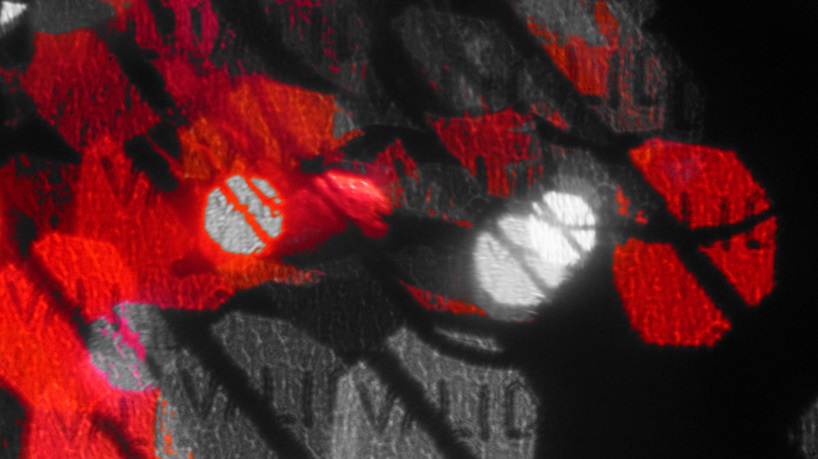
For today’s images I thought about rejection as a stop sign, a barrier to hopes and dreams, so I used an octagon shape with a bar across it filter and tried different plastic filters behind it. When I used the word VALID behind it, I understood rejection as a denial of validity, and suddenly taking the images in the mirrorworld felt like play.
Welcome back for the ninth day of Writober. Today, we’re exploring the universal fear of separation by looking at fear of rejection.
Rejection by Maria L. Berg 2024
Fear of rejection makes me think of a middle school dance, or being picked last for teams on the playground. However, the fear of being socially excluded can make a person display needy and clingy behaviors. It can also make a person avoid interactions.
Rejection is something every artist knows well. Especially as a writer and/or poet, rejection letters are the norm when we’re doing the work of submitting. This year to take the sting out of rejection, I’ve been playing rejection letter bingo.
It started with a rejection letter bingo card in the Writer’s Relief newsletter. I liked the idea of each of my rejection letters being a possible square on my bingo card. The idea got me submitting, and when the rejection letters started coming in, putting stickers on that bingo card made me want to get more rejection letters, so I kept submitting. Those first rejection letters still held the familiar sting, but now, after a couple bingos, rejection makes me think about where to send my next submissions.
The phrase: Antonomasia, Synecdoche & Metonymy
These rhetorical devices substitute a detail of something for that thing. Antonomasia is the substitution of an epithet or title for a proper name (e.g., the Bard for Shakespeare), or the use of a proper name to express a general idea (e.g., a Scrooge for a miser). Synecdoche is when a part of something is substituted for the whole, as in “hired hand” representing a worker. Metonymy is the name of an attribute or adjunct for that of the thing meant, for example suit for business executive, or the track for horse racing. How do you use these substitutions in your writing?
Fighting Fear of the Blank Page: Sometimes fighting fear of the blank page means not looking at the page at all.
Dictation: Though I haven’t had the patience to train a dictation program, I have had fun results speaking my work into a recorder and then typing up what I recorded. Either way, when you get to the page, you already have words to start with.
*Quick Note about links in this post: I am an amazon associate, so most of the links in my post will take you to amazon products. If you buy from these links, I will make some pennies which will help me pay for this site and my creative endeavors.
OctPoWriMo
Poetry Toolbox
These are quick exercises that I hope you’ll do every day. We will build on these exercises throughout the month.
Word list: Write down the first ten words you think of when you think of fear. Any words at all. Anything that comes to mind. Then choose your three favorite and say them aloud a few times until you hear the accented and unaccented syllables (if more than one syllable) and notice the duration of each syllable. (Inspired by Frances Mayes’ list of a hundred favorite words in The Discovery of Poetry)
I created this Excel Spreadsheet for you to use to collect and explore your fear words.
2. Sensory Imagery: In your journal or a word processing file, fill in these lines as quickly as you can. Notice they are slightly different from last week. You may want to revisit one or two in more detail if you’re inspired and have time.
3. More Sensory Imagery: I find, a great place to start when exploring abstract ideas, is to brainstorm sensory imagery. Write down the first few things you think of to answer these questions:
What does rejection smell like?
What does rejection taste like?
What texture is rejection? What does it feel like to the touch? What temperature is rejection? Where do you feel it?
What does rejection sound like?
What color(s) is rejection? What is a symbol of rejection? What does it look like?
4. Choose one poem to study all week: Read your chosen poem again. Look at one stanza at a time. Any new ideas? Learn more about the poet. Read some other poems by the poet. Are any lines still giving you trouble? Write about it in your journal.
Poetry Building
Antonomasia is the substitution of an epithet or title for a proper name (e.g., the Bard for Shakespeare), or the use of a proper name to express a general idea (e.g., a Scrooge for a miser).
Synechdoche is when a part of something is substituted for the whole, as in “hired hand” representing a worker.
Metonymy is the name of an attribute or adjunct for that of the thing meant, for example suit for business executive, or the track for horse racing.
there are maple trees, one, two, three but wait there’s 5 more, 2 behind the bungalow and lots in the poetry state forest I hear target practice from far away, it’s probably for shooting deer, bears and dinosaurs but how will we, still alive, socialize in the winter? wrapped in bear skins we’ll sit around pot-bellied stoves eating the lobelias of fear leftover from desperation last summer’s woodland sunflowers and bee balm remind us of black cherry eaten in a hurry while the yard grows in the moonlight shrinking like a salary or a damaged item when we return in the morning for a breakfast of harvest petunias sprinkled with wild marsh mallow
Today’s prompt: Write a poem exploring the fear of rejection using synechdoche, metonymy, and/or antonomasia.
Form: If you’re looking for more of a challenge, write your poem as an etheree. An etheree is a syllabic poem with lines building from one to ten syllables.
Writober Flash Fiction
Write a story with a beginning, middle, and end with conflict that leads to change in less than a thousand words (no minimal word count) inspired by one of the images in the Separation folder of the Writober 2024 Pinterest board. How has fear of rejection affected your character(s)?
NaNo Prep
Today, let’s get back to exploring our MC through his or her relationships: family, friends, love interest(s), cohorts, workmates, people s/he interacts with every day.
You may want to create a character web to explore how the people the MC interacts with relate to each other.
Halloween Photography Challenge
Take a photograph that depicts rejection or fear of rejection and link to your photo in the chat.
Get Moving
Now that you’ve read all the prompts and have all these ideas running around in your head, it’s time for motion. Some suggestions (repeated from last week):
Go outside. Breathe deeply, and stretch. I very seldomly buy clothes, but I picked up these very comfy pants that are great for morning stretching. They are warm, so soft inside, and are tapered at the ankle so they stay in place while stretching and moving your body. I also really like having pockets, even in my stretch-pants.
Go for a brisk walk. Bring along something to record your voice. If you don’t have a cell phone (like me), you may want a pocket mp3 player to record any thoughts that pop up while you explore your neighborhood. I’ve been using this model for music, listening to audio books while I mow, and recording sounds and thoughts for many years now. Nothing fancy, but it’s all I need.
Take a hot shower. I got myself Aqua Notes Waterproof notepad and pencil for the shower, and I really love it. I often jot down words and rhymes or quick lines that pop into my mind once it’s warmed by hot water.
I really enjoyed how the prompts came together today. Like my experience with my photo-walk yesterday, looking for fear of abandonment made me think about its opposite, reclamation. When a building is abandoned, nature reclaims it. When objects are abandoned, they may later bring great joy to collectors or recyclers when they reclaim them, as my family’s old record albums have done for me.
OctPoWriMo
Today’s Poetics prompt at dVerse Poets Pub is to choose an old album cover and use it as inspiration for your poem. I lost most of my records to hurricane Katrina, but I now have an eclectic collection of records that belonged to my grandparents, my parents, and my sister. So today, I looked through my collection looking for album covers that made me think of fear of abandonment (or were just really creepy). Here’s what I picked out:
The two on the left made me think of creepy old cults and why they are abandoned. “Disco Inferno” made me think about how music and dance eras take over, are a huge part of people’s lives, and then are abandoned for the next one. The two snow covers have to do with my answer to “What is the texture of abandonment?” I said, “cold snow up your sleeves and down your neck.” The polk-a-dot bear costume made me wonder where it went when it was abandoned: If that man still has it somewhere: What it looks like now.
A Disco Inferno Leaves an Indelible Stain
Ivy vines reclaiming, leave an indelible stain on crumbling bricks of abandoned mansions; the indelible stain of changing fortunes and attitudes; the indelible stain of life enduring and moving on, like disco.
Saturday Night Fever left an indelible stain on my psyche. The macho of the disco inferno an indelible stain on the sexual revolution, and yet the indelible stain of sparkling disco balls and skating rinks makes me smile.
Now that my blouse fits again, reclaimed, there’s the indelible stain I can’t wish it away, abandon it like disco. An indelible stain isn’t snow inside a ski-jacket: it stays. The indelible stain tells me to throw away this shirt, but I don’t, do I.
Writober Flash Fiction
For today’s story, I chose the “Jungle ruin” image.
Visiting the Abandoned Temple
I no longer remembered why we had trusted this man, an Australian who said he traveled here all the time, and he knew a spot that would blow our minds. We had been hiking through this thick, starving-bug jungle since dawn. I was a swamp of sweat and biting my tongue to stop from whining, “Are we there yet.” My tongue hurt almost as badly as my feet.
I was thinking, “If one more branch hits me in the face, I’m going to sit down and never move again” when I heard Calvin say, “Whoa, man. Totally worth it.”
I hurried to catch up, barely catching myself from falling on my face when I tripped over a thick vine. I hoped it was a thick vine. And there it was, taking up the entire cliff wall, the entrance to an ancient abandoned temple.
“Who built it?” Calvin was asking our new friend.
“The locals say it was built by the most ancient, as a portal from their dimension to ours,” he said.
The statues of men hanging by their fingertips on either side of the stone-blocked entrance gave me a bad feeling. “Calvin, we’ve seen it. Let’s go.” I said. I couldn’t believe I had said it myself. This place was amazing, usually I would want to explore, find a way in, but every cell of me was screaming, Run!
“What are you talking about? We just got here,” said Calvin starting up the broken, uneven steps. Then the tentacle was around his waist, his arms his ankles. He folded backward and his head cracked on the stone steps. Then I was running back the way we had come as fast as I could, never looking back, not once.
“Oh don’t go,” our guide yelled after me. “The fun is just beginning.”
He no longer had an Australian accent. His booming voice floated and echoed as if from a great distance with overtones and undertones like the chords of a multi-dimensional throat singer weaving through time. At least, that’s how I describe it to the doctors in our sessions.
Halloween Photography Challenge
For today’s images I was inspired by my answers to the “More Sensory Imagery” questions. Because I answered that abandonment was black, white, red, and gray, I used the fun filter in my camera that turns everything grayscale except the color red.
One of my symbols for abandonment was an ivy vine, so I went outside and pulled an ivy vine then sketched and cut it for a bokeh shape filter. I really like how the overall shape in the image I chose above, looks like an ivy leaf made of ivy leaves and vines.
Welcome back for the eighth day of Writober. Today we’re exploring the universal fear of separation by looking at abandonment.
Abandoned by Maria L. Berg 2024
Fear of abandonment may begin in young childhood when we were completely dependent on others for our survival. Fear of abandonment can result from unmet needs. This article “How to Overcome Fear of Abandonment” from PositivePsychology.com, includes worksheets and questionnaires that you may want to try for this week’s writing.
The phrase: Epiphora
For today’s rhetorical device, we’re looking at another form of repetition, putting words together into a phrase to repeat at the ends of lines for emphasis. But first, our warm-ups.
Fighting Fear of the Blank Page: Fighting the blank page is also about motivation. Some people feel they can only write when they feel inspired, others feel that if you just sit down to write at the same time each day, eventually the inspired words will come. I believe in a combination of both. A little extra motivation can definitely help.
Motivational Writing Programs: I joined 4theWords in October of 2022. I had been thinking about ways to gamify my writing that wasn’t only putting stickers on paper, and 4theWords did that for me. I battle cute forest monsters with my word-count and win virtual loot for quests and costume pieces for my avatar. It is surprisingly rewarding. The time flies by and the words stack up. I looked at other possible online motivational programs, but 4theWords is the one that works for me.
*Quick Note about links in this post: I am an amazon associate, so most of the links in my post will take you to amazon products. If you buy from these links, I will make some pennies which will help me pay for this site and my creative endeavors.
OctPoWriMo
Poetry Toolbox
These are quick exercises that I hope you’ll do every day. We will build on these exercises throughout the month.
Word list: Write down the first ten words you think of when you think of fear. Any words at all. Anything that comes to mind. Then choose your three favorite and say them aloud a few times until you hear the accented and unaccented syllables (if more than one syllable) and notice the duration of each syllable. Combine your three words into a phrase. (Inspired by Frances Mayes’ list of a hundred favorite words in The Discovery of Poetry)
I created this Excel Spreadsheet for you to use to collect and explore your fear words.
2. Sensory Imagery: In your journal or a word processing file, fill in these lines as quickly as you can. Notice they are slightly different from last week. You may want to revisit one or two in more detail if you’re inspired and have time.
3. More Sensory Imagery: I find a great place to start when exploring abstract ideas, is to brainstorm sensory imagery. Write down the first few things you think of to answer these questions:
What does abandonment smell like?
What does abandonment taste like?
What texture is abandonment? What does it feel like to the touch? What temperature is abandonment? Where do you feel it?
What does abandonment sound like?
What color(s) is abandonment? What is a symbol of abandonment? What does it look like?
4. Choose one poem to study all week: Read your chosen poem again. Read it aloud. Journal about your thoughts on the poem. Has your understanding changed in any way? Have new questions come up? Look up the poem online. Are there any interviews with the poet? Has anyone else written insights about the poem?
Poem Building
Epiphora, also known as epistrophe, is the repetition of a word or phrase at the end of each line. A great example of epiphora is We Real Cool by Gwendolyn Brooks. It’s also a good example of the power of line breaks.
Example poem: Today we’re looking at Fears by Felipe Benitez Reyes, copied here from poets.org for educational purposes.
The sensation of being the only guest in a grand hotel on the outskirts of the city —and hearing the somnambulistic elevator and a scream— or being in an empty theater or in a lonely plaza of a lonely unknown city weighed down with suitcases and no money surrounded by escaped doves from the studio of the worst taxidermist that ridiculous melancholy of one who feels ignored at the parties of younger people whom he calls late at night from a bar with the lights already turned off and talks to himself about the comforts of being an academic ghost of an orchestra conductor
I fear, in the end, that I’ve kissed The lips of a mistaken goddess
How does Reyes’s poem make you feel? What words stand out to you as expressing fear of separation? How do the line lengths, first words and end words, work to create further these feelings.
Today’s prompt: Write a poem exploring the fear of abandonment.
Form: If you’re looking for more of a challenge, write your poem using epiphora.
Writober Flash Fiction
Write a story with a beginning, middle, and end with conflict that leads to change in less than a thousand words (no minimal word count) inspired by one of the images in the Separation folder of the Writober 2024 Pinterest board. How has fear of abandonment affected your character?
I wrote: I noticed that he (the MC) was described not through his appearance but through the objects he interacted with: his bicycle, his umbrella, his briefcase, his wristwatch. Later, I noticed that rooms were also described through objects:
“Unwin saw a broad maroon rug, shelves of thick books with blue and brown spines, a pair of cushioned chairs angled toward a desk at the back. To one side was a great dark globe, and before the window loomed a bald massive globelike head. On the desk a telephone, a typewriter, and a lamp, unlit.”
What objects does your main character carry all the time? What objects are most meaningful to your MC? What objects would you use to describe your MC’s bedroom? What about your MC’s living room?
Halloween Photography Challenge
Take a photograph that depicts abandonment or fear of abandonment and link to your photo in the chat.
Get Moving
Now that you’ve read all the prompts and have all these ideas running around in your head, it’s time for motion. Some suggestions:
Zombie run – I remembered a friend telling me about a program she had on her phone that was supposed to motivate your run by telling you you’re being chased by zombies. So I searched “zombie run” and found that there’s a local Zombie Run 5k coming up this week on Saturday, Oct. 12th. So my suggestion is to check out your local Halloween events today. They may already be happening this week.





 Experience Writing