These are my responses to the Writober prompt post Fear of Attack.
OctPoWriMo
Attack Attention
Beware the crows circling the cornfield and the children behind the rows where are their parents?
Pay attention when rotting wood gives way, traps your ankle, and you hear giant scissors somewhere Why do you smell bacon?
Stay alert when the sky’s neon-green and flying machines are hovering over everything and everyone Where’s the music for this laser-show coming from?
Hyper-vigilance is the key to staying safe from murderous sprees, but you’ll also need to be prepared. Don’t let monsters catch you unaware.
Writober Flash Fiction
Candace’s downstairs neighbor watched Texas Chainsaw Massacre every day. The horrible screams and chainsaw noises that came up through the floorboards made her worry about his psyche, and discouraged her from ever watching the film.
Tonight, lost on a dirt road after her car broke down, staring at a man’s silhouette holding a revving chainsaw over his head, she wished she was more like her downstairs neighbor. At least she would have an idea of what happens next.
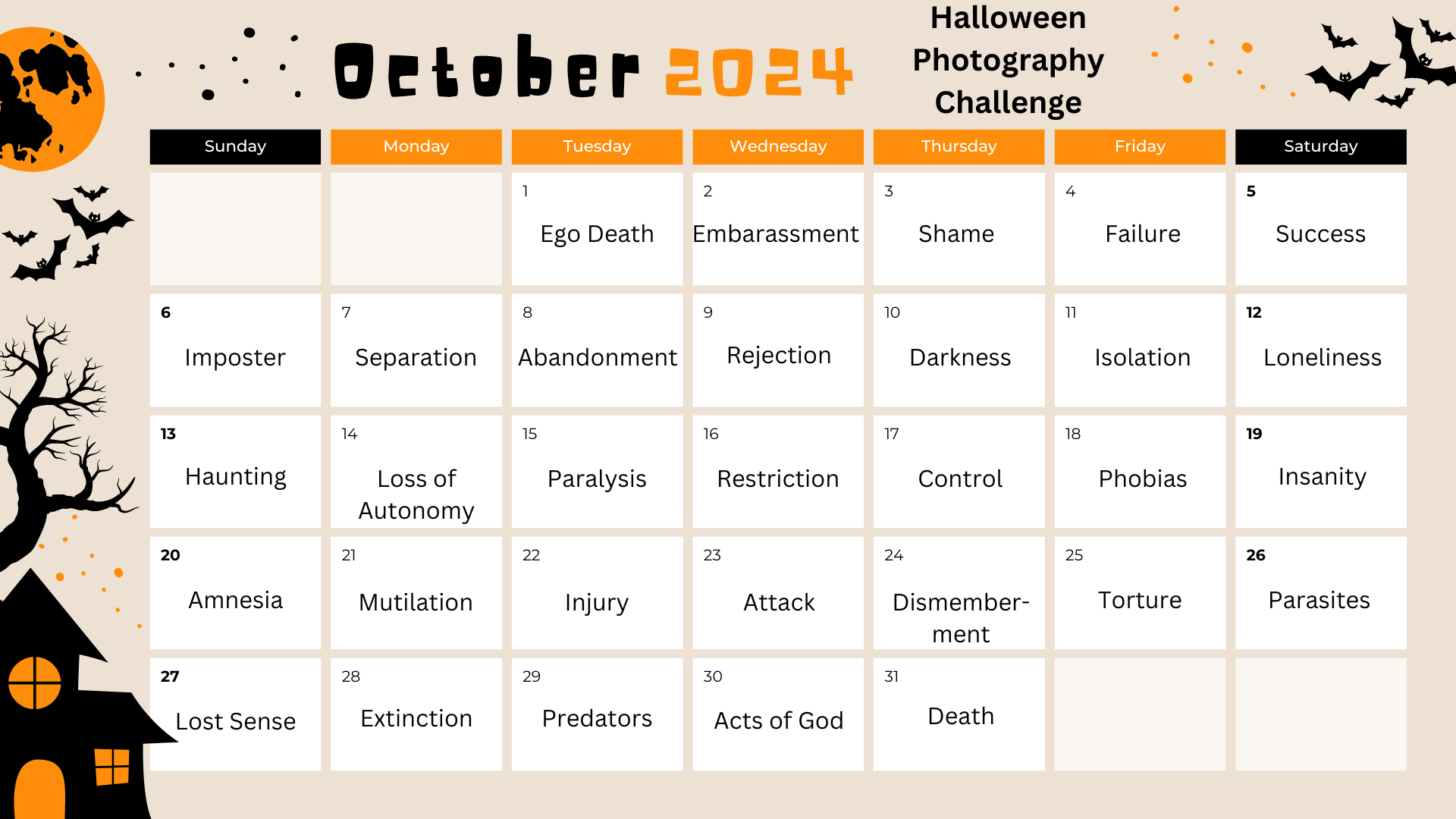
Halloween Photography Challenge
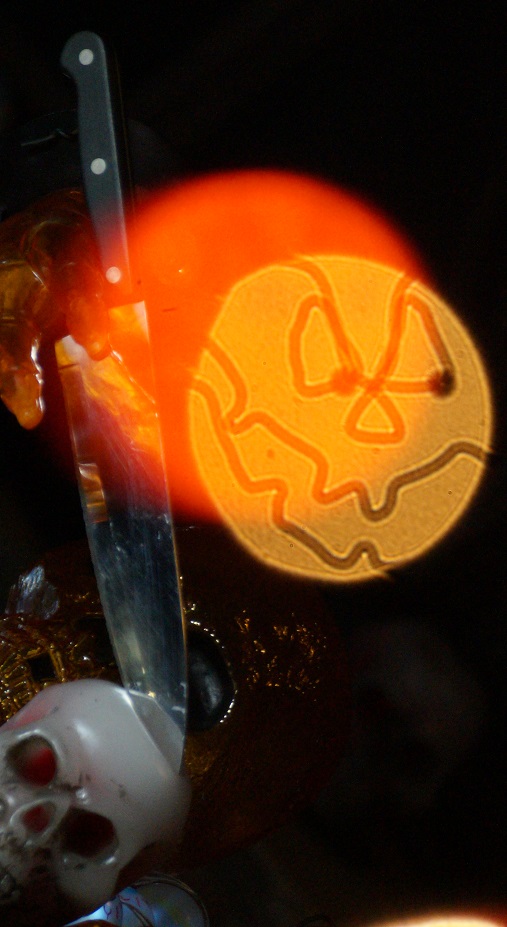
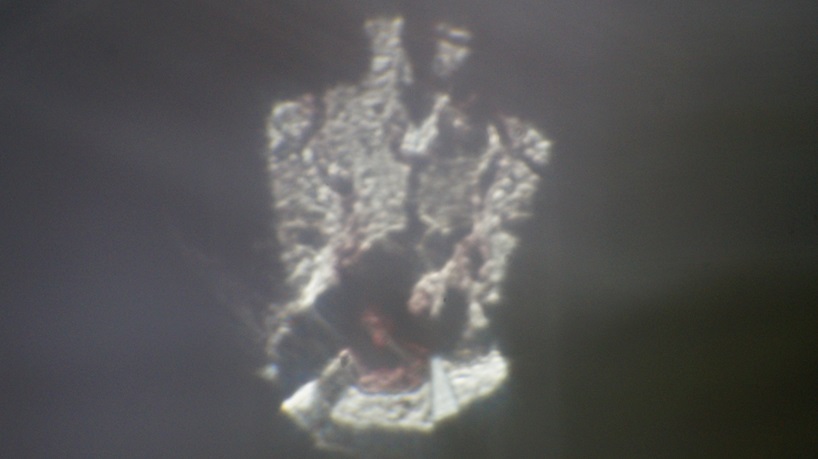
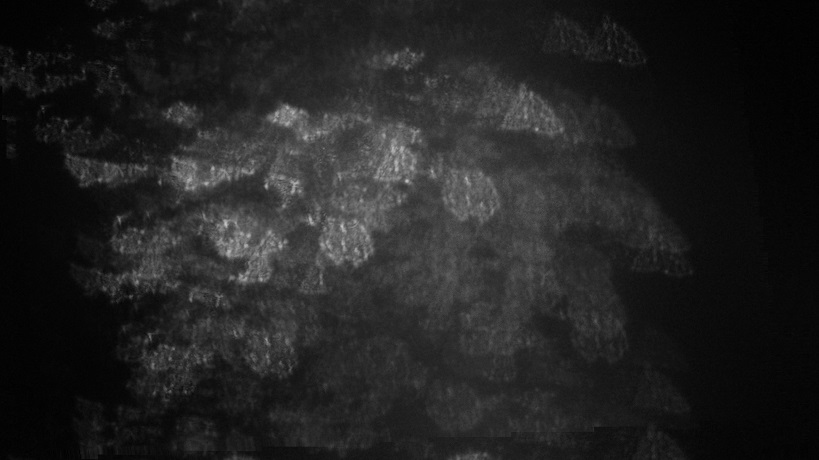
For today’s images I thought of an axe-wielding maniac, so I cut an axe-shape filter and took photos in the mirrorworld with the red-only effect.
Welcome back for the twenty-third day of Writober. During this fourth week we’re exploring the universal fear of mutilation. Today we’re looking at fear of attack.
Fear of Attack by Maria L. Berg 2021
Fear of attack is a fear of violence, terrorism, and also a fear of not being able to know the hearts and minds of others. It is a fear of evil intent, of sociopaths and psychopaths (fear of insanity). It’s a fear of weapons, injury and death.
“Be aware, but not fearful. Awareness—paying attention to your surroundings, and noticing anything unusual about people and their behavior—is helpful. Being constantly fearful is not helpful. It can actually limit awareness. Fear is a focus on what could happen, which can leave you less aware of what is happening. A sudden feeling of fear is an important clue that something may be wrong. If you are always fearful, that sudden feeling can’t emerge as a clue.”
Rhetorical Device: feminine and masculine rhyme
Masculine rhyme only rhymes the final syllable of a word. I liked this explanation from novlr’s What is a Feminine Rhyme?:
“While masculine rhyme, where the final syllable is stressed, is a staple of poetry, feminine rhyme is often overlooked but equally powerful, adding musicality and nuance to a poem. Feminine rhyme rhymes two or more multi-syllable words on the penultimate (second-to-last) syllable, with the final syllable unstressed, thus creating a more delicate and varied effect.”
“An example of a feminine rhyme is the pairing of the words ‘turtle’ and ‘fertile.’ The word ‘turtle’ has two syllables, with the stress on the first syllable, and the word ‘fertile’ has two syllables, with the stress on the first. With the stress falling on the penultimate syllable of ‘fertile,’ the two words create a gentle and pleasing rhyme, which can be used to create a more subtle and complex effect in a poem.” (I altered this quote to make sense)
There are also masculine and feminine line endings. The masculine line ends on a stressed syllable, and the feminine line ends on an unstressed syllable. For a quick review of syllabic stress and meter take a look at Sounds of Words: Stress and Duration.
Fighting Fear of the Blank Page: A lot of the time this fear comes from not knowing where to start. What if the order of things didn’t matter?
Writing cube: I came up with this idea on the second day of April’s NaPoWriMo this year. Terrance Hayes’s thoughts on boxes made me think of using flattened cube to put my words on. Then I can put the words on the inside or the outside of the cube, and then by turning the cube, enter the poem (or any writing) from different text.
*Quick Note about links in this post: I am an amazon associate, so most of the links in my post will take you to amazon products. If you buy from these links, I will make some pennies which will help me pay for this site and my creative endeavors.
OctPoWriMo
Poetry Toolbox
These are quick exercises that I hope you’ll do every day. We will build on these exercises throughout the month.
Word list: Write down the first ten words you think of when you think of fear. Any words at all. Anything that comes to mind. Then choose your three favorite and say them aloud a few times until you hear the accented and unaccented syllables (if more than one syllable) and notice the duration of each syllable. Add the least connected exact rhyme, and the strangest slant rhyme. Can you think of a feminine rhyme? (Inspired by Frances Mayes’ list of a hundred favorite words in The Discovery of Poetry)
I created this Excel Spreadsheet for you to use to collect and explore your fear words.
2. Sensory Imagery: In your journal or a word processing file, fill in these lines as quickly as you can. Notice they are slightly different from last week. You may want to revisit one or two in more detail if you’re inspired and have time.
3. More Sensory Imagery: Ask yourself sensory questions about fear of attack.
4. Choose a poetry collection: Keep reading the collection this time more slowly. Read each poem aloud. Take your time. What stands out to you? What do you like? What don’t you like?
Poetry Building
Feminine and masculine rhyme – take a look through your wordlist. Can you identify any feminine rhymes? How do they sound different than masculine rhymes.
Example poem: Today we’re looking at The Shark by William Henry Venable, copied here from poets.org for educational purposes.
Captured! Along the beach those shouts reveal
The fisherman exultant victor! Hark!
The Karcharos, from out his crystalline, dark
Blue lair by rud of flesh and lurking steel
Bewrayed, hath ravined down with his last meal
Death as a gobbet. On the hot sand, stark,
He gasps and shudders agonizing. Mark!
With horrible grin those bloody jaws appeal
Unto his gloating murderers.—No more
Those serried ranks sextuple of fanged white
Shall scare the shallows and appall the shore,
Never again wreak havoc and affright,
Ranging the Gulf Stream, weltering in gore;—
Poor Shark! Man-eater! learn of Man, to fight.
How does this poem make you feel? What stands out to you? Who is the attacker in this poem?
Today’s prompt: Write a poem exploring the fear of attack using feminine and masculine rhyme anywhere in your poem.
Form: If you’re looking for more of a challenge, write a monorhyme poem with alternating masculine and feminine end rhymes.
Write your poem and post it to your site (blog/ website/ other), then post a link in the chat. You may also post your poem in the chat if you do not have a place to post it. If you are posting as “someone” or “anonymous,” please put your name at the end of the poem. Throughout the day, please check back when you can to read and encourage other poets, to learn from each other, and enjoy each other’s efforts.
Writober Flash Fiction
Write a story with a beginning, middle, and end with conflict that leads to change in less than a thousand words (no minimal word count) inspired by one of the images in the Mutilation folder of the Writober 2024 Pinterest board. How does fear of injury affect your character?
Novel Prep
I had a feeling that something was wrong with NaNoWriMo this year. There weren’t any write-ins scheduled online or locally. It looks like the NaNoWriMo organization stepped in it again. Last year there was a controversy over their response to bad actors in the forums, and now there’s a controversy to their statements on AI. So my local municipal liaison has quit and many writers don’t want to be associated with the organization anymore. So yet another of the online events I found motivational is being abandoned. It may be time for me to take a hint and let it go.
That doesn’t mean we can’t write a novel draft in November. But now I’m wondering if I shouldn’t continue my poetry focus and start my new novel in January instead. I have some thinking to do.
Halloween Photography Challenge
Take a photograph that depicts fear of attack, and link to your photo in the chat.
Get Moving
Now that you’ve read all the prompts and have all these ideas running around in your head, it’s time for motion. Some suggestions:
Self-defense: practicing self-defense actions can be good exercise. I have Self-defense Training Camp for Xbox 360, and it gets me moving. Or you may want to try this basic self-defense course I found on Youtube:
These are my responses to the Writober prompt post Fear of Injury.
OctPoWriMo
Life is Injurious
Cuts, scrapes, and bruises sprains, and infectious oozes tooth chips, muscle tears repairs, repairs, repairs
The body’s busy healing as living keeps injuring a constant clash of care, and cares, and care
It’s the fear and the pain that lead to fear of the pain happening again so we avoid, avoid, avoid
But is life in a bubble free from all trouble and scissors, adventures, and germs a good life by anyone’s terms?
Writober Flash Fiction
Feeling Invincible Does Not Make One Indestructible
Ford felt invincible behind the wheel of his old Ford pickup. On an open stretch of road with the pedal to the floor, he felt like he could fly. But then something ran out in front of him. In the flash before he swerved it looked more human than animal. The truck left the road, crashing through the tops of trees. The branches caught the indestructible truck. Ford, without his seat belt, could fly, but was not invincible.
Halloween Photography Challenge
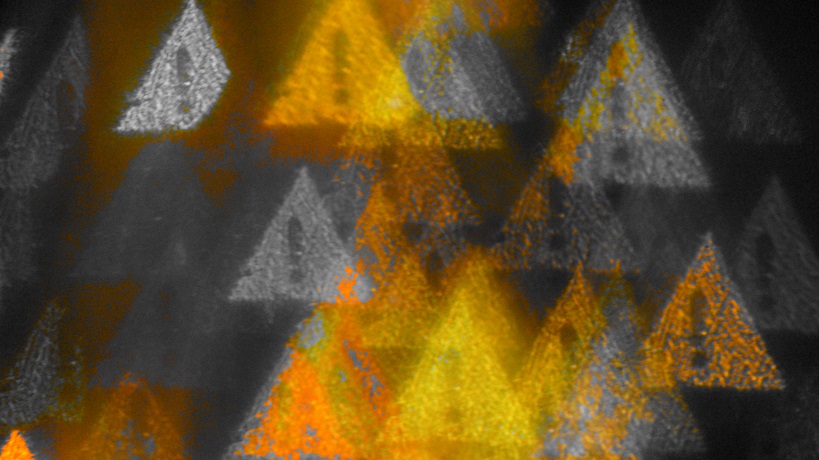
For today’s images I made a caution sign using a triangle shape filter over plastic that I penned yellow with a black exclamation mark, then used the yellow only filter in my camera in the mirrorworld.
Welcome back for the twenty-second day of Writober. During this fourth week we’re exploring the universal fear of mutilation. Today we’re looking at fear of injury.
Fear of Injury by Maria L. Berg 2024
When I started looking into fear of injury, I discovered there are different phobias associated with fear of injury:
Traumatophobia – A fear of being physically hurt
Kinesiophobia – An excessive fear of physical movement and activity that can negatively impact sports performance.
Dystychiphobia – fearof causing or being involved in an accident.
Blood-injection-injury (BII) phobia – fear of blood, injuries, and injections.
Showing that there’s a lot to explore when it comes to fear of injury.
Slant rhyme, also called imperfect rhyme, includes some rhetorical devices we’ve already talked about: familial rhyme, assonance, and consonance. Slant rhyme is a rhyme of words with sounds that are similar, but not the same. I especially like the Yeats example rhyming young with song.
Fighting Fear of the Blank Page: Start with a page full of text, cut it into short phrases, put the cut pieces into a bag or jar, and pull them out one at a time and paste them onto the page.
*Quick Note about links in this post: I am an amazon associate, so most of the links in my post will take you to amazon products. If you buy from these links, I will make some pennies which will help me pay for this site and my creative endeavors.
OctPoWriMo
Poetry Toolbox
These are quick exercises that I hope you’ll do every day. We will build on these exercises throughout the month.
Word list: Write down the first ten words you think of when you think of fear. Any words at all. Anything that comes to mind. Then choose your three favorite and say them aloud a few times until you hear the accented and unaccented syllables (if more than one syllable) and notice the duration of each syllable. Add the least connected exact rhyme, and the strangest slant rhyme. (Inspired by Frances Mayes’ list of a hundred favorite words in The Discovery of Poetry)
I created this Excel Spreadsheet for you to use to collect and explore your fear words.
2. Sensory Imagery: In your journal or a word processing file, fill in these lines as quickly as you can. Notice they are slightly different from last week. You may want to revisit one or two in more detail if you’re inspired and have time.
3. More Sensory Imagery: Ask yourself sensory questions about fear of injury.
4. Choose a poetry collection: Read through the collection in order. Is there a theme, a story, repeating ideas that run through the collection? Which poems are your favorites? Which didn’t you like? Why?
Poetry Building
Slant rhyme – when looking for imperfect rhymes you might want to try B-Rhymes a near rhyme dictionary online.
Example poem: Today we’re looking at Love, Hope, Desire and Fear by Percy Bysshe Shelley, copied here from poemhunter.com for educational purposes.
Love, Hope, Desire, and Fear
Percy Bysshe Shelley
And many there were hurt by that strong boy, His name, they said, was Pleasure, And near him stood, glorious beyond measure Four Ladies who possess all empery In earth and air and sea, Nothing that lives from their award is free. Their names will I declare to thee, Love, Hope, Desire, and Fear, And they the regents are Of the four elements that frame the heart, And each diversely exercised her art By force or circumstance or sleight To prove her dreadful might Upon that poor domain. Desire presented her [false] glass, and then The spirit dwelling there Was spellbound to embrace what seemed so fair Within that magic mirror, And dazed by that bright error, It would have scorned the [shafts] of the avenger And death, and penitence, and danger, Had not then silent Fear Touched with her palsying spear, So that as if a frozen torrent The blood was curdled in its current; It dared not speak, even in look or motion, But chained within itself its proud devotion. Between Desire and Fear thou wert A wretched thing, poor heart! Sad was his life who bore thee in his breast, Wild bird for that weak nest. Till Love even from fierce Desire it bought, And from the very wound of tender thought Drew solace, and the pity of sweet eyes Gave strength to bear those gentle agonies, Surmount the loss, the terror, and the sorrow. Then Hope approached, she who can borrow For poor to-day, from rich tomorrow, And Fear withdrew, as night when day Descends upon the orient ray, And after long and vain endurance The poor heart woke to her assurance. —At one birth these four were born With the world’s forgotten morn, And from Pleasure still they hold All it circles, as of old. When, as summer lures the swallow, Pleasure lures the heart to follow– O weak heart of little wit! The fair hand that wounded it, Seeking, like a panting hare, Refuge in the lynx’s lair, Love, Desire, Hope, and Fear, Ever will be near.
How does this poem make you feel? What stands out to you? Can you identify slant rhymes in the poem?
Today’s prompt: Write a poem exploring the fear of injury using slant rhyme anywhere in your poem.
Form: If you’re looking for more of a challenge, write your poem as a Terza Rima with slant rhymes.
Write your poem and post it to your site (blog/ website/ other), then post a link in the chat. You may also post your poem in the chat if you do not have a place to post it. If you are posting as “someone” or “anonymous,” please put your name at the end of the poem. Throughout the day, please check back when you can to read and encourage other poets, to learn from each other, and enjoy each other’s efforts.
Writober Flash Fiction
Write a story with a beginning, middle, and end with conflict that leads to change in less than a thousand words (no minimal word count) inspired by one of the images in the Mutilation folder of the Writober 2024 Pinterest board. How does fear of injury affect your character?
NaNo Prep
Now that we’ve brainstormed a lot of scenes, lets focus on our characters again. How do your characters’ voices differ? What is unique about how they sound, the words they use, sayings they use, sounds they make? Listen to your MC and your Antagonist. How are their voices consistently different from each other?
Halloween Photography Challenge
Take a photograph that depicts injury or fear of injury, and link to your photo in the chat.
Get Moving
Now that you’ve read all the prompts and have all these ideas running around in your head, it’s time for motion. Some suggestions:
Take a walk imagining your neighborhood’s haunted history tour. Where are the ghosts? How did they die? Uh, oh, is that one chasing you? Better move a little faster. 👻👻👻🎃
Choosing from the knife selection the medium blade with the best reflection stabbing into plump, rough skin finding it surprisingly thin I slice until my slices meet yank the neck to reveal the meat and set to scraping stringy entrails digging in when scooping fails carving chunks from vacant flesh breathing in the death so fresh I’m not one to repeat or cheat there’s no erasing, no delete I take risks with my technique to make an expression completely unique because this chance comes once a year and I want my pumpkin to show its fear
Writober Flash Fiction
Mutilated Image
Hannah didn’t mean to spill acid on Tim’s photo. To this day she doesn’t know why it was on her workbench while she was experimenting with etching glass. But after she saw the pretty colors that a couple drips made as the photo’s surface bubbled, she added some more. The screams from upstairs tore through her, and she bolted up the stairs. Tim was sitting in his easy chair in front of the TV. The game was in the third quarter. Hannah relaxed for a second thinking he was just mad at the game, but he kept screaming, a tortured blood-curdling scream. And something smelled like bacon. Then she saw his face, skin burning off, sizzling, bubbling, changing into so many beautiful colors.
Halloween Photography Challenge
For today’s images I used my torso filter with an inkblot on plastic filter and took a picture of the security light across the street while standing under a tree in the rain.
Welcome back for the twenty-first day of Writober. During this fourth week we’ll be exploring the universal fear of mutilation.
Fear of Mutilation by Maria L. Berg 2022
From Wikipedia: “Mutilation or maiming is severe damage to the body that has a subsequent harmful effect on an individual’s quality of life. In the modern era, the term has an overwhelmingly negative connotation, referring to alterations that render something inferior, dysfunctional, imperfect, or ugly.” Fear of mutilation can lead to fear of sharp objects and equipment, and certain spaces and activities. This universal fear has been the impetus for many a horror movie franchise.
We have passed the half-way point of this adventure and are on the home stretch. Congratulations! So many new poems, stories and photographs, and so many new techniques to explore as we write. Last week, we looked at techniques for expanding our lines into stanzas. This week we’ll be looking at techniques for tying our stanzas together. We’ll look at ways to create rhythm and music in your poems.
Rhetorical Device: Perfect rhyme
Perfect rhyme is rhyme in which different consonants are followed by identical vowel and consonant sounds, such as in moon and June. It is also the rhyme of homonyms such as bear/bare, and there/their. In tradition poetic forms, perfect rhyme is often synonymous with end rhyme – the rhyme occurs between the final words of different lines, but perfect rhyme can be so much more (as can end rhyme).
The video and course talk about five kinds of rhyme, but today we’re going to focus on perfect rhyme. One of the challenges of rhyme is that it often sounds cliché or forced.
Rhymezone.com is a wonderful online tool for finding perfect rhymes. I’ve always typed in the word I want to rhyme with, but as Shank points out, we’re actually rhyming with a phoneme, so instead of entering the word, we can focus on the sound we want to rhyme.
For your rhymes not to be cliché or forced, pick the rhyme that seems least connected to your word and freewrite in your journal until you see some connections.
Perfect rhyme can play a role in modern and experimental poetry as well as traditional forms. The placement of rhymes can be within a line. Every other first word could rhyme. Every third middle word could rhyme. The possibilities are endless.
Fighting Fear of the Blank Page: How are you feeling about that blank page? Is it still taunting you? What if you relax with some music.
Song Rhymes: Start with your favorite song, or whatever you’re listening to and write down all the rhymes, then find a song that goes with the theme or feel of what you’re writing and write down all the rhymes. Combine the two and see what they inspire.
*Quick Note about links in this post: I am an amazon associate, so most of the links in my post will take you to amazon products. If you buy from these links, I will make some pennies which will help me pay for this site and my creative endeavors.
OctPoWriMo
Poetry Toolbox
These are quick exercises that I hope you’ll do every day. We will build on these exercises throughout the month.
Word list: Write down the first ten words you think of when you think of fear. Any words at all. Anything that comes to mind. Then choose your three favorite and say them aloud a few times until you hear the accented and unaccented syllables (if more than one syllable) and notice the duration of each syllable. (Inspired by Frances Mayes’ list of a hundred favorite words in The Discovery of Poetry). Today, add the perfect rhymes that seems least connected to your words.
I created this Excel Spreadsheet for you to use to collect and explore your fear words.
2. Sensory Imagery: In your journal or a word processing file, fill in these lines as quickly as you can. Notice they are slightly different from last week. You may want to revisit one or two in more detail if you’re inspired and have time.
3. More Sensory Imagery: Ask yourself sensory questions about fear of mutilation.
4. Choose a poetry collection: Choose a poetry collection to study for the rest of the month. It may be by the same poet you’ve been looking at or a collection by different poets.
As a reviewer for Netgalley.com I was given the privilege of reading two new poetry collections:
Water, Water by Billy Collins (coming out in November available for pre-order. Thank you Random House for the reviewer eGalley): I enjoyed this collection. Collins’s way of observing the daily minutiae and connecting it to life’s broader questions makes for pleasant reading.
In this collection, I noted his use of negation to create contrast as in the opening line of “Crying in Class,” “This is not a weeping board,” and the poem “If/Then” starting with, “Let’s just say there is no expanding universe,” and “Against Longing” which begins with, “One of the things I would not write is.”
As a poet who lives on a lake and loves to swim, I related to the titular poem, “Water, Water.” I was drawn in by the opening, “I do some of my best thinking when standing on the bottom of a lake, up to my chin in lake water.” I recommend this collection for everyone.
The Best American Poetry 2024 edited by David Lehman and Mary Jo Salter (Thank you Simon & Schuster for the eGalley) : Because I was reading Billy Collins’s new collection, it was fun to see one of his poems in this collection. I appreciated Mary Jo Salter’s introduction giving some explanation of her process and choices as guest editor. Presenting the poems in the order of the poet’s last name makes for an eclectic collection in which each poem is a separate experience. This collection gives the reader an overview of contemporary poets and the journals that publish them. I recommend this collection for all submitting poets, and lovers of contemporary poetry.
Poetry Building
Perfect Ryme
Example poem: Today we’re looking at “The white bark writhed and sputtered like a fish” by Edna St. Vincent Millay, copied here from poetryfoundation.org for educational purposes.
“The white bark writhed and sputtered like a fish”
The white bark writhed and sputtered like a fish Upon the coals, exuding odorous smoke She knelt and blew, in a surging desolate wish For comfort; and the sleeping ashes woke And scattered to the hearth, but no thin fire Broke suddenly, the wood was wet with rain. Then, softly stepping forth from her desire, (Being mindful of like passion hurled in vain a similar task, in other days) She thrust her breath against the stubborn coal, Bringing to bear upon its hilt the whole Of her still body. . . there sprang a little blaze. . . A pack of hounds, the flame swept up the flue!— And the blue night stood flattened against the window, staring through.
I’m not a big fan of the sonnet, but Edna St. Vincent Millay’s sonnets are different. They’re surprising, not sing-songy or sappy. What makes them work? What is she doing that makes her sonnets uniquely her own?
Today’s prompt: Write a poem exploring the fear of mutilation using perfect rhyme. Look through your wordlist, any perfect rhymes? Might be a good place to start.
Form: If you’re looking for more of a challenge, write a sonnet in the style of Edna St. Vincent Millay.
Write your poem and post it to your site (blog/ website/ other), then post a link in the chat. You may also post your poem in the chat if you do not have a place to post it. If you are posting as “someone” or “anonymous,” please put your name at the end of the poem. Throughout the day, please check back when you can to read and encourage other poets, to learn from each other, and enjoy each other’s efforts.
Writober Flash Fiction
Write a story with a beginning, middle, and end with conflict that leads to change in less than a thousand words (no minimal word count) inspired by one of the images in the Mutilation file of the Writober 2024 Pinterest board. How does fear of mutilation affect your character?
NaNo Prep
How’s your outline coming? After brainstorming all those moving through act two scenes, do any stand out as life-changing events for your MC. Pick out three scenes: one that could be the end of act one, one that could be the midpoint, and one that could be the middle of act three (or end of act three if following a four act structure). For each of theses scenes, brainstorm how you can increase the stakes.
In Writing the Breakout Novel and Workbook, Donald Maass guides writers to increase both personal stakes and public stakes. To increase personal stakes identify the MC’s main problem, conflict, and goal in the scene. Then ask yourself what could make this problem matter more? What could make this problem matter more to your MC? What could make this problem matter more than life itself? Find the inner motives that most powerfully drive your character and put your MC in such terrible situations that s/he must use all of them.
To increase public stakes think about the novel’s outward central problem. Then ask yourself, what would make this problem worse? Then, ask yourself what are the circumstances that would make my MC fail to solve the problem? “The only way to keep an ending in doubt is to make failure possible.”
Brainstorm scene ideas in which your MC fails, putting some worry and doubt into the reading experience.
Halloween Photography Challenge
Take a photograph that depicts fear of mutilation and link to your photo in the chat.
Get Moving
Now that you’ve read all the prompts and have all these ideas running around in your head, it’s time for motion. Some suggestions:
I remember that I’m not myself, smelling of cherry cigar. I wouldn’t do those things, but I can’t remember what I did when I wasn’t myself.
This accursed possession leaving me blank and dazed with blue-raspberry coating my tongue only long enough to remember that I’m not myself, a blessing really, the black abyss of not knowing.
But without my memory— that haunting melody in a chill breeze— am I really me remembering that I’m not myself? How do I know I wouldn’t do those things when I don’t know what I’ve done?
Cherry cigar and blue-raspberry slushy, that haunting melody in a chill breeze, the fog settling in and I’m gone. I never understand how long, then emerge like a tiny diving bird barely perceptible among the waves.
Writober Flash Fiction
Ivan’s amnesia left him waking up each morning believing he was in the ’80’s. He listened to his favorite music on his tape recorder and watched his favorite movies on VHS. Not only did he have retrograde amnesia, but anterograde as well. Not being able to make new memories, he felt lost and confused all the time. He left himself notes each night, recording what he thought was most important to know the next day into his tape recorder, but it was too big and bulky to carry around with him. Frustrated, he woke up one morning with a brilliant idea. It took him a long time to find a plastic surgeon who would do the operation, but that was when he was talking to licensed plastic surgeons with offices. He didn’t understand the horrified looks of people he met. They could not seem to appreciate the brilliance of his solution. He put a tape in his forehead each morning and recorded everything he thought was important. They kept asking why he didn’t just record what he needed on his phone, but that didn’t make any sense, phones don’t record anything, and they’re attached to the wall.
Halloween Photography Challenge
While asking myself sensory questions about amnesia, I thought of its texture as a gas: fog, smoke, or steam, and it’s shape as a cloud. So I used a splatter paint filter on plastic under a splatter-paint cut out filter and use the Rich black and white setting on my camera to attempt to capture the fog of amnesia.
Tunetober
This week I played around with a droning sound to go under my melody and counter-melody and came up with this on my hulusi:
Here’s a picture of my hulusi:
Sewtober
For this week’s decoration I came up with the idea of making a fabricglass pumpkin. It’s going to take me a while to make, but I finished the wire frame that I’ll be putting the fabric pieces on when I finish them.
Welcome back for the twentieth day of Writober. It’s Sunday, and the last day we’ll be looking at the universal fear of loss of autonomy. I was looking through my horror movies and realized that fear of Possession didn’t get on our calendar. I think it’s definitely part of the fear of loss of autonomy, so let’s look at it today along with Amnesia.
Fear of Amnesia by Maria L. Berg 2024
Fear of amnesia is not only the fear of forgetting, not knowing, but also the fear of losing oneself. Fear of possession is a similar fear of losing oneself, but because of being taken over by another spirit, or being.
By looking back at this week’s fears, the aspects of the fear of loss of autonomy: paralysis, restriction, control, phobias, insanity, amnesia, and possession have you gotten any closer to any of your core causes of these fears? What memories have come up for you that you may not have thought of since they happened?
Rhetorical Device: Paradox
A paradox is like an oxymoron but extends past words to phrases and sentences. A paradox is a statement that appears self-contradictory, but may be true. My favorite is reading the text “This page intentionally left blank.”
Fighting Fear of the Blank Page: How’s your relationship with the page coming along? Which approaches have been your favorite so far?
Review this week’s techniques: Try one you didn’t try yet, or use your favorite from this week.
*Quick Note about links in this post: I am an amazon associate, so most of the links in my post will take you to amazon products. If you buy from these links, I will make some pennies which will help me pay for this site and my creative endeavors.
OctPoWriMo
Poetry Toolbox
These are quick exercises that I hope you’ll do every day. We will build on these exercises throughout the month.
Word list: Write down the first ten words you think of when you think of fear. Any words at all. Anything that comes to mind. Then choose your three favorite and say them aloud a few times until you hear the accented and unaccented syllables (if more than one syllable) and notice the duration of each syllable. (Inspired by Frances Mayes’ list of a hundred favorite words in The Discovery of Poetry)
I created this Excel Spreadsheet for you to use to collect and explore your fear words.
2. Sensory Imagery: In your journal or a word processing file, fill in these lines as quickly as you can. Notice they are slightly different from last week. You may want to revisit one or two in more detail if you’re inspired and have time.
3. More Sensory Imagery: Answer sensory questions about fear of amnesia and/or fear of possession.
4. Choose one poem to study all week: Read your chosen poem again. Read it aloud. Are there parts of it you’ve memorized? Can you recite the whole thing? Are there rhymes and rhythms that make it easy to remember? How do you see the poem differently now? Do you still like and dislike the same things? What has changed? Write about it in your journal.
Poetry Building
Paradox: From Ultius.com “Often, a paradox is a statement that seems to be contradictory to itself, or even amusing; yet it may contain hidden or obvious truth. Paradox is often used to illustrate the speaker or writer’s opinion which is contradictory to accepted traditional thought on the subject. Paradox is used in literature to cause innovative thinking or ideas. The following are examples of paradox:
“The enemy of my enemy is my friend.”
“What a pity that youth must be wasted on the young.” – George Bernard Shaw
Can you think of a paradox that gets to the truth of fear of amnesia?
Example poem: Today we’re looking at Morning in the Burned House by Margaret Atwood, copied here from poets.org for educational purposes.
How does this poem make you feel? What is the paradox of the poem?
Today’s prompt: Write a poem exploring fear of amnesia and/or fear of possession using paradox.
Form: If you’re looking for more of a challenge, write your poem as an Inverted Refrain using as many of this week’s rhetorical devices as work with your poem.
Writober Flash Fiction
Write a story with a beginning, middle, and end with conflict that leads to change in less than a thousand words (no minimal word count) inspired by one of the images in the Loss of Autonomy folder of the Writober 2024 Pinterest board. How could fear of amnesia play a role in your story?
Hiring: When your MC fails at reaching her/his original goal, does s/he hire someone or recruit someone’s help? How does s/he choose? Why?
Persuading: How does your MC persuade others to join in (Does s/he use the rhetorical devices we’ve been exploring 🎃)?
Halloween Photography Challenge
Take a photograph that depicts fear of amnesia or fear of possession and link to your photo in the chat.
Tunetober
How did it go? Is your tune getting scarier as it develops? This week, record a scary sound in nature, or in your environment. Find a way to fit it into your tune.
Sewtober
This week, sew yourself a treat, and share a sewing trick.
Get Moving
Now that you’ve read all the prompts and have all these ideas running around in your head, it’s time for motion. I found this comedy video, but I think the moves will get the blood pumping, and laughter’s good for you too.
These are my responses to the Writober prompt post Fear of Insanity. It occurred to me as I journaled this morning, that as I wrote the prompts for today, I was focused on the fear of losing one’s mind, going insane, but the fear of insanity may also include the fear of encountering someone else’s insanity, or interacting with insanity.
When I woke up this morning, it didn’t feel like Saturday, so I decided to incorporate some Saturday prompts from other sites to play with as well.
OctPoWriMo
I sometimes enjoy a Stream of Consciousness Saturday, so I checked to see what Linda’s prompt was for today, and saw that it was to pick a word that starts with “kn.” I found several words that I thought fit well with fear of insanity, and with the couplets and endword repetition of a ghazal in mind, here’s what I came up with (not a ghazal):
Fear of Insanity
We punch through the resistant membrane to iron rust and sour-sweet candy knots in the iridescent scraggly beard of the madman wielding a knife who knocks,
overwhelming halitosis of rotting teeth dizzies like knockout drops. Another horror derivative, a knockoff of that knockabout knockoff,
the mutation, ever-changing, like overlapping radio frequencies on a knife-edge tightrope, suddenly loosened to slack-rope while we’re juggling knifepoints.
But it was the knowledge, the ancient forbidden knowledge that broke us open, leaving us mirror-knotted and known
to the knocker with bloody knuckles now wielding knowledge of our fear of seeing him in our own knowing eyes.
Writober Flash Fiction
Pleading Insanity
Patrick didn’t do it because the voices told him to. At least that wasn’t the only reason. It was the way the light glinted off the knifeblade as it whispered to him, and the way that same light glinted in the fear in their eyes reflected in the knifeblade as the whispers grew louder, and the pretty colors as their blood rushed and pulsed around the fear in their eyes he saw in the knifeblade when the whispers became commands like heads floating out of his head. All those heads, floating from his neck, telling him what to do, were quiet now and the blade, no longer shining, no longer reflected the light.
Halloween Photography Challenge
Saturdays I also sometimes enjoy Kaleidoscope Saturday, so I thought I’d play with my Kaleidoscope today for a little extra insanity. First I put a physical kaleidoscope in front of my camera lens and took some pictures outside. Then, I had some fun putting some of this week’s images into a free online kaleidoscope generator.
Welcome back for the nineteenth day of Writober. Today we’re exploring our third universal fear: loss of autonomy through the fear of insanity.
Fear of Insanity by Maria L. Berg 2024
Insanity is defined as a severely disordered state of the mind. In the nineteenth century it became less literally used as meaning extreme folly or unreasonableness. Fear of insanity, is the fear of losing control of one’s own thoughts and behaviors.
Rhetorical Device: Synesthesia
Synesthesia is a perceptual phenomenon in some people who experience more than one sense simultaneously like seeing colors and shapes when listening to music, or tasting words. Kandinsky, one of the first abstract artists had synesthesia and described his experience of seeing sounds in his book, Point and Line to Plane. As a rhetorical device, synesthesia is describing one sense in terms of another..
Fighting Fear of the Blank Page: Give yourself a new perspective by creating your own synesthesia.
Simulate synesthesia: Color-coded alphabet -Assign a unique color to each letter of the alphabet and see how words look visually when written out. You can do this with colored pens, or with text color in your word processing program. In Word you can use Find and Replace for each letter, and use the Advanced Options where you can format the font type, color and size.
*Quick Note about links in this post: I am an amazon associate, so most of the links in my post will take you to amazon products. If you buy from these links, I will make some pennies which will help me pay for this site and my creative endeavors.
OctPoWriMo
Poetry Toolbox
These are quick exercises that I hope you’ll do every day. We will build on these exercises throughout the month.
Word list: Write down the first ten words you think of when you think of fear. Any words at all. Anything that comes to mind. Then choose your three favorite and say them aloud a few times until you hear the accented and unaccented syllables (if more than one syllable) and notice the duration of each syllable. (Inspired by Frances Mayes’ list of a hundred favorite words in The Discovery of Poetry)
I created this Excel Spreadsheet for you to use to collect and explore your fear words.
2. Sensory Imagery: In your journal or a word processing file, fill in these lines as quickly as you can. Notice they are slightly different from last week. You may want to revisit one or two in more detail if you’re inspired and have time.
3. More Sensory Imagery: Ask yourself sensory questions about fear of insanity.
4. Choose one poem to study all week: Read your chosen poem again. Look at one stanza at a time. Any new ideas? Learn more about the poet. Read some other poems by the poet. Are any lines still giving you trouble? Write about it in your journal.
Poetry Building
Synesthesia as a rhetorical device uses input from one sense to describe another. Today’s a great day to use your warm-up sensory descriptions. Use what you wrote for “What does insanity taste like?” and use it to describe what insanity sounds like.
Example poem: Today we’re looking at insanity through the poem Despair by H. P. Lovecraft, copied here from hplovecraft.com for educational purposes. You may also want to take another look at Lovecraft’s Nemesis from Day 4.
Despair By H. P. Lovecraft
O’er the midnight moorlands crying, Thro’ the cypress forests sighing, In the night-wind madly flying, Hellish forms with streaming hair; In the barren branches creaking, By the stagnant swamp-pools speaking, Past the shore-cliffs ever shrieking; Damn’d daemons of despair.
Once, I think I half remember, Ere the grey skies of November Quench’d my youth’s aspiring ember, Liv’d there such a thing as bliss; Skies that now are dark were beaming, Gold and azure, splendid seeming Till I learn’d it all was dreaming— Deadly drowsiness of Dis.
But the stream of Time, swift flowing, Brings the torment of half-knowing— Dimly rushing, blindly going Past the never-trodden lea; And the voyager, repining, Sees the wicked death-fires shining, Hears the wicked petrel’s whining As he helpless drifts to sea.
Evil wings in ether beating; Vultures at the spirit eating; Things unseen forever fleeting Black against the leering sky. Ghastly shades of bygone gladness, Clawing fiends of future sadness, Mingle in a cloud of madness Ever on the soul to lie.
Thus the living, lone and sobbing, In the throes of anguish throbbing, With the loathsome Furies robbing Night and noon of peace and rest. But beyond the groans and grating Of abhorrent Life, is waiting Sweet Oblivion, culminating All the years of fruitless quest.
How does this poem make you feel? How did Lovecraft express the fear of insanity?
Today’s prompt: Write a poem exploring the fear of insanity using synesthesia.
Form: If you’re looking for more of a challenge, write your poem as a Ghazal.
Writober Flash Fiction
Write a story with a beginning, middle, and end with conflict that leads to change in less than a thousand words (no minimal word count) inspired by one of the images in the Loss of Autonomy folder of the Writober 2024 Pinterest board. How does fear of insanity skew your character’s perceptions?
Hurting: How does your character get hurt? Physically and mentally. How does your character deal with pain?
Failing: What does your character try and how does s/he fail? How does your character deal with failure?
Observing: Who or what does your MC observe? What does s/he learn?
Analyzing: What does your MC need to analyze? Does s/he need professional assistance? Ask for help from an ally? What new information comes from this analysis?
Halloween Photography Challenge
Take a photograph that depicts insanity or fear of insanity and link to your photo in the chat.
Get Moving
Now that you’ve read all the prompts and have all these ideas running around in your head, it’s time for motion. Today’s suggestion: Linnea Quigley’s horror workout










 Experience Writing