Quickening Notes
elongate
stretch to
your whole being
you linger after waves
disipate
split
to share
you give half
to emphasize and sustain
refit
made
to remember
left in haste
quarter for the meter
paid
A celebration of writing, reading, and creativity
Quickening Notes
elongate
stretch to
your whole being
you linger after waves
disipate
split
to share
you give half
to emphasize and sustain
refit
made
to remember
left in haste
quarter for the meter
paid
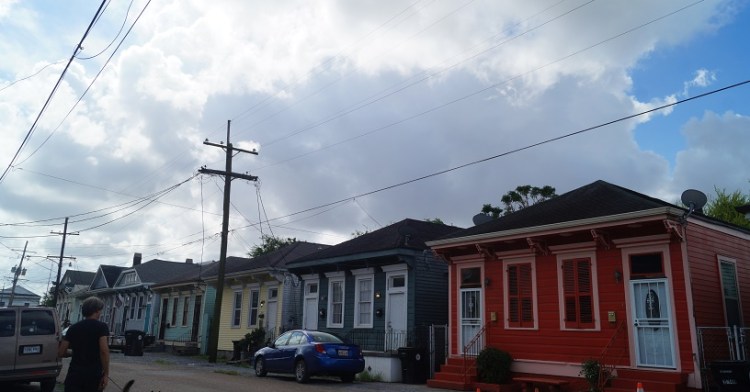 I had pretty much spaced #Writober3 until this morning. Because I’m in New Orleans and my schedule is out of my hands, I won’t be as on top of my daily writing as I have been the last couple of years, but I’m going to try to do the daily poems for OctPoWriMo and I started adding pictures to a #Writober3 Pinterest board to inspire Halloween themed flash fiction.
The first pins I added are pictures I took from my immediate surroundings and a crow claw that I had on my camera from late July. I decided not to number the images this year. Just choose the image on the day it speaks to you. I am going to start with this one:

The theme for this year’s Halloween party is “Strange Brood” and this little lady definitely came from one. I think writing her story will set the tone for a great #Writober.
The OctPoWriMo theme for today is Surrender. Here’s the poem I came up with:
Callistemon
Callistemon, the bottle brush tree
releases her red tassels
as I surrender to the moment
From elation as the light shines
through the erect, lush hibiscus
to the frustration of a burning throat
and muddy head of acclimation
I focus on the detailed lines of a glistening dragonfly’s wing
She extends
tail to the sun
on the tip of a twig
fully splayed
Like a kite escaping its tether
on a fitful wind, I surrender
to each fleeting change
Revelations bombard by the hour
The days pass too quickly
Each stuffed full of muti-days of meaning
I swirl in the dance of confusing splendor,
facing my first regret of ever catching your eye while I recognize the truth of my bliss
The white flag
wavers
I yield
to whatever comes

I can’t believe I flew into New Orleans on Monday and I’ve already been on WWOZ and now the day of the show is here. It has been a whirlwind week of daily practice, costume sewing and promotion and yet somehow it feels so normal, like this is what we always do.
If you want to know more about how our group formed and such, we talked about it in our WWOZ interview . We start talking at 126.
Tonight’s show is going to be stuffed full of great music. I’m excited to be reuniting with friends from when we started: The Stacks and Egg Yolk Jubilee. David Rhoden from the stacks made this adorable animation to promote the show:
http://davidrhoden.com/news/2018/the-stacks-with-rubber-maids-and-eyj-this-saturday
Robin, lead singer/guitarist for The Rubber Maids got our recordings re-mastered and pressed to vinyl. The record sounds great and will be available to buy at the show.

And next week we’re doing it all again. We have a show at Poor Boys next Saturday. We’re going to play more shows while I’m here and we’ll be posting videos, so keep checking back.
Though my main focus today is music. Don’t forget OctPoWriMo starts on October first, so get your poetry chops prepped for a month of great prompts and poems.


I recently attended the Pacific Northwest Writers Association Conference (PNWA18). I had a great experience. Here are my top ten reasons to attend a writers conference:
 10. Autographs – At PNWA authors can buy a table in the “bookstore” to sell their books. There is an autograph party where you can meet the authors and ask them to sign their books. The week before the conference, a member of my critique group gave me a copy of Writing the Breakout Novel: Insider Advice for Taking Your Fiction to the Next Level

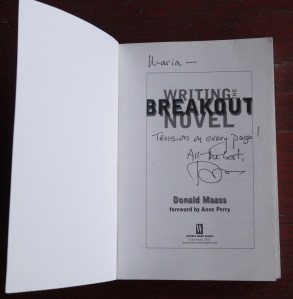 with me and was happy to see Donald Maass
9. The speaker – This year’s speaker was R. L. Stine
8. Author panel – During one of the desserts, Robert Dugoni
7. Pitch fest pitch practice – This is a great opportunity at the beginning of the conference to meet other writers and hear about the stories they’ve written. Each round table has a coach to give feedback on your pitch, so it will be ready when you get your chance with the agents and editors.
 6. Question and Answer sessions in your genre – This is a great opportunity to hear agents and authors talk about working in your genre. I volunteered to moderate the literary fiction section. The three agents who were looking for literary fiction talked about how they find and work with their authors, their favorite recent titles and gave great insider information about the literary journals they read when looking for new talent. Hint: Start reading Tin House.
5. Classes – One of the reasons writers really like the PNWA conference is that it focuses on the craft of writing. There are many great sessions to choose from. I got a lot out of “A Novel in Four Drafts” presented by Lindsay Schopfer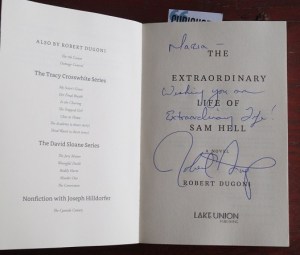
4. The agent and editor panels – This is a very important part of the conference. Finding the agents and editors most interested in stories like yours will help you make a successful pitch. It’s important to research the agents and editors before going to the conference, but even when you’ve done your homework, hearing the agents talk about what they’re looking for specifically gives you a much clearer picture if they will be a good fit for your work.
3. Pitching to agents and editors – Here’s the actual professional work of going to the conference, pitching your novel. If your manuscript is complete and polished, or you will have it polished by next year’s conference, I recommend buying the early-bird tickets as soon as they become available. The ticket is less expensive and comes with two pitch blocks. I think it’s important to have two pitch blocks because there is less pressure and if things do not go well in the first block, you can adjust your pitch and try again. Make sure your pitch is about 90 seconds long so there is time for questions. Include a quick description of your main character, the inciting incident and the crisis of your story, but don’t give away the ending.
2. Inspiration / Filling the well – Writing can be a very isolating and introspective vocation. Spending time with writers at every stage of their careers, listening to their personal stories and the stories they’ve written, and going to the sessions all help to get your creative juices flowing. In The Artist’s Way
And the most important reason to go to a writers conference is . . .
1. Relationships with fellow authors – I have met some amazing people at PNWA. Meeting other writers online is nice, but it is not the same as meeting in person. There’s just no substitute. Make sure to make business cards that not only express something about your novel, but also show your personality. Make sure to include all of your online platform information and hand those cards out to everyone who will take one. Be open and have fun meeting everyone. The joy of going to a writers conference is the concentrated evidence that everyone has a unique story to tell. It’s amazing.
Getting excited? A good place to start is heading over to pnwa.org and becoming a member. Not in the pacific northwest? That’s okay. You can attend the meetings online and the conference is open to everyone. If you would like to find a conference closer to your hometown, I created a map of US conferences to get you started in your search.


Remember to support your local authors.

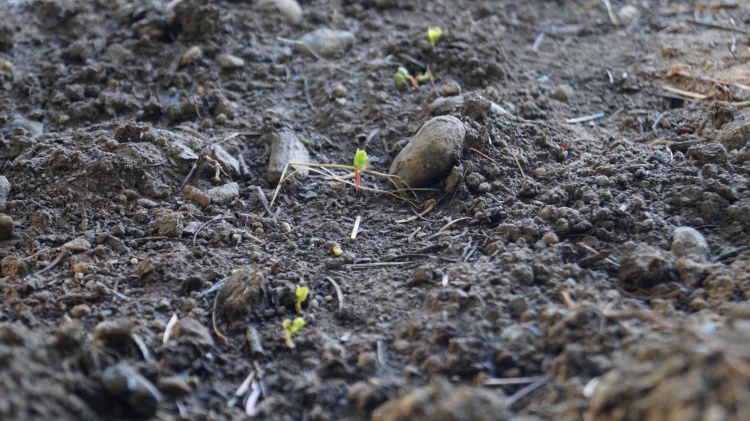
Today’s prompt for the dVerse Poets Quadrille is the word earth.
Cruel Dance
Your roots, deep veins
in dark earth smell
of heat and safety
Clinging sweet on savory
Luscious minerals necessary for
Life on earth our
feet stabilize during the
eternal push and pull
of gravity’s cruel dance
The earth leaves its
mark upon our soles.
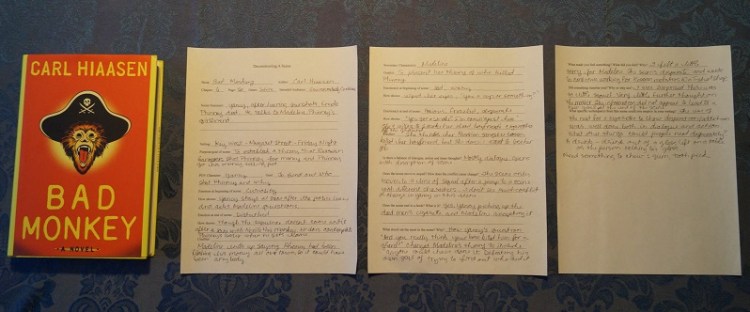
This summer my wonderful local book store, A Good Book in Sumner, Wa, not only had a Summer Reading Bingo card, but came up with a Bingo card for writers as well. It looked daunting at first with squares like: Write your manifesto (turn your excuses upside down); Write seven days in a row; and Finish Something; but the more I worked on it, the more inspired I was to continue.
One of the final squares on my card before I got my blackout was, “Deconstruct a Scene.” The instructions were to read a scene from your favorite book/author and find what makes it work. I picked out scenes from different authors I enjoy and put the books on my desk with the scenes I’d chosen dutifully marked, but kept moving on to other squares of the Bingo card. Finally, I searched the internet to see if there were any forms or worksheets out there to guide me through the process of deconstructing a scene. I didn’t find what I was looking for, so I went to work creating my own.
I had recently attended my first meeting at the Pacific Northwest Writers Association (PNWA) cottage. I’ve been a member for years, but only watched some meetings online. I’m glad I went. Pam Binder gave a presentation on critique groups and created a hand- out with her ideas of how to evaluate a scene that were helpful. I also incorporated ideas from Writing Fiction: A Guide to Narrative Craft (8th Edition)

Evaluating a scene is similar to evaluating an entire story. A scene encompasses the same elements:
The point of deconstructing scenes by authors you admire is to look for the techniques they use to make a scene stick with you. You want to identify the choices they make that appear so effortless and keep you reading like:
I tested my worksheet on a scene from Bad Monkey by Carl Hiaasen. I chose this for my exercise because my current work in progress (I finished the first draft two days ago. YAY!) is in that vein: A murder mystery that brings a lot of eccentric characters into wild situations. The scene I chose did not specifically fit the scene and sequel structure, and I realized this by using my worksheet. I also discovered a technique to show emotion that I liked and may use in the future.
Filling out the worksheet didn’t take as long as I thought it would and the insight gleaned from filling it out was well worth the effort. The great thing about this Scene Deconstruction Worksheet is not only can I use it to read as a writer, but I can use it to evaluate my own scenes.
You can get a copy of my worksheet to use in your own reading and writing by signing up for my newsletter.

When you do, you will receive a link to the file and a special message from me about once a month.
I hope that you will use this worksheet and find it as informative as I have.
Today is Quadrille Monday over at the dVerse Poets Pub and De Jackson served up the word: box.

Stacked Boxes
Stacking larger boxes on small boxes
A heavy head bobbles upon a lilting middle, teetering on a poor foundation
Functioning intelligence, serpentine systems based on a corrupted piece of code
The hypocrisy covers lies told to disguise the fib
A whisper topples the tower.
For anyone who has been following my writing adventure, you will not be surprised that “Puzzle” inspired me to write many poems. I wrote three dVerse Poet Quadrilles in the first 25 minute sprint of #MagicMon over on twitter. I am excited about this one.

Bronchial Birch Trees
I asked for the box because I need to see the corrupted result
Pieces will fit together, but not to my vision
My passion for this puzzle used to excite me into the night
I can’t open this mangled mutation of my aborted dream.
This is fun! My friend Diana Rose Wilson was having a bout of writer’s block, so I mentioned trying plotting with Tarot to get some ideas. She tried it, said it took her down a rabbit’s hole and gave up, but said I could go ahead and interpret her spread. I decided to give it a try, thinking it might be fun to see if someone else’s spread might inspire a scene for me as well since the cards are interpretive symbols with immeasurable possible interpretations.

I decided to make this the first entry in my I Regret Nothing Journal
I shuffled and cut my deck three times while thinking, What would be the last card in Diana’s spread and What would the outcome be for Diana’s story? Believe it or not, the top card after the final shuffle and cut was The Lovers. Perfect.

I grabbed my copy of Jumpstart Your Novel
Now that you know the tools I used for my interpretation, I’m going to give you my interpretation of the entire spread as a story plot. If you would like further instruction of how I came up with this interpretation, I highly recommend getting a copy of Jumpstart Your Novel
Now. With no further build up . . . Drum roll please . . .
Your protagonist is wealthy on many levels: from a wealthy family and a well-known family name, may have old money or be “self-made” through hard work. S/he is from a close-knit, tight family unit and follows family traditions and customs. This protagonist starts out having it all, but something from the past threatens his/her happiness. Something from the past: a person, a document, a memory threatens to destroy this perfect life.
The story begins with the protagonist facing doubts and fears that something isn’t right. S/he wishes to let go and enjoy/reap the good life, but worries it is too good to be true. Whatever threat from the past has come to light (family, business, family secrets, blackmail, old business partner, old school friend, old lover, inheritance, current relationship falling apart, etc.), the protagonist has dug in his/her heels and stubbornly refuses to negotiate or compromise. There is a good chance that s/he is wrong, but pride/ego/family name is in the way. The protagonist becomes awkward and difficult, determined to keep the battle/conflict going. S/he will lose any honesty s/he had, willing to call black white to disagree on almost every item.
The protagonist wishes s/he could walk away, but because of original home/wealth/happiness, can’t. S/he wishes for space and time to think, to come up with a new approach, but is constantly pressured. S/he wants to find a way to be free from blame for every horror s/he is discovering created the wealth s/he enjoyed. And/or wants to know who is causing the unrest (blackmail/threats). And/or wants to come clean about past (family, business, secrets).
The protagonist makes an attempt create distance from the situation; makes a move from turbulent seas to calmer waters where s/he finds belief in self and sense of purpose. This is where the protagonist recognizes/discovers love for another.
No matter what this protagonist does, s/he is still a representative of the family s/he was born into, thus people see a person who: earned a place on the winners podium; earned success because s/he learned vital lessons of life; has balance in life and success that will be long term. This perception feels hypocritical and difficult through his/her changing reality.
The protagonist must overcome the past and transform into a lover. The love interest, met earlier, helps in discovery and realization with a sharp wit and intelligence. S/he sees through the wealth and prestige to her/his heart. This lover helps the protagonist to rise above the conflict and trouble. As lovers, they find the truth.
The protagonist finally finds real love–has changed from being selfish and entitled to someone who listens to needs, desires feelings, likes and dislikes and knows how to communicate his/her own. Through this change the protagonist finds balance and harmony in relationship and life.
The End
And there you have it–a delicious romance plot outline that you can use over and over again–from only one Celtic Cross Tarot Spread. Why do I think this is so fun? Because using this plot I already came up with these elevator pitches:
A young heiress, happily living in the lap of luxury, finds out she has been promised to her father’s business partner. Unless she can find proof that an accidental death that occurred before she was born wasn’t her father’s fault, she will have to marry a man she loathes, or her family will lose everything. With the help of a childhood friend, she delves into her family history finding more than her heart can hold.
A Pop-Star in the middle of a world-wide tour finds out that her manager has stolen all of her money and disappeared. Not able, or willing to return to her hyper-religious family who has “dis-owned” her, she ends up in a dive-bar in a small southern town where she sings on a bar-stool for tips. When a disgruntled lawyer gets lost and finds her way to her arms, she promises to help her get her life back.
A young developer thinks he has it all: wealth, property, a thriving business and the best name to use as a brand all over the world. When his father dies, he expects everything to smoothly continue into his wonderful future, but the will is cryptic and suddenly he has to face the questions of how his immigrant grandfather made his money. The business runs itself, or at least stays still while he tries to follow his father’s odd clues that lead him to a mysterious woman and a new understanding of himself.
Like I said, this is fun. I came up with those in the last 15 minutes. They’re not great or anything, but they have what you need to start an intriguing romance novel (imho).
Diana mentioned she might read this interpretation and write a companion piece, so keep your eyes on her website.

 Experience Writing