How to Read Like a Writer: Getting Started

Reading Like a Writer by Maria L. Berg 2023

Want to up your reading game? Want to know what it means to read like a writer first hand? I sure do. And I think I’m ready. I have read hundreds of books on writing, and they all have something in common: they use examples from a variety of novels as examples of writing techniques. This year, I want to train myself to find these examples as I read novels, learn from them, and apply what I learn to my novel draft. I hope you’ll join me in the experience.

Choosing the Novels

Like me, you may be thinking, No problem. I have a To Be Read (TBR) pile a mile high. I’ll never run out of books to read, but are those the books to start reading as a writer?

There are so many novels in the world, how will I find the ones that are going to help me grow as a writer?

I started my quest by looking at lists of 100 books you should read before you die. Most of those lists consist of the same great books I have read, but I found some interesting books I hadn’t even heard of. Then I looked at the Nobel prize winners for literature, and the Pulitzer prize winners for fiction. I now had a huge list, but I doubted any of them would work as comps for my novel (Comps are books with similar premises, themes, or style to my work that I will use when pitching my finished novel). I definitely want to be reading as many possible comps as I can as I work. 

So a new approach to my reading list was to list all the authors I have really enjoyed over the years, and think about where some possible comps might come from in that list. I went through stages in my life when I would read everything I could find by one author. Who were those authors? Charles Dickens, Isabel Allende, Salman Rushdie, John Irving, Kurt Vonnegut, Margaret Atwood, Mary Higgins Clark, Carl Hiaassen, Toni Morisson, Tony Hillerman, and many others.

Half of those authors already have novels on my lists, and I’ll pick one by each of the others to add. The other thing to do is to look over the best sellers in Mystery and Thriller for the last ten years and pick some of them that sound promising. The order of reading will have to do with procurement, but having a prepared list gives me hope that I won’t stray too far from my ideal.

Reading Like a Writer

Once I’ve chosen my fifty-two novels I plan to study this year, how will I approach reading and learning from each of them? What is it I’m looking for as I read each novel that will be different as a writer? How will I learn from them? I’ll have to come up with a system of questions to ask myself while I read.

The best place to start is why am I doing this? What am I searching for? Why do I want to read like a writer? What do I hope to gain by it? What am I hoping to find in these novels?

What am I really trying to learn? I think I’m trying to learn the specifics of the writing I think is good and bad. What makes me keep reading, and what makes me put a novel down? What makes a passage or character memorable, and why do I forget so many books the moment I’ve put them down? I want to find the tricks to creating emotion in the reader, and keeping the reader turning pages. I want to discover how to make my characters relatable, making the reader care for my protagonist. I want to learn how to create interesting twists and surprises. I want to learn how to give my characters unique voices so that the reader can tell who’s talking without dialogue tags.

Now that I have a more specific idea of what I want to learn from the novels I read, what specific questions will I keep in mind while I read to get to the answers I’m looking for?

The Questions

I recently read some really good craft books: The Linchpin Writer by John Matthew Fox (which I reviewed here), How to Write a Damn Good Novel by James N. Frey, and Plot versus Character by Jeff Gerke. I used these three books to inspire some questions to think about as I read.(The links to these books are amazon associate links, if you click on these links to buy the book, I receive some thank you pennies that are greatly appreciated).

Questions for Reading as a Writer

Do I like the title?
Do I like the cover?
How many pages, chapters?
What genre?
What format did I read?
When was the book published?
Have I read anything else by the author?
Look up the author, learn something about the author
Did I like the book?
What did I like most about it?
What did I like least about it?
What was the book about (brief summary)?
What book or movie would I compare it to?
What viewpoint was it written in?
What tense was it written in?

The Linchpin Writer points out linchpin moments to look for in every novel. It inspired these questions:

What about the first paragraph drew me in?
What do I think the book is about from the first paragraph?
Does the first paragraph present characterization, energy/tone.
mystery, and emotional bedrock?
How would I rewrite it/improve it?
What did this novel teach me about beginnings?
How can I apply it to my own novel?

How is the main character introduced?
How is the main character first described?
Is it just eyes and hair?
What’s the most interesting/memorable detail?
What is a single word to describe the main character?
How would I rewrite the description?
What did this novel teach me about character introductions and
descriptions?
How can I apply it to my own novel?

What is the first line of dialogue?
What is the main character’s first line of dialogue?
Did it reveal the main character’s main concern?
Did it foreshadow what was to come?
Does it showcase the character’s personality?
How many words is it?
Does it have a surface meaning and a deeper one?
Does the dialogue reveal character, support the plot, hit the emotional theme, escalate the tension?
Does the main character have a unique voice/way of speaking?
Do I like this first line of dialogue?
How can I apply what I like to my own work?

Where did I feel an emotion while I read?
What in the writing made me feel an emotion?
Which technique did the author use to make me feel that emotion?
Did I like feeling that emotion, or did I feel manipulated?
Did I learn something about eliciting emotion in a reader?
How can I apply that to my novel?

Did the book elicit wonder?
Was there  something that made me marvel?
What metaphors did the author use?

Is there romance, sex scenes?
How did the author approach emotional love?
How did the author approach physical love?
Did it develop the characters’ personalities?
Did it further the plot?

How did the chapters end?
Were there cliffhangers?
Was there a variety of chapter endings?
Are there examples of the “already, but not-yet” technique?
Do any chapters end on character change?

How does the book end?
Is the ending satisfying?
Was there a surprise or twist?
Was there a second ending?

Do any characters die?
How did they die?
Was it foreshadowed?
Did I care?
How was the pacing?
What moments did the author speed up to good effect?
What moments did the author slow down to good effect?

How to Write a Damn Good Novel says every good novel needs a clear premise. It inspired these questions:
What is the novels premise?
Has the author proved the premise?
How is the premise made clear to the reader?
What is the main character’s premise?
Do I relate to the character? How?
Was the character likeable? Why?
How do the main characters grow from pole to pole?
Is there rising conflict? Is it ever static, or does it jump?
Does the story begin at the correct place?
Do the events of the story grow out of one another?
Is there poetic justice or irony?
What is the narrative voice?
Would it have been better if told from another viewpoint?
Does each scene have a rising conflict?
Were flashbacks used? Were they absolutely necessary?
Is there foreshadowing? How is it used?
Is the dialogue in conflict? Does it further characterizations? Does it further the story? Is it fresh and colorful?
Is the writing sensual? What are my favorite sensory descriptions? Is there a good balance of all the senses?
Is there humor? Did the author ever make me laugh?
What types of specific, concrete details stood out (or didn’t) to make the story more realistic?

Plot versus Character says characters are layered like an onion. It inspired these questions:

What is the main character’s core temperament?
How does the reader know that?
What is the main character’s character arc?
What is important in the character’s backstory? How does the reader know that?
How do others perceive the main character? How is that presented to the reader?
How does the main character speak and move that is unique?
What are the main character’s assets?
What are the main character’s faults/flaws?
What is the ordinary world? How is it presented?
What is the inciting incident? When, where in the book does it occur?

I’m sure there are many more questions this book can inspire, but I want to get started, and my list is getting very long.

Time to Experiment

Now that I have gathered an overwhelming amount of questions and read a novel, I’ll dive back into the novel and see if these questions help me learn from what I read. It may be that only a few of these questions are useful to me, but I won’t know until I try. I’ll attempt to organize the questions for useful study, and create an efficient method as I learn. Expect a post later this week (Thursday) with my first results.

Do you have a technique for reading as a writer? I would love to hear about it in the comments.

The Warm-up Week: Creating New Systems

Warm and Fuzzy by Maria L. Berg 2023

How was your first week of the year? Mine was busy and fun. I love how writing down what I want to do, here at Experience Writing, motivates me to do it. With all of the new things I’m trying, I have to remind myself that I’m just getting started. I need to be patient and give things time.

I did read a novel this week. I finished The Manual of Detection by Jedediah Berry. Tomorrow I’ll have a post about how I plan to start reading as a writer and applying what I learn from reading novels. Then later in the week I’ll have a post about what I learned from The Manual of Detection and how I can apply that to my work.

I was inspired to look at my contradictory abstractions study in a new way and will share that on Tuesday.

This week’s images were inspired by early abstract painters, Kandinsky and Mondrian. I used different size sharpies to color and draw on clear plastic then cut shapes out of black paper to represent large brush strokes, or paint blobs. I like the effect. I’m still trying to figure out the arrangement of my mirror room, but I think I’m getting results.

After realizing last week that my motivational issues are due to fear, I decided to face that fear by facing myself. I set up a chair and fabric drape in my office and have started taking self-portraits every day just as I am, no make-up, messy hair. So far it’s great practice. I’m hoping after a while, I’ll loosen up and get past trying to pose for the camera. Over time I’ll play with different looks: wigs, make-up, costumes, etc. It’ll be fun (I hope).

I finished up my chapbook for the Writer’s Digest NovPAD Challenge and sent it in, I entered a Sony Photography contest, and sent images to two literary magazines. I like that I’ve started the year submitting my work. I want to keep that up consistently this year.

I got a fun e-mail from the editor of Heron Tree. They are looking for submissions of found poetry, and one of the text options this year is Culpeper’s Complete Herbal. I am so grateful she emailed me and turned me onto this fabulous text from 1826 with color plates of drawings of the different herbs, and text of how Mr. Nicholas Culpeper used them in his work. I’m going to start by putting sections of the text through the Mesostic Poem Generator and see what comes out.

I started a new (to me) Coursera.org Course, “The Modern and Postmodern (Part 1)” through Wesleyan University. One of the texts led me to Project Gutenberg and now my Kindle is full of philosophy and aesthetics books from the early 1900s. I will never run out of things to read.

I also started my first SloPo mini-course with ModPo Penn. We’re studying Joan Retallack‘s poems.

I Got It Bad and I Think That’s Good by Maria L. Berg 2023

Using drum beats to create poetic lines

This week I started something I’ve been wanting to do for a while. I’m working on my drumming and applying it to writing poetry. To do this I found some videos from Music College TV on Youtube. This is the video I’m starting with:

I practiced playing four beats of quarter notes, then four beats of eighth notes in different combinations of cymbals and drums. Then I thought about how to represent that with words as a line of poetry. Thinking only of the rhythm, I came up with:

cat cat cat cat, kitty kitty kitty kitty

fox fox fox fox, vixen vixen vixen vixen

Easy right? And fun to say, but not exactly poetry. So then I took a section of a poem I wrote this week while thinking about finding the bad in good and the good in bad, and attempted to keep the meaning of the line while changing it to my new rhythm.

Here are the original lines:

I tell everyone I meet that I’m a good person,
but I’m not.
I talk about honesty and truth,
but I’m lying
I recite poems that equate truth to beauty,
but I think they’re ugly
I expound on the value of flaws and natural beauty,
but seek perfection

And here are the new lines in my simple drumbeat:

I say I’m good when we meet, but you’re not buying
I talk of truth, honestly, I know I’m lying
If truth is fine, why do I find yours is ugly?
If flaws make rich, why do I wish to be smudge free?

The new lines in rhythm felt like they needed to rhyme which I think is interesting. It’s challenging, but it definitely makes me write and think in a new way.

No Rush

I’m happy that I’m making progress, so I’m not going to rush things. I’ll stick with finding the good in the bad and the bad in the good while continuing to work on the song “I Got It Bad and That Ain’t Good” and playing around with my simple drum beat. I may stick with this song and beat for one more week or two or through the end of the month, as long as I am continuing the work and feeling inspired.

I do plan to stick to a novel a week though. This week I’m reading The Madness of Crowds by Louise Penny.

How are you diving into the New Year? I look forward to hearing about it in the comments.
Happy New Year! Welcome to Experience Writing 2023

I came across this video this morning, and it really spoke to me, so I wanted to share it. I named last year “The Year of Finishing Novels.” I dove into studying goal setting and motivation, from tiny habits to atomic habits. And it worked for a little while. But I found, like the video says, that my real problem wasn’t motivation, but fear, especially when it came to my sleep issues. This year, I still have all my tools and tricks I learned last year, but now I realize I’m only working on one thing: Fear. And fear won’t just go away, I need to face it by continuing to move forward.

2022 in Review

Last year was an exciting year for me. I chose abstract nouns as my focus for the A to Z challenge during April’s National Poetry Month, and that led to my study of contradictory abstract nouns that I plan to continue. The study of contradictory abstract nouns in my photography led to all sorts of discoveries and inventions. My favorite was my floating reflection ball studio which I played with all summer.

I had my first photograph publication in Wrongdoing Magazine in the fall. And I have two images coming out in the next issue of Stone Canoe in the spring. I completed the ModPo Coursework and got my certificate of completion. I joined 4theWords for writing motivation, and though it’s not what I meant when I said it was going to be a year of finishing novels, I did finish an entire first draft of a new novel in November.

The Newest Idea by Maria L. Berg 2022

What to expect here at Experience Writing in 2023

Since I have a completed first draft of a novel I can’t wait to get back to (it’s been resting for December). This is going to be the year I finish a novel. So you’ll see some novel revision posts.

Last year I really enjoyed sharing my study of contradictory abstract nouns and my attempts to capture them in an image, and poetry, so you will see more of those types of posts.

I’m going to try some new things as well:

Music – Last year I neglected my musical instruments. This year I want to bring music into my study of contradictory abstractions, so I pulled out some music books and found some contradictory abstractions in my Billie Holiday Anthology Sheet Music. Each week I plan to pick a song to work on and explore how the contradictory abstractions are explored in the music. For my first piece I chose, “I Got It Bad (And That Ain’t Good)” by Duke Ellington and Paul Francis Webster. During the week I’ll attempt to sing it, learn it on the piano, guitar, bass and other instruments, and close read the lyrics as poetry. This is an experiment. We’ll see how it goes. I’m hoping it will lead to me writing some new songs later in the year. Another way I want to bring music into my writing is to learn a new drum beat each week and attempt to bring the beat into my poetry.

Reading as a Writer – I have read a ton of books on writing, but I haven’t been reading as many novels as I would like, so this year I’ve made reading lists for novels, poetry collections, and art books and hope to apply what I learn to my novel, poetry and photography. My hope is to read a novel a week and be able to share what I learn about the craft of writing from it, and how I applied what I learned to the revision of my novel. The novel I’m reading for this week is The Manual of Detection by Jedediah Berry.

So some lofty goals, but I think it’s going to be a great year. I hope you’ll join me for the experience.

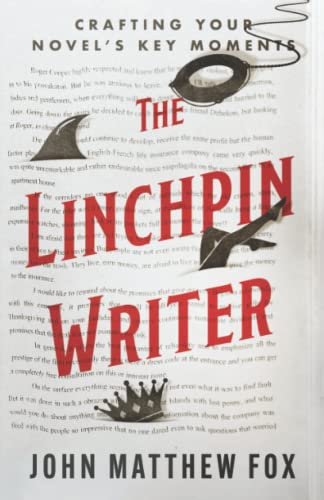
Craft Book Review: The Linchpin Writer: Crafting Your Novel’s Key Moments

The Linchpin Writer: Crafting Your Novel’s Key Moments by John Matthew Fox is the best book I have received from the Library Thing Early Reviewers Program. I am so glad I can share this book with you to finish up this year. I highly recommend it for writers and everyone who enjoys reading.

Why I picked it up: I received an e-book copy from the author as part of the Library Thing Early Reviewers program.

Expectations:
From previous experience, I expected a bunch of blog posts thrown together, and imagined one or two possible insights at best. However, I liked the cover and hoped the writing would be as sharp.

Intended Audience:
At first glance, this book appears to be intended for novelists  interested in traditional publishing. However, this book is full of actionable information for all writers and storytellers of all kinds, and the anecdotes may be interesting for all readers.

What I liked:
I am happy to say I like almost everything about this book. I like how the metaphor and theme are illustrated on the cover, clearly explained right at the beginning of the book, and continued through out. This is a craft book for people who think they have read all of the craft books. It’s inspiring, has fresh ideas, and makes you want to get to work. It lays out a writing rule, and then instantly shows examples of impressive ways to break it. It offers useful “Writing Challenges” at the end of each chapter to get you reading as a writer, and applying what you learn. I really like the approach to character description which I find challenging. He even brought up the game of Clue (which I had recently bought a modernized version of at the thrift store) when talking about surprise and mystery.

What I didn’t like:

I don’t like that he uses Google as a verb, instructing the reader to search certain phrases to find things on his website, when he could just as easily directed the reader to his blog and stated which category to click. The blog is well designed and full of interesting posts. The only reason to tell people to Google things is because he believes it will improve his SEO (listing position on the Google search engine). I feel like it cheapens the merits of the book itself. Which brings me to the only other thing I didn’t like about the book which was that it was too obvious that the book was trying to sell online classes and direct traffic to the website instead of the other way around.

Rating: ♦♦♦♦♦ 5 out of 5

Overall, I highly recommend this book to absolutely everyone. It’s an inspiring craft book for writers and a great read for everyone. I am so glad I stuck with the Early Reviewers program through all the bad reads to get to such a good read, and get to share a great book with my readers. Treat yourself to a Happy New Year and get this book!

Happy Reading and Writing!

Anatomy Coloring e-books: 2 New Book Reviews

I received two e-books from Library Thing Early Reviews, both anatomy coloring books. This review posed a bit of a challenge: how I would color an e-book. I found a free PDF editor, XODO, which has many drawing colors and highlighter colors to choose from, and was able to color with my stylus. Though not the same joy as crayons or pencils on paper, it made it possible to color without having to print out the pages.

Why I picked it up:
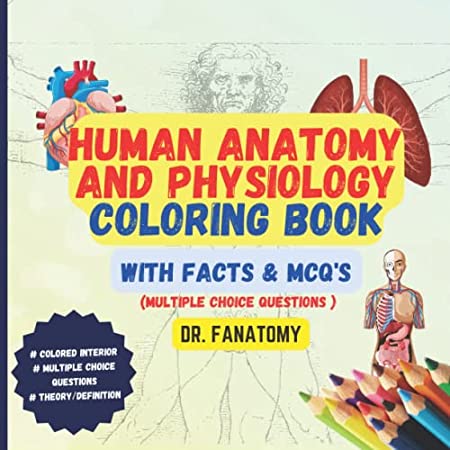
I received a free e-book version of Human Anatomy and Physiology Coloring Book (amazon associate link) by Dr. Fanatomy from the publisher through the Library Thing Early Reviewers program.

Intended Audience: In the stamp on the title page it says” Fun activities for medicos.” I doubt medicos it is meant to be the Spanish word for doctors, but more the slang term for physicians, medical students, and others interested in medicine. In the disclaimer on the copyright page, it states that this document is for educational and entertainment purposes only. So I would say it is intended for people who find learning about human anatomy entertaining.

My Expectations:

I’ve wanted an anatomy reference book for some time, and thought anatomy coloring books looked fun and useful. For my purposes, I look at it as a reference book for my writing. If my characters get hurt, I can look up a specific term for the location of their injuries. Or if I create a hypochondriac, he or she can think they have pain or damage to all the things on these pages. If I want to be more specific in my poetry, instead of talking about an aching heart, I can talk about a specific part.

What I liked: I like the way that the book is organized by systems, giving a diagram of the whole system and then looking closer at its parts. The opening organ systems chart is an informative, and interesting chart of what you’ll find in the book. I also like the terminology charts in Appendix 1 and 2, but think they should be at the beginning of the book instead of appendices. I like the specific, detailed diagrams like the knee, the hip, and the heart. Those were the kinds of references, I was hoping for when I picked this up I appreciated having the PDF so I could enlarge the images of the diagrams, otherwise I think they would have been too small. I did learn a few things (like I don’t know much about lymph nodes), and I had fun trying to color with my stylus on my tablet.

What I didn’t like: I didn’t enjoy some of the design choice: I’m not a fan of the cover. I think it’s the use of Leonardo da Vinci’s Vitruvian Man that makes it look like a kid’s cut an paste project. I thought the background pattern on the pages didn’t add, but distracted from the text. I didn’t like the font chosen for the titles. Consistency in fonts would have been more professional looking. I did NOT like the first coloring page of Andreas Vesalius with the poor dog in the background. And there were some bad typos.

Though I enjoyed the format of the book over all, I thought the note lines on the diagram pages took up too much space when the diagrams needed the whole page, Instead of instructing over and over to assign different colors to the different structures, more information about the anatomy would have been appreciated. On the Skull diagram, for example, there isn’t enough information. It lists “Frontal,” “Temporal,” and “Parietal.” Are these bones, or parts of one bone? And “Zygomatic” and “Sphenoid” and “Ethmoid” what? I’m afraid I didn’t find that diagram very educational. But if I want to know more than just terms or names, I’ll have to look it up on the internet anyway.

Overall, I had fun figuring out how to use my tablet as a coloring book, and it’s fun to color lymph node diagrams, and the digestion process, but I wasn’t a fan of the design or the typos.

Rating: ♦♦▾ 2½ out of 5

Why I picked it up:
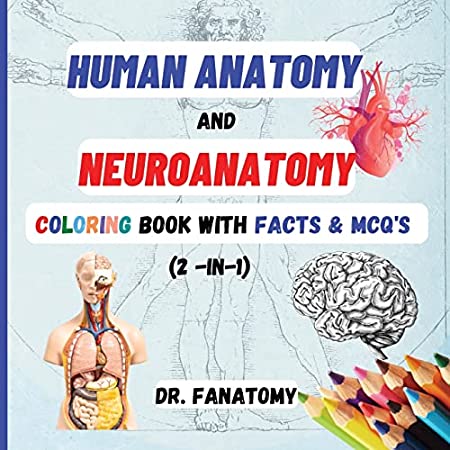
I received a free e-book version of Human Anatomy and Neuroanatomy Coloring Book with Facts & MCQ’s (amazon associate link) by Dr. Fanatomy from the publisher through the Library Thing Early Reviewers program.

My Expectations:

I was excited to review this book, since I took neuroanatomy in graduate school.

Intended audience: The neuroanatomy addition to the book, appears to be intended for those with photographic memory and a good understanding of neuroanatomy to begin with.

What I liked: I was excited to see that the second part for the brain anatomy didn’t have the design issues of the first, but it still had the repetitive instructions and absolutely no information at all, only numbered lists of names that correlated to numbers on the diagram.

What I didn’t like: I don’t like the cover, except for the colored heart.Though I like the look of the pages, and I’ll probably spend some time coloring the detailed diagrams, there’s very little useful information for anyone who doesn’t already have a working knowledge of neuroanatomy. And even then, it doesn’t provide anything but names and arrows. I found the arteries diagram odd, like there were a couple golf tees shoved in that brain.

Overall, the first part of the book was the exact duplicate of the book I reviewed first, flaws and all. The second part, the neuroanatomy section got rid of many of the design issues I didn’t like in the first part, but also provided absolutely no information except names. Though I like the clarity of the coloring book aspect, some of the diagrams aren’t clear, and there isn’t much to learn just memorizing names.

Rating: ♦♦▾ 2½ out of 5

So it looks like I have plenty of body parts to color badly, since I can’t really control where the color goes with my stylus very well. Maybe I’ll expand the images and finger paint. The images are kind of fun to color, though not as educational or useful as references as I had hoped.

Happy Reading and Writing!

Endings and Beginnings: THIS is a Great Day

Winter Wonderland by Maria L. Berg 2022

I woke up in a winter wonderland. It started snowing yesterday evening, and the snow stuck. There was about a half foot of snow when the sun came out. I was so excited to try my reflection balls in the snow. What a great way to celebrate finishing my draft.

I Did It! I wrote THE END on my novel draft. Over 100,000 words in one month. I’m so excited and happy: not only because I pushed through to the end, but because I get to put it away while I read books, and work on revising my poems for the Chapbook challenge, and then I get to come back to it to start the new year off right.

Contradictory Abstract Nouns

Last month I looked at a different combination of abstract nouns each day, however each of them was related to the big five: beauty, truth, wisdom, love, or happiness. So this month I’m going to sort them back into the big five and review what I’ve learned. It’ll be interesting to see if collecting the images back into their big five counterparts leads to different ideas for the what their contradictions are, and what their unification looks like.

Reflections in the Snow by Maria L. Berg 2022

dVerse Poets Pub

For today’s Meeting the Bar prompt Laura challenges us to look back over our recent poems and make a poem out of twelve of our last lines to celebrated the twelfth month. What a great way to start my review of the poems I wrote in November for the Poem a Day challenge.

Forgetting Every Ending Leads to No Beginnings

You can’t be disappointed, if you have no expectations
perhaps forgetfulness is the cleanse
so cross that bridge over and over
in the glow of morning

as serious as life and death
that sweet resolve
to defraud the people pretending to live
the blue bottle in the icebox waiting to warm the way down

I knew that my dream holiday repast had finally come and gone
when I was given a cup of cocoa, and told to go upstairs
on second thought I see it like it is
nothing promised, no regrets

So that’s it. November is over. It was an amazing month. I’m looking forward to reviewing everything I created, and polishing it in the future. For now, I am going to get lost in some reading, exercise, and cleaning the house. Have a great weekend! I’ll be back some time next week.

And a Successful NaNoWriMo Comes to an End

Failure in success and success in failure by Maria L. Berg 2022

Contradictory Abstract Nouns (Photography Challenge)

Today I’m looking at finding the failure in success and the success in failure.

It is finally here, the final day of November: the last day of NaNoWriMo; the last day of prompts for the NovPAD challenge; and the last day of this extended study of the big five abstract nouns and their contradictory counterparts. This month has been huge for me in terms of creation, invention, and discovery.

I now have yet another novel draft, and thirty new poems, and a ton of new images, all successful failures and failed successes. Luckily, they don’t end there. November succeeded as a month of creation. Now it’s time to spend as much time in review, and to find the failures, examine them and learn from them; to sort through and find what I still like after letting time pass, and see why I think it succeeded and how to use that successes to transform the failures. I plan to let the novel completely rest, while I focus on the poems and images in December.

November PAD Chapbook Challenge

The last prompt for this challenge is a title prompt “And (blank).”

And Success Will Follow

The undertaking is a complete fiasco
The shapes are blurry,
the colors are dull
so step over the line again

The performance is a total flop
the notes are wrong
the movements sloppy
so square off against butterflies once more

The operation is an absolute loss
alarms are sounding
footsteps approaching
so laugh in the face of fear anew

The design is a full-scale bust
the pieces don’t fit
the vision is not birthed
so muster the courage afresh

The quest is a downright defeat
the return is without elixir
the dragon still hoards the treasure
so cross that bridge over and over

Success in failure and failure in success by Maria L. Berg 2022

NaNoWriMo

Today I will write until this draft is finished, no matter how many words it takes, even if I have to write through the night, I will get to “The End.” I’m very excited. I’m so close. I won’t let myself down. 

The draft is a complete mess. I know most of it is garbage, but the whole story is there. I have used the process of drafting to get to know some really interesting characters, create a small town world, and create and resolve conflicts. In this way, this NaNoWriMo has been a complete success. The words flowed, and I wrote more in a month than I ever have before. But what I really succeeded in doing was creating more work for myself.

I’ll be back tomorrow to talk about my plans for the dwindling days of this year and what to expect in December, but then I’ll be taking a break, at least for the weekend.

Happy Final Day of November!

The Glow of Daring Disinterested Infatuation

Disinterest in infatuation and infatuation in disinterest by Maria L. Berg 2022

Contradictory Abstract Nouns (Photography Challenge)

Today I’m looking at finding the disinterest in infatuation and infatuation in disinterest. Today’s study of infatuation brought me to foolish passion and and another look at that great word “unreason,” which made me think of the obsessive works in Nonconformers: A New History of Self-Taught Artists by Lisa Slominski (and contributors).

For today’s images I changed my lighting preparing my palette for next month. And I cut a new detailed filter.

Infatuation in disinterest and disinterest in infatuation by Maria L. Berg 2022

November PAD Chapbook Challenge

Today we get a two for Tuesday prompt:

  1. Write a truth poem, and/or…
  2. Write a dare poem.

dVerse Poets Pub

Today’s is an ekphrastic prompt. Of the four painting to choose from, I felt the most connection to “A November Morning” by John Atkinson Grimshaw.

What We Dare in the Glow of Morning

We dare the cold bite of winter chill
getting through sweaters and coats
mittens, scarves, and caps
to find purchase in our bones
We dare the slippery sidewalks
the threat of the hard meet of concrete
embarrassment of flailing
pain, bruises, and scrapes
We dare to dream of a different world
where all this courage has purpose
inspiring, changing, improving
every trek to a destination desired
We dare to imagine a future in which
our Novembers are paintings of the past
in which we dared to venture out
in the glow of morning

Excited to Realize Indifference is a Challenge

Indifference in excitement and excitement in indifference by Maria L. Berg 2022

Contradictory Abstract Nouns (Photography Challenge)

Today I’m looking at finding the indifference in excitement and excitement in indifference.Everything about my work is excitement to me, the lights the shapes, the discovery, so how do I show indifference in that excitement. A second person might be indifferent to the excitement. The  world might be indifferent to the excitement. What does indifference look like? I was thinking no filter at all. Only looking at circles. But even that is exciting. Maybe not looking through the lens finder at all.

November PAD Chapbook Challenge

Today’s prompt is to write a remix poem.”This could be a different take on the same subject, or retrofitting a free verse poem into a traditional form (or vice versa).”

dVerse Poets Pub

It is Quadrille Monday where today’s challenge is to write a forty-four word poem which includes the word “warm” in some form. It will be an interesting exercise to condense all the lines I collected from the poems I’ve written this month into only forty-four words as my remix poem.

Attempts at Indifference Went Down in Flames

Let’s pretend I found indifference—
was free of bias learned from experience
and could know vibrations of unfiltered perceptions
and nerves afire went for broke
Nothing is as incomprehensible as honest truth
—would I in my excitement be warmed by the fire
or burned?

Excitement in indifference and indifference in excitement by Maria L. Berg 2022

NaNoWriMo

Last night I set up files for each of the scenes I need to get me through the end of this draft, and hopped from one to another writing about five hundred words into each. I still have a ways to go, but I think I can get to the end by the 30th. I’m excited.

The Enhanced Diminution Resolution

Diminution in Enhancement and Enhancement in Diminution by Maria L. Berg 2022

Contradictory Abstract Nouns (Photography Challenge)

Today I’m looking at finding the enhancement in diminution and the diminution in enhancement. Today’s study definitely starts with the dictionary.

enhancement noun the state or quality of being elevated, heightened, or increased, as in quality, degree, intensity, or value

diminution noun the act, fact or process of diminishing, lessening; reduction

If one thinks about the law of supply and demand, one could enhance the value of something through diminution: lessening the available quantity. So that could be the diminution in enhancement. I’m still thinking about my first attempt at cubism yesterday. Cubism is a type of diminution, reducing something to its shapes and angles, and yet also increasing them by showing the shapes and angles from more than one point of view at the same time. So cubism could be the enhancement in diminution.

For today’s images, I cut another filter in an attempt at cubism, then took shots from different heights, and tried different intensities by adding my purple LEDs to the blue, and then using transparencies with mostly white.

I feel like all of today’s experiments got me closer to the cubism idea I had in mind. I think it’s a fun concept to explore further.

Enhancement in Diminution and Diminution in Enhancement
by Maria L. Berg 2022

November PAD Chapbook Challenge

Today’s prompt is to write a resolution poem.

The Resolution

Ah, that note
the one anticipated
through elevated
intensity through
recede and decay

Ah, that note
the one needed
through degrees of
dissonance through
heightened state

Ah, that note
the one expected
through learned
settlement through
accord and verdict

Ah, that note
that sweet resolve

NaNoWriMo

Yesterday I got my second NaNoWriMo win, so my draft is at 90,000 words, and yet I have a ways to go before I hit The End. I’m excited that I’m over-writing this year, so for the first time my revision process will be chiseling away instead of building up. However, I also want to get to The End, so I can let it rest, and focus on poetry next month while I put together my chapbook. Determination is key. I have four days: will I write this novel to the end? I sure hope so.

It’s time for the final push!