🔗Post contains Amazon associate links (shown with Aal in parentheses) 🔗Links in the Table of Contents are Jump links to each of the challenges to navigate easily to the prompt of your interest: OctPoWriMo for poetry; Writober Flash Fiction for flash fiction; Halloween Photography Challenge for photography 🐦⬛Example poems are copied here for educational purposes. 🖼️I made these banners from my photos and free for commercial use fonts. Feel free to use them in your posts.
During a scary part of a movie, we often close our eyes, or peek through our fingers over our eyes, but we forget to cover our ears. The sounds are often the scariest part. Have you ever thought about the sounds that scare you the most?
In movies, a person called a foley artist, uses all sorts of things you might not expect to create the sounds you hear.
Check out this fun video showing a foley artist at work:
As writers, we also have a bunch of interesting tools for creating sounds:
Onomatopoeia – is the term for words that sound like what they describe. Fun words like bang, crash, boom, pow, bark, meow, cough, hiccup, hum, and splash.
Euphony and Cacophony – Euphony is an agreeableness of sound, a combination of sounds that please the ear. Cacophony is a combination of sounds that grate on the ear like the harsh and jarring j, x and k sounds.
Alliteration – the same letter or sound at the beginning of adjacent or closely connected words.
Assonance and Consonance – Assonance is the repetition of vowel sounds in words that are close to each other in a sentence or phrase. Consonance is the repetition of consonant sounds.
rhyme and slant-rhyme (or close-rhyme) – Slant rhyme is a rhyme of words with sounds that are similar, but not the same. I especially like the Yeats example rhyming young with song.
OctPoWriMo
In last year’s first post of Writober, Letters: Symbols of Sound, I shared a chart that separates consonants by where they are formed in the mouth. I really enjoy reading across the chart and feeling the change of the sounds from the front of my mouth to the back of my throat. Which consonants sound scarier? Which consonants feel scarier? How could you use this in your poem?
That scraping of iron on iron when the wind rises, what is it? Something the wind won’t quit with, but drags back and forth. Sometimes faint, far, then suddenly, close, just beyond the screened door, as if someone there squats in the dark honing his wares against my threshold. Half steel wire, half metal wing, nothing and anything might make this noise of saws and rasps, a creaking and groaning of bone-growth, or body-death, marriages of rust, or ore abraded. Tonight, something bows that should not bend. Something stiffens that should slide. Something, loose and not right, rakes or forges itself all night.
~Li-Young Lee
How does this poem create a scary soundtrack?
Prompt: What sounds scare you? Think of a time you were startled by a sound, in the dark, alone at night. Describe it as clearly and with as much detail as you can. In your poem, try to recreate the fear you felt through only describing sounds.
Possible Form: Sound Poem A Sound Poem is intended primarily for performance and emphasizes the phonetic aspects of language and downplay the importance of meaning and structure.
Click on the link and take a look at the image. How might this image relate to today’s theme? Write a piece of flash fiction, anything from a six-word story to 999 words. Feel free to bring in the OctPoWriMo prompt and the Photography Challenge prompt, anything that inspires your story.
Flash Fiction Tip: Write everything that comes to mind, then chisel away everything that isn’t absolutely necessary to get to the heart of the story like sculpting your flash fiction.
Thank you so much for joining me for this year’s October challenges. Remember to support each other by visiting and commenting on as many links as you can as we explore our Deepest Fears in anticipation of Halloween.
Remember, all of the prompts are provided as inspiration. You may use any of them or none of them. The only goal of the challenges is to come up with creative work each day. Hopefully the prompts will help you stretch yourself, and try new things. Have fun!
Here’s some music to get you movin’ and in the mood:
🔗Links in the Table of Contents are Jump links to my responses to each of the challenges 🐦⬛This is original work created by Maria L. Berg and this post counts as copyright. All rights reserved.
Souxie had just laughed it off when she complimented Paul’s white suit with a pink skinny tie, and he said, “What this? I always dress like this.” She felt silly in her teased hair, blue eyeshadow and pink and sky-blue striped mini-dress, but he seemed into it. It was eighties night at Top Rum, and he was cute.
When he invited her up to see his apartment, she jumped at the chance to see what they had done inside the old Tower Records Warehouse. She had heard the apartments were open and spaceous though the building still looked like a warehouse on the outside. Some graffiti that yelled Watch Out! in pastel colors grabbed her attention as he pressed numbers in a keypad. The sound of the combination made her think of Domo Arigato Mr. Roboto, a song that had played at the bar.
Her satin stilletoes echoed on the concrete steps as they climbed to the second floor. He was telling her how much she was going to love what he had been able to collect. It wasn’t just an interest; it was a lifestyle. They were both breathing heavily when they reached the top. Then she saw it. The entire space was like walking into a Vogue spread from 1983. White furniture, pink wood floors, white blinds floor to ceiling along the walls. Light poured in behind the blinds as if it was the middle of the day. But it was night. She peeked behind one of the blinds: there were rows of neon on brick walls. No windows at all. At least he wouldn’t be bothered by traffic.
“You want a drink?” he asked.
She watched him cross the room to a bar between two huge dracaena marginata plants. She held in a laugh as his huge shoulder pads bounced around his ears when he pulled two glasses from behind the bar and filled them with ice. “Sure,” she said. “What are you having?”
“Two gin and tonics coming up.”
She crossed the floor to take a seat in the closest white chair when she was suddenly stuck. Her heel was caught in a crack between the floorboards. She slipped her foot out and squatted down to tug her heel free. That’s when she noticed herself in the odd small box of a TV on the floor. She waved at it, but it kept showing her foot getting caught, then her foot slipping out of her shoe. She was glad she hadn’t bent over in her minidress. She watched her foot slip from her shoe a few more times and then she saw herself see the TV and wave. It was a strange sensation, like she wasn’t herself.
“What is that?” she asked.
“What’s what?” he said, bringing the drinks and handing her one with a cherry. His had a lime.
“Your weird floor TV.”
“Oh that. Isn’t it fun? So totally eighties don’t you think? There’s a camera over there.” He gestured toward a plant. “It’s on a delay and then repeats, like a long guitar reverb, or a reality echo.”
“But it’s just aimed at feet,” she said finally reaching the chair, putting her glass on a small square side table and staring at her crossed feet on the screen.
“Yes. It captures a step. Each step we take is a half of a breath in motion. Most of the time we don’t think about our steps, or our breath. But in my screen we can separate ourselves from them and watch them for a while.”
Paul put his drink on the side table next to Souxie’s and walked over to an entertainment center with a turntable at its center. He flipped it on and the room filled with Michael Jackson’s PYT (Pretty Young Thing).
He flipped through his shelves of records. “I have some pretty rare vinyl,” he said. “It’s really the only way to get the true eighties sound.”
She took the cherry and tossed it into the nearest planter. She didn’t want to hurt his feelings, but she didn’t like cherries. She liked lime in her drink, so she took his drink, squeezed the lime juice into the drink, and then put the spent lime into the glass he had given her. She sipped his drink. He’d never know.
He came back over and grabbed the glass with the lime in it. “So what do you think? The eighties had everything right? These days everything’s so small, compact. I like things big, bold, bright, you know?” He held up his glass. “Cheers,” he said and clinked her glass, his breath quick and shallow.
She smiled glaring-white perfectly straight teeth through shiny pink lips, and watched him drink most of his drink, pushing the slice of lime to the side with his lips. She wondered what about him she had thought was cute. It wasn’t his greasy, slicked-back hair, or his stubby-fingered small hands. It wasn’t the little alligator on his Izod shirt, or his silly Swatch watch. An eighties night was fun, but she definitely didn’t want to live there. She was contemplating the best way to extricate herself from the situation when he gasped and gurgled, started clawing at his throat. She held her breath. His eyes pierced hers then flashed to her glass. As he fell to the floor, his glass slipped from his hand spilling ice over the pink wood.
Souxie sat back, sipped her drink and watched his breaths slow until they stopped, then she watched him breathe again—his head by her feet in the strange old box TV—he stopped and then he breathed again, and then again.
Halloween Photography Challenge
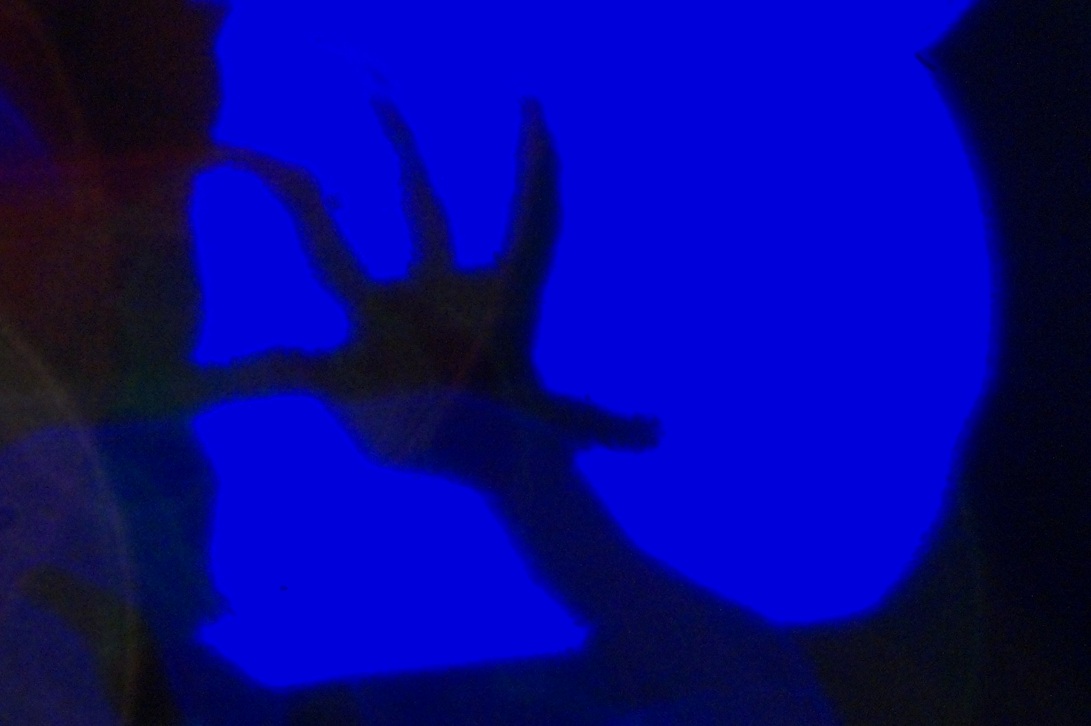
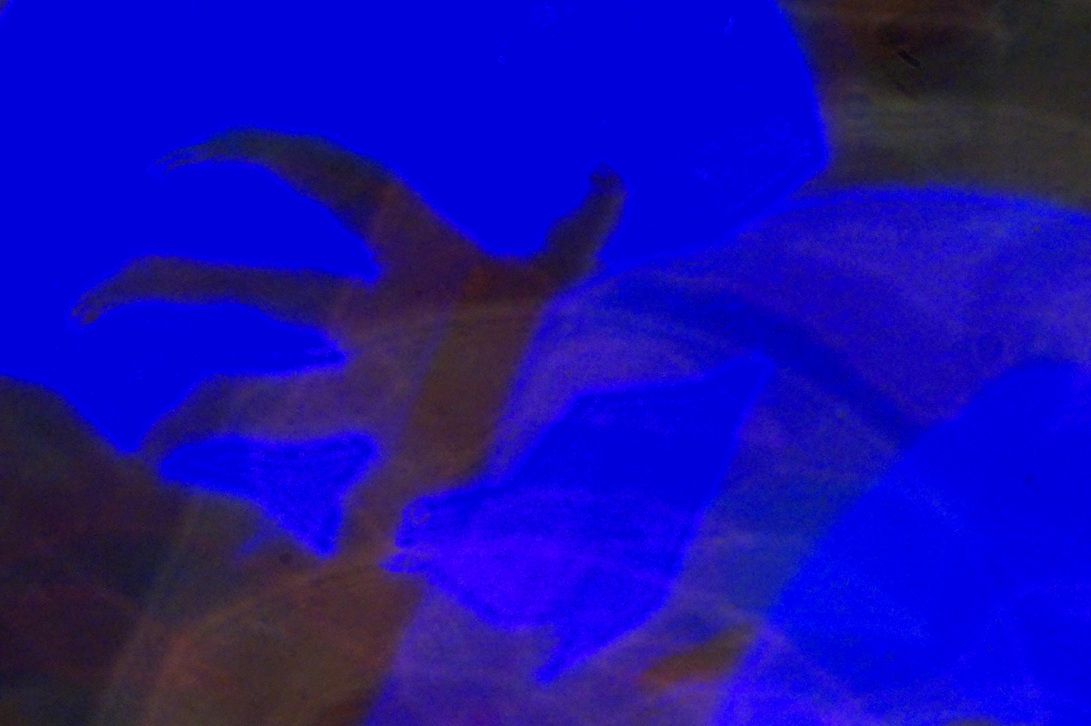
The Bogeyman to me, is the man that was under my bed at night, waiting to grab my ankles if I got out of bed, especially if I needed to go to the bathroom. So for today’s images, I attempted to recreate the fear of those grabbing hands, shooting out from under the bed.
🔗Post contains Amazon associate links (shown with Aal in parentheses) 🔗Links in the Table of Contents are Jump links to each of the challenges to navigate easily to the prompt of your interest: OctPoWriMo for poetry; Writober Flash Fiction for flash fiction; Halloween Photography Challenge for photography 🐦⬛Example poems are copied here for educational purposes. 🖼️I made these banners from my photos and free for commercial use fonts. Feel free to use them in your posts.
Welcome to Writober 2025. I am so glad you’re here. If you are not interested in the introduction and just want to go to a specific challenge prompt, click on one of the links below. Have fun, and don’t forget to put a link to your creation(s) in the comments.
I encountered a very creepy sound while playing Kinect Sports on Xbox(Aal) with my nephew. In a few of the games, when it’s game point, the crowd noise and music die away and all you hear is breathing and a heart beat until the game is over. I recorded this from the game:
That sound makes me really uncomfortable. Breath is our constant rhythm, our source of life, but it’s easy to forget about it. Breath just happens. However, in situations when we can’t breathe, even for a second, it’s all we can think about.
Durham University has an Online Exhibition called Catch Your Breath for all sorts of inspiration for writing about breath.
In creative writing, punctuation is a way we can create breath. The comma is a pause. Often, when reading aloud, we can find where a sentence needs a comma by feeling where we want to breathe. The semi-colon is a longer pause, the colon a long pause, and the period a complete stop.
In poetry, line breaks are also a place to breathe. White space on the page in prose is a place for breath.
Iambic pentameter (ten syllables with the stress or accent on the second syllable of every pair or foot) is the most common in English metric verse because it is what a person can read aloud in one breath. Or, as Mary Oliver puts it in Rules for the Dance(Aal), “it is the line which is the closest to the breathing capacity of our lungs.”
How can you bring breath into your writing and imagery today?
OctPoWriMo
Mary Oliver begins her book, Rules for the Dance(Aal), with breath. She says, “Metrical poetry is about: breath. Breath as an intake and a flow. . . . A cardinal attribute of breath (or breathing) is, of course, its repetition. The galloping footbeats of the heart, that spell fear. Or the slow and relaxed stretch of breath of the sleeping child. In either case, by their repetition, they make a pattern.”
There’s something living underneath our floor. We aren’t sure what it is, or if it wants to scratch its way up to where we are. We drown it out sometimes. Sometimes we can’t. But nights, up from the floorboards, in the dark it starts again, the rough, irregular heave and rasp—the creature hard at work in some crevice, god knows, of the old house. In some dark place the mind is loath to venture, it comes and goes without any permit. And that this force cannot consider us, is wholly ignorant of who we are, seems monstrous in its total independence: It is not trapped: It cannot be let out.
~ Tess Taylor
How does this poem breathe?
Prompt: Focus on your breath. Cover your ears and listen to your own breathing. Use punctuation, repetition, enjambment, and/or internal rhyme to create breath in your poem. Write about one of your deepest fears, expressing how your breathing changes when gripped by fear.
Possible Form: Breath poem – The breath poem is a condensed syllabic form created by Robert T. Randolph. It consists of a title and three lines with the syllable count 3-3-4. The aspect of the breath poem that I found particularly interesting is it is to be read aloud with a specific breathing pattern: After reading the title, read the first line while breathing in, the second line while breathing out, the first syllable of the third line while breathing in, and the last three syllables while breathing out, or inhale the first three syllables and exhale the fourth.
If you would like to share your poem, leave a link in the comments. Or, if you can’t link up, leave your poem in the comments and make sure to add your name.
Click on the link and take a look at the image. How might this image relate to today’s theme? Write a piece of flash fiction, anything from a six-word or one sentence story to 999 words. Feel free to bring in the OctPoWriMo prompt and the Photography Challenge prompt, anything that inspires your story.
Leave a link to your story in the comments.
Flash Fiction Tip: Focus the story on one life-changing conflict, a singular moment that changes the character (or characters) in a significant way.
“What Every Monster Story Has in Common” from the PBS MONSTRUM series
Halloween Photography Challenge
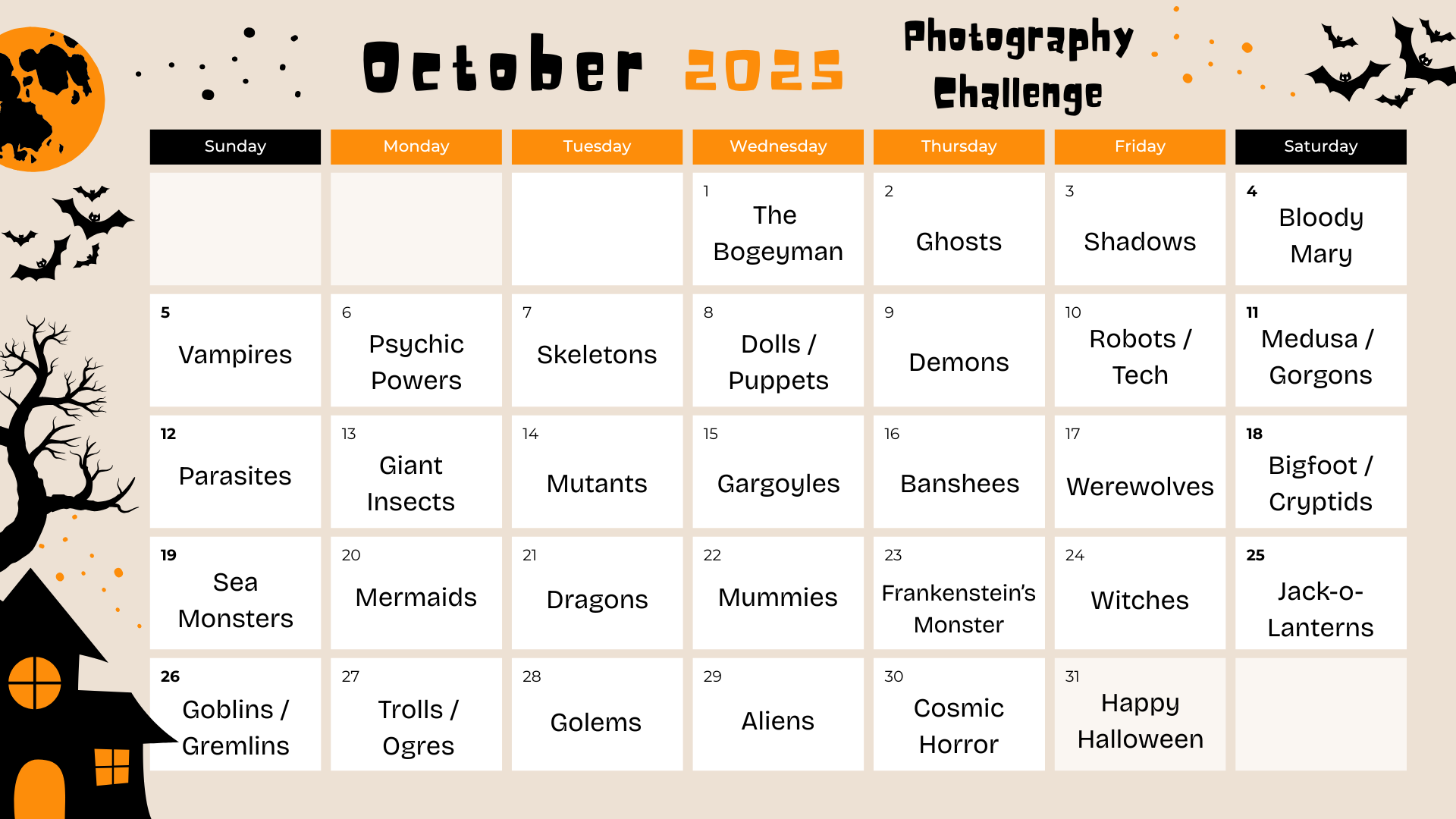
Last year I chose abstract words for this challenge. This year, I wanted to get back to more concrete symbols of Halloween. I read both On Monsters: An Unnatural History of Our Worst Fears(Aal) by Stephen T. Asma and Writing Monsters(Aal) by Phillip Athans while exploring our deepest fears, and noticed how I associate different fears with different monsters. We all have different associations and memories with different monsters, so I thought they would make good prompts that would take our photography deeper.
Your photos may be of a physical attribute of the monster, your interpretation of the monster, or an image that represents the fear that monster evokes in you. Your photo may be of a space where you imagine that monster lives or hides; it could be a picture of where you first remember learning about that monster, or a photo that captures a mood of that monster. The possibilities are endless.
Here are some reasons that monsters are scary from Writing Monsters(Aal) by Phillip Athans:
They are unpredictable
They have a disturbing capacity for violence
They exhibit an “otherness”
Our imagination makes them scarier
They are amoral
They are beyond our control
They are terrifying in appearance
They turn us into prey
Today’s monster, the Bogeyman or Boogieman, has been around in different forms to scare children for a very long time. Here’s a fun video about the history of the Bogeyman around the world.
Thank you so much for joining me for this year’s October challenges. Remember to link to your creative works in the comments and support each other by visiting and commenting on as many links as you can as we explore our Deepest Fears in anticipation of Halloween.
Remember, all of the prompts are provided as inspiration. You may use any of them or none of them. The only goal of the challenges is to come up with creative work each day. Hopefully the prompts will help you stretch yourself to try new things. Have fun!
Here’s some music to get us moving and in the mood:
📝This post is in response to the Poetics prompt at dVerse Poets Pub ✒️This post contains a new poem that is the property of Maria L. Berg
Monster Gators by Maria L. Berg 2023
Prompt
Today’s prompt from Truedessa for Poetics at dVerse Poets Pub is to write a poem inspired by the poem “The Song by Paddle Sings” by Emily Pauline Johnson (1861-1913).
Poem
Paddling Against the Current
It was a perfect day for a paddle. Morning sun warmed our cheeks as we donned our life jackets and coaxed our canoe from the shore.
In perfect sync, our oars sliced through light, glinting off peeks of breezy waves and each swirl we formed echoed from bank to bank.
But without warning, a cloud covered the sun and the breeze in the shadow made us shiver.
The current grew against us and even paddling on both sides of the canoe, we spun in circles.
The current grew too strong. Our muscles exhausted from paddling against it.
We heard a voice yell, “Paddling should be illegal,” then the unmistakable dual rotors of a Chinook pulsed overhead and we froze. The current took us.
I remember a time we canoed in the Louisiana swamp. We threw fries in the water, taunting begging the gator to act. When he snapped, we screamed and then laughed. Like the thrill of a jump scare we screamed but then laughed when we knew we were safe in our canoe. He couldn’t harm us.
I want to stop screaming. I want to laugh.
Writober Starts Tomorrow!
This year’s theme is Our Deepest Fears. Poets, there will be daily prompts for October Poetry Writing Month (OctPoWriMo). Storytellers, there will be images for flash fiction prompts. And Photographers, there will be daily one word prompts for the Halloween Photography Challenge. The prompts will be posted at 12:01 am Pacific Time every day in October. You are invited to join in to any or all of the challenges in any combination you wish. Looking for more information? Check out Come Join the Writober Fun.
📝This post is in response to the MTB prompt at dVerse Poets Pub ✒️This post contains a new poem that is the property of Maria L. Berg
In the Green by Maria L. Berg 2025
Prompt
Today’s prompt from Laura Bloomsbury for Meet the Bar at the dVerse Poets Pub is to write an imagist poem with a color motif. This prompt was so timely as it’s imagist week at ModPo as well.
Poem
Where the Green Meets the Blue
The barely-yellow butterfly flits over shaggy green grass darting, dashing, then disappearing among the small shiny green leaves of the lakeside bushes
where fluid meets solid testing definitions and constraints.
Now, a bee sifts through the green blades. I know it has some yellow, but all I see is a moving shape. I don’t hear its warm buzz from here only lapping waves and a dog barking in its green yard under its evergreen trees on the other side where the green meets the blue.
Where flowing meets growing this lush stillness is always in motion.
A breeze sets the green leaves rustling. My sage and basil tremble in their pots. Ferns poke through the slats of the old deck only used to hold the floats of summer. Right now, the butterfly flapping around the rosemary and dill might not know that summer is coming to an end. How could it when everywhere it rests is so green?
🌊This post is part of this year’s Writober Blogging Challenges 🧩This post continues the Writober Events since 2016
This year’s Writober is only two weeks away. Are you looking for a fun writing challenge? A great blogging community that loves Halloween? Are you interested in exploring our fears for deeper writing and self-understanding? Then, join in for Writober 2025.
Writober is a whole month of daily prompts in October to get us in the Halloween mood. It’s an accumulation of blogging events I’ve enjoyed participating in over the years whose hosts dropped away, so I took on hosting them to keep them going. Writober includes daily poetry prompts for October Poetry Writing Month (OctPoWriMo); daily image prompts to inspire stories for the Writober Flash Fiction Challenge; and daily word prompts for the Halloween Photography Challenge.
OctPoWriMo
I started participating in the OctPoWriMo daily poetry challenge in 2017. At that time Morgan Dragonwillow had been hosting it for six years. She had enjoyed April’s National Poetry Month daily prompts so much, she wanted another poetry month in the fall. I had taken the CalArts poetry workshop online through coursera.org for the first time that September and thought it would be fun to challenge myself to continue writing poetry with a daily poetry writing challenge. I also wondered how my #Writober 2 images would interact with their inspirational prompts.
I really enjoyed OctPoWriMo and even volunteered to write some of the prompt posts on the OctPoWriMo site in 2019.
Sadly, life happened and Morgan was unable to continue hosting. In 2022 the site was moved to OctPoWriMo 2022 on blogspot and the prompts are still up.
In 2023 I saw that no one was planning to host OctPoWriMo, so I took it on and have been providing the daily prompts since.
Writober Flash Fiction
I happened upon a great writing challenge called #Writober in 2016. The organizer, J.S. Nagy a.k.a @BrassGoblin, created a pinterest board and challenged himself to write a 101 word story inspired by one picture each day. He asked other writers to join him and read each other’s stories on Wattpad. The stories inspired by the challenge were fun. One of my stories was even published!
The next year, I got excited to add some of my own images to the #Writober board, so I contacted J.S. Nagy to see if he had started planning. Sadly, for me, not him, he was headed to Japan and didn’t have time for it. So I took on #Writober 2 and have continued it since.
You don’t have to use the images to inspire daily 101 word stories as @BrassGoblin suggested. I use the images as inspiration for flash fiction of any length under 1,000 words. I also use them to inspire my poetry, and/or photography.
Halloween Photography Challenge
I found Tourmaline.’s Halloween Photography Challenge in 2021. Because I love abstract photography, and illustrate my posts with my own photos, joining this challenge was perfect for me. I found the one word Halloween-themed prompts very inspirational, and really enjoyed Tourmaline.’s toy photography.
But like the other two challenges I enjoyed, Tourmaline. stopped hosting her challenge. So in 2023 I took on hosting this challenge as well.
How to Participate
Participation is easy and fun! The day’s prompt post will be up at 12:01 am Pacific Time. Read the prompts, respond to whichever challenge(s) appeals to you. Post your fun and fabulous work on your blog, website, social media, etc. and link to it in the comments, or post directly into the comments if you don’t have anywhere that you publish—make sure to add your name. Then, click on other participants’ links and leave comments on their posts, or comment on what they’ve left in the comments.
Come back each day and enjoy a whole month of Halloween fun.
📝This post is in response to the MTB prompt at dVerse Poets Pub ✒️This post contains a new poem that is the property of Maria L. Berg
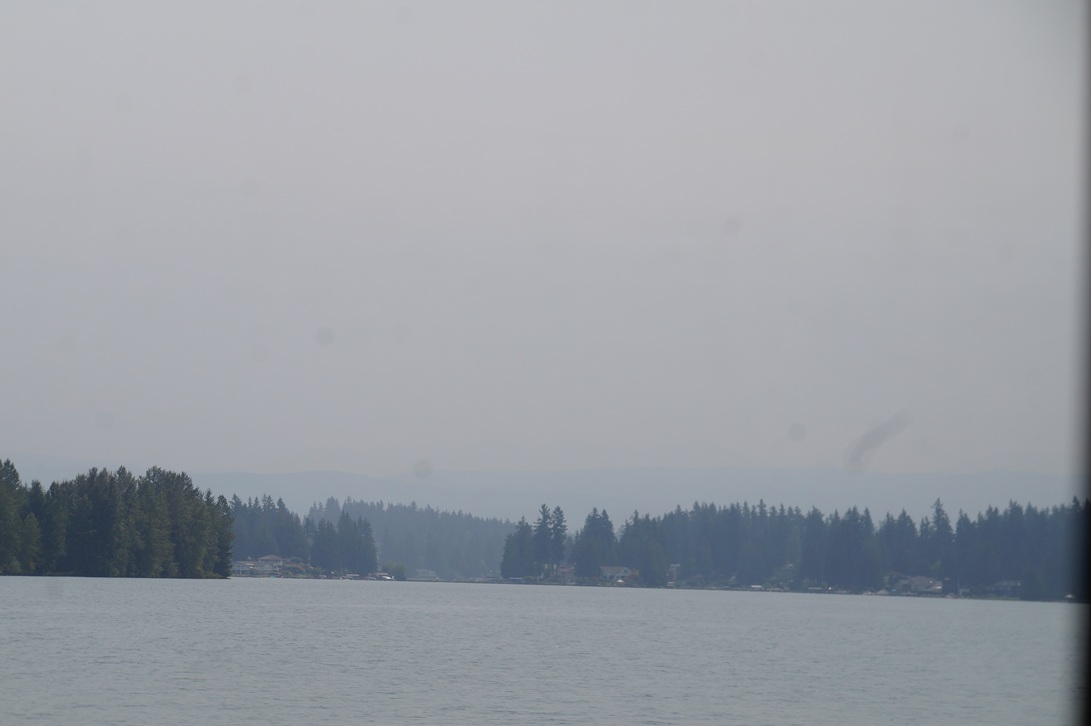
Summer Haze by Maria L. Berg 2025
Prompt
Today’s prompt from Björn for Meet the Bar at the dVerse Poets Pub is to write a cinquain. A cinquain is a syllabic poem with five lines. The lines follow the syllable count: 2, 4, 6, 8, 2.
Poem
Late Summer
This haze hides the mountain and traps unpleasant heat but I’m not yet choked by smoke from the fires.
🔗This post contains Amazon associate links (links marked with Aal in parentheses) 🌊This post is part of this year’s ongoing depth study 🧩This post continues the discussion from Deep Questions posted on April 19th
Deeper Questions II by Maria L. Berg 2025
This year’s depth study hit a bit of a snag when I came to the conclusion that to deepen my thinking and writing I need to ask deeper questions. At the end of my post “Deep Questions” from April 19th, I proposed generating questions and then measuring how deep they are from how answering them rated on my depth scale I created for “Drawing Depth Data.” But when I went to generate deep questions, I felt like I didn’t exactly know how. I realized I was going about things a bit backwards: How could I measure the depth of a question from its answers, when the depth of the question is the answer? The deepest questions may not have any answers, only lead to more questions.
Deep questions are open-ended. They cannot be answered with Yes or No, or a one or two word answer. Deep questions push past the surface data of things and events to the whys and hows. Deep questions ask about underlying causes, probe the subconscious, and look for the unseen connections.
But how do we generate these deep questions? Nothing I read in books or online gave me a direct answer to this question. I was looking for the rules for constructing deep questions. I wanted to find a secret formula that would tell me how to ask deeper questions, but instead I found advice for changing my mindset.
Deep Questions Mindset
In the book Questions Are the Answer(Aal)by Hal Gregersen, he recommends that we immerse ourselves in situations where we feel:
less right
less comfortable
less compelled to speak
His ideas reminded me of living in a new country: being hyper-aware, all my senses heightened, constantly trying to figure things out from the slightest clues. He says if your willing to be wrong, uncomfortable, and reflectively quiet, your questions will multiply and lead to deeper questions.
In the book Change Your Questions, Change Your Life(Aal) by Marilee Adams Ph.D. she says we have two mindsets: Learner and Judger. We have to move out of our judger mindset (while making friends with it) and into our learner mindset to get to “Question Thinking”(she trademarked the phrase question thinking).
She defines the judger mindset as reactive and automatic, possibility-limited, and inflexible. The learner mindset is flexible and adaptive, responsive and thoughtful, and sees unlimited possibilities. When we recognize that we are in judger mindset, she provides a list of “switching questions” to get to the learner mindset. For example:
What assumptions am I making?
Is this what I want to feel?
Is this what I want to be doing?
What am I missing or avoiding?
Over at Inquiry Institute, Marilee Adams’s website, she offers a couple blog posts on mindset.
Generating Questions
Once we’re in the a questioning mindset, one thing all of the resources I read recommended was to start by brainstorming a whole lot of questions. In Questions Are the Answer(Aal), Hal Gregersen calls it Q Storming. He recommends setting a timer for four minutes and writing down every question that comes to mind. He sets a goal of at least fifteen to twenty questions.
Another thing they all have in common is to write down everything with no judgement. In the instructions for Question Formulation Technique, or QFT at the Right Question Institute website it says:
Ask as many questions as you can.
Do not stop to discuss, judge, or answer the questions.
Write down every question exactly as it is stated.
Change any statement into a question.
I was still having trouble generating questions, so I used some of the tools we’ve explored during this depth study to get me started:
The Deep Knowledge Worksheet from the Depth of Knowledge post. The worksheet incorporates questions from Webb’s Depth of Knowledge and the Depth and Complexity framework.
Using all those tools to generate questions, I was able to generate seventy-three questions about depth and this depth study pretty quickly. But were they deep questions?
After generating all of those questions, I realized why I had been having so much trouble coming to conclusions about how to form deep questions. I had been asking What is a deep question? and looking for an answer, when a question was the answer all along. I finally re-framed my inquiry to What makes one question deeper than another? and I started to make progress.
First, I combined any questions that were asking the same thing in different ways which got my list down to around fifty questions. Then I picked out the twelve questions that I found the most interesting. Twelve questions that I thought were the deepest of the bunch.
Here are the twelve deep questions I came up with for this depth study:
1. What am I avoiding in my depth study? Why?
2. What has yet to be proven about depth? What is unclear, missing, or unavailable?
3. What depths do I want to explore but haven’t found a way yet?
4. What is the possible value and purpose that I want from this depth study? What are the possibilities of this depth study?
5. When do we recognize depth?
6. Where do we find depth beyond its physical attributes?
7. How would others approach this depth study differently?
8. What moral arguments could emerge from this depth study?
9. Who values and cares about depth? Who are the experts or stakeholders? Who or what is influenced by depth?
10. What assumptions am I making about depth?
11. What general statement, hypothesis, or main idea about all of the definitions and underlying structures of depth relate in a way to create a useful understanding of depth?
12. What analogies or metaphors could be used to compare depth to other things?
These questions are not in any particular order. You’ll notice that many of these questions are more than one question: I found that for some of my questions I couldn’t decide which way of asking was the deeper question, and couldn’t find a clear way to combine them, so I kept the related questions together. This is not a definitive list, but only a starting point. To continue my exploration, for each of my questions I need to ask: What is a deeper question than this? Why?
Looking at my list, I was surprised to see that most of my questions start with What. I found that strange when deep questions are about why and how. The first question start of Project Zero’s Creative Question Starts is just “Why . . . ?” My first question has a Why? at the end. So I started looking at all of my questions and they could all be followed by Why?
Exploring this idea, I came across Five Whys. Five Whys is an iterative interrogative technique used to get to cause and effect first described and used by Toyota Motor Company. Like a little kid asking why the sky is blue, each answer is responded to with Why? until getting to the root cause of a problem (or an acceptable answer). It is called Five Whys because the technique is to ask Why? five times, but it may take more or less iterations to get to the desired conclusion.
For our purposes, we may want to practice Five What’s Deepers along with our Five Whys.
Deep Questions in Action
Now that we have tools for generating and evaluating deep questions, and some ideas for how deep questions can lead to deeper questions, what’s next?
The next thing I did was see if my twelve deep questions were as interesting (and deep) when applied to another topic. I’m working on my prompt posts for this October’s Writober with the theme Our Deepest Fears, so I replaced “depth” and “depth study” with “our deepest fears” and was happy with the results. I can now use these questions for:
journaling
evaluating example poems
creating prompts
writing inspiration
guiding research for daily topics and themes
continuing our depth study during Writober
The resources I read recommend making a daily practice of generating questions. As with all things, practice leads to improvement, and daily question generation will keep us curious and aware of all the exciting things we don’t know. They recommend setting aside a designated time each day for silent contemplation. One recommended practice is during this time: Note how you are feeling. Q storm for four minutes. Evaluate the generated questions. Choose up to three questions to guide your inquiries. Note how you are feeling again.
If you enjoy these posts and the work I do here, please head to my buymeacoffee page and be the first to show your support!
For this post I tried a new format including a Table of Contents with jump links for the different sections. What did you think? I’m testing it out for the Writober prompt posts. Do you like it? Please let me know in the comments.
I enjoyed today’s Poetics prompt at dVerse Poets Pub from Melissa Lemay. Inspired by the poem, “August Morning,” by Albert Garcia, she challenged us to “wander from room to room as if in a museum.”
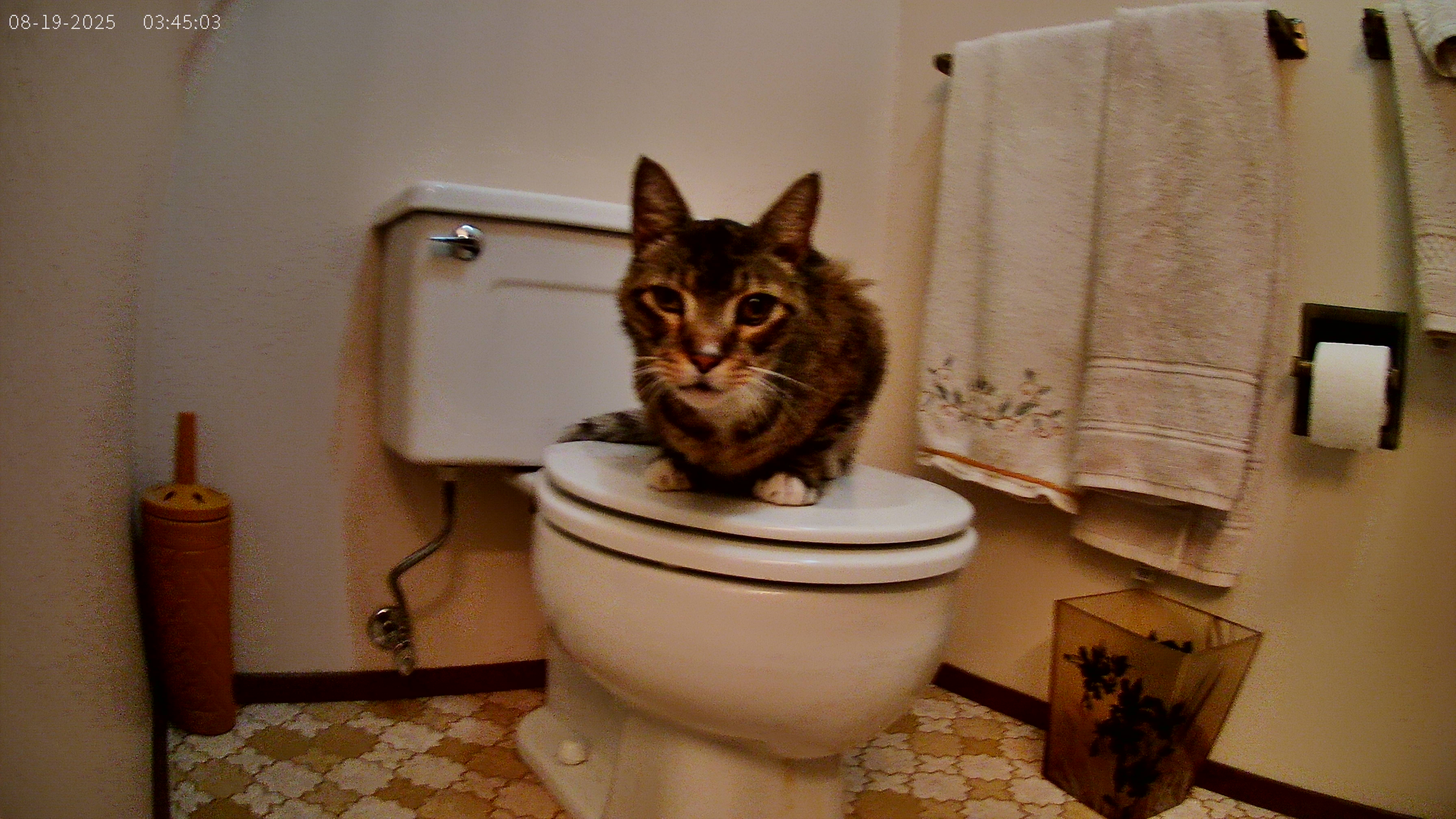
Toilet Kitty by Maria L. Berg 2025
The Museum of Temporary Hideouts
We say nature abhors a vacuum, meaning empty spaces don’t stay empty for long. This house has a vacuum in its walls and every space is filled. Like the rooms of bygone eras in the local museum, this house collects objects of yesteryear, the tools once innovative now obsolete.
Yet somehow, for over a decade kitty keeps finding new spaces for his temporary hideouts. He spent a week returning day after day to a spot behind the entertainment center with the old, fat tv that only plays VHS tapes and DVDs. Two weeks in different spots under the guest bed squeezed between craft tables and an old easel. Then there was the week when he curled up in the bass drum of a friend’s kit left behind for a girlfriend in Canada.
This week he’s a toilet cat, spending his days in the upstairs bathroom where the fancier towels collect in the cupboard and guest shampoos congregate among gifts of bath bombs and sugar scrubs, Epsom salts and soaps. It’s beginning to smell like his fur in there.
I’m waiting for him to discover his next unexplored hidey hole before I give the place a good scrub. I’m curious to see which of the filled spaces, once a vacuum nature abhored, he will redefine as the perfect emptiness for a week of filling. Which of these life-size diorama’s will be added to the museum?
These poems continue my exploration of Krisis for the dVerse Poets Pub anthology call. It’s the last Open Link Night before the deadline, and we were given the opportunity to present up to three poems for this post. I’ve come up with two offerings.
Betrayal By Nature
“Nature never did betray the heart that loved her.”~William Wordsworth
But the nest beneath my window: How I loved watching the mother wren her body filling the space over her little spotted eggs; the ugly blue eye-bulbs of the featherless chicks after they pecked themselves free of their cracked shells; and the gory gobbling of worms. Nature isn’t always pretty.
I watched them every day from my office window quiet and careful not to upset our tentative relationship of actors and audience. We had an understanding an implicit contract of trust: I would cause no harm and in return I could observe this miracle of life and growth. I knew it wouldn’t be long before they flew away, but if you love, you set your baby birds free to fly, that’s part of the deal.
But one morning, they were gone along with half the nest. I went outside and found one baby’s body below the bush. Another had been dragged to the yard. The others I assumed gobbled by a crow or raccoon in the night. So cruel.
Now I shoo away any bird that flits into the bush beneath my window. I remove any gathering materials that could begin a nest.
Permanent Crisis
“If you look at books written in this period, one of the most popular words for titles was crisis.”~Professor Steven Gimbel
He says the industrial revolution brought on a flurry of books with crisis in their titles but I can’t find them. The Library of Congress offers: The Scarlet Letter, Moby-Dick, Jane Eyre, The Red Badge of Courage, Uncle Tom’s Cabin, Little Women the required reading of my youth full of human crises: disease, death, war, adultery, slavery, equality, obsession, mental-illness, but not one with the word crisis in the title.
He says there was a sense that humanity itself was at a crossroads: people moving from farms to urban settings were alone but never alone. They could never have imagined today’s traffic cameras and doorbell cameras hand-held devices taking video and pin-pointing the precise location of each one with a Global Positioning System of satellites. Billions of humans staring at screens so alone but never alone.
I search for book titles from this year and find the word crisis everywhere: 2025: Constitutional Crisis; Waste Land: A World in Permanent Crisis; The Next Crisis: What We Think About the Future; Crisis Communications: and the Art of Making Nothing Happen And why not? Being human is being in crisis. Our brains are pattern machines, creating short-cuts and habits, producing pleasure to drive us toward predictability and delivering discomfort to coax us from the unknown.
But the only constant in life is change: the next shoe is always dropping— somehow in threes, though we remove them in pairs. Each new wrinkle will come forming deeper valleys the more we smile.



 Experience Writing