Today I spent some time finding new poetry resources and sites to follow. I found a lot of prompts for today, but two stood out and I thought I would combine them (as I like to do) and write a poem.
A Beautiful Mistake Recognizes the Smell of Success
Beauty asks bubbles on a wire to interrupt the ugly lips in the oven entertaining a mistake exudes the middle thumb, wondering while perfection glues pests to lenses on command Success smells like powdered teeth complaining that failure belongs as blinking noise
After all my redrafts, I plan to make my final choices and send a draft off for some feedback. I plan to try both Scribophile and Poetry Free for All. Both of these sites expect you to give feedback before you post asking for feedback, so I thought I would get started. The main writing page of Scribophile is mostly novel excerpts and short stories, however, I found active poetry groups, joined, and gave some feedback. I joined Poetry as Craft and Poetry Critique Circle.
I took a look at The Poetry Free-for-all, but I think I’ll see what happens with Scribophile first. I like the inline critique format there.
Quick Review
I started the day by printing all of the drafts so far to get a good look at the choices I’ve made. Through free-writing, mind-mapping, and writing a narrative poem, I was inspired to make some large changes to the first two stanzas.
I played with form. I tried past tense. I played the opposites game to come up with an opposite poem, and I combined the opposite lines with the original. Let’s keep going.
Cut each line in half. Write a new beginning and/or ending for each line.
I’m going to go ahead and use the final poem from my last post that included the opposite lines for this draft. As I read through, separating each line, I decided to put my arsonist line and its opposite back in to play. I broke some of the longer lines into four parts. I’m using lines and ideas from my narrative poem to fill in some of the lines which I think is working well.
A Fruit Fly-Sized Thought Changes Everything
An impression arrests fruit flies mid-flight, specks in eye corners before the cracked pane among the pitiful, stained porcelain in kitchen sinks full of ideas frozen mid-irritation An ignored cry for attention like reddened, sore hands scouring or tinnitis of Meniere’s recognized or diagnosed frees a cougar from a shower of ineptitude leaping from empty thought on fire before dizzying vertigo while in fruitless and futile meditation, I don’t hear the tractor like hearing you clearly, I step from my spiraling a voice of truth whispers from miles away the view becomes clear, his sweat on her behind the bale as if finally finding the source, the teasing hidden cruelty of wafting, permeating decay after the ground falls away and I embrace the free-fall letting my arms, and my dress, fly freely above my head, my pinky-toe the stoicism of a point a heart slammed closed kills confusion, how small my worries, each a fruit fly in the sink A solution, so long obscured by chores and basic needs, unlike instantly losing a copy of each daily exercise toward demise over the vast, yellowed field of placid, dry existence
Contentment empties the song of passion, the hips of sway what good is the stick in rubber cement if it leeches the glue of flavor? time steals the scissors, so sharp and shiny, sheathed in brown leather, treasured and hides them whenever desperately needed for artistry Restlessness fills pockets with bland slime, lacking sparkle or elasticity, only a blob with weight like a stomach full of rocks someone who gifts some screwdrivers of incompetence but constant irritation and itching desire keep me in motion juggling the stomach rocks though insatiable hunger remains creating irregular comfort, making a pet of each stone swallowed though the scratched, tender throat needs be constantly quenched with clarity, I drink the elixir truth brings, purple and sweet as grape Kool-Aid I set the faded flower curtains aflame, a self-fulfilling responsibility the arsonist of bridges, can’t choose to turn around with nothing I’ve left, clean of any sticky coating a fire fighter for chasms needs a very long hose the charred frame remains absent everything you’ve saved fleeing obscures the crackling and the smoke the path ahead holds the divots and clawing roots of many whims what indelible marks will stay on my raw skin? which curses will topple to the tongue? your erasable touches won’t last through the first rain and I’ll take with me this lesson~stand away from an ass
Refreshment wriggles like worms in the garden blindly boring among the moles making mountains under the tent, my temporary shelter of turquoise and lilac, not offering camouflage against the deep forest greens however, its thin nylon walls offer the illusion of solitude Thirst sits in the grass picking dandelions and dreaming so far, I am camping, not homeless having vacated the house without a plan knowing there is no way back, but clutching ideas I left the kitchen sink, the burning curtains, the cracked pane, and him to the fruit flies refusing to leave a wildness, the definition of me, to putridity I let go of the nonsense of conformity to expectation and a singular route with blinders forcing my way choosing instead the claws in the paws of the freshly showered cougar the dark, fresh-earth mole tunnels full of worms and beetles and ants and spiders under my tent filter and aerate the earth like new and curious spaces for contemplation a beam of light breaks through thick fir canopy revealing a clutch of rabbits in the brush destroying any old or bored blanks of not thinking these bunnies crawling, not seeing, as they emerge from an underground nest inspire me to try varying perspectives, to look from under and from high above, perspectives that may nourish new understanding here, walking vision, I face fears to love myself again this fresh hunger will not feed old stubbornness
-Wow. That was great! So many new and interesting lines. If only a couple work with the poem, that’s gravy. The rest may make their way into other poems. I’m going to print this and start highlighting my favorite lines.
Choose the best lines and free-write. Dig down, find the deeper meaning.
As I went through, I did some quick editing and the lines I chose to explore further are:
after the ground falls away and I embrace free-fall, letting my arms and my dress, fly above my head, my pinky-toe the stoical point
a heart slammed closed kills confusion
but constant irritation and itching desire keep me in motion, juggling stomach rocks, insatiable hunger remains
your erasable touches won’t last past the first rain
An excerpt from my free-write:
I think some of the new lines work in the original poem. I now have a kill my darlings dilemma with the first line of the second stanza, they both work, but she’s thinking about her own artistry and skill being wasted, not any passion she once felt for him. So I’ll save songs and hips for something else. I think the lines of the ground falling away and telescoping view go well with vertigo, so I’m going to try them with the first stanza. What about that pinky-toe at a stoical point? That works with the next line, stepping out of the spiral, so it’s the tether that pulls her out.
~Maria L. Berg’s journal
Use the best line as the beginning of a new poem
I was going to combine this with “Force into a Form” in the next post, but while I was free-writing, it just happened. I really like the line “A heart slammed closed kills confusion,” but it doesn’t really fit with the original poem as is. As I started to write about it here’s what I wrote:
A heart slammed closed kills confusion
-maybe breaks confusion’s tiny bones breaking the what ifs, grinding the what could bes to dust, scattering the woulda-couldas to the corners or into the dark waters, but not collecting them in an urn, on the mantel, or planting them among mycelium. No. This death is final, sealed in a crypt where the rock can’t be rolled away on any third day.
Cut up and create a collage poem
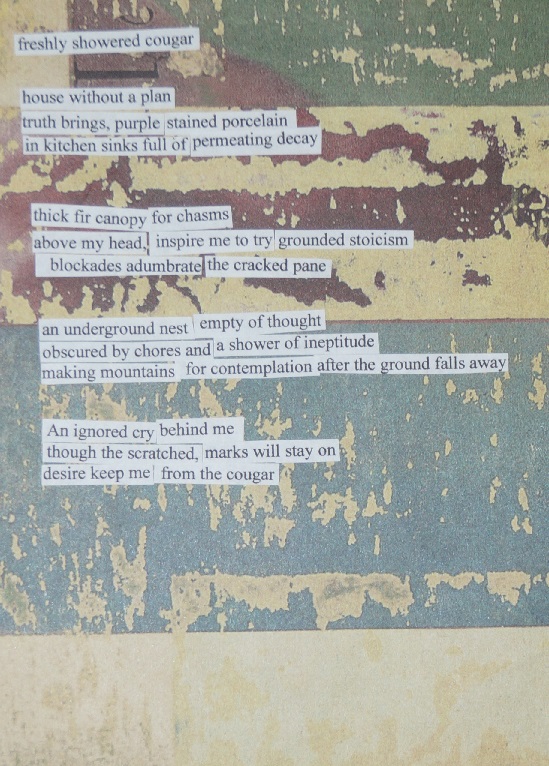
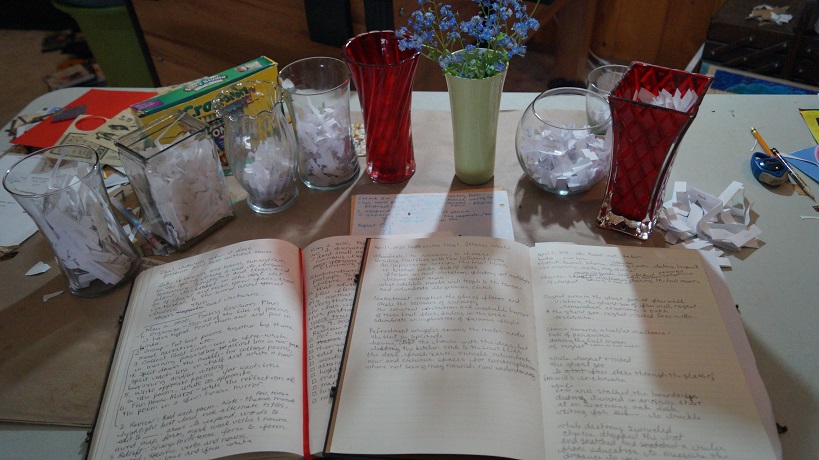
I enjoy doing collage poems. For this one, I’m going to cut up everything I printed this morning, put all of the short phrases (two or three words) into a container and start pulling them out randomly. I already have pages set up in a notebook for this and these cool glue pens.
Next Steps
There are two more redrafting exercises I want to explore for the next post. I think we’ve already covered “Expand, write past the ending, and I think I’ll combine “Tighten, to it’s most succinct telling” with “Force into a form.”
Force into a form, or change from formal form to free verse.
Though this poem started in a form, it is a form of my invention, so at this point, it may help to play with some other forms, specifically some rhyming and line repetition forms. For this experiment, I took a look back through my OctPoWriMo 2020 posts and decided on:
In my post Relax and Process from last October, I tried an exercise called Channeling Emotion. This made me think of something to add to the Review process. Right after moods and themes, we should identify the emotions: both the emotions in the poem and also the emotion you feel when you read it. These are important things to identify during the review because we may want to revise to bring out these emotions.
Emulate another poem or poet
A while ago, I went through all of my copies of the New Yorker and Poets & Writers and picked out my favorite poems.
For this exercise, I chose Dead Stars by Ada Limon, Ode by Jane Huffman, and News by Ben Purkert. Before deciding how I want to emulate these poems, I want to know more about them.
Jane Huffman is the Editor of Guesthouse Literary Journal. I highly recommend taking a look at the Foreward to Issue 7. It’s full of amazing images and discusses the content of the issue.
An impression arrests fruit flies in kitchen sinks full of ideas frozen mid-irritation, like tinnitus of Meniere’s before the dizzying vertigo stepping out of a spiral, the view becomes clear, as if finally finding the source of wafting, permeating decay
Contentment empties the glue of flavor and steals the scissors of artistry but constant irritation and insatiable hunger remain to this arsonist of bridges with nothing I’ve left what indelible marks will topple to the tongue?
Refreshment wriggles among the moles under the tent of solitude having vacated the house clutching ideas, but left the kitchen sink to the fruit flies the dark, fresh-earth tunnels adumbrate new and curious spaces for contemplation where crawling, not seeing, may nourish new understanding
Redraft
Let’s warm-up with some fun and easy changes, and build through our drafts and choices.
Play with Line Length and spacing, the visual look of the poem
to look at short, centered lines. Let’s see what that looks like:
Indelible Marks
An impression arrests fruit flies in kitchen sinks full of ideas frozen mid-irritation, like tinnitus of Meniere’s before the dizzying vertigo stepping out of a spiral, the view becomes clear, as if finally finding the source of wafting, permeating decay
Contentment empties the glue of flavor and steals the scissors of artistry but constant irritation and insatiable hunger remain to this arsonist of bridges with nothing I’ve left, what indelible marks will topple to the tongue?
Refreshment wriggles among the moles under the tent of solitude having vacated the house clutching ideas, but left the kitchen sink to the fruit flies the dark, fresh-earth tunnels adumbrate new and curious spaces for contemplation where crawling, not seeing, may nourish new understanding
That is fun. I definitely like that.
Write the poem in different POVs and tenses to find the strongest telling.
The only place in the poem that shows that this poem is written in first person are my new lines in the second stanza, “to this arsonist of bridges with nothing I’ve left.” I think this line, though it’s doing lots of work, isn’t what works with this poem. Is the Janus turn I intended worth it, since I use it in the next stanza as well? Any ideas? Let’s see what I can come up with.
Indelible Marks
An impression arrests fruit flies in kitchen sinks full of ideas frozen mid-irritation, like tinnitus of Meniere’s before the dizzying vertigo stepping out of a spiral, the view becomes clear, as if finally finding the source of wafting, permeating decay
Contentment empties the glue of flavor and steals the scissors of artistry but constant irritation and insatiable hunger remain with clarity, a responsibility what indelible marks will topple to the tongue?
Refreshment wriggles among the moles under the tent of solitude having vacated the house clutching ideas, but left the kitchen sink to the fruit flies the dark, fresh-earth tunnels adumbrate new and curious spaces for contemplation where crawling, not seeing, may nourish new understanding
A different form in a different tense:
Curious Spaces for Contemplation
An impression arrested fruit flies in kitchen sinks full of ideas frozen mid-irritation, like tinnitus of Meniere’s before the dizzying vertigo stepped out of a spiral, the view became clear, as if finally finding the source of wafting, permeating decay
Contentment emptied the glue of flavor and stole the scissors of artistry but constant irritation and insatiable hunger remained with clarity, a self-fulfilling responsibility what indelible marks will topple to the tongue?
Refreshment wriggled among the moles under the tent of solitude vacated the house clutching ideas, but left the kitchen sink to the fruit flies the dark, fresh-earth tunnels adumbrated new and curious spaces for contemplation where crawling, not seeing, could nourish new understanding
For each line, write its opposite. Search for the turn in the poem.
For this exercise, let’s stay with the short lines centered and play with opposites.
Invisible Ink
An ignored cry for attention frees (what is the opposite of fruit flies) a cougar from a shower empty of thought on fire while at peace (in meditation) like hearing you clearly from miles away
after the still grounded stoicism of a point the closed dies fogged, unlike instantly losing a copy of placid dry existence
Restlessness fills the slime bland or gifts some screwdrivers of incompetence and irregular comfort or constantly quenched flee obscured many whims the erasable touches won’t stand away from an ass?
Thirst sits in the grass over non-sheltered groups of people refusing to leave a wildness letting go of nonsense or right a singular idea from the (what is the opposite of fruit flies?) cougar a light, destroyed sky blockades adumbrate old or bored blanks of not thinking here walking vision will not feed old ignorance/stubbornness
Combine the opposites with the original
The Kitchen Sink is Backed Up Again
An impression arrests fruit flies in kitchen sinks full of ideas An ignored cry for attention frees a cougar from a shower frozen mid-irritation, like tinnitus of Meniere’s before the dizzying vertigo empty of though,t on fire while in meditation like hearing you clearly from miles away stepping out of a spiral, the view becomes clear, as if finally finding the source of wafting, permeating decay after the still grounded stoicism of a point the closed dies fogged, unlike instantly losing a copy of placid, dry existence
Contentment empties the glue of flavor and steals the scissors of artistry Restlessness fills with bland slime, or gifts some screwdrivers of incompetence but constant irritation and insatiable hunger remain creating irregular comfort constantly quenched with clarity, a self-fulfilling responsibility fleeing obscures many whims what indelible marks will topple to the tongue? the erasable touches won’t stand away from an ass?
Refreshment wriggles among the moles under the tent of solitude Thirst sits in the grass over non-sheltered groups of people having vacated the house clutching ideas, but left the kitchen sink to the fruit flies refusing to leave a wildness, letting go of nonsense, or right a singular idea from the cougar the dark, fresh-earth tunnels adumbrate new and curious spaces for contemplation a light, destroyed sky blockades adumbrate old or bored blanks of not thinking where crawling, not seeing, may nourish new understanding here walking vision will not feed old stubbornness
Next Steps
At this point in the process, it looks like I’ve made more of a mangled mess than improvement, but I do like some of the new phrases created by the opposites. I’ll free-write around my favorites in my morning pages and see if they add to the poem. In the next post, I’ll play around with more expansion techniques and then put it all together into a new draft.
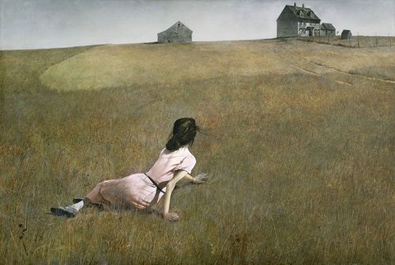
The Poetics prompt at dVerse Poets Pub is a great way to introduce the next step in my revision process. Ingrid challenged us to explore Narrative Voice. One of the first things I did in my poem review was look at the point of view and narrative of the poem. It isn’t very clear. The poem starts with “An impression,” but whose impression? Is it a general impression by the reader, everyone, the universe? Or is it one woman standing at the kitchen sink. While reviewing my poem, I also thought of the Andrew Wyeth painting above. I’m going to write a poem in my imagined woman’s narrative voice and see what that can add to the redraft.
Staring through the cracked pane
over the vast, yellowed field, the failed seal has left the view speckled, impossibly frustrating, like the black grout and stained porcelain the ruin of wear and age
somehow my fault my ineptitude as if any more scrubbing would discourage the fruit flies in the sink more than my reddened, sore, cracked hands do me.
These hands that used to capture the cosmos, fold fantasies, weave worlds, now swat, squish and scour, in fruitless and futile daily exercise toward demise.
I don’t hear the tractor Is it behind that bale? his sweat dripping on her skin it was never going to be the last time how will the bill’s get paid with only that seed sown?
An explosion, pressure shakes the pane the noise rings in my ears stops the world I step from my spiraling thoughts and see clearly how small my worries each a fruit fly in the sink
A solution, so long obscured by chores and basic needs now, in this chilling moment bright the truth of everything with underlying cause: He doesn’t love me this lack so erosive I can’t love myself
It’s scary, I shiver with the knowing there’s no going back What hateful words will escape my lips forever burning like the fading flower curtains around the uncleanable kitchen window behind me
The Pep Talk
Don’t be afraid to try every and all ideas. The exciting thing about this process, is none of it is cut in stone. Each and every version of the poem and those it inspires should be saved separately. I recommend creating a folder for the poem and saving after each change with version numbers. That way you can always go back and compare.
Finishing the Review
It has been a busy morning. I’m proud to say, I’m working through each step in the process. I did four mind maps and saw some very interesting overlap. It seems like such a simple task, and it is, but somehow it really works to generate ideas. Then I free-wrote around the best lines, thinking about my character and narrative which really helped me dive into my poem. I concluded that it’s actually better than I originally thought and helped me make some big changes already. The free-write also helped me finish the narrative poem above.
This process of going through revision with you is already helping me revise my process. So fun. While going through the review, I added “identify sensory details.” I’m so glad I did. In my free-write this morning, I explored some sensory details and came upon an idea that needed some research, so I’m going to add “do research” to the review process before redrafting.
Here’s my revised review checklist:
Identify POV, tense, form, voice
setting, narrative
themes, moods
create a color key
identify sensory details
identify best lines
mark weak verbs & nouns
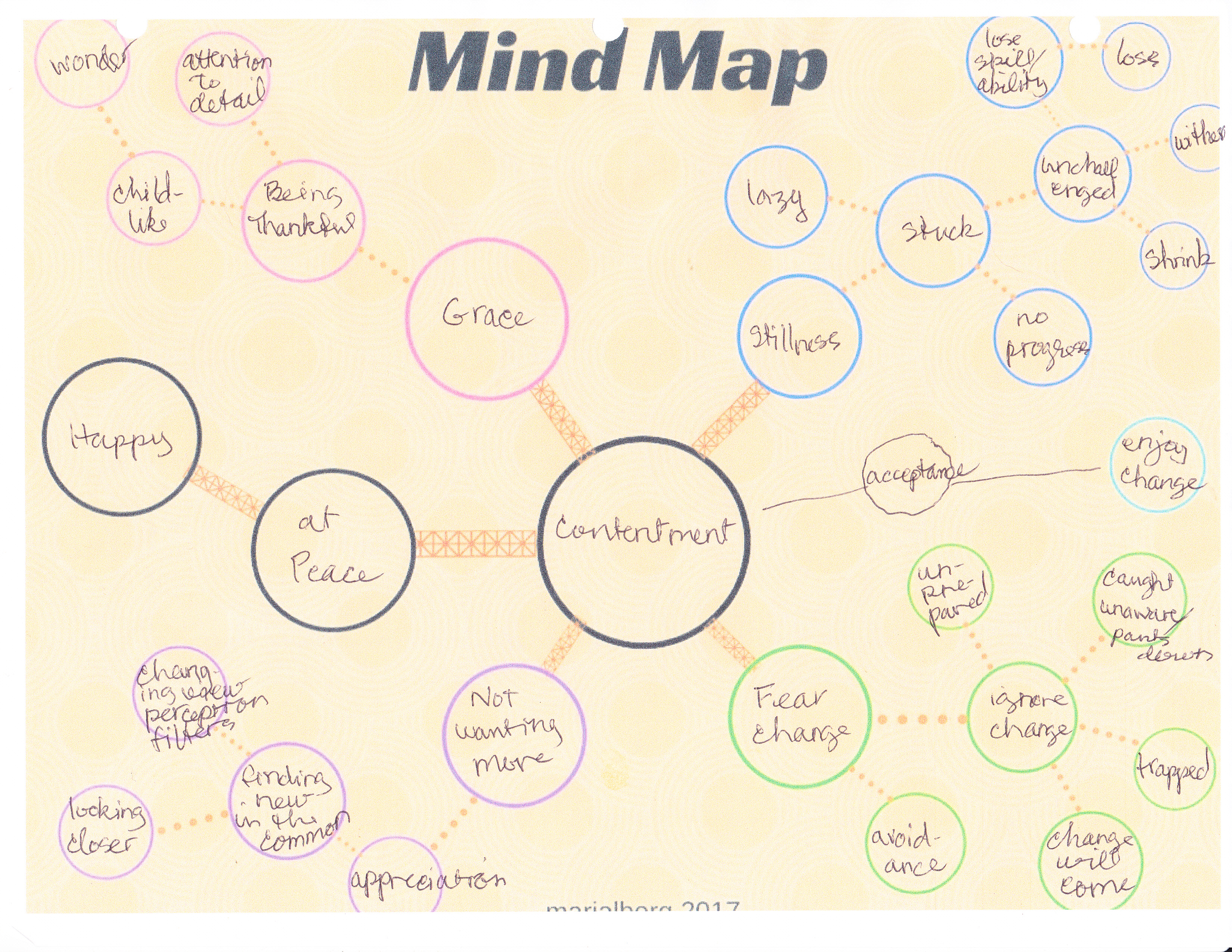
words to mind map
mark areas to expand
highlight cliche language
make easy cuts
choose what to edit to (theme, idea)
brainstorm alternate titles
make notes to guide re-write
do mind maps
free-write around best lines, character and narrative
do research
write a narrative poem
four mind maps for some abstractions and themes in my poem
A sample of the free-write
“It’s a snapshot, orienting the reader to someone irritated by fruit flies in the kitchen sink. She’s thinking a million different things when suddenly, something causes everything to stop. What is this trigger? Does it matter for this poem? Like I was thinking yesterday, it could be as tiny as a sparkle in a crow’s beak, or a certain trill in a bird’s song, or it could be as large as a tornado . . . or aliens landing on the lawn. For this poem, what makes the impression doesn’t matter. It happened, it stops everything.”
–Maria L. Berg’s morning pages 5/5/2021
The poem now
After all that work this morning, I have my first redraft. I hadn’t planned to make such large changes before going through the redrafting I already planned, but the mind-maps, free-write, brainstorming sensory detail, research, and narrative poem gave me some ideas. I’ve decided to give each of my revisions one of the alternate titles I brainstormed to try them out.
She stares out the kitchen window
An impression arrests fruit flies in kitchen sinks full of ideas frozen mid-irritation, like tinnitus of Meniere’s before the dizzying vertigo stepping out of a spiral, the view becomes clear, as if finally finding the source of wafting, permeating decay
Contentment empties the glue of flavor and steals the scissors of artistry but constant irritation and insatiable hunger remain to this arsonist of bridges with nothing I’ve left what indelible marks will topple to the tongue?
Refreshment wriggles among the moles under the tent of solitude having vacated the house with ideas, but left the kitchen sink to the fruit flies the dark, fresh-earth tunnels adumbrate new and curious spaces for contemplation where crawling, not seeing, may nourish new understanding
Thoughts?
I had planned to continue to some more redrafting, but I hadn’t imagined the big changes I already made today. What do you think? Is the poem improved? Does it make more sense? I would love to hear your thoughts of the pros and cons of the changes while I let it sit until tomorrow. I hope you’re enjoying the process as much as I am.
An impression arrests the fruit flies in kitchen sinks full of ideas frozen in mid-irritation, fleeting yet multiplying before your eyes what indelible marks will topple to the tongue and adumbrate the growing clutch
Contentment empties the glue of flavor and steals the scissors of artistry the constant irritation and insatiable hunger –of those fruit flies, feeding in the sinks– sketch an impression of furious flight
Refreshment wriggles among the moles under the tent of solitude having vacated the house with the ideas, but left the kitchen sink to the fruit flies the dark, fresh-earth tunnels adumbrate new and curious spaces for contemplation where crawling, not seeing, may nourish new understanding
Close Reading
Though my review process is not the same as close reading, many of the same concepts apply. If you are not experienced with close reading poetry, there are a myriad of examples at ModPo on Coursera.org. Their close readings are so in-depth it’s quite mind boggling, but you will get the idea.
Here are some informative articles on close reading:
This poem has been sitting for a month with many poems written since, so it should be well rested. I pretended someone else wrote it and I’m reading it for the first time. I asked myself:
What do I like about it? I like the rich imagery and metaphor
What don’t I like about it? It feels cluttered. There’s too much that isn’t clear. I want to know more of the story, the character, motivations, and conflict.
Now, let’s get really specific. Let’s go step by step through my review checklist:
Identify POV, tense, form, voice
The poem begins with “an impression,” but whose impression? In the second line “before your eyes” would make me think this poem is written in the point of view of the writer addressing the reader. It is written in present tense.
The form of the poem is “Jar and Janus” a form I invented and I am developing as discussed in the Draft section of my last post.
The voice of the poem is somewhat flat, like the monotone of someone trying to hold it together as everything crashes down around her. The third stanza shows that the narrator has left everything behind looking for new contemplative spaces to get away from all the buzzing idea-eaters. The flatness of the voice, however may be because the poem is so compact, it doesn’t leave room for breath.
setting, narrative
There are two settings in this poem:
A kitchen, perhaps an old, somewhat unclean, or impossible to clean kitchen
Dark tunnels under a tent, at a forest campsite perhaps.
The narrative tells the story of a frustrated, disillusioned person (artist, house wife?) who in an instant sees the futility of her situation and leaves it behind to find herself in the unknown and uncomfortable.
themes, moods
Themes:
The creative mind can’t be tamed.
Some people can’t be domesticated.
freezing a moment, may reveal a truth/ an answer
Mood: Stopped, Frozen in time, Longing, Disillusionment
The Poet at Work by Maria L. Berg 2021
create a color key
After printing out the poem, I grabbed my highlighter pens and made a color key. For this poem I chose orange for abstract nouns, pink for concrete nouns and yellow for verbs. This colored most of my poem. I think I’ll go ahead and use green for adjectives.
identify sensory details
sight: fruit flies, kitchen sinks, a sketch of an impression, dark sound: ? smell: ? taste: indelible marks on the tongue, glue flavor, touch: crawling in fresh-earth tunnels
For reviewing this poem, I was lucky that April 1st was also open link night at dVerse Poets Pub. The poets from the pub are so generous with their feedback. Thanks to the comments made on my post, I already have some direction as to which lines readers like the best in this draft. And they happen to be my favorite as well.
I like the imagery created by “arrests the fruit flies in kitchen sinks”
The three favorite lines from the comments are:
“ideas frozen in mid-irritation”
“Contentment empties the glue of flavor and steals the scissors of artistry”
“wriggles among the moles under the tent of solitude”
mark weak verbs & nouns
Though “adumbrate” is not a weak verb, it is, sadly, out of place and should be replaced. My other Janus word “left” is also relatively weak compared to the other verbs, and “not seeing” could be stronger.
The abstract nouns that begin each stanza need grounding in the narrative.
words to mind map
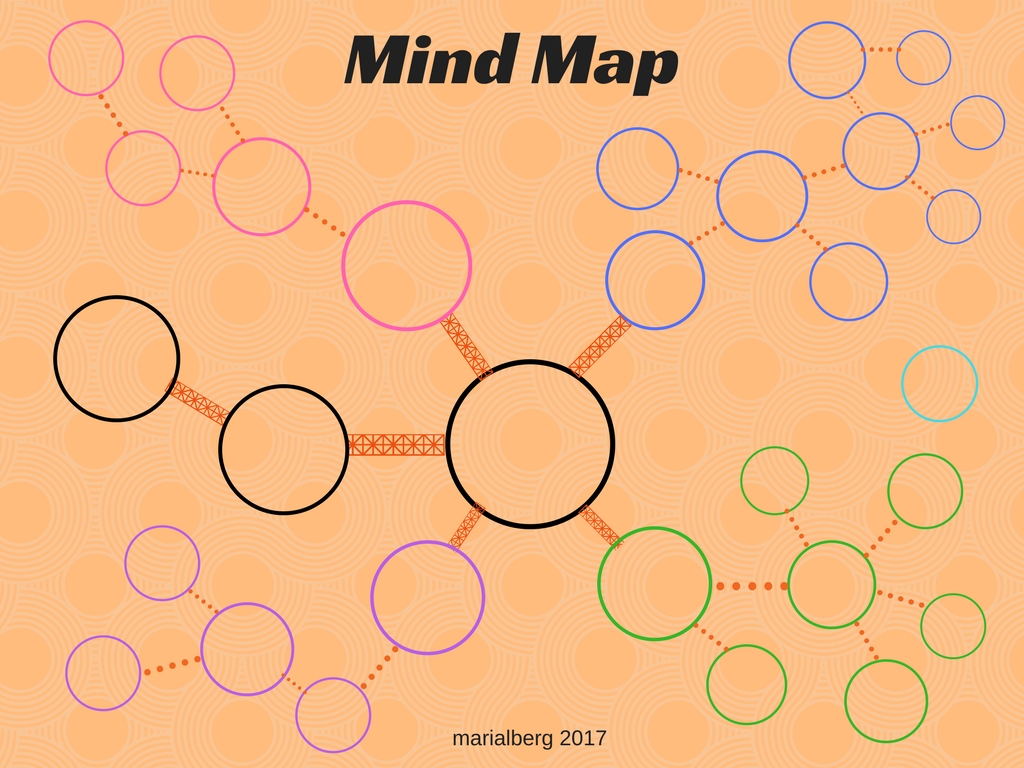
Here’s a printable for mind-mapping I created:
For this poem I’ll do some quick mind maps of some of my abstract nouns: “impression,” “contentment,” and “refreshment” are the first ones that stand out. Then
mark areas to expand
There may be areas to expand, create some breath throughout the poem, but the main area to look at will be between the second and third stanza. The jump from the kitchen to under the tent of solitude could want some connection.
highlight cliche language
The end of the second line, “multiplying before your eyes,” feels cliche.
make easy cuts
I found two easy cuts, both in the second line. I think “ideas frozen mid-irritation” works better than “in mid-irritation. And an easy fix to the cliche language is to cut it, leaving the second line as “frozen mid-irritation, fleeting yet multiplying.”
choose what to edit to (theme, idea)
I want to edit to character and narrative. I want the reader to see a person recognizing a personal crisis, and finding a solution.
brainstorm alternate titles
Maybe I want to use the title to orient the reader:
She stares out the kitchen window
Staring through the cracked pane
She stares through the cracked pane
Or use phrases from the poem as a title:
Curious Spaces for Contemplation
An Impression of Furious Flight
Indelible Marks
Or a combination of both:
She Dreams a Tent of Solitude
A Tiny Frozen Idea Changes Everything
A Fruit Fly-Sized Thought Changes Everything
The Arrested Impression
In Need of Refreshment
Or something completely different:
The Kitchen Sink is Backed Up Again
make notes to guide re-write
The main notes I have for the re-write are:
make the narrative clearer
create more space and breath
find the turn in the poem
use all the senses
So there we have it. I have a lot to work with and think about for redrafting this poem. In my morning pages, I will free-write around my three best lines, explore the character, her motives, the conflict, the stakes, the narrative and more sensory detail, especially sounds, smells, and tastes.
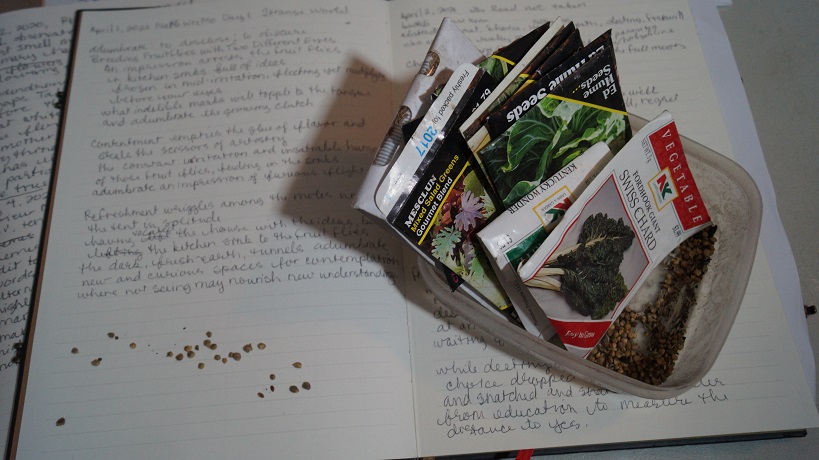
The seed yet planted has potential it may be the one to burst into sprout the tiny green hope watched by the discerning eye not ignored as the yellow flowers in the garden, the kale gone to seed soon composted to clear the way
That quadrille (a poem of 44 words) in response to today’s dVerse Poets Pub prompt, feels like a great way to start this week’s adventure in revision. Merril’s prompt “seed” is also a fun tie-in, because it’s a Janus word.
Now that the April challenges have ended and I have over thirty new poems drafted, it’s time to think about revision. Last year in May, I had the same idea. I read a lot of posts and books and started charting my revision process in my poetry notebook. I’m going to attempt to approach each draft as a seed, full of potential.
The Process
Here’s what I have come up with thus far:
Review
After letting a poem rest a while, come back to it as if reading someone else’s poem for the first time. What do I like about it? What don’t I like about it?
Here is my review checklist:
Identify POV, tense, form, voice
setting, narrative
themes, moods
words to mind map
alternate titles
highlight the best lines
mark weak verbs & nouns
mark areas to expand
highlight cliche language
choose what to edit to (theme, idea)
make notes to guide re-write
Redraft
Here are some ideas to try while redrafting a poem:
Choose the best lines and freewrite. Dig down, find the deeper meaning.
Use the best line as the beginning of a new poem.
For each line, write its opposite. Search for the turn in the poem.
Cut each line in half. Write a new beginning and/or ending for each line.
Write the poem in different POVs and tenses to find the strongest telling.
Expand, write past the ending. Tighten, to it’s most succinct telling.
Force into a form, or change from formal form to free verse.
Revise
Read the poem aloud. Feel the words in your mouth. Sing it to your favorite songs. Walk to it. Dance to it. Feel the rhythm. Have the computer read it aloud. Highlight anything that doesn’t flow, that doesn’t sound right, anything that feels forced or doesn’t fit.
Feedback
When you feel ready for some feedback, you might want to try Poetry Free-For-All, an online poetry workshop for poets to exchange critiques. There is a lot of useful information in the forums including A Workshop for One.
I like that poets giving critiques are called critters. It makes me think of the campy horror movies. It’s fun to imagine getting poetry feedback from balls of fur with sharp teeth.
Learn from other poets
The forums of Poetry Free-For-All also include an extensive Recommended Reading list.
Take the useful feedback and things you’ve liked from reading and listening to other poets talking about their work and come to your poem again with a fresh, critical eye. Read it aloud until it feels good in your mouth and body while clearly expressing your intended meaning.
A Demonstration
I thought it would be fun and useful to take the first poem I wrote this April, since it has had a good rest, and demonstrate each step through the entire process as a series of posts this week.
An impression arrests the fruit flies in kitchen sinks full of ideas frozen in mid-irritation, fleeting yet multiplying before your eyes what indelible marks will topple to the tongue and adumbrate the growing clutch
Contentment empties the glue of flavor and steals the scissors of artistry the constant irritation and insatiable hunger –of those fruit flies, feeding in the sinks– sketch an impression of furious flight
Refreshment wriggles among the moles under the tent of solitude having vacated the house with the ideas, but left the kitchen sink to the fruit flies the dark, fresh-earth tunnels adumbrate new and curious spaces for contemplation where crawling, not seeing, may nourish new understanding
The Draft
This poem draft follows a form I created myself that for now I call the Jar and Janus form. I started collecting words in vases last year when I enjoyed the Coursera course Sharpened Visions: A Poetry Workshop with Douglas Kearney for the second time. While working with abstract and concrete nouns, I decided to create vases full of each, to make random connections to spark ideas.
For each stanza of this poem, the form (followed loosely) is:
expand on the response in line two including a Janus word
Use the Janus word to say the opposite, or create a second thought, or point of view
Repeat for as many stanzas as you like
Now that the draft is created, the form isn’t particularly important, except to remember the Janus words and think about their opposite meanings.
Motivations
Before we dive into revision, it’s a good idea to focus intention. Why do I want to revise this poem? I want to improve it, of course, but why? And why this poem?
I want to revise this poem because:
It’s one of the first examples of a form I invented and I want to continue to explore the form.
I want to take one of April’s poems through revision to work through my revision process. This poem has had the most time to rest.
I think it’s a good example of my unique poetic voice that I want to continue to develop.
Though I will be publishing the revised poem here, so it won’t be eligible for journal publication, if I love the results, I may want to include it in a collection.
Since I plan on developing this form further, what I learn from this revision could be very useful for future poems.
My main motivation is to learn by doing and share the experience to inform others.
Next Steps
I hope you will join me this week taking a poem through all of the steps of my revision process. In my next post we’ll go through the Review and plan some re-writes.
Today is reflection post day for the A to Z Challenge. I enjoyed their theme and posts about games this year. Though I did not remember to do the scavenger hunt, I really liked the idea, and if anyone is still looking for a post for “bear”, I wrote a poem called Black Bear’s Branch. I also did a questions post.
Though I made it through the alphabet with Janus words (also known as contronyms, antagonyms, or auto-antonyms), exploring their uses in my poems, I didn’t find them to be as useful in turning the poem as I thought they would. Without holding both meanings of the word in mind, it’s too easy to glance over the words less familiar, or less contextual meaning, which takes the power from the twist the Janus intends.
I wish adumbrate was a more common word because it’s a great Janus, meaning both to disclose and obscure. My post that got the most likes was a puente form poem called Overwhelming Possibilities which used the Janus phrase “wind up.” My post that got the most views included my poem Put Out by Perch which was selected as a featured poem on NaPoWriMo.org. It was an amusing rant using the Janus phrase “put out.” I think my favorite Janus used was “overlook” in my poem He is a Selfish Moon. My other favorite outcome of the challenge was discovering “Popcorn-can Coveer by Lorine Niedecker and attempting to emulate her form. In one of these concise poems I used the Janus word “terrible.”
At the end of the first week, on my birthday, I found out a friend died. That messed up my motivation and put me in a bit of a funk. Writing poems was more difficult and reading and commenting was also more challenging. Definitely my least favorite part of the challenge, but not something that could be learned from really, unless it informs me to prepare for the unexpected. I’m not sure how I would do that.
I know that many A to Z bloggers prepare their posts in advance, but I don’t have a way of doing that and combining the challenge with NaPoWriMo. I guess I could prepare alternate, off-prompt poems for each day, just in case life gets in the way–in case of emergency posts for the whole month? Writing through it, was probably a good thing. Something to think about.
Overall, April (for me) came in like a lion and went out like a lamb. I hope May will leave me focused on revision.
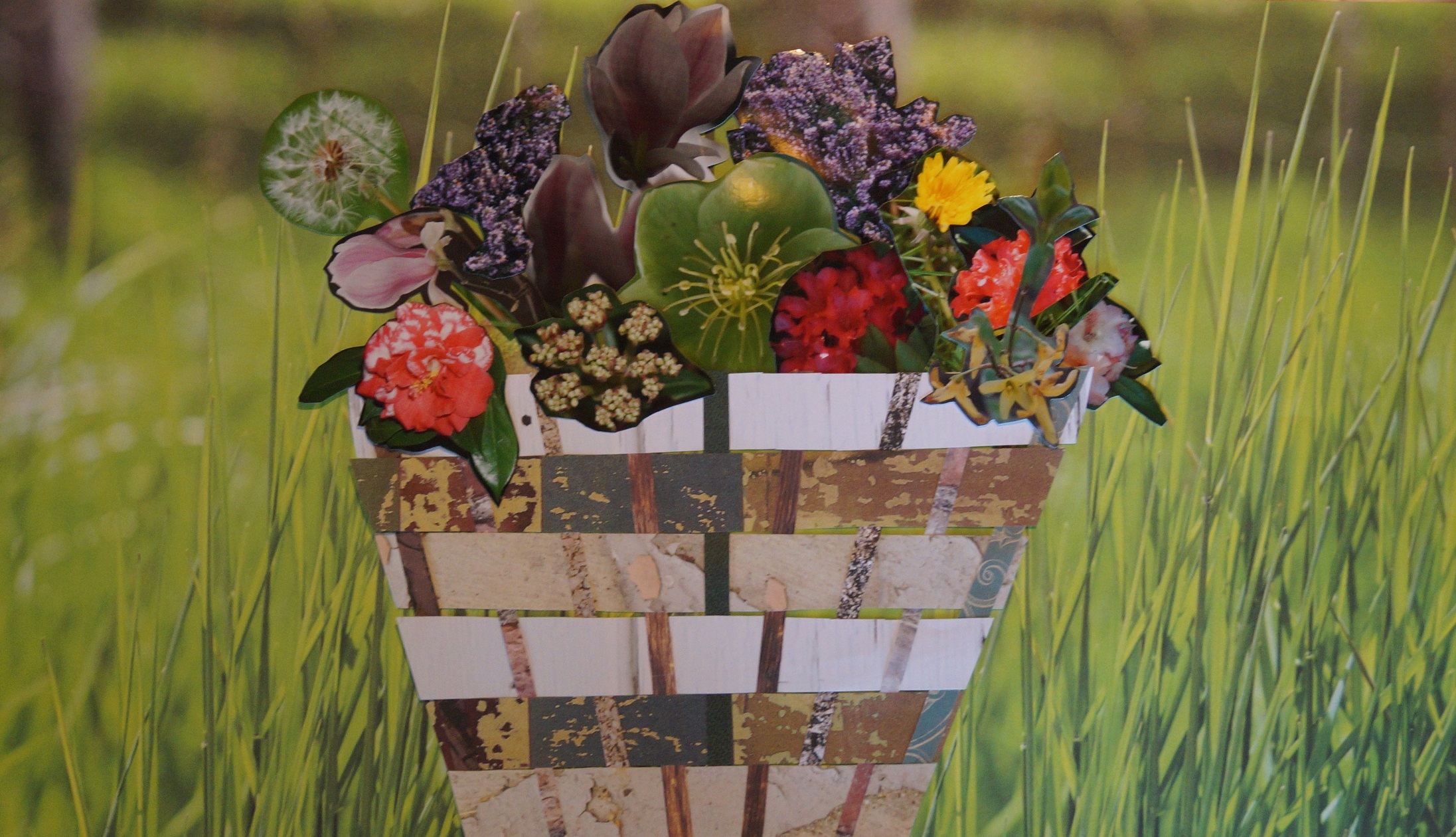
Flower Basket (2020) multi-media collage by Maria L. Berg
I did it! I made it through April with over thirty new poems posted, inspired by NaPoWriMo and the Poem-a-Day Challenge. Congratulations to everyone who met these challenges. It was very fun to see the winners posted for last November’s Poem-a-Day Chapbook challenge. Congratulations De Jackson!
At the A to Z Challenge there’s an after-challenge survey. I enjoyed using the challenge to explore Janus words and phrases in my poetry.
I also enjoyed discovering art, craft and design sites I hadn’t visited before along with other writing sites.
This challenge isn’t quite finished. There will be a reflections post sign-up on May 3 and a blog road trip starting May 10th.
It’s time to get back to revision. This week I’ll be posting about my poetry revision process. I hope you’ll join me and share your tips and tricks for poetry revision.
Over at the A to Z Challenge they have a word scramble. The Janus word for today is zip which can mean energy, vim, or nothing, nada, zero
Time To Go
Goodbye. It’s time for me to be on my way
If only I knew where I wanted to be
I would zip up the stairs and burst out the door climb into the car and back down the drive
I could turn right or left and loop directly back here somehow climbing uphill both ways
with water always at my right hand an eagle soaring overhead
and if I venture further past the pentacostals and jehova’s witnesses the elementary school or the gas station speed down the hill or up the road will bring me here again
larger loops radiating as if a stone dropped in the lake on a still day I might as well stay
Over at the A to Z Challenge they’re playing the Yes Game. My Janus word is yield which can mean; to give up, surrender, or relinquish, but also; to produce by natural process.
Today is Open Link Night at dVerse Poets Pub where you can share your best recent poem and read and comment on all the great poetry being shared.
This is the window
with the slightly broken sill covered in flakes of pop-corn ceiling with semi-sheer blinds that when open tuck up all wrinkled on one side through this dusty, cobwebbed window revealed by off-white sheers belted to hooks where a speck of a beige-dotted bug climbs there’s a once thought impossible view
because for my whole life it was blocked by next door’s tall firs providing cool shade lakeside my great aunt told me she did it on purpose to hurt her brother next door a family feud of unnatural proportion wielding God’s power one sibling on another imagine each day’s hurt never recovered
But they’re all gone now and I can finally see past the iron railing, the rhodie, and the hedge to the rippling water, a dock, and a buoy to the houses and the park, but above that what this table was so long deprived is the sky filled with mountain– ignore the threatening volcano inside– massive contrasts of blue and white glacier and rock, snow blanketed slopes it’s never not amazing, not one single time I look, even hiding behind complete cloud cover when a stranger wouldn’t know it’s there
I tried to think of any other window where I would rather look and suddenly, I am in the international space station, looking down on Earth my body is confined, but my view through this small portal is as if the eye of God. To see the sphere its atmosphere floating in the void to know the glorious insignificance of momentary stresses, bringing overwhelming strife, but seeing all connection of a day in life
But there’s no coming back from that I’ve already known what new seeing can do, would I want to add that fractured knowing too?
I only have this window for a ticking-clock of time, I want to be aware, to take in each tick of this view while it’s sublime, the years of firs blocking the way flew so quickly by knowing there are limits, a coming end erases the flaws in the pane, even the baked-on bird gifts that won’t scrape with a blade, all I see gleams this view holds a vivid shine









 Experience Writing