#OctPoWriMo & #Writober Day 1: Surrender

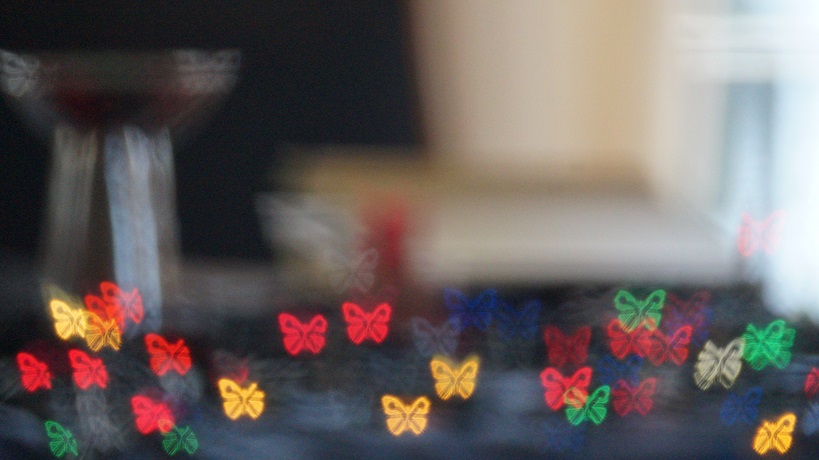
I like the idea of surrender as giving in to each of these little butterflies

Welcome to the first day of October!

OctPoWriMo

I woke up excited to get started on my first poem of October’s yearly poem-a-day challenge, and headed straight to the OctPoWriMo site. Though the heading on the Home page says “OctPoWriMo 2021”, the prompt is still the Day 31 prompt from last year. So, I had decisions to make.

I have been slowly working my way through In the Palm of Your Hand by Steve Kowit. It’s a great generative workshop in a book that includes revision in the process. I highly recommend it to everyone working on their poetry craft. I thought I could bring some of those prompt ideas into #OctPoWriMo, maybe put a spooky spin on them, but that didn’t feel right.

It’s week four of ModPo. ModPo is a free, interactive Modern & Contemporary American Poetry course/discussion offered online by the University of Pennsylvania through Coursera. The course focuses on close-reading and discussion of poems. There’s a live webcast every Wednesday. This week was mostly focused on Gertrude Stein. ModPo can be a large time commitment, and it would be nice to use the poets and poems studied and discussed as inspiration for generative work. I could do a Dadaist cut-up a la Tristan Tzara.

I’m also enjoying How Writers Write Poetry 2015, a free MOOC offered by the University of Iowa’s International Writing Program. Session 2: Content and Form, focuses on sound and goes well with ModPo week four, so I may find myself making a lot of repetition and playing with sound.

However, all of those things are things I was already doing, and not #OctPoWriMo to me, so what to do?

Back in 2018, before the world of pandemic and sequestering and such, I was playing reunion shows with my band, The Rubber Maids, in New Orleans. I tried to do OctPoWriMo in my down time, but didn’t get very far. Since the focus of Experience Writing is revision this year, I thought I would revisit the OctPoWriMo prompts of 2018.

The Day 1 prompt in 2018 was Surrender. That feels like a good way to face this OctPoWriMo. Morgan was talking about surrendering to love and all its messiness, so I will surrender to my love of words, and poetry, and creating in all its ups and downs and mess; to the pleasure of the sounds, and rhythms I create, letting go of my obsessive need for meaning and understanding, if only for one poem a day.

Suggested form: free verse

In 2018 on day one, I wrote a poem called Callistemon. I like the lines at the end, so in the spirit of revision, I will start finding my sounds there, and yield to whatever comes.

To Whatever Comes

I yield, I will yield, yielding
to bliss, a kiss of mist
peeled feelings come to being
fizz blitz, bubble, tumbles, bumbles
then fizzles, puzzling the quickness
am I fickle? My sickle swings
back to beginnings with abandon
coming undone
craving raving, not saving
unbuttoned, loose
sluice then juice
slather and lather longer
I yield, I will yield, yielding
to blissful song longer
ignoring boring inklings of wrong
gone the gong, the hook,
the harm and alarm, I
entrust this thrust of
crispy crust to crumble
to dust in my lust
to wield all the words
this word sword salad
whirls now in the world
swirled, swirling
I do not resist, but go
under, give in, give up
succumb, submit, surrender

Feel free to link to your OctPoWriMo poems in the comments. I look forward to hearing how you’re approaching the challenge this year.

Writober

As I mentioned in my post, Thinking About #Writober, I’m doing things a little differently this year. I looked back through all my years of #Writober and the image and microstory that resonated with me today is from October 22, 2020. The image is “Lost” by Alex Timmermans and this was my microstory:

The stranger arrived with the fall, leading a wild boar by a sheer scarf. They approached silently from the thick wood to the east, as if they did not possess enough weight to crunch a dry leaf. Yet everywhere they walked, trouble became too heavy to bear.

~Maria L. Berg

The image and story reminded me of a time I was taking a walk in the woods and a man passed me going the opposite direction with a shovel in a wheelbarrow. Today, I thought, what if the strange man with the wheelbarrow passed the man with the wild boar?

I think there are the makings of an interesting, spooky story there, so my tentative plan is to do some research and brainstorming tomorrow, develop the characters on Sunday, come up with an outline on Monday and draft the rest of the week.

This is the first time I’ve tried Writober this way, so the main point is to have fun and be flexible.

I hope you’ll join me in writing some spooky stories for Writober and tell me about them in the comments.

Happy Reading and Writing!

September’s Changing Focus Blog Challenge: Reflections

Last month I was excited to find the Changing Focus Blog Challenge, because I’m always looking for ways that my talents and creativity can work together, and a multimedia project around a theme each month felt like just the thing for me. I came up with, and executed, my Pathways response in two weeks. I like it, but it felt like a draft: rushed and rough, And I didn’t realize I didn’t have until the end of the month, so it was late.

So this month, I paid special attention to the end date, and got started right away with an oral poem to music for dVerse Poets Pub.

I thought about reflecting bokeh and tried several shots with the big mirror in the closet, and got some very interesting shots, but that needs a lot more practice.

The lake wasn’t calm enough to get much other than dock shadow. I took a few photographs of reflections in the windows, thinking of setting up scenes inside and doing an inside/outside type reflection.

I wrote more poems about reflections. I found a great site for kids that inspired me to do an acrostic, but that led me to working on a submission for Constellations: A Journal of Poetry and Fiction with the theme Redirections. I love how my work on pathways and reflections had my mind firing for redirections.

After I looked up “reflections” definitions and found “folding back,” I thought my daily inkblots that I started during “Pathways” could continue into this project and I thought about playing with my Rorschach mask, a mask that reacts to temperature change to change its black and white pattern. I couldn’t see through the mask, so the 10sec timed shots were very tough, but I had some fun with it.

However, a couple of minutes of that would take more space and time than my computer or I have; we would all get dizzy; and it seams like something I want to save for a more Halloween inspired piece.

I came up with some melodies in A-flat, chose beautiful chords with my capo on the fourth fret, and yet nothing was coming together. I even started a page in my hardback The Musician’s Notebook: Deluxe Edition, titled it “Reflections in A flat major.” But blank those pages stay. Perfectionism is a curse. Nothing will ever be perfect.

I took my small, ornamental mirror into the bathroom, creating eternal reflections, then I remembered that the large mirror in the office closet wasn’t attached to the wall. It was heavier than I would have liked, but I shoved, slid, carried it into the closet where I was working. I had ideas to film myself moving the mirror while filming to create more and less eternal reflection with my eyes and feet around the mirror: naked to full costume was also an idea through all of these processes.

By this time I was stressing and hitting other deadlines and any one of my ideas would take another month. So this morning, I decided I had to let this reflections project go and do a project every other month and be happy for the inspiration.

But this evening, the world provided. And this panoramic image says it all.

Thinking About #Writober

It might already be a zombie vampire. Watch Out!

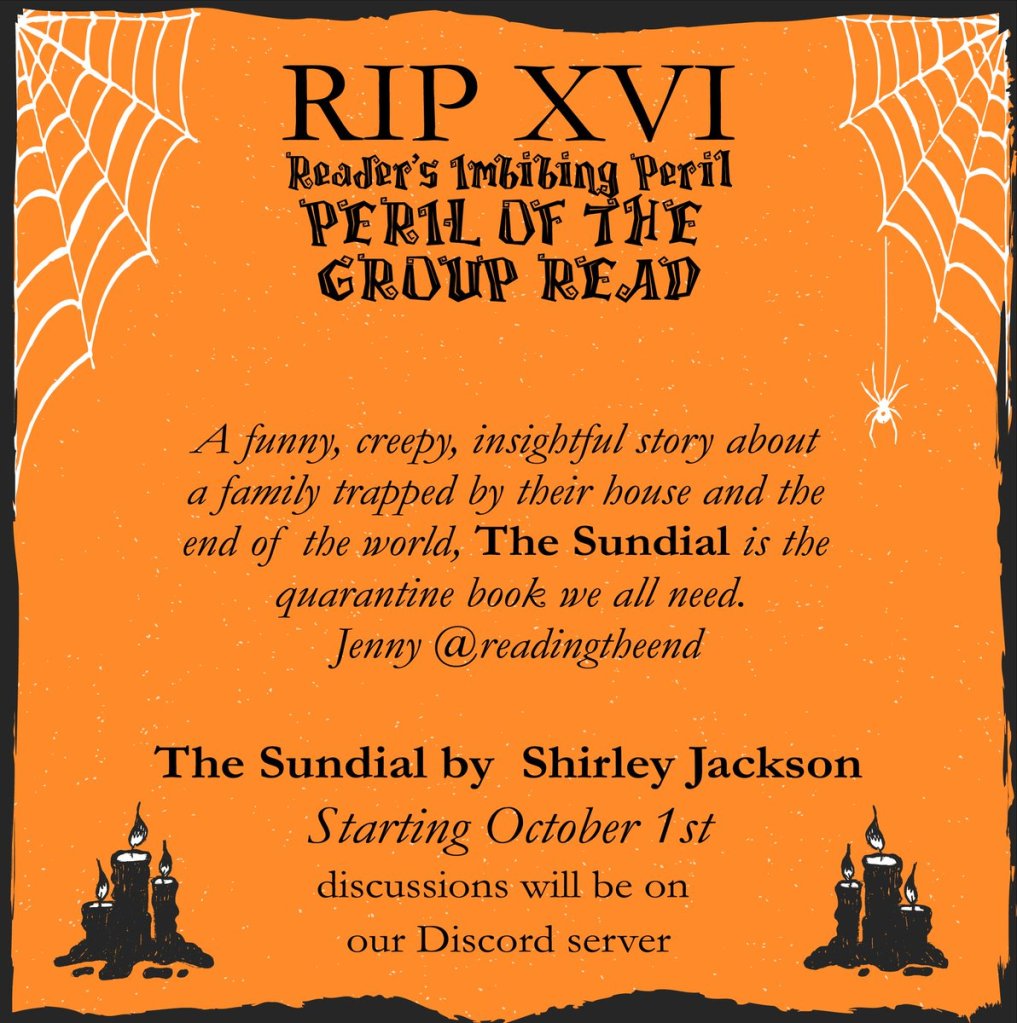
I got in the Halloween spirit a little early this year. Yesterday, I was tweeting about Readers Imbibing Peril. It starts the first of September, but I always forget until October. So in one way I’m early by only starting a couple weeks late. This year’s group book is The Sundial by Shirley Jackson. I started reading it just after watching the first episode of the new season of Slasher and something was oddly familiar. I think I’ll finish the book and then see if Slasher really is mangling it. I haven’t picked any other scary books to read this season yet, but I do have a bunch of thrillers on my kindle. Readers Imbibing Peril also has a fun photo challenge this year and a BINGO card. Oh, so much Halloween fun!

I also went through a list of the top 200 horror movies of all time on Rotten Tomatoes and made lists of movies I haven’t seen yet that looked interesting, or at least were famous, and movies I want to watch again. I would have to watch two or three a day (don’t have time for that). But at least I won’t have to search for something to watch for a while.

Usually for #Writober, I create a collection of images on Pinterest and challenge myself, and you who want to join me, to write a piece of flash fiction inspired by the image each day of October. The first and second years I actually came away with some finished flash fiction. The last few years I haven’t gotten much past a one or two sentence microfiction each day. This year, since my focus is revision, I thought I might choose about six of my favorite microfictions from previous years and expand them into flash and or short stories. I think Ray Bradbury’s schedule of a story a week is much more doable than a story a day, especially when I’m doing OctPoWriMo as well and writing a poem a day.

So that was the working plan for #Writober, but then I saw A. M. Moscoso’s Halloween Prompt Challenge over at MY ENDURING BONES and those all look like fun. So now, the working plan is to go through the last five #Writobers and pick my favorites to revise and turn into stories, and to pick some prompts from the Halloween Prompt Challenge to write new stories to, too.

When I went to Pinterest to link to last year’s images, I noticed I had been collecting images for this year, so I filled up a folder for #Writober6 in no particular order for you to pick and choose from when you’re in need of inspiration. Since I’ll be going back through all the #Writobers to find my favorites, here are links to each of the collections:

  1. #Writober
  2. #Writober2
  3. #Writober3
  4. #Writober4
  5. #Writober5

I hope all of that creepy, scary goodness gets you in the Halloween spirit, too. Or you can bookmark it, and come back when you’re ready 👻

The Novelinee is new to me

My first plum shrub cocktail photograph by Maria L. Berg 2021

Today’s prompt from Laura at Dverse Poets Pub is to write a Novelinee, a nine line stanza with a rhyme scheme in iambic pentameter. Let’s see what I can come up with.

In novelty

a sudden interest overpowers calm
and everywhere I look a present falls
like plums too high to pluck now in my palm
enthralling rubber skin to sweetness calls
excite my senses newness all around
abundance fills my morning breakfast air
the plop of ready fruit, adventure’s sound
what foreign taste awaits for me to dare
once hidden, now the joy in looking found

I finished this poem right on time to go combine my shrubs. I made:

  1. plum & honey + apple cider vinegar with basil
  2. plum & agave + balsamic vinegar with sage

For my cocktail I used equal parts rum, the balsamic shrub and tonic water. Sounds weird, but it’s tasty and has a nice bite. Here’s to trying new things! Make your way to the bar and request a sample. 🙂

Vision and Revision: a guest post by Jacob M. Appel

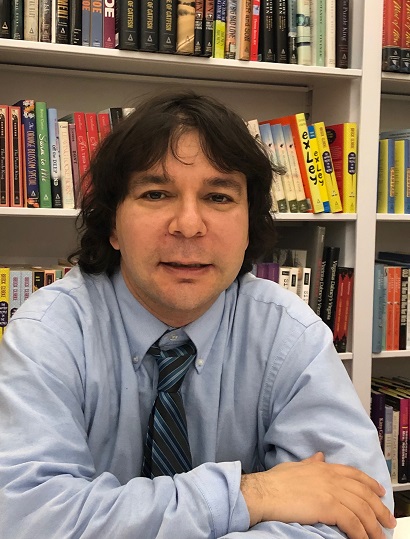
  Jacob M. Appel is an American author, poet, bioethicist, physician, lawyer and social critic. He is currently an Assistant Professor of Psychiatry and Medical Education at Mount Sinai’s Icahn School of Medicine, where he is Director of Ethics Education in Psychiatry. He is also the author of four literary novels, nine short story collections, an essay collection, a cozy mystery, a thriller, a volume of poems and a compendium of medical dilemmas. 


 Vision and Revision

            Once I had the pleasure of chatting with a well-known sculptor whose preferred medium was marble—and I couldn’t resist asking her what happened if she made a mistake.  I had expected her to respond with an earnest observation about the planning required to prevent such a calamity: measuring with calipers, modeling in plaster, etc.  Instead, she laughed and replied, “Why do you think the Venus de Milo is missing her arms?”

Fortunately, writing is far more forgiving.   A loose plot line can always be tightened or a more original rhyme found to end a stanza.  Would-be authors are taught early on that Hemingway wrote forty-seven different endings to A Farewell to Arms and Fitzgerald continued to revise The Great Gatsby even after it had been typeset, that Auden had the audacity to alter “September 1, 1939” after publication and Moore grappled with the text of “Poetry” for five decades.  In contrast, writers publicly (although falsely) believed to eschew revision—Jack Kerouac, Frank O’Hara—are often derided accordingly.  One can still hear the disdain of Capote’s quip about Kerouac, “That’s not writing, that’s typing.”

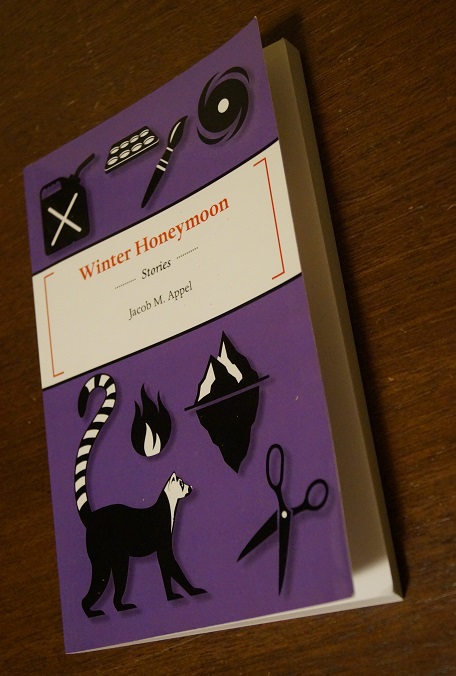
Jacob's latest story collection, Winter Honeymoon
Jacob’s latest story collection

In modern western culture, and particularly in the United States, revision has claimed a hallowed position.  Nearly every writing course I have encountered incorporates an emphasis upon revision, a belief that multiple drafts are essential to the writing process.  Maybe this reflects the Protestant ethic and the spirit of capitalism, or the Edisonian notion that genius is 99% perspiration.  Unfortunately, many aspiring writers take the wrong message from these lessons.  It is certainly true that revision has a valuable place in the writing process.   However, that does not mean that vision isn’t also necessary.  Nor does it mean that, just because great works require revision, revision necessarily leads to great works.

Grace Paley frequently observed that she did her best writing in the bathtub.  Her point was not, of course, that she had to worry about getting soap suds on her writing pad.  Rather, she was suggesting that she thought through her stories in depth before she put pen to paper.  Having a sense of where you are going in advance helps you get there—both in life and on the page.  Anyone who has ever planned family vacations with young children surely knows this:  It is far wiser to book a hotel room at Disneyland or Yellowstone prior to departure than to hop into the station wagon and drive until one finds an appealing destination.   For John Wayne and a few inveterate literary explorers, the open road may be alluring.  For many writers, it is the sure path to hours before a blank computer screen.  That is not to say that a writer cannot change paths or make discoveries as she writes—for the creative mind, that is inevitable.   But choosing the Goldilocks moment to transfer words from one’s soul to one’s hand—not too soon, not too late—is one of the skills that separates the skilled writer from the amateur.   And, fortunately, it can be cultivated.

I urge my students to take time to reflect upon what they want to say, and how, long before they consider saying it.  It is easier to erase a sentence in one’s mind than on one’s parchment. (There are a few exceptions, like Dostoevsky, who managed to weave his revisions and even his mistakes seamlessly into his prose without any undoing.)  Either Will Rogers or Head & Shoulders once warned: “You never get a second chance to make a first impression.”  That is as much true regarding the impression you make upon yourself as the impression that you make upon others.  Once you’ve committed yourself to a word or idea in print, you’ve often moored yourself to a particular course.  Needless to say, there are limits to how much one should wait before setting down your internal epics.   As either Aristotle or Voltaire or my Great Aunt Sadie once warned, “Don’t make the perfect an enemy of the good.”  But the good, thought through in advance, can prove the mortal foe of the mediocre.

A photograph of the hardcover of The Mask of Sanity by Jacob M. Appel
Jacob’s novelThe Mask of Sanity

The fetishization of revision often leads writers to forget one of the craft’s most important principles:  Quit while you’re behind.  I firmly believe that anyone with the passion and commitment can write valuable and inspiring poetry or fiction.   Yet that does not mean that every particular poem or story can be transformed into a work of value and inspiration.  Sometimes, the materials themselves don’t cohere:  the author had chosen the wrong structure or genre for this particular idea or the underlying plot simply isn’t compelling; other times, the material is worthwhile but the author is at the wrong point in her journey to share it most effectively.  Knowing whether a story or poem is working is a talent.   But recognizing whether a story or poem can work is a far more crucial skill.

So how does one know whether a story or poem can work?   One question to ask is whether, as you are writing, you find yourself with too many or too few ingredients.  An analogy I often share with my students is self-assembling an exercise bicycle—inevitably, one of life’s greatest challenges.   If you try multiple times and find yourself with excess parts and wheels that don’t spin, or too few parts and a hollow pole for a seat, you might consider repackaging and returning to the supplier.  The same is true with writing.  Sometimes, the pieces just don’t fit together.  Accept that.  Move on.  Live to fight another day.  I say this as a writer who has spent thousands of hours writing manuscripts that should have been scrapped after fifteen minutes.  Revision is often necessary, but it is rarely sufficient.  No writer wants to be lauded as a “revisionary.”

It has become a trope in creative writing to place original drafts and revisions of famous works side by side to admire the radical changes imposed by the authors between drafts.  That is often a rewarding exercise.   But I exhort students that they should admire the vision of the original as well.  Exceptions do exist:  The Ray Carver-Gordon Lish Complex, for instance.  (Editor Gordon Lish is often credited with line editing Carver’s stories to create the spare, crystalline prose we now know as Carveresque.)  Yet it is usually the magic of the original draft that still enchants in the final form.
Revision, in other words, is an essential tool—but it shouldn’t be a crutch.  I am very wary of writers who plan on revisions at the outset, of students who assure me, “I’ll fix that later.”  To my thinking, that is like planning for a second marriage at your first wedding.  The responsibility of the writer is to get it right the first time.  And then, in the revision, to get it even righter.

Oral Poetry: Trying a new writing process

The Poetics challenge from Ingrid at dVerse Poets Pub is to write a poem without writing it down. This intrigued me and sounded like a great way to start exploring some ideas for this month’s Changing Focus project around the theme “reflections.”

I thought I’d share this vocal warm-up I like to do before recording (because it’s fun):

Yesterday, I discovered that the bass effects pedal I’ve had for many years, has a built in drum machine, so hold onto your hats world.

Focus on Reflections words and music by Maria L. Berg

Focus on Reflections

I face a self-imposed focus
on reflections
a month of looking
of looking in mirrors
looking at me

not turning away
looking further
and deeper
finding the deep waters
past the imperfections

What will I find there?
What does reflection
smell like? What is its
taste? How will I get to
the point where I
only see what I like?

All those flaws
become only a reflection
only the light
hitting a chip in the mirror
everything reflects light
all we see is a reflection


*That was an interesting experience. After finding a drum beat and recording the drum and bass. I played it back while saying lines to the room. When I felt like the concept was flowing, I recorded myself, then typed up what I said as if transcribing. That was fun. I think I’ll play with that a lot.

Cover of The Cynic in Extremis, a poetry collection by Jacob M. Appel. There is a picture of a grumpy looking pug wrapped in a furry blanket.

I hope all of you will come by this Thursday, Sept. 2, and read a special guest post about revision by Jacob M. Appel. I recently enjoyed his poetry collection, The Cynic in Extremis. I found it both entertaining and provocative.

Now Back to the Scheduled Program . . . Revision: Using feedback to strategize.

It’s been fun taking this art break, but it’s time to get back to what this blog is all about this year: revision. And at the end of this post I have a special announcement. Ooooh, Aaahhh.

Brainstorming Revision Strategies

Since one of my stories placed in its event in the Writer’s Games, it will be published in the 72 Hours of Insanity anthology later this year. I will soon receive notes from the editors. The main reason I find the Writer’s Games worthwhile is that each story receives feedback from three to five judges. Today, let’s look through my feedback and strategize how to approach revision.

The Feedback

During the Writer’s Games I wrote six stories. These are my generalized notes of feedback from all of the stories.

Character Development

  • physically describe the secondary character
  • clarify MC’s relationship and emotional connection to secondary character
  • how character holds him/herself
  • more description and elaboration of characters important to the climax and end of story
  • character should cling to previous beliefs and behaviors before change

Setting

  • consider how descriptions interact with internal logic
  • smooth transitions

Backstory

  • a delicate balance: too much in one story, not enough in another
  • more backstory through character’s internal thoughts, not dialogue

Foreshadowing

  • needs to be more clear
  • character’s beliefs need to be clear at the beginning

My thoughts

As with most feedback, one judge says one thing, and the next says the opposite, but what I listed above appeared to be a consensus, or was something I agreed with. Saving the feedback and giving it time to sit helped me separate my emotional jerk reactions and find useful information. Now that I’ve identified things to work on, how do I want to approach revision?

Revision Strategies

Character Development

I like to leave most of the physical aspects of my characters up to the reader’s imagination, but it appears the readers sometimes need more. I have a couple of tools I’ve collected but didn’t use while writing these stories. I’ll give them a try before I revise.

Exercise 1: Act out how the character walks, stands, gestures. To do this, I will envision that I am the character and walk around the room for a while. Then I’ll act out some dialogue as the character. I’ll video tape myself doing this and see how my movement and gestures change as I become each character.

Exercise 2: Chart the character relationships. For this exercise I’ll put the main character’s name in the center of a page then put the names of the rest of the characters encircling it, then I’ll draw lines of relationship between the characters and write what those relationships are. I’ll journal about how these relationships formed and changed over time, then I’ll focus on the main character’s perceptions of each of these relationships.

I thought the comment about a character not letting go of his/her previous beliefs so quickly was a very good point. I’ll brainstorm ways that my characters can demonstrate that they don’t want to believe their own eyes, and are struggling to find rational explanations before changing their beliefs.

Setting

I thought the comment about description needing to follow the stories internal logic was good. I do tend to explain things after the fact when I should make sure something is clear to the reader before I describe it, or at least directly after, not later in the story. I will be on the look out for places where the reader needs context.

Backstory

The feedback I received about use of backstory is tricky. There’s a delicate dance here that ties in with the work I need to do to recognize when the reader needs more context. I think I will try a couple of exercises to work on this.

Exercise 1: Read through the story and highlight everything I consider backstory. Are there flashbacks? Highlight flashbacks in another color. Are they necessary? What do they bring to the present narrative? Where does the reader need context for a character’s feelings or actions? What is the character’s most powerful memory that influences that behavior? Will it clear things up for the reader to know that, or will it take them out of the present action?

Exercise 2: Print out 5 short stories I like and highlight every use of backstory and flashbacks. When and how was backstory used.

Foreshadowing

Using chiastic outlines ( This article “The Strength of a Symmetrical Plot” does a good job of explaining it and has a great example created by Susan Raab using the story of Beauty and the Beast) has really helped me think about foreshadowing. However, from the feedback I received, it looks like I still have a ways to go. I think both of the exercises I set up to work on backstory will also apply to foreshadowing.

Reading aloud

I have found in the past that having the computer read my story to me has helped with final edits, especially typos. Recently, however, while I was recording myself reading my poems for the pathways project, I found that knowing I was going to record it led to important revisions. I haven’t tried that with a short story yet, so for this revision, I will try recording myself reading it aloud and see what the process of recording myself reading it does for short story revision.

And here’s the Special Announcement!

One of my favorite short story writers, Jacob M. Appel, has taken time out of his incredibly busy schedule to write a guest post about revision for Experience Writing. If you haven’t read his work yet, he has something for everyone. He has published novels, story collections, a poetry collection, essays, and medical articles; he contributes to Writer’s Digest, and so much more. There’s a documentary about him on Amazon Prime Video called Jacob.

Here’s his bio from his website:

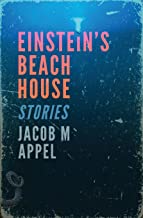
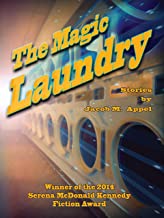
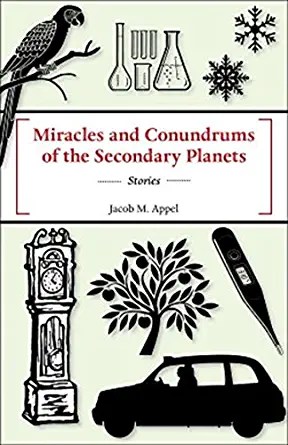
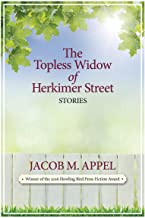
Jacob M. Appel’s first novel, The Man Who Wouldn’t Stand Up, won the Dundee International Book Award in 2012. His short story collection, Scouting for the Reaper, won the 2012 Hudson Prize and was published by Black Lawrence in November 2013. He is the author of seven other collections of short stories: The Magic Laundry, The Topless Widow of Herkimer Street, Einstein’s Beach House, Coulrophobia & Fata Morgana, Miracles and Conundrums of the Secondary Planets, Amazing Things Are Happening Here, The Amazing Mr. Morality, The Liars’ Asylum and Winter Honeymoon; an essay collection, Phoning Home; a poetry collection, The Cynic in Extremis; four other novels novel: The Biology of Luck, The Mask of Sanity, Surrendering Appomattox, and Millard Salter’s Last Day; and a collection of ethical dilemmas, Who Says You’re Dead?

Jacob has published short fiction in more than two hundred literary journals including Agni, Alaska Quarterly Review, Conjunctions, Colorado Review, Gettysburg Review, Iowa Review, Pleiades, Prairie Schooner, Shenandoah, Southwest Review, StoryQuarterly, Subtropics, Threepenny Review, Virginia Quarterly Review, and West Branch. He has won the New Millennium Writings contest four times, the Writer’s Digest “grand prize” twice, and the William Faulkner-William Wisdom competition in both fiction and creative nonfiction. He has also won annual contests sponsored by Boston Review, Missouri Review, Arts & Letters, Bellingham Review, Briar Cliff Review, North American Review, Sycamore Review, Writers’ Voice, the Dana Awards, the Salem Center for Women Writers, and Washington Square. His work has been short listed for the O. Henry Award (2001), Best American Short Stories (2007, 2008), Best American Essays (2011, 2012), and received “special mention” for the Pushcart Prize in 2006, 2007, 2011 and 2013.

Jacob holds a B.A. and an M.A. from Brown University, an M.A. and an M.Phil. from Columbia University, an M.S. in bioethics from the Alden March Bioethics Institute of Albany Medical College, an M.D. from Columbia University’s College of Physicians and Surgeons, an M.F.A. in creative writing from New York University, an M.F.A. in playwriting from Queens College, an M.P.H. from the Mount Sinai School of Medicine and a J.D. from Harvard Law School. He has most recently taught at Brown University in Providence, Rhode Island, where he was honored with the Undergraduate Council of Students Award for Excellence in Teaching in 2003, and at the Gotham Writers Workshop in New York City. He also publishes in the field of bioethics and contributes to such publications as the Journal of Clinical Ethics, the Journal of Law, Medicine & Ethics, the Hastings Center Report, and the Bulletin of the History of Medicine. His essays have appeared in The New York Times, The New York Daily News, The New York Post, The Chicago Tribune, The Detroit Free Press, The San Francisco Chronicle, The Washington Times, The Providence Journal and many regional newspapers.

Jacob has been admitted to the practice of law in New York State and Rhode Island, and is a licensed New York City sightseeing guide.

I think you can see why I’m excited. I hope you will stop by Experience Writing this Thursday, September 2nd, to read Jacob’s insights on revision. See you there!

Pathways: a video, music, and poetry project

Update 9/2/2021: After enjoying all the oral poetry for the Poetics prompt this week, I thought the poets of dVerse Poets Pub might enjoy this for Open Link Night. I hope you will check out today’s special guest post from Jacob M. Appel on revision as well.

Here it is! My response to wRightingMyLife’s Changing Focus monthly blogging challenge. The theme was Pathways.

I’ve wanted to try something that combines music, photography, and writing for a while, so this was a great inspiration to give it a try. This first effort was a bit rushed ( I happened upon the challenge halfway through the month), but I had a lot of fun with it and learned a lot.

While putting together the video, I learned how to do some animations with my photographs (haven’t figured out how to use them with my video editing software yet), and learned some techniques for combining motion and still photography.

Recording myself reading my poems was great practice. While practicing, some revisions and edits became obvious.

Writing music to go with the visuals and poetry was very challenging. Many of my ideas just wouldn’t work. I went through days of discarding recordings, but finally came up with the feel of pathways I was going for.

September’s theme is Reflections. I have a lot of reflection to do about my Pathways project. 😉

Little Red Geranium

Flower-a-day #12

For today’s drawing I used pencil, colored pencil, watercolor and crayon.

Glandularia? Sounds more like a glandular problem than a pretty flower.

Flower-a-day #11

My colored pencils didn’t have anything close to this pretty color, so I tried watercolor. That was fun.